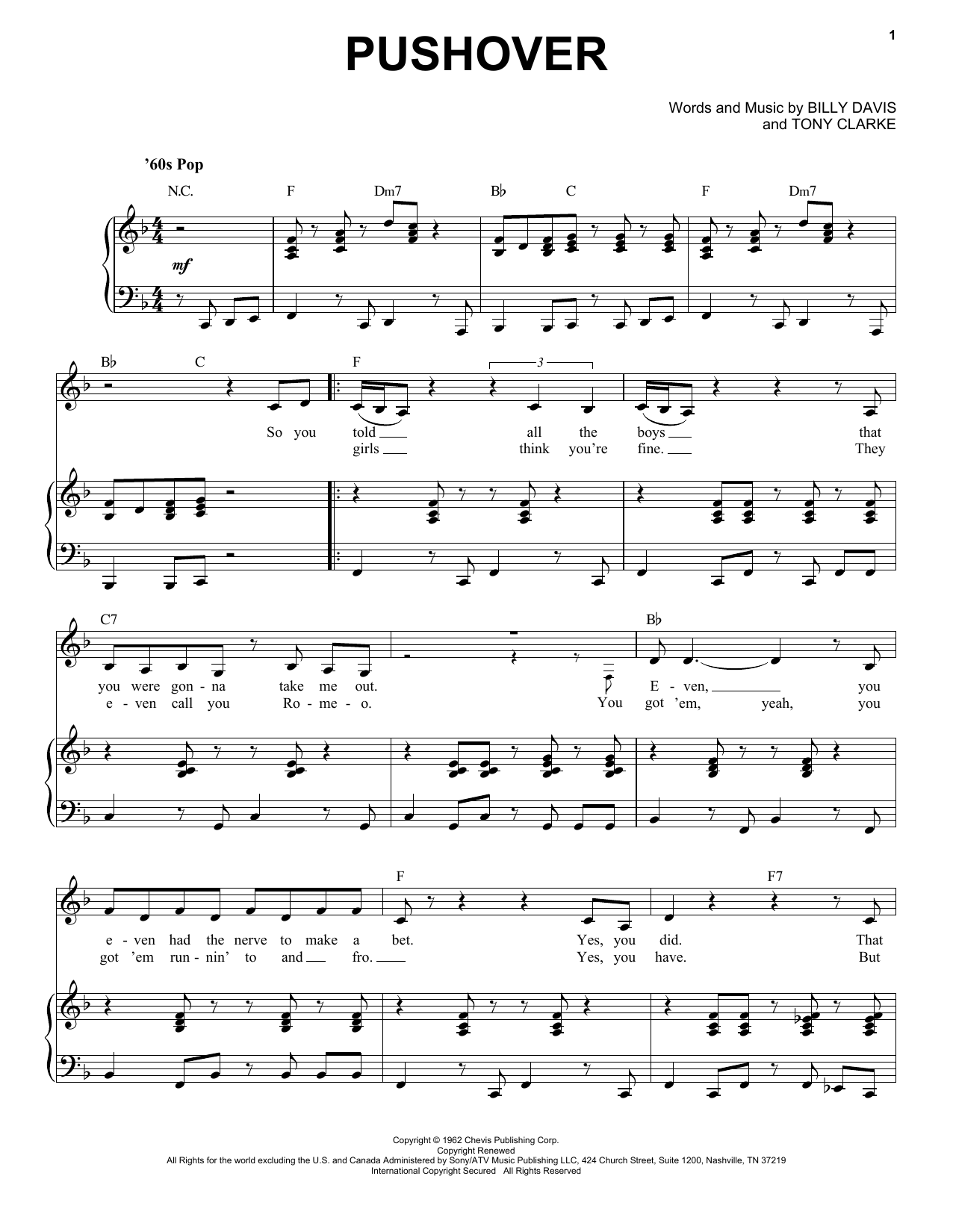
Pushover Sheet Music Preview

Pushover: Piano Vocal

As performed by Etta James

Item: 35-DS01228787

Digital Download
$5.99
Description

Pushover: Piano Vocal isn't in MakeMusic Cloud just yet...but it could be. Let us know you'd like to see it, and you'll help shape what comes next. In the meantime, start a free trial and dive into thousands of interactive titles your students can play along with today.

Sample Audio
No sample audio found.
Sample Video
Additional Details
Publisher: Hal Leonard
Page Count: 5
SKU: 35-DS01228787

More about this title

About the Artist: Etta James

Etta James emerged from the Los Angeles blues scene in the 1950s with a voice of extraordinary depth and emotional power. Her career spanned over five decades, during which she became one of the most influential blues and R&B singers in American music history, known for her ability to inhabit a song with raw vulnerability and commanding presence.

Why we love this

Etta's interpretive instincts on this track reward singers who understand how to navigate tension between rhythmic precision and emotional expression. The vocal line sits naturally for voices with lower registers, and the piano part provides enough harmonic sophistication to keep pianists engaged without overwhelming the lyrical content.

What to expect

The song settles into a slow, deliberate blues groove where every phrase carries emotional weight. There's a confessional quality to the lyric, supported by a piano texture that suggests both restraint and underlying intensity.

Who it's for

Singers exploring blues standards and R&B foundations will find fertile ground here. Pianists looking to expand their repertoire beyond classical contexts and develop sensitivity to accompaniment roles in small ensemble settings will benefit from learning this score.

How to get the most out of it

  • Keep the groove pocket tight without letting it become rigid. The accompaniment should breathe and flex slightly around the vocal phrasing rather than lock rigidly to a click.
  • Shape the lyric delivery conversationally. Etta never sang a line straight; she bent notes, delayed entries, and used silence as an expressive tool. Encourage the vocalist to find similar moments of personal interpretation.
  • Balance the vocal intimacy with the piano texture. This arrangement benefits from a piano part that sits behind the voice rather than competing with it, allowing the vulnerability of the lyric to remain central.

How to use it

This works beautifully as a solo showcase piece or paired with other blues standards in a jazz or American songbook recital. It also serves as an excellent teaching vehicle for singers developing maturity in interpreting 20th-century popular song across styles beyond art song tradition.

Skills your students will build

  • Blues articulation and phrasing conventions
  • Rubato and rhythmic flexibility within a steady groove
  • Vocal control in lower register tessitura
  • Blues harmony reading and harmonic awareness
  • Collaborative listening between voice and accompaniment

You May Also Like