
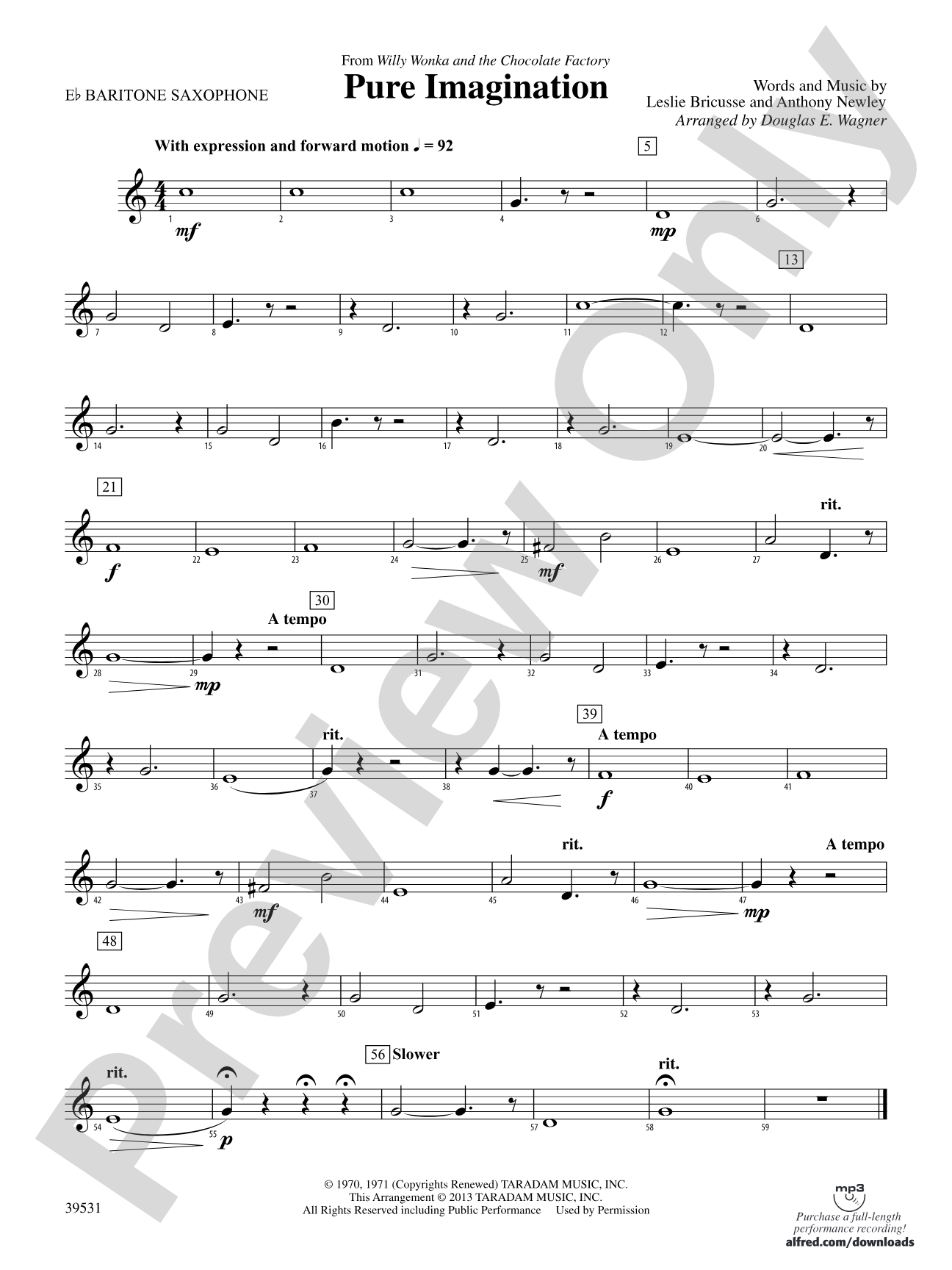

Pure Imagination (from Willy Wonka and the Chocolate Factory): E-flat Baritone Saxophone
Words and music by Leslie Bricusse and Anthony Newley / arr. Douglas E. Wagner
Grade: 2 (Easy)
Item: 00-PC-0016224_BTX
$3.00
Pickup currently not available
Description
With its message of endless possibilities and dreams fulfilled, this piece, from the 1971 Academy-award nominated film score of Roald Dahl's Charlie and the Chocolate Factory (1964), by songwriting team Leslie Bricusse and Anthony Newley, has remained popular since the 1970s---and even more so today, or so says the more than 5.5 million views on YouTube. The tune surfaces three times in the movie, first during the opening title music, then as the feature number by Gene Wilder as he leads his assembled golden ticket winners into the chocolate room, and finally, as part of the "Wonkavator" music at the end. Great fun for all generations, and all generations to come! This arrangement provides a dramatic opportunity to teach expression. A charming and musical choice, it is memorable and heartwarming. (2:45) This title is available in MakeMusic Cloud.


Don't just read it, hear it, play along with it, and watch your students grow with it. In MakeMusic Cloud, Pure Imagination (from Willy Wonka and the Chocolate Factory): E-flat Baritone Saxophone comes alive with professional accompaniment, adjustable tempo, and built-in practice tools that turn solo practice into real progress.
Open in the Player
Jump straight in and assign it today.
Start Your Free Trial
Open this title and explore the full library in minutes.
Sample Audio
1
Audio File
--:--
0:00
0:00
Sample Video
No sample videos found.
Additional Details
Series:
Pop Young Band
Publisher:
Alfred Music
Page Count:
120
SKU:
00-PC-0016224_BTX
More about this title
About the Composer: Leslie Bricusse
Leslie Bricusse is a British songwriter and composer whose work spans theatre, film, and popular music. He co-created some of the most enduring songs of the 1970s, collaborating with Anthony Newley on the score for Willy Wonka and the Chocolate Factory, which earned an Academy Award nomination and introduced "Pure Imagination" to audiences worldwide. His compositions are known for their melodic accessibility and emotional directness, making them natural fits for educational ensembles seeking repertoire with immediate appeal and genuine artistic substance.
Why we love this
Grade 2 bands rarely encounter repertoire this thoroughly satisfying. The arrangement captures the whimsy and wonder of the source material without talking down to young players, and the straightforward instrumentation allows conductors to focus on teaching genuine musicality and phrasing rather than wrestling with complex technical demands. Students recognize the melody instantly, which transforms a concert from "school music" into a genuine event.
What to expect
Hopeful and inviting, with the quality of stepping into an imaginary world where anything is possible. The melody floats above warm harmonic support, creating moments of wonder balanced by the straightforward charm of a tune that audiences of all ages remember from childhood.
Who it's for
Grade 2 concert bands seeking a crowd-pleasing selection with genuine musical substance. Directors working with less experienced ensembles will appreciate that the arrangement teaches expressive conducting and tone production without overwhelming the group technically.
How to get the most out of it
- Shape the melody with intentional dynamic peaks and valleys rather than playing it straight. The song's magic lives in how thoughtfully you allow it to breathe.
- Balance the harmony sections against the lead voices. Young bands often bury the melody under overzealous inner parts; ensure clarity by asking accompanying voices to blend inward.
- Establish a comfortable tempo early in rehearsal and stick with it consistently. This tune rewards steady pacing over rushing, which young players instinctively want to do.
- Attend to articulation choices with care. Consistent tonguing and note separation between sections create the playful character the piece deserves.
How to use it
Reserve this for a concert where community engagement matters. The recognition factor makes it ideal for pop-themed concerts, family performances, or programs featuring musical theatre repertoire. It pairs naturally with other accessible popular selections and can anchor a pops concert where younger players gain confidence performing in front of audiences who actively want them to succeed.
Skills your students will build
- Shaping melodic phrases with dynamic intent
- Balancing melody and accompaniment voices
- Maintaining consistent tempo and pacing
- Controlling articulation for stylistic consistency
- Responding to expressive conducting gestures