
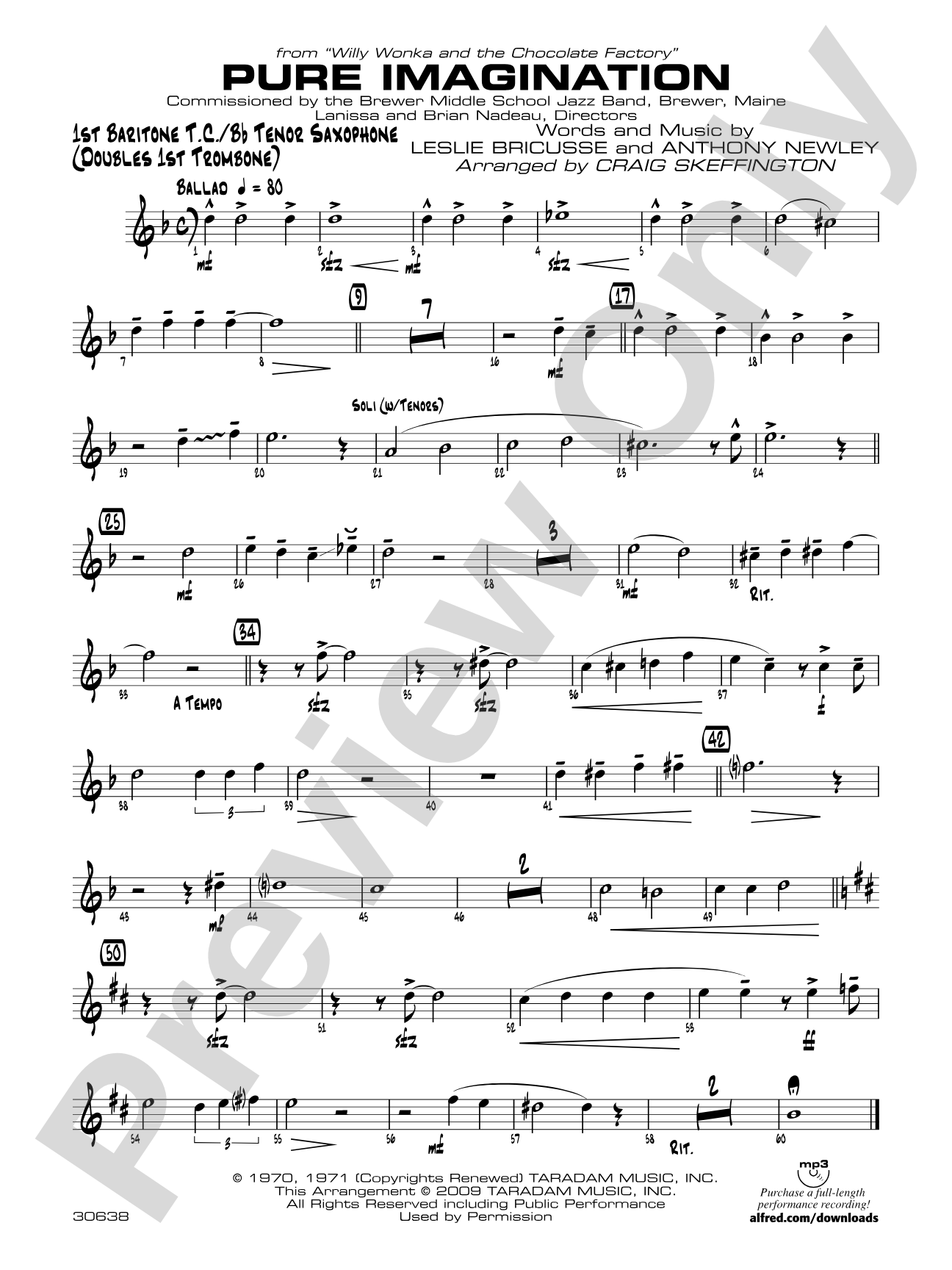

Pure Imagination (from Willy Wonka and the Chocolate Factory): Baritone T.C.
Words and music by Leslie Bricusse and Anthony Newley / arr. Craig Skeffington
Grade: 3 (Medium)
Item: 00-PC-0016192_BTC1
$3.00
Pickup currently not available
Description
If you haven't heard this gorgeous ballad from Willie Wonka and the Chocolate Factory, now is the time. This sensational alto sax ballad, scored with lush harmonies and backgrounds, includes a written solo for the lead alto player and lead trumpet range to written A, above the staff. Newsflash: this will be your new favorite tune! (3:15) This title is available in MakeMusic Cloud.


Don't just read it, hear it, play along with it, and watch your students grow with it. In MakeMusic Cloud, Pure Imagination (from Willy Wonka and the Chocolate Factory): Baritone T.C. comes alive with professional accompaniment, adjustable tempo, and built-in practice tools that turn solo practice into real progress.
Open in the Player
Jump straight in and assign it today.
Start Your Free Trial
Open this title and explore the full library in minutes.
Sample Audio
1
Audio File
--:--
0:00
0:00
Sample Video
No sample videos found.
Additional Details
Series:
Jazz Band Series
Publisher:
Alfred Music
Page Count:
56
SKU:
00-PC-0016192_BTC1
More about this title
About the Composer: Leslie Bricusse
Leslie Bricusse composed some of the most enduring melodies in musical theater and film during the 1960s and beyond. His gift for writing singable, memorable tunes that carry genuine emotional weight made him a sought-after collaborator for stage and screen. "Pure Imagination" stands as one of his signature achievements, a ballad that has transcended its original context to become a standard in jazz repertoires worldwide.
Bricusse's approach to melody prioritizes accessibility without sacrificing sophistication. His work demonstrates how a well-crafted tune can work across multiple genres and ensembles, from theatrical performances to jazz interpretations. This flexibility has made his compositions valuable teaching tools for musicians learning to phrase, interpret, and reimagine classic material.
Why we love this
Craig Skeffington's arrangement transforms a beloved ballad into a genuine showcase for your jazz ensemble's musicianship. The written alto saxophone solo gives your lead player an opportunity to shine over lush, sophisticated harmonies rather than relying solely on improvisation, while the lead trumpet voicing creates a beautiful secondary color that elevates the ensemble sound without overwhelming the soloist. This is the kind of crowd-pleasing selection that builds ensemble cohesion and reminds your audience why ballads matter in jazz.
What to expect
Tender and imaginative, this arrangement invites your ensemble into a world of lush voicings and intimate storytelling. The written solo floats over warm, sophisticated harmonies that evoke wonder and introspection. There's a theatrical quality baked into the piece that honors its film origins while speaking authentically to the jazz idiom.
Who it's for
Jazz ensemble directors seeking a ballad that connects with audiences while maintaining musical substance. High school and college jazz groups will find the Grade 3 difficulty accessible yet rewarding, with enough harmonic interest to engage serious players and enough melodic clarity to appeal to listeners unfamiliar with jazz.
How to get the most out of it
- Shape the opening with careful attention to dynamics; the ballad's beauty depends on your ensemble's ability to find space between notes and resist the urge to fill every moment with sound.
- Work the written solo patiently in sectionals before full ensemble rehearsal. Your alto player needs time to internalize the melody and make it their own before layering in the accompaniment.
- Let the harmonies breathe. Encourage your rhythm section to stay light and supportive, allowing the soloist room to interpret rubato without feeling rushed or constrained by tempo.
- Balance the lead trumpet carefully against the alto saxophone. These voices should feel like partners in the melody, not competitors. Listen for blend and balance in your full ensemble runs.
How to use it
This works beautifully as a concert closer or as a palate-cleansing ballad between more energetic selections. The three-minute-fifteen-second duration makes it ideal for variety shows, pops concerts, or formal jazz competitions where you want to demonstrate your ensemble's lyrical depth alongside its rhythmic drive. Its recognizable melody means audience members will feel welcomed into the performance even if they don't regularly attend jazz concerts.
Skills your students will build
- Interpreting written solo lines and balancing improvisation with composition
- Voicing jazz harmonies and achieving blend across sections
- Phrasing and dynamics in ballad contexts
- Accompanying a soloist with rhythmic subtlety and harmonic awareness