
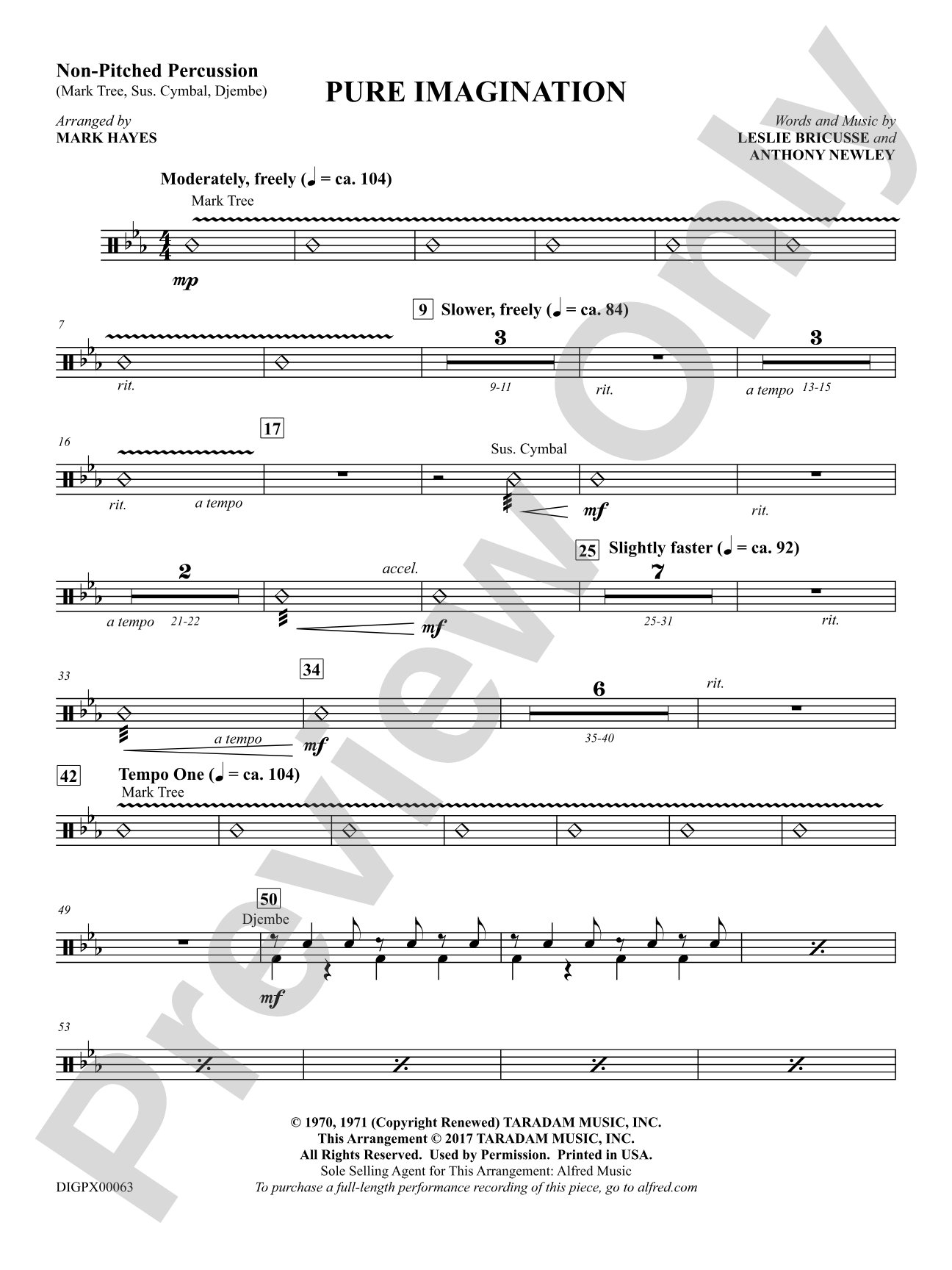

Pure Imagination: 1st Percussion
From Charlie and the Chocolate Factory
Words and music by Leslie Bricusse and Anthony Newley / arr. Mark Hayes
Item: 00-PC-0017797_PC1
$3.00
Pickup currently not available
Description
Originally performed by Gene Wilder in Willy Wonka and the Chocolate Factory, this inspirational ballad shimmers with the Mark Hayes touch. "Come with me, and you'll be in a world of pure imagination!"


Don't just read it, hear it, play along with it, and watch your students grow with it. In MakeMusic Cloud, Pure Imagination: 1st Percussion comes alive with professional accompaniment, adjustable tempo, and built-in practice tools that turn solo practice into real progress.
Open in the Player
Jump straight in and assign it today.
Start Your Free Trial
Open this title and explore the full library in minutes.
Sample Audio
1
Audio File
--:--
0:00
0:00
Sample Video
No sample videos found.
Additional Details
Series:
Alfred Pop Choral Series
Publisher:
Alfred Music
Page Count:
114
SKU:
00-PC-0017797_PC1
Instrumentation:
SoundPax
More about this title
About the Composer: Leslie Bricusse
Leslie Bricusse has shaped the landscape of theatrical and film music across five decades, collaborating with some of the era's most distinctive composers. His work on Willy Wonka and the Chocolate Factory represents a high-water mark of mid-century songwriting: whimsical, emotionally direct, and built to linger in memory. As both lyricist and composer, Bricusse crafted material for stage productions, feature films, and television that balanced commercial appeal with genuine artistry.
Bricusse's gift for conversational lyrics paired with memorable melodies has made his songs enduring staples of the musical theater and popular music repertoire. "Pure Imagination" exemplifies his ability to write material that speaks to audiences of all ages while maintaining sophistication in its harmonic and structural choices.
Why we love this
Mark Hayes' arrangement preserves the song's intimate, introspective character while giving it the harmonic richness and voice-leading sophistication that choirs thrive on performing. The inclusion of instrumental parts and recorded accompaniment means your singers can rehearse independently and hear exactly how their voices should blend into the whole. This is a piece that feels both immediately recognizable and genuinely rewarding to sing.
What to expect
Wistful and dreamy, with an underlying current of gentle optimism. The harmonic landscape is warm and impressionistic, occasionally lifting into unexpected colorful chords that mirror the song's invitation to step into imagination. There's an intimacy here despite the inspirational text; it feels less like a Broadway belt and more like someone confiding a beautiful secret.
Who it's for
Choirs ranging from high school to adult ensembles will find this accessible yet musically substantive. The SoundPax designation indicates flexible voicing, making it suitable for groups with varying voice distributions and sizes. Whether your singers know the movie or not, the song's timeless appeal and Hayes' skilled orchestration make it a natural fit for groups looking to expand beyond traditional choral literature.
How to get the most out of it
- Let the melody breathe in the opening phrase. The song's magic lives in its simplicity, so resist the urge to oversing or add unnecessary dynamic swells in the first chorus.
- Balance texture carefully during moments where different voice parts weave independent lines. Hayes' arrangement often distributes the melody across sections rather than concentrating it in one voice; clarity of line matters more than blend here.
- Use the recorded accompaniment in sectional rehearsals to help singers lock their harmonic context, then gradually move rehearsals toward unaccompanied singing to deepen intonation awareness.
- Shape the dynamic arc across the entire piece rather than treating each verse as a separate unit. The emotional payoff comes from subtle intensification, not dramatic shifts.
How to use it
This pairs beautifully in a concert focused on film music or contemporary popular standards. Consider programming it alongside other Hayes arrangements or in a set exploring how musical theater composers have shaped cinema. The song's introspective quality makes it an effective contrast to more energetic pieces, and its universal recognition can serve as an accessible entry point for audiences less familiar with choral music.
Skills your students will build
- Balancing independent melodic lines across voice sections
- Shaping longer phrases with subtle dynamic control rather than obvious swells
- Singing in close harmony while maintaining individual line clarity
- Responding to harmonic movement that extends beyond functional progressions