
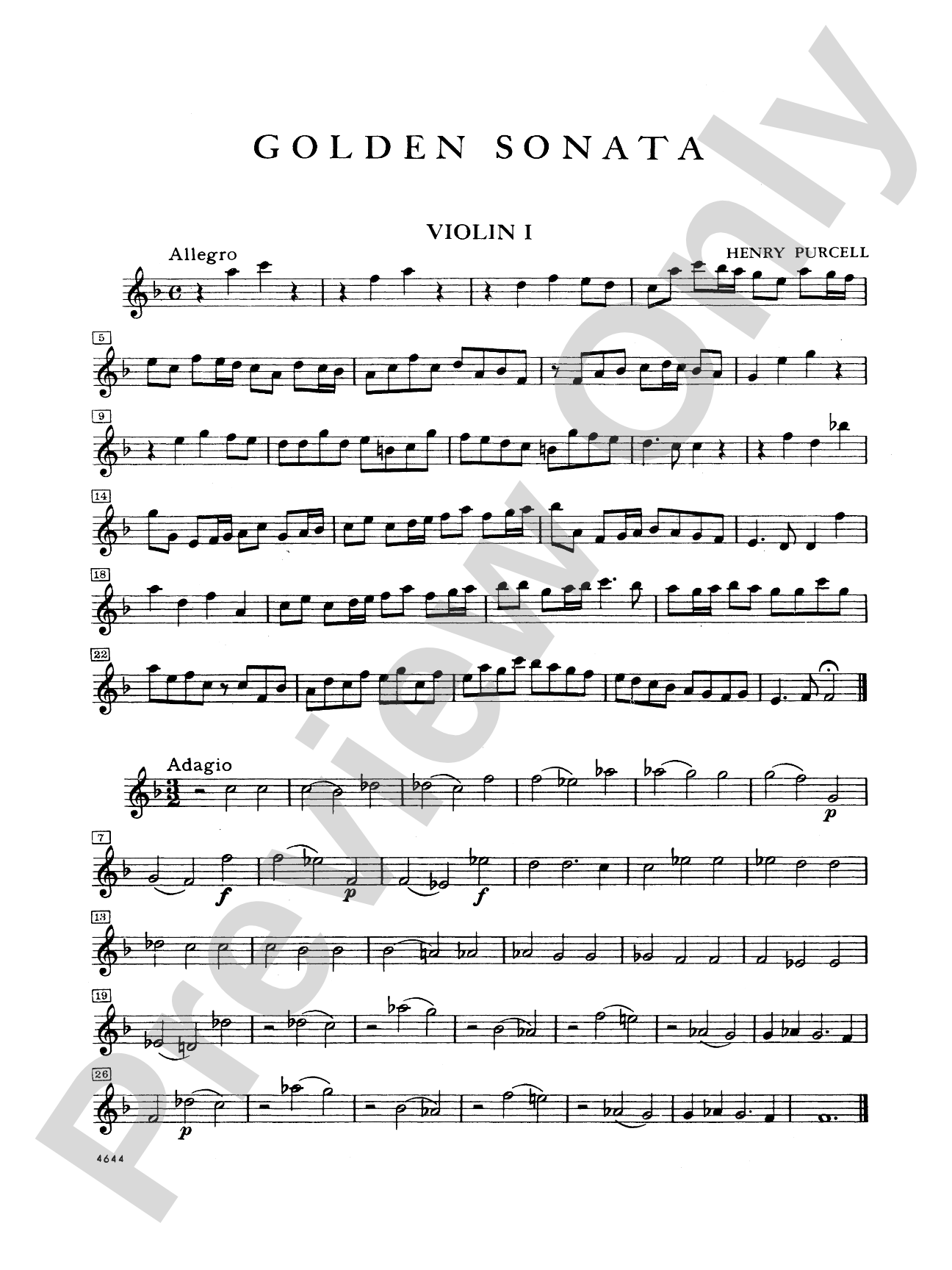
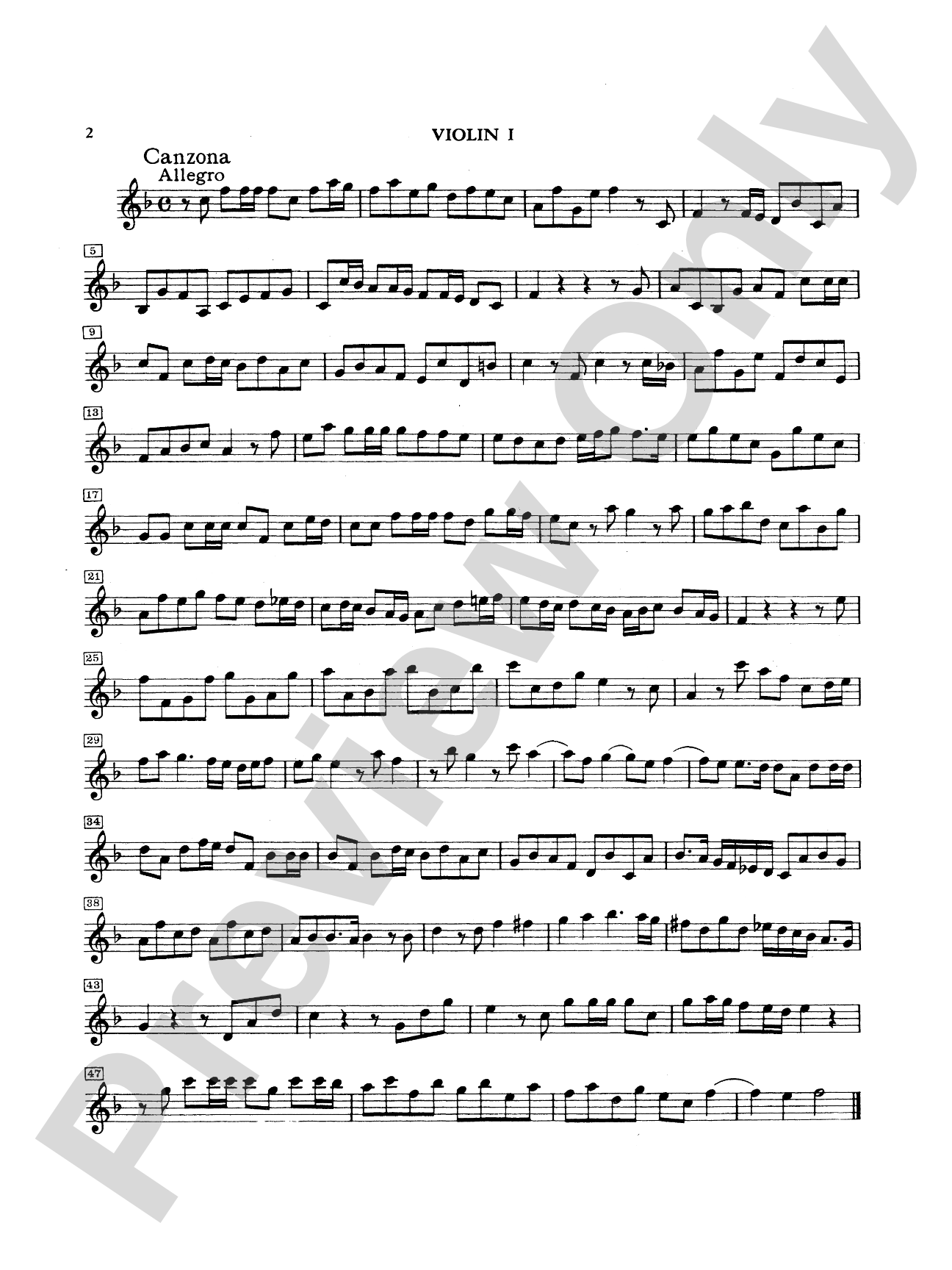
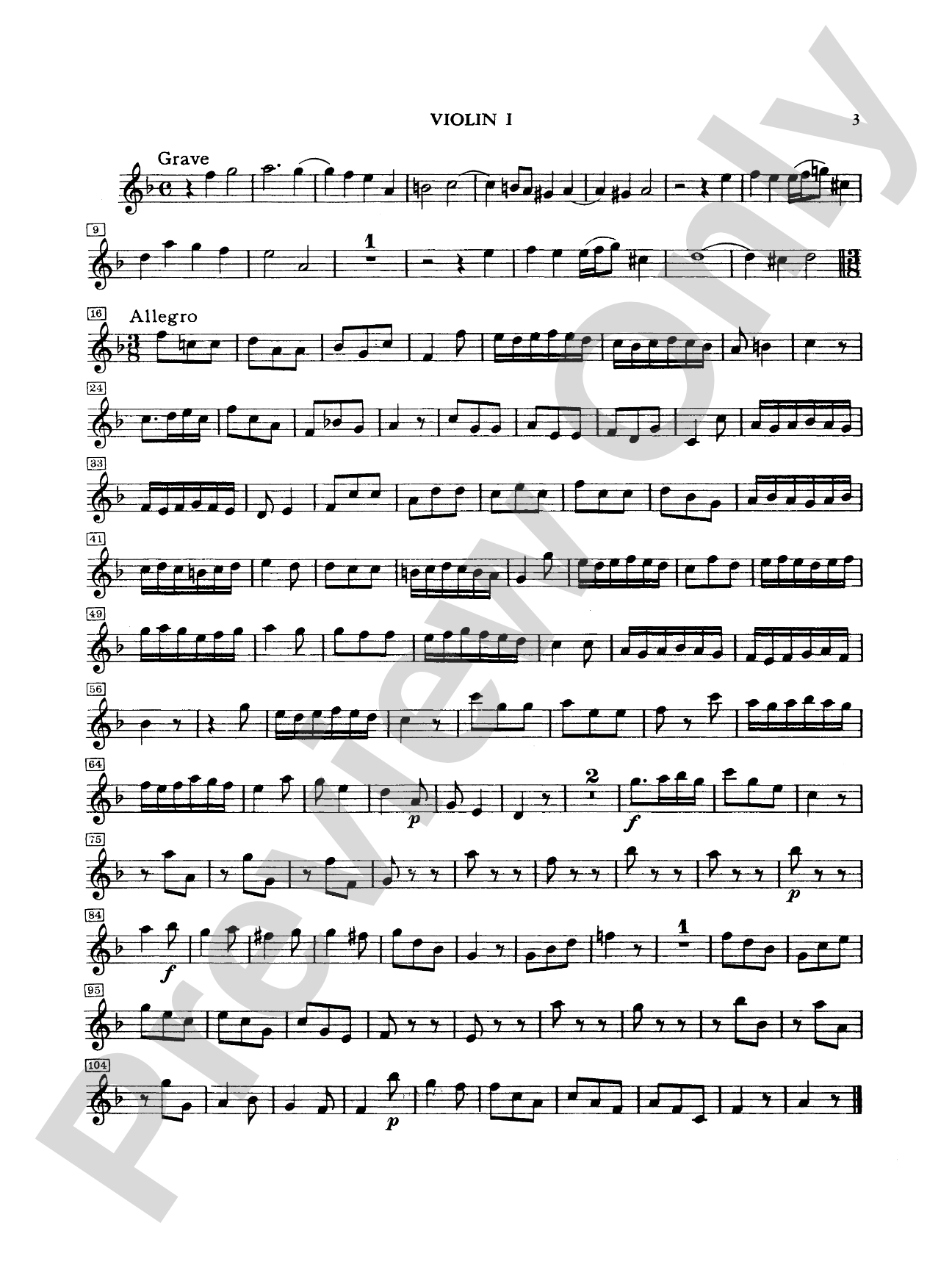


Purcell: Golden Sonata: Violin Book
By Henry Purcell
Item: 00-PK-0003580

$9.99
Pickup currently not available
Buy Extra Parts (Digital PDF Download)
| Product | Price | Quantity |
|---|---|---|
| Purcell: Golden Sonata | $1.99 | |
| Purcell: Golden Sonata | $1.99 | |
| Purcell: Golden Sonata | $1.99 | |
| Purcell: Golden Sonata | $1.99 |
Parts Added to Cart!
Related Items
Golden Sonata: Violin Book |
$9.95
|
View |
Description
A Violin solo for 2 Violins with Piano Accompaniment composed by Henry Purcell.


Don't just read it, hear it, play along with it, and watch your students grow with it. In MakeMusic Cloud, Purcell: Golden Sonata: Violin Book comes alive with professional accompaniment, adjustable tempo, and built-in practice tools that turn solo practice into real progress.
Open in the Player
Jump straight in and assign it today.
Start Your Free Trial
Open this title and explore the full library in minutes.
Sample Audio
No sample audio found.
Sample Video
No sample videos found.
Additional Details
Series:
Kalmus Edition
Publisher:
Alfred Music
Page Count:
24
SKU:
00-PK-0003580
More about this title
About the Composer: Henry Purcell
Henry Purcell (1659-1695) stands as England's greatest Baroque composer and a figure of European significance. His output spans sacred music, theatre works, chamber music, and keyboard compositions, all marked by harmonic sophistication and expressive depth that influenced generations of English composers.
Purcell's chamber works, particularly his sonatas, demonstrate his mastery of counterpoint and his gift for writing idiomatically for strings. The Golden Sonata represents the pinnacle of his instrumental writing, combining technical brilliance with the lyrical warmth that makes his music enduringly rewarding to perform.
Why we love this
This duet showcases writing that sits comfortably in the hands while making real musical demands on both players. The interplay between the two violin parts creates genuine dialogue, and the piano accompaniment provides harmonic grounding without overwhelming the string writing. Contest and festival adjudicators consistently respond to the work's structural clarity and the opportunities it offers for musical maturity.
What to expect
The Golden Sonata unfolds with the measured elegance of Baroque dance rhythms, yet its harmonic language carries an emotional depth that feels almost intimate. The two violins weave together in passages of imitative counterpoint, then separate into lyrical solo moments, creating a sense of musical conversation that feels both formal and genuinely expressive.
Who it's for
This work suits intermediate to advanced violinists who are ready for substantial chamber music with Baroque stylistic requirements. It works equally well for competition preparation, festival performance, or concert programming where two string players collaborate with piano.
How to get the most out of it
- Balance the two violin lines so that the musical conversation remains audible; neither part should dominate, though the material will naturally shift emphasis between players.
- Attend to the figured bass harmony suggested by the piano part, especially at cadential moments, to maintain secure intonation and stylistic phrasing.
- Shape phrases across the barline rather than emphasizing downbeats; Baroque phrasing breathes with the harmonic rhythm, not the meter.
- Coordinate vibrato carefully between the two violins to create blend without losing clarity of individual line.
How to use it
Include this in a Baroque chamber music concert or string recital where it can stand alone as a substantial work or anchor a program of instrumental duets. The piece also serves effectively in competition contexts where adjudicators value both technical clarity and interpretive maturity. Consider pairing it with other Purcell chamber works or with contemporaries like Corelli to create thematic programming around English Baroque instrumental writing.
Skills your students will build
- Baroque articulation and phrasing conventions
- Counterpoint realization and linear independence between parts
- Sustained intonation in fast passage work and scalar passages
- Collaborative listening and ensemble balance in duo texture
- Musical narrative and structural awareness across a multi-movement work