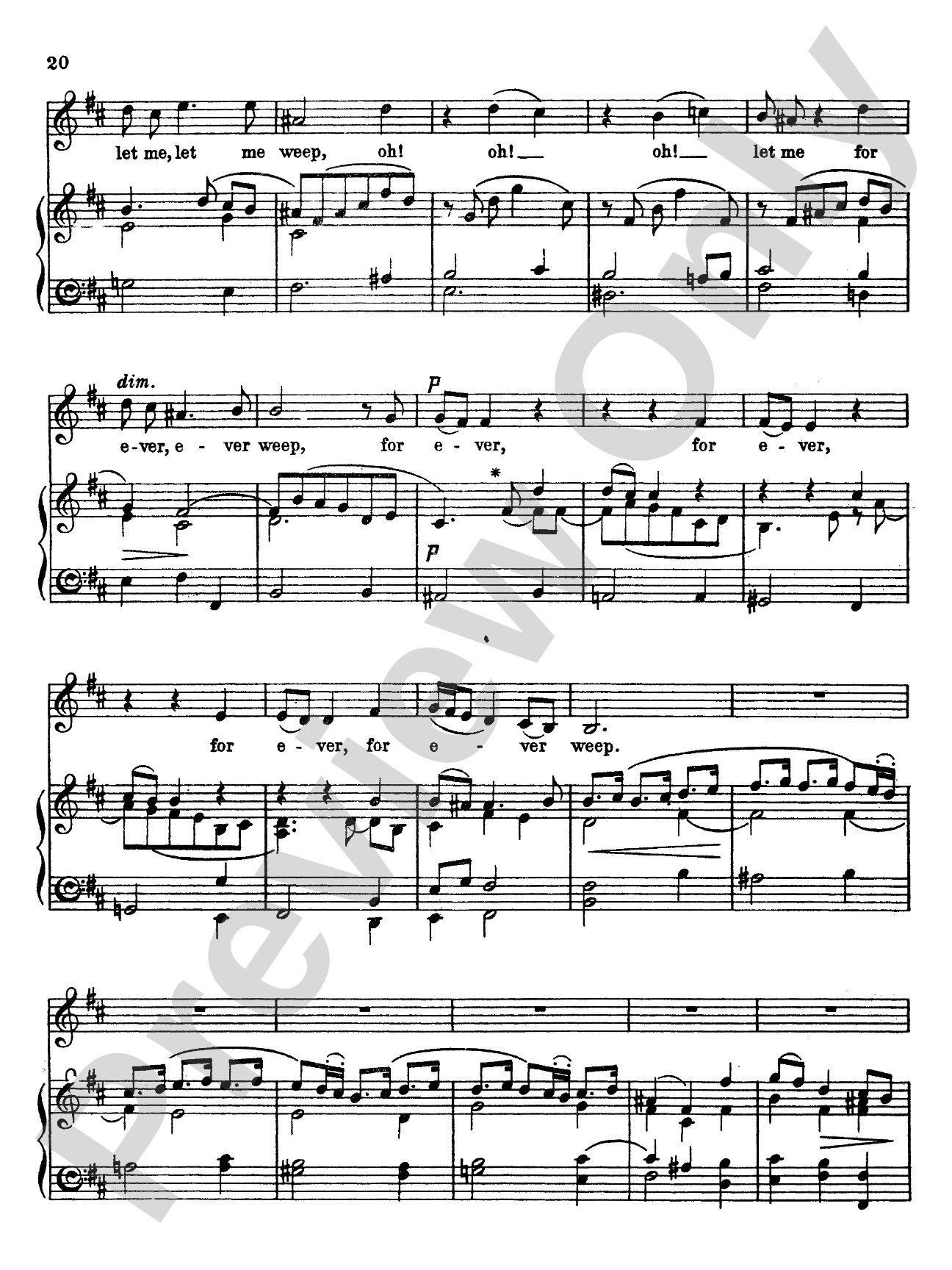
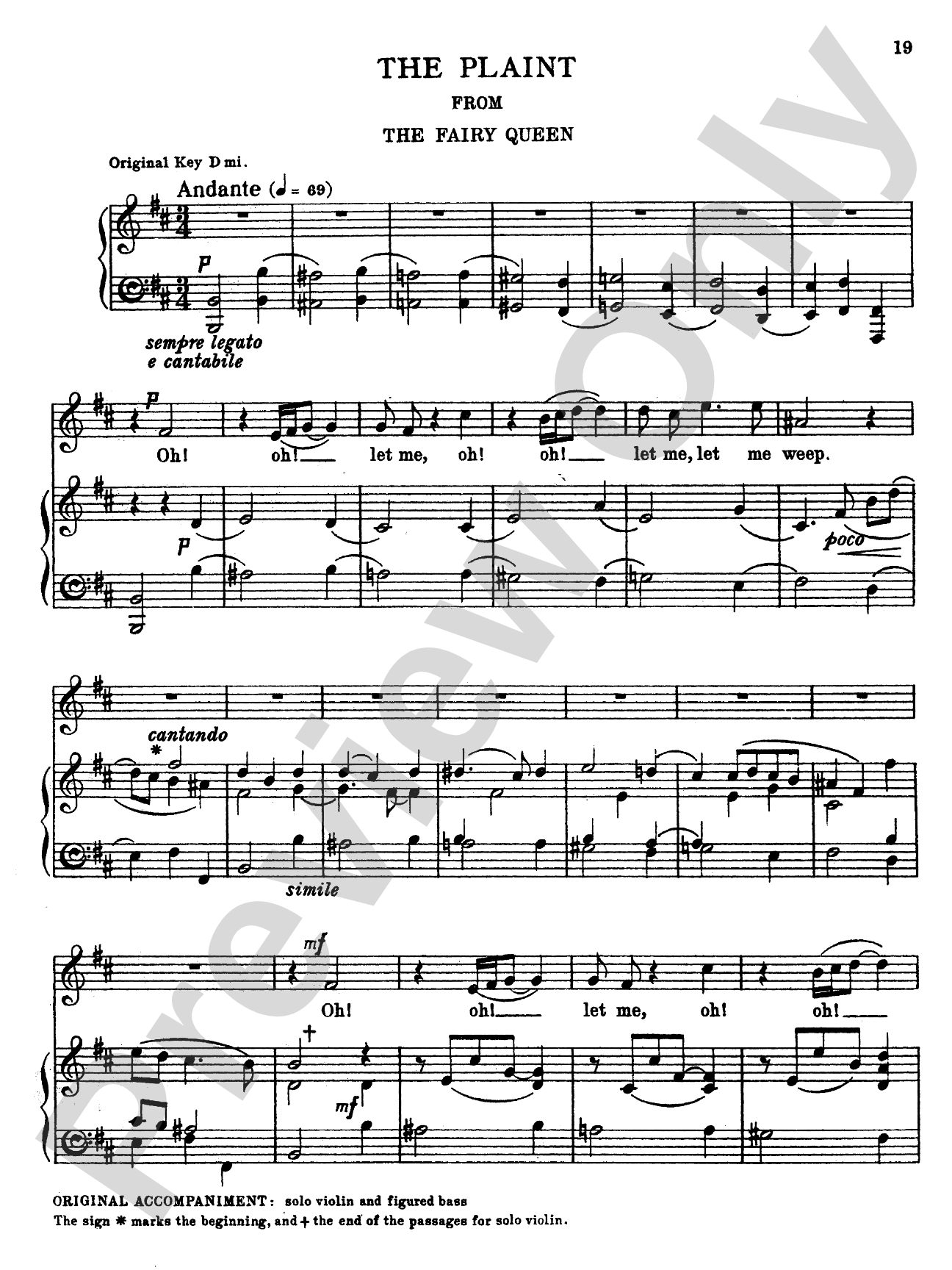
Purcell: Fifteen Songs and Airs for Contralto or Baritone from the Operas and Masques Sheet Music Preview

Purcell: Fifteen Songs and Airs for Contralto or Baritone from the Operas and Masques

For Contralto or Baritone with English Text (Vocal Score)

By Henry Purcell

Item: 00-PC-0011581

Digital Download
$0.99
Description
A collection of vocal solos composed by Henry Purcell.

Don't just read it, hear it, play along with it, and watch your students grow with it. In MakeMusic Cloud, Purcell: Fifteen Songs and Airs for Contralto or Baritone from the Operas and Masques comes alive with professional accompaniment, adjustable tempo, and built-in practice tools that turn solo practice into real progress.

Sample Audio
No sample audio found.
Sample Video
Additional Details
Series: Kalmus Edition
Publisher: Alfred Music
Page Count: 76
SKU: 00-PC-0011581

More about this title

About the Composer: Henry Purcell

Henry Purcell (1659-1695) stands as England's greatest Baroque composer and a defining voice in the development of English opera. Working primarily in London during the Restoration period, he composed extensively for the theater, creating music that blended Italian harmonic sophistication with English melodic sensibility. His operas and masques remain touchstones for vocal training and historical performance.

Purcell's gift for word-setting and dramatic expression made him a favorite of librettists and performers alike. He understood the human voice with remarkable clarity, writing passages that challenge the singer technically while remaining intensely singable. His influence on subsequent English composers was profound, and his music continues to reward careful study and sustained interpretive engagement.

Why we love this

These solos capture Purcell at his most theatrically inventive, drawing from his major stage works and offering contraltos and baritones genuine dramatic material rather than generic concert songs. The range of character and mood across the fifteen pieces gives singers room to develop interpretive nuance and understand Baroque text-painting in a practical, performance-ready context. Programming selections from this collection signals serious musicianship and opens conversations about English vocal tradition.

What to expect

These songs inhabit the theatrical world of Restoration England, full of longing, defiance, and emotional directness. Whether lamenting loss or celebrating love, Purcell's melodies cut straight to human feeling, supported by bass lines that ground the voice in harmonic clarity and unexpected turns. The music feels both immediate and timeless, rewarding performers who commit fully to the text.

Who it's for

Contraltos and baritones preparing recital repertoire or seeking Baroque material with dramatic substance and historical significance. Voice teachers working with intermediate to advanced singers who are ready to engage with period style and word-painting as compositional tools rather than decorative elements.

How to get the most out of it

  • Attend carefully to Purcell's bass figures and harmonic language when preparing; they often contain dramatic information that shapes phrasing and emotional contour.
  • Shape phrases around the natural stress of the English text rather than forcing lyrical arches; Purcell's settings reflect speech rhythm in sophisticated ways.
  • Explore the full range of vocal color available in your voice; these airs demand flexibility between lyrical passages and declamatory sections within single pieces.
  • Balance ornamentation with clarity; rapid passagework should articulate the text, not obscure it.

How to use it

Build a recital around selections from this collection, pairing Purcell with works by his English contemporaries or with Continental Baroque composers to illustrate stylistic exchange. A single aria works beautifully as part of a varied vocal recital program, offering the historical depth and interpretive challenge that educated audiences expect. Consider programming multiple pieces as a group to showcase the range of Purcell's dramatic invention across a single concert.

Skills your students will build

  • Text-painting and word-setting interpretation in Baroque style
  • Managing rapid passagework while maintaining textual clarity
  • Harmonic literacy through engagement with figured bass and Purcellian harmony
  • Dramatic characterization and emotional specificity within formal song structures
  • Ornamentation and embellishment historically appropriate to Restoration English opera

You May Also Like