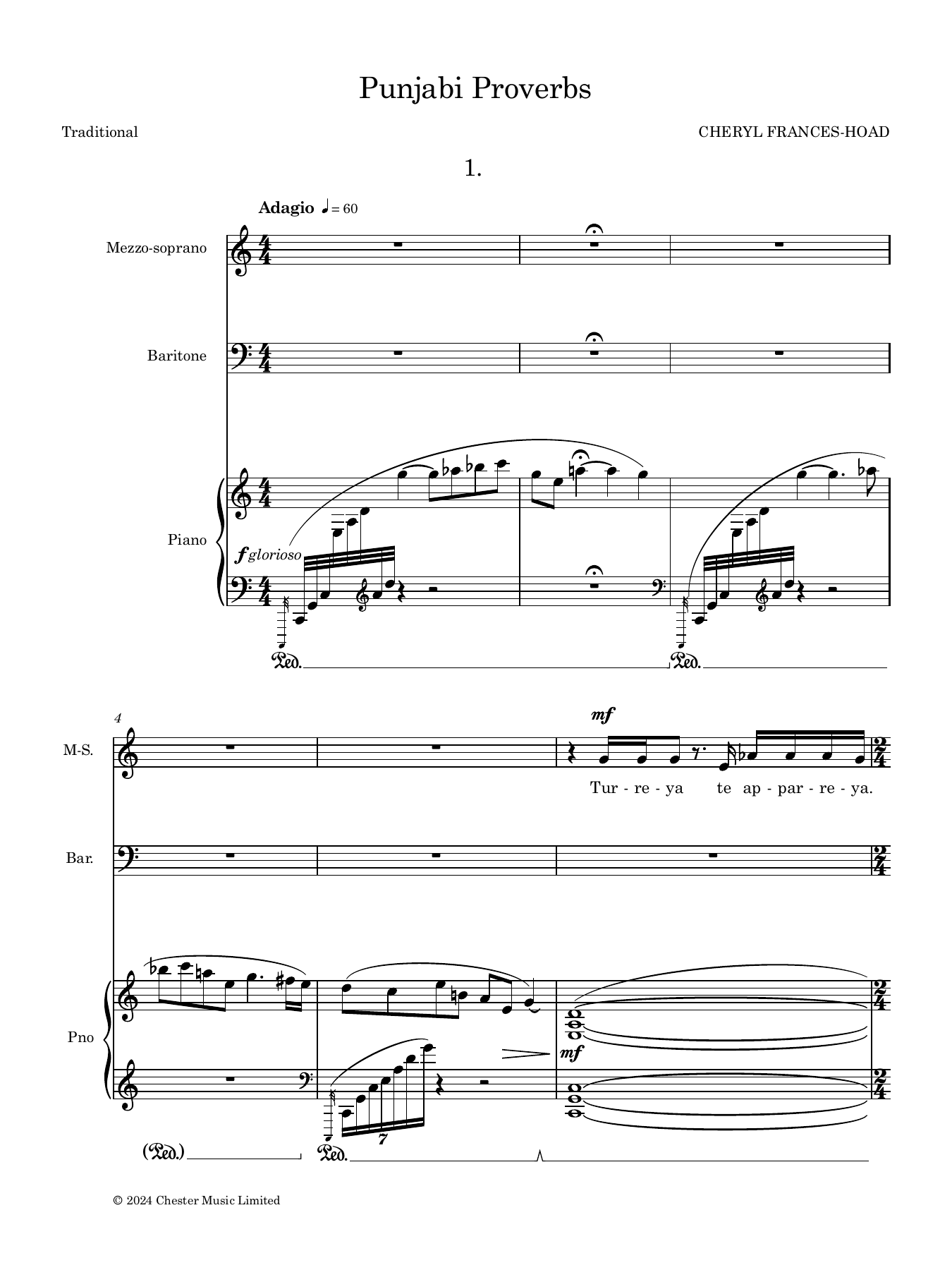
Punjabi Proverbs Sheet Music Preview

Punjabi Proverbs: Piano Vocal

By Cheryl Frances-Hoad

Item: 35-DS01948198

Digital Download
$18.99
Description

Punjabi Proverbs: Piano Vocal isn't in MakeMusic Cloud just yet...but it could be. Let us know you'd like to see it, and you'll help shape what comes next. In the meantime, start a free trial and dive into thousands of interactive titles your students can play along with today.

Sample Audio
No sample audio found.
Sample Video
Additional Details
Publisher: Hal Leonard
Page Count: 41
SKU: 35-DS01948198

More about this title

About the Composer: Cheryl Frances-Hoad

Cheryl Frances-Hoad is a composer whose work bridges classical traditions with multicultural musical narratives. Her compositions often draw from cultural proverbs and philosophical texts, translating them into vocal music that demands both technical precision and interpretive depth from performers.

Why we love this

Frances-Hoad's setting of Punjabi wisdom creates a compelling vehicle for exploring text-music relationships. The piano part provides sophisticated harmonic support while the vocal line unfolds with natural phrasing, making this a strong choice for advanced singers developing artistry beyond pure technique.

What to expect

Each proverb unfolds with quiet authority, drawing strength from cultural wisdom rather than dramatic gesture. The music respects the weight of the words while allowing the piano to create atmospheric context, producing moments of both introspection and surprising harmonic richness.

Who it's for

This cycle suits advanced high school vocalists and confident college-level singers ready to engage with contemporary classical vocal writing. Collaborative pianists will find the part rewarding for its textural variety and the interplay it demands with the voice.

How to get the most out of it

  • Study the meaning of each proverb before learning the notes. Your interpretation of the text will shape your vocal color and phrasing far more than the score markings alone.
  • Pay close attention to the relationship between the piano and voice; they often move in counterpoint rather than simple accompaniment patterns, which requires careful ensemble listening.
  • Experiment with dynamic contrast across the collection. Treating each proverb as its own miniature character study rather than a uniform recital set will sustain listener engagement.

How to use it

Include this in a recital focused on contemporary song cycles or as part of a program exploring music rooted in world cultures and literatures. The substantial length makes it suitable as a complete first half or as a meaningful closing statement to a broader concert narrative.

Skills your students will build

  • Interpreting text with musical sensitivity and cultural awareness
  • Managing longer-form vocal works with consistent focus and energy
  • Collaborating with piano through contrapuntal and non-traditional accompanimental textures
  • Sustaining vocal line through varied harmonic and melodic language

You May Also Like