Edvard Grieg (1843-1907) was a Norwegian composer whose gift for melody and harmonic color made him one of the most performed Romantic era composers. His prolific output of piano works reveals a composer deeply invested in exploring the instrument's expressive potential, from grand gestural works to intimate character pieces that reward both performer and listener with their accessibility and emotional authenticity.
Why we love this
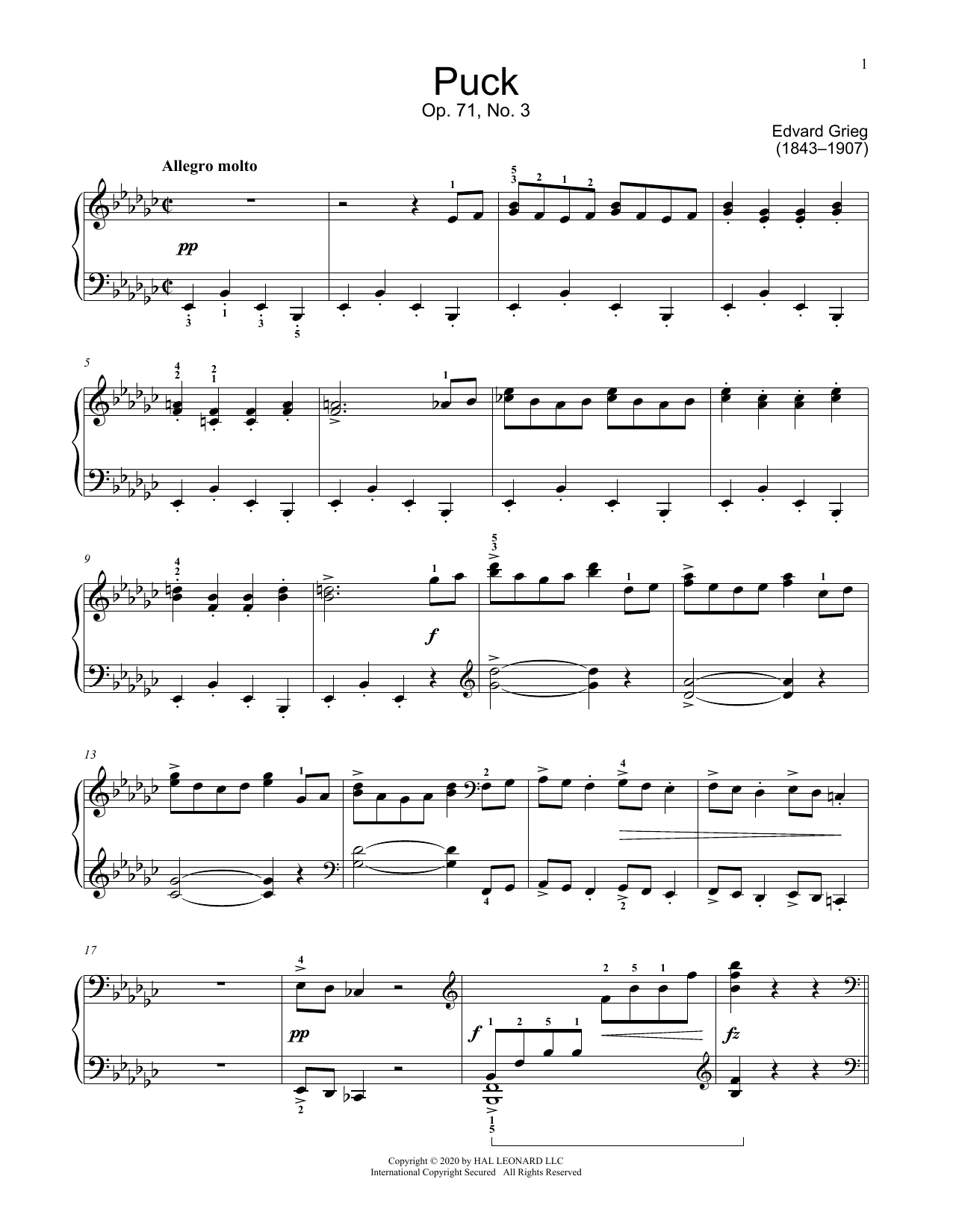
Grieg's character pieces have an uncanny ability to sound more sophisticated than their technical demands suggest. Puck captures playful mischief and delicate texture in a four-page package that fits real recital programs and student portfolios without requiring extreme virtuosity.
What to expect
Puck conjures the spirit of mischievous energy, darting around with unpredictable gestures and sudden shifts in color. The piece breathes with the lightness of a sprite, never settling too long in one emotional space, inviting the performer to embrace playfulness without sacrificing musicality.
Who it's for
This piece works beautifully for intermediate pianists developing their interpretive voice and comfort with character pieces. It also suits advanced students building a diverse recital repertoire that balances technical display with genuine musical storytelling.
How to get the most out of it
Lean into the restless rhythmic energy of the opening; resist the urge to smooth it into anything too polished. The piece lives in its fidgety charm.
Shape the dynamic shifts with precision. Grieg's contrasts between soft and emphatic passages define the character, so treat each marking as essential rather than decorative.
Keep the tempo buoyant but not rushed. A sense of forward motion matters more than taking it fast; clarity of texture will suffer if you prioritize speed.
How to use it
Pair this with other Grieg character pieces for a thematic concert exploring Scandinavian Romanticism, or use it as a palette cleanser between heavier Classical era works and Impressionistic repertoire. It works equally well as a student recital highlight or as part of a themed program on narrative and character in piano literature.
Skills your students will build
Interpreting character and narrative through tempo and dynamic shaping
Managing rapid articulation patterns and rhythmic precision
Pedal control in passages where clarity and atmosphere must coexist
Balancing multiple textural layers simultaneously
You May Also Like
Scan to Complete Your Purchase
Use your phone's camera to scan the code below
You'll log in on your phone and the order will be added to your account