
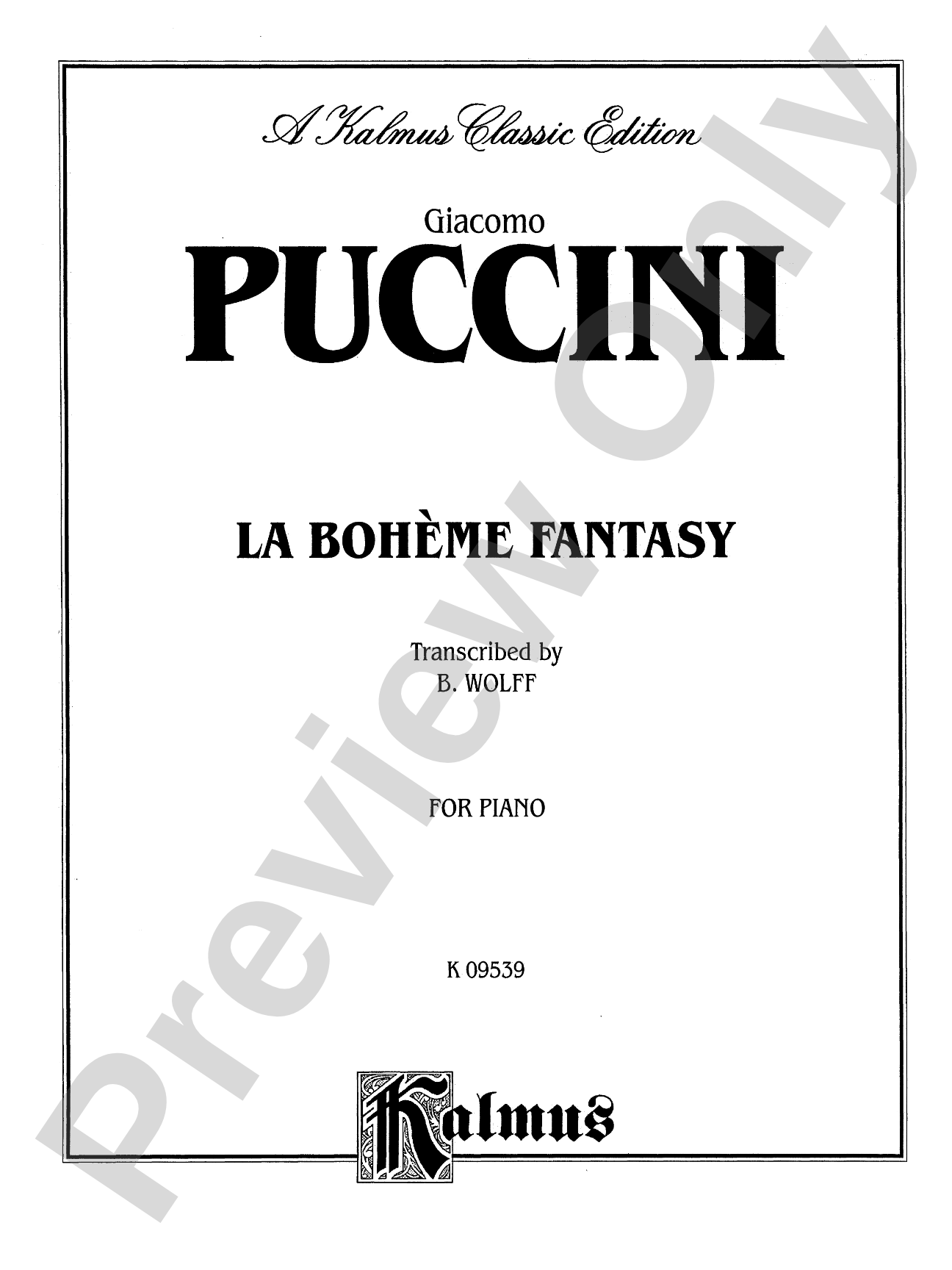

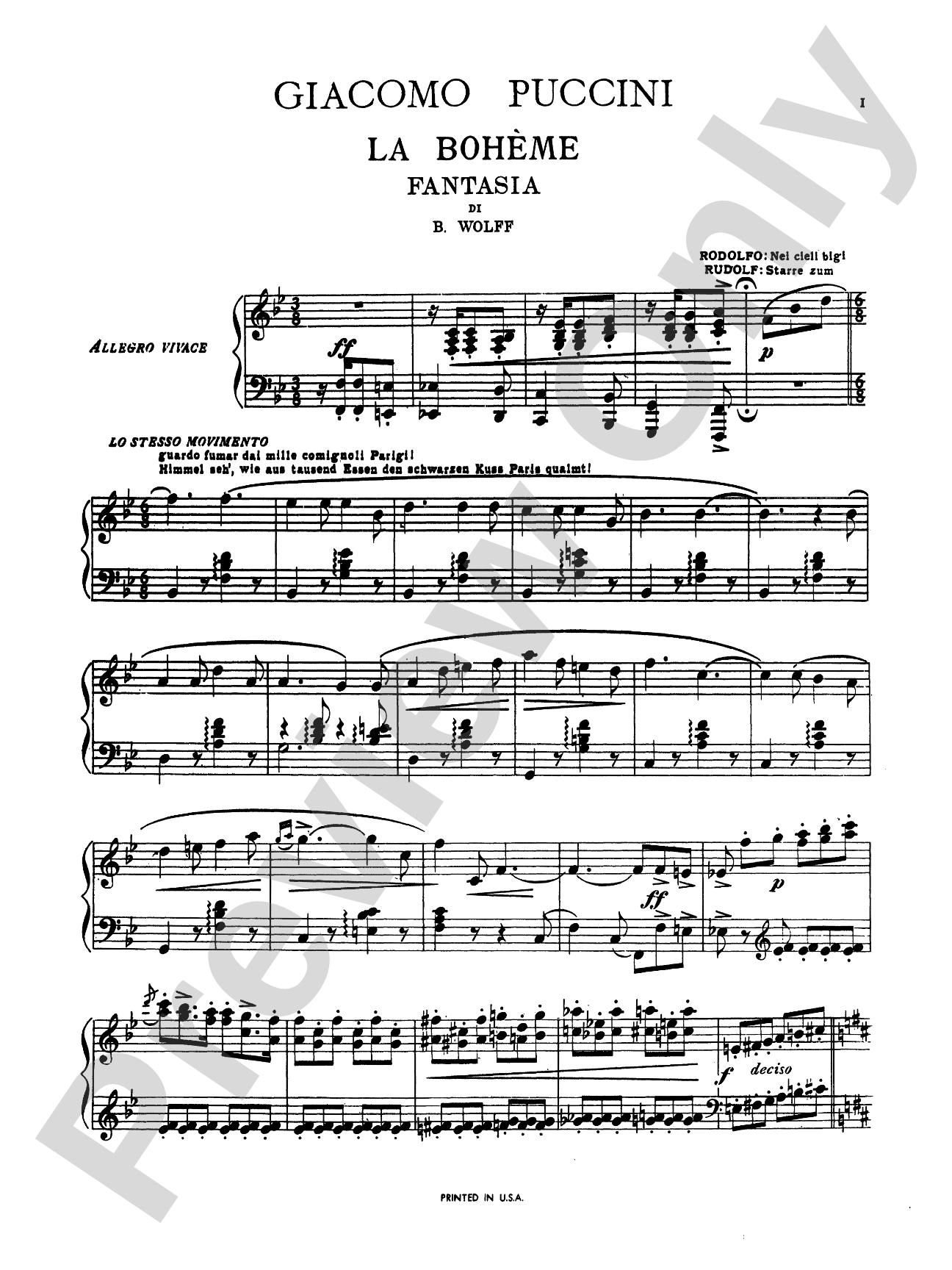
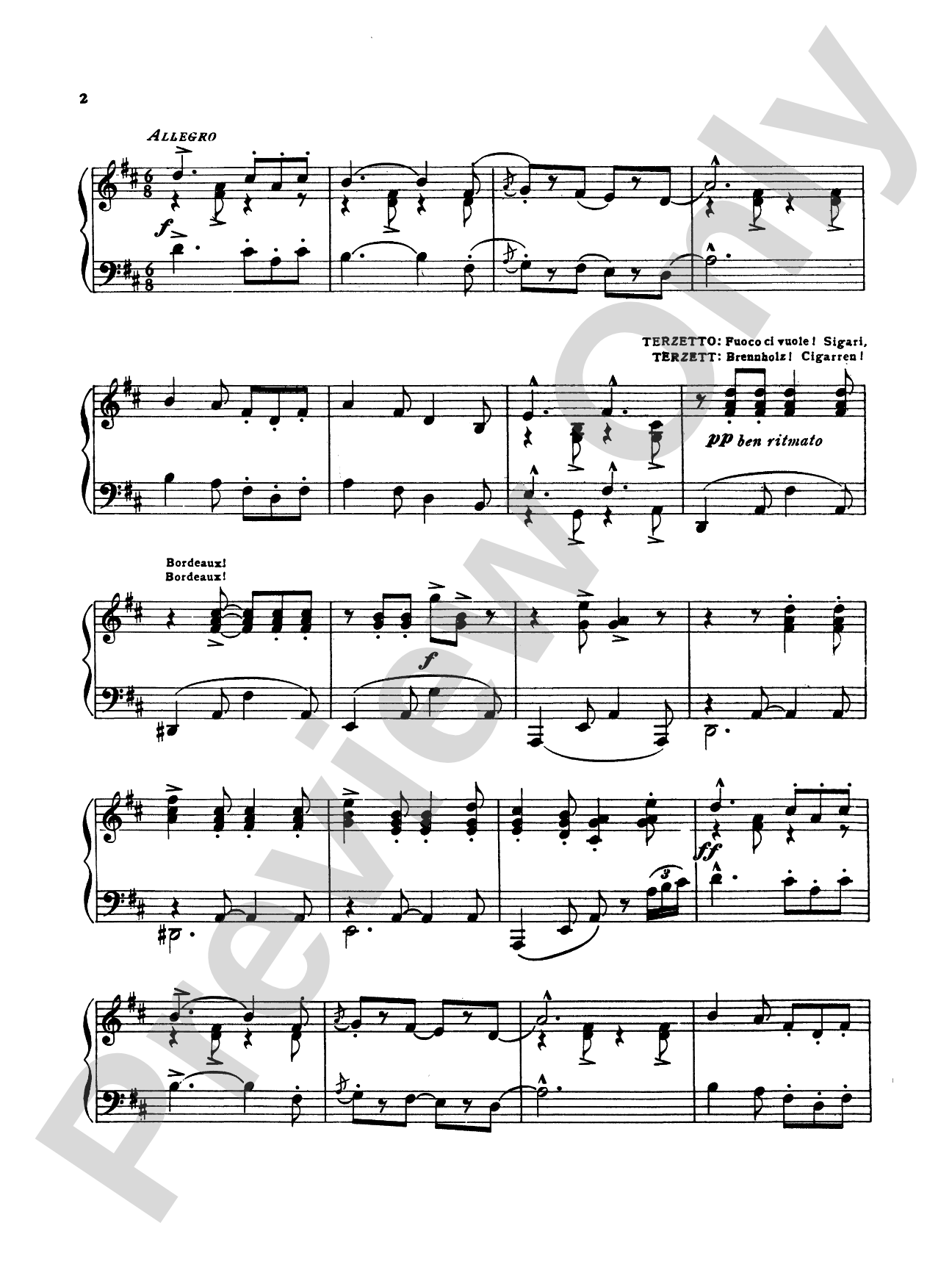
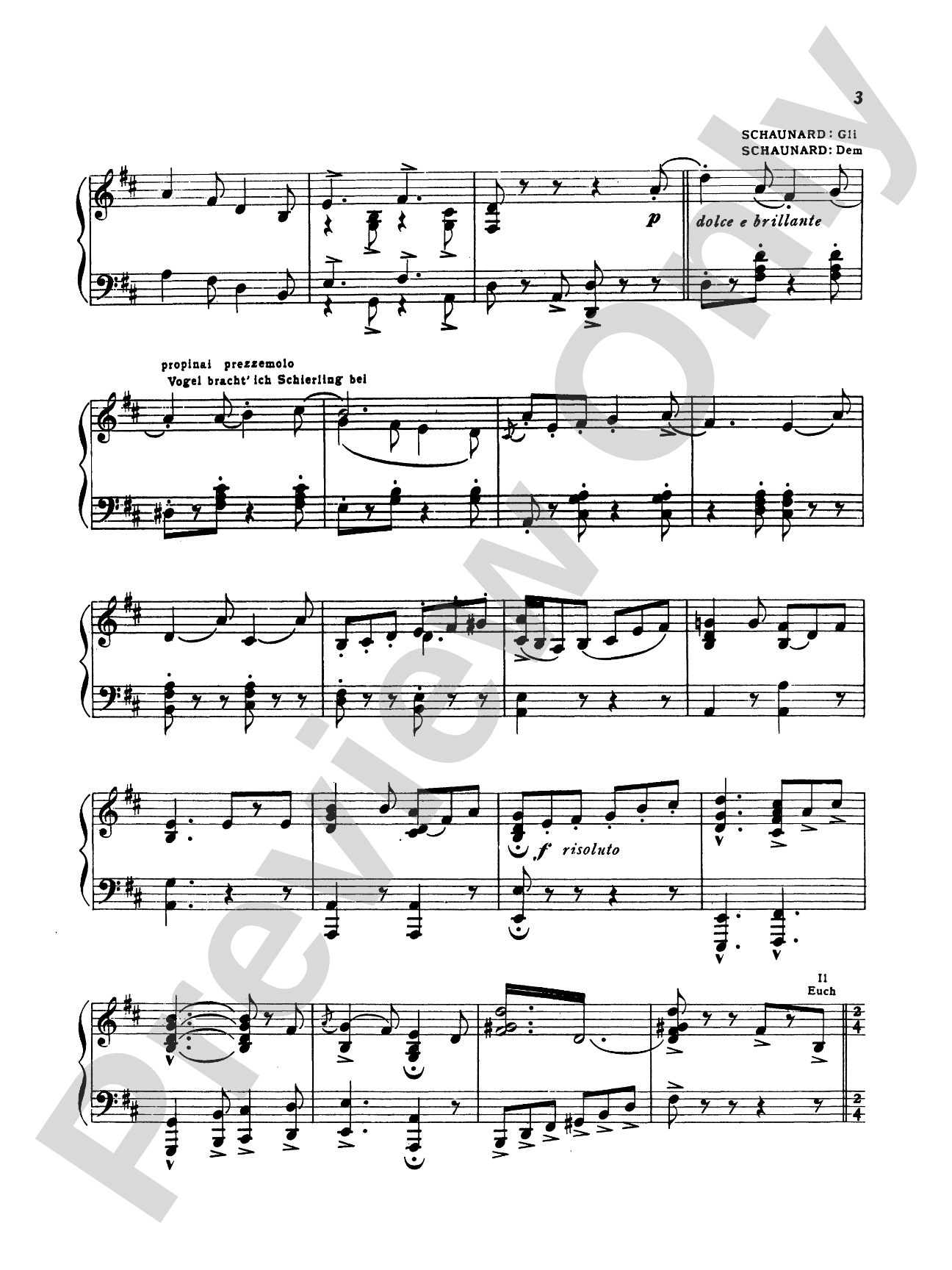
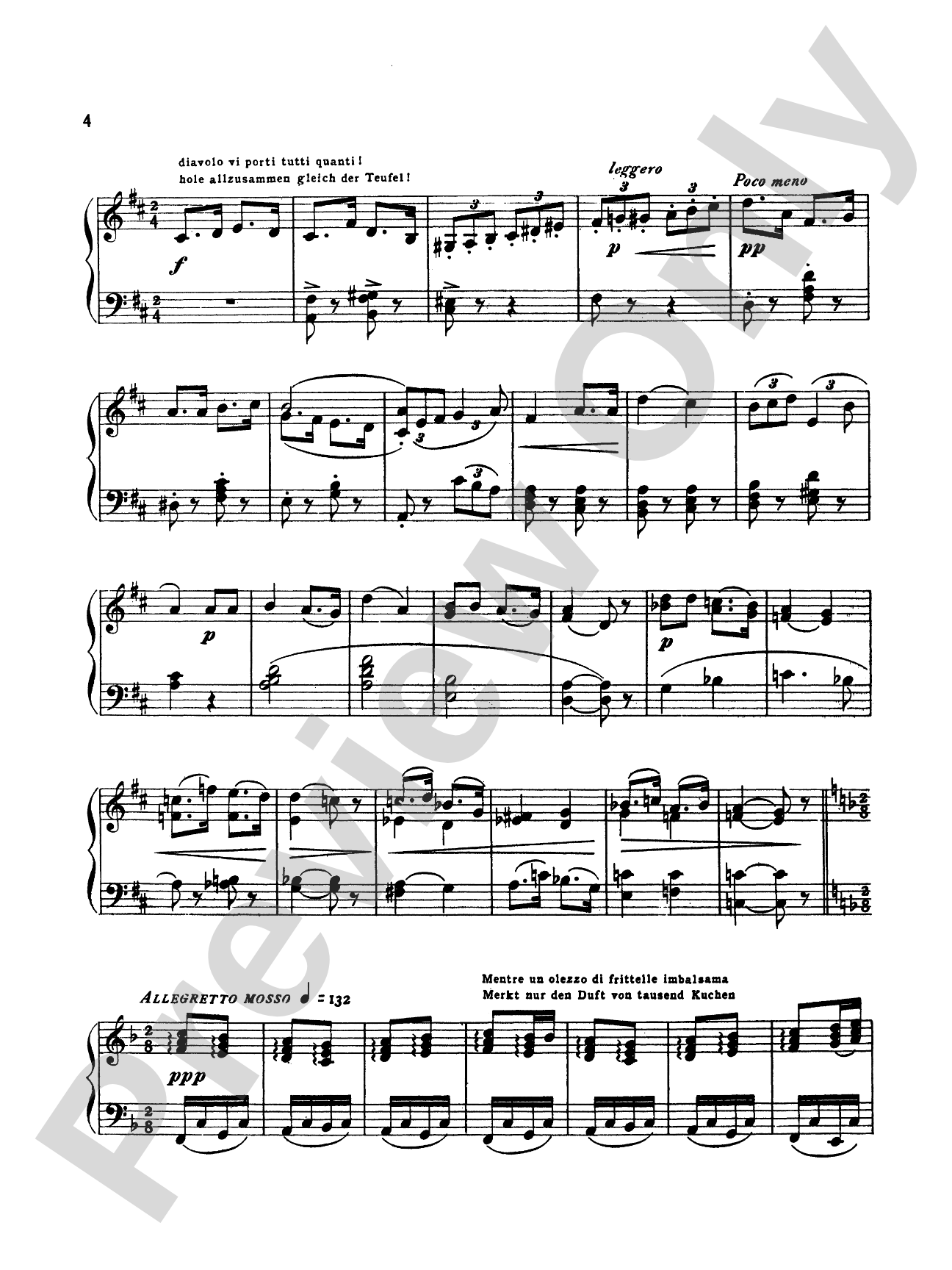
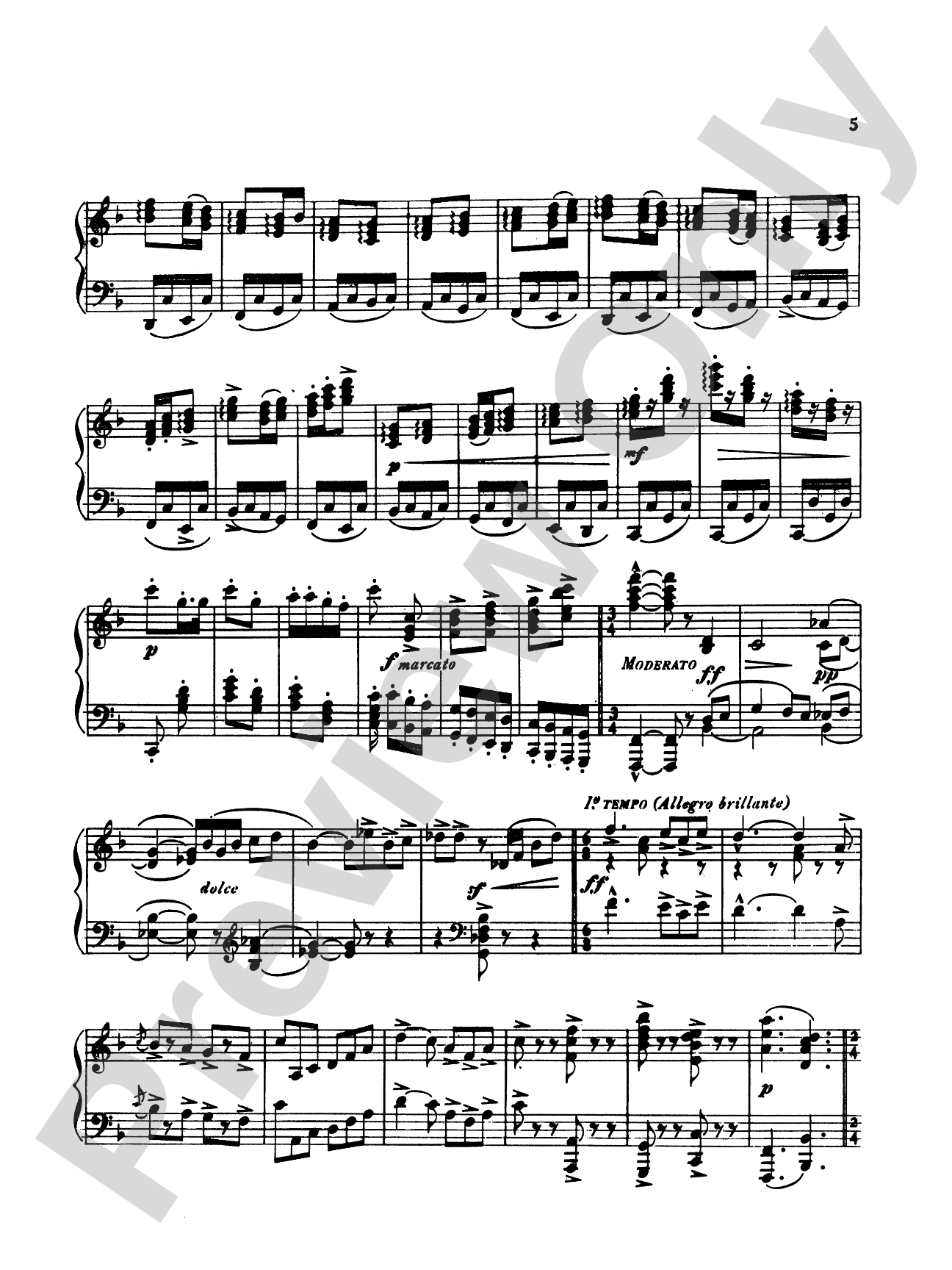
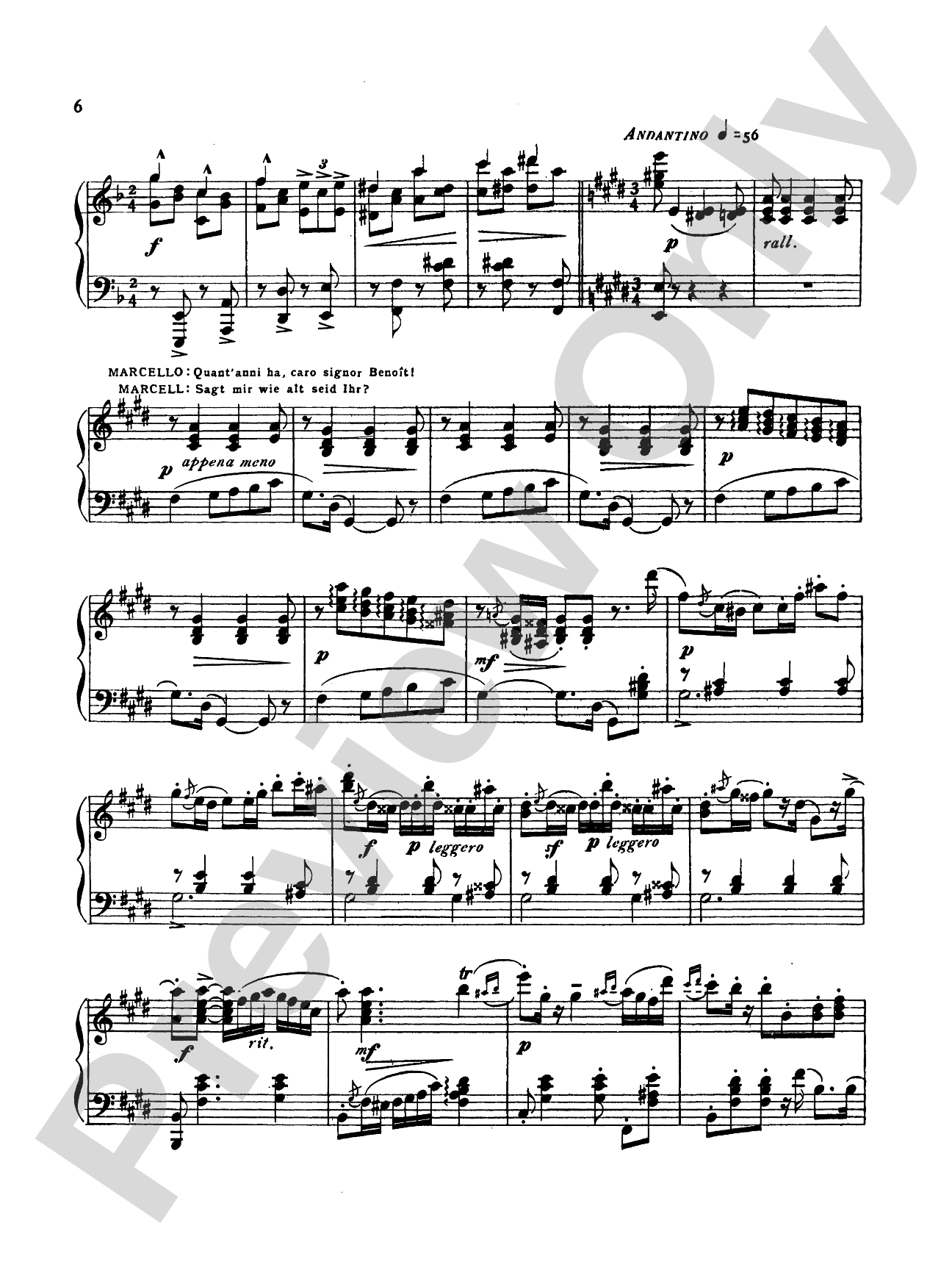
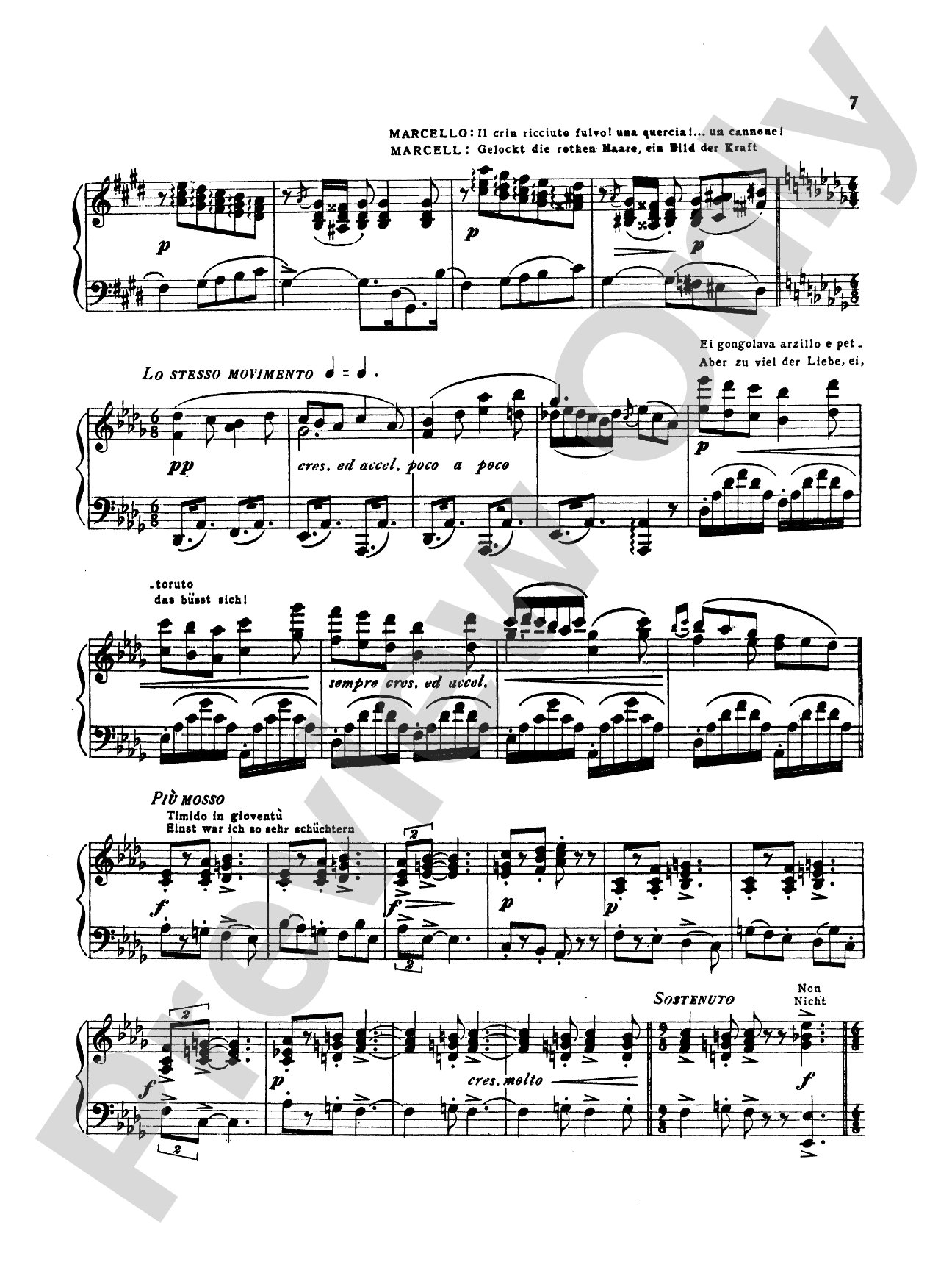
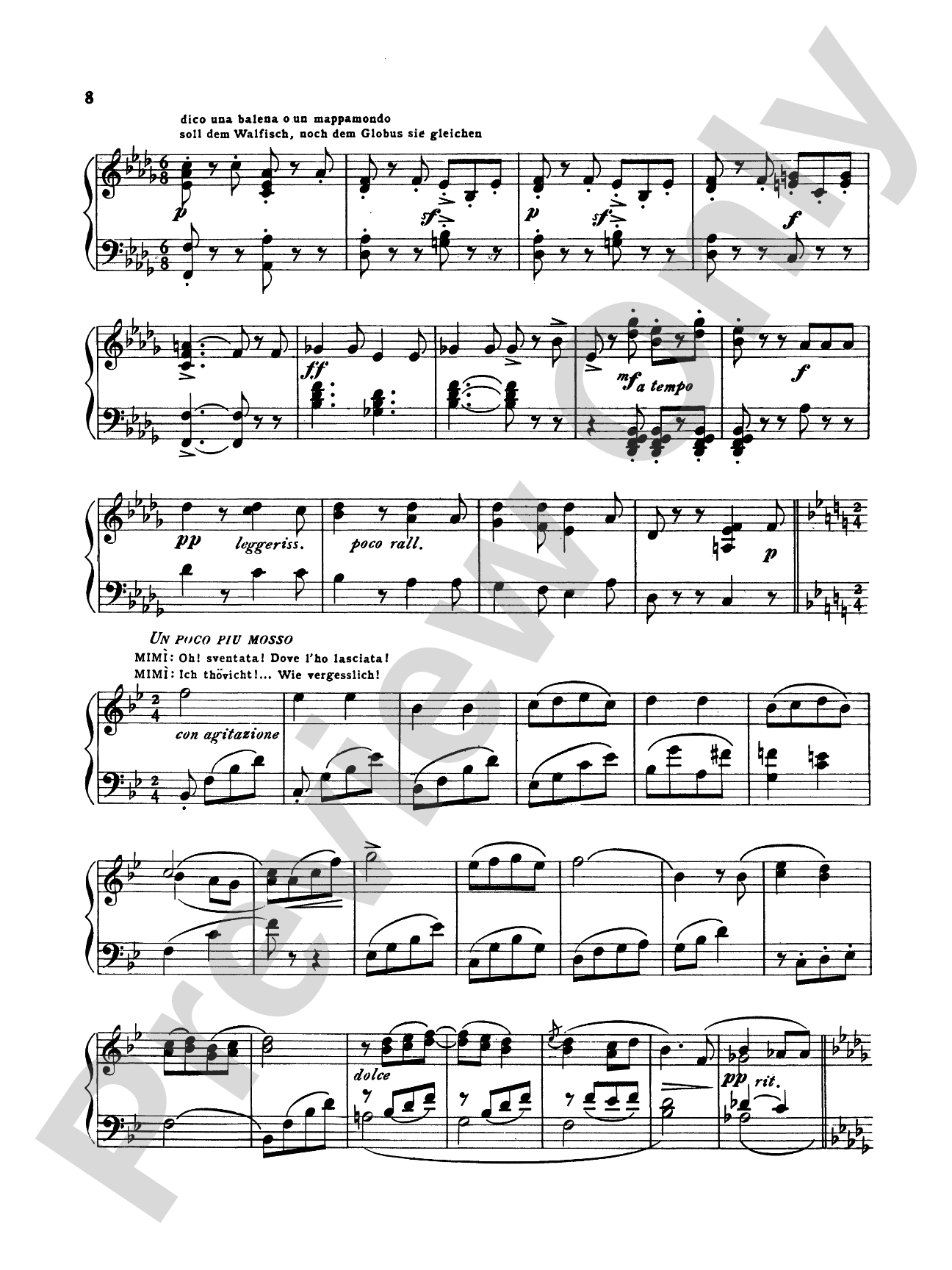
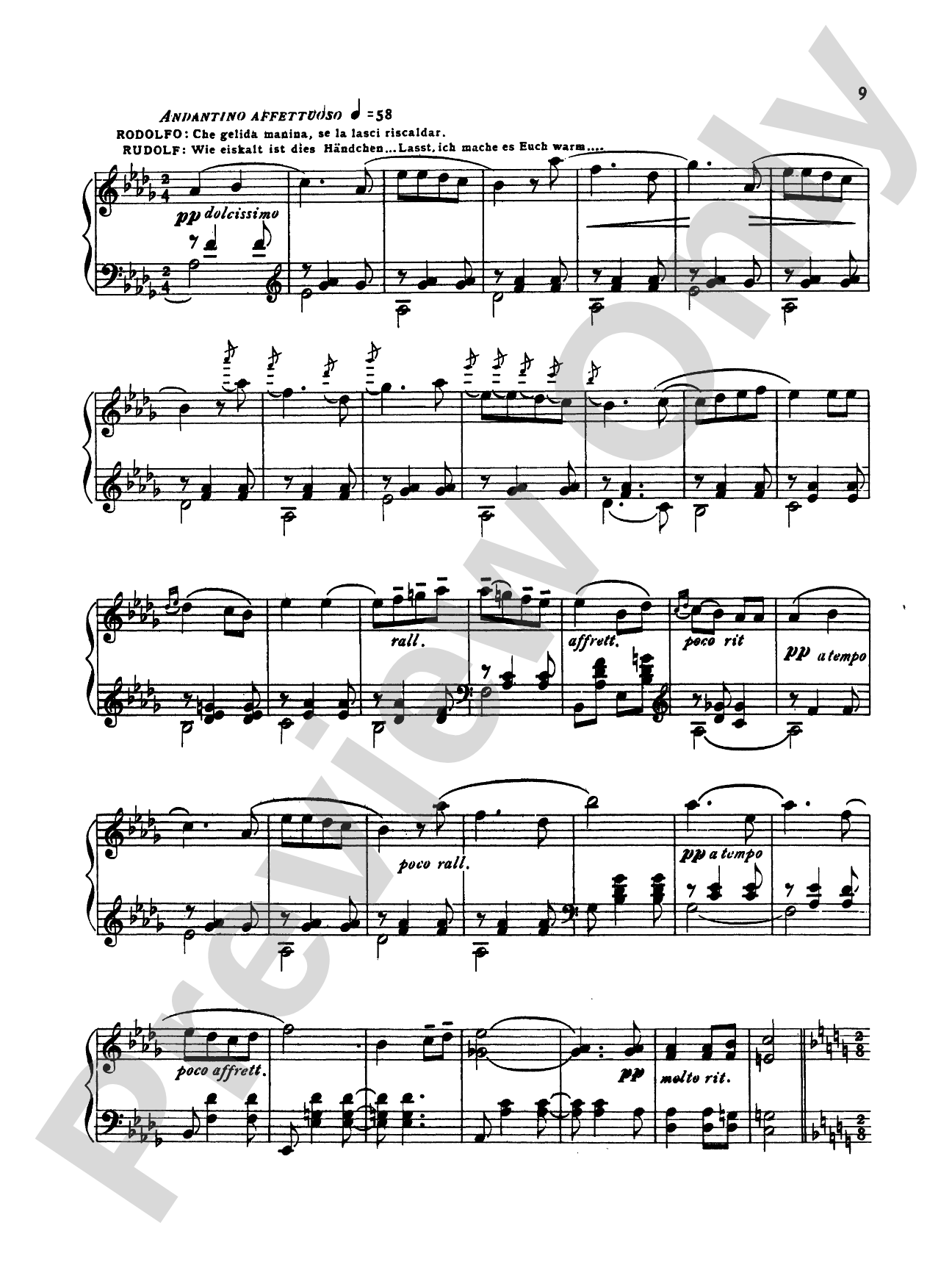
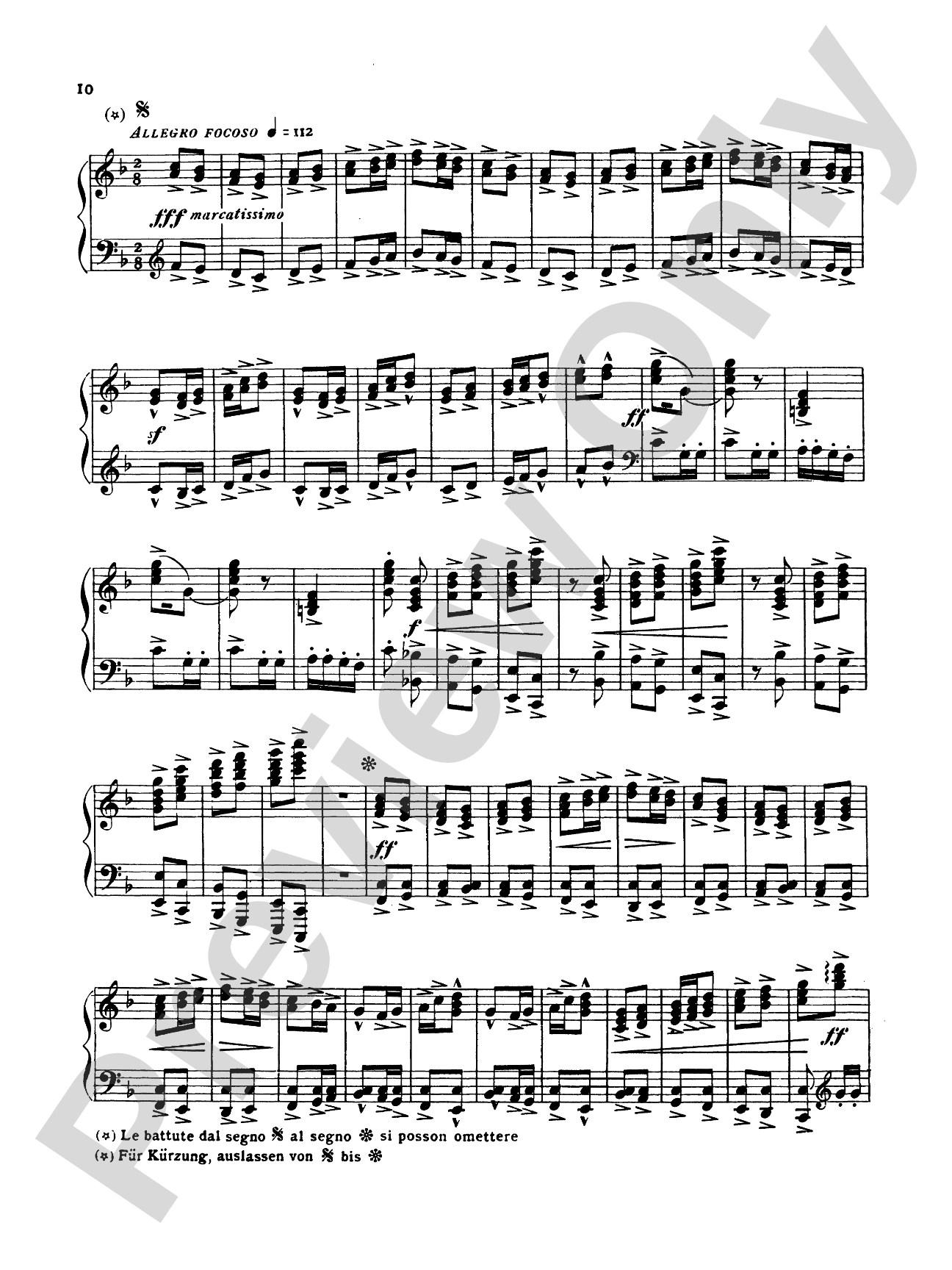
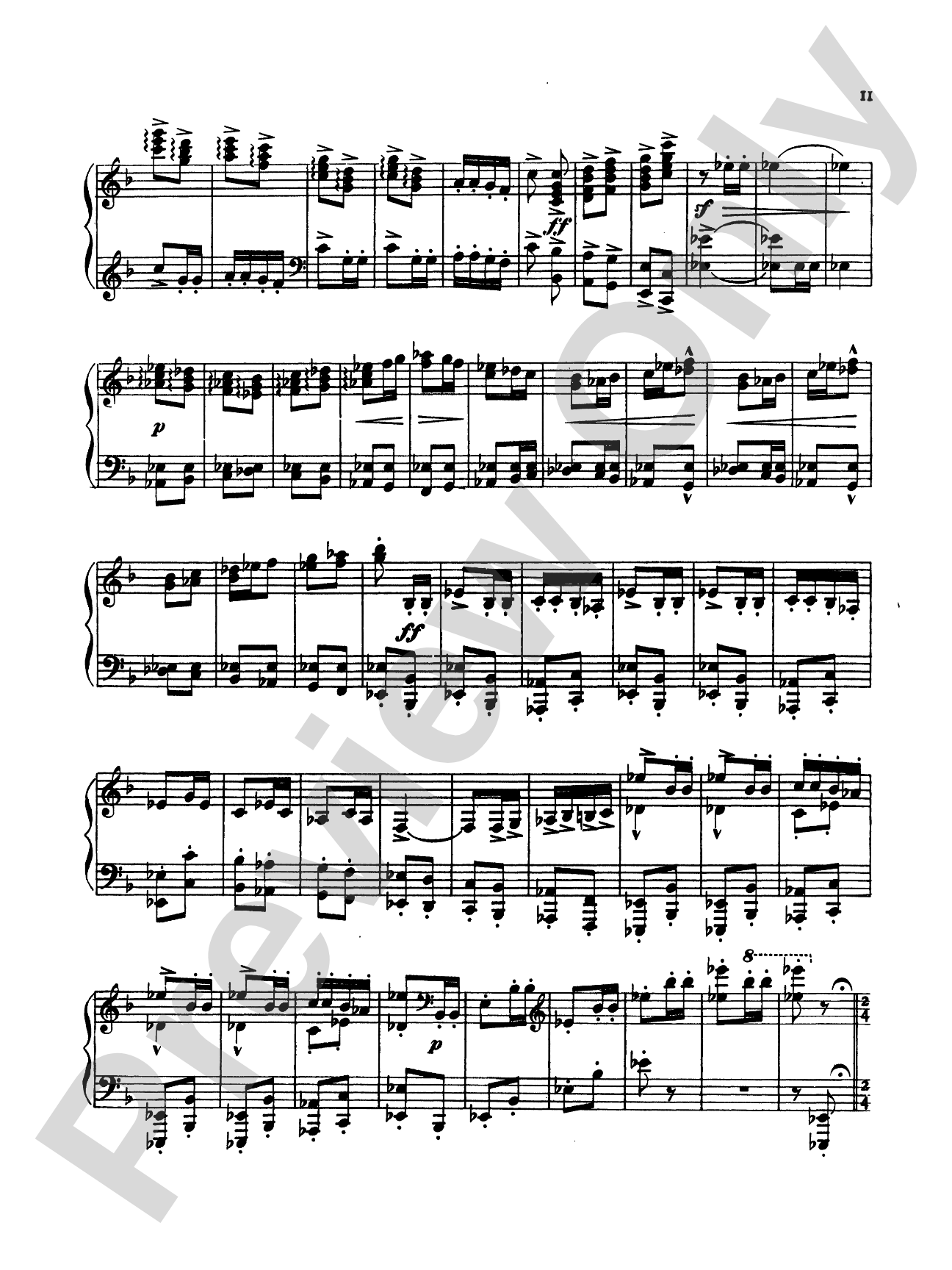
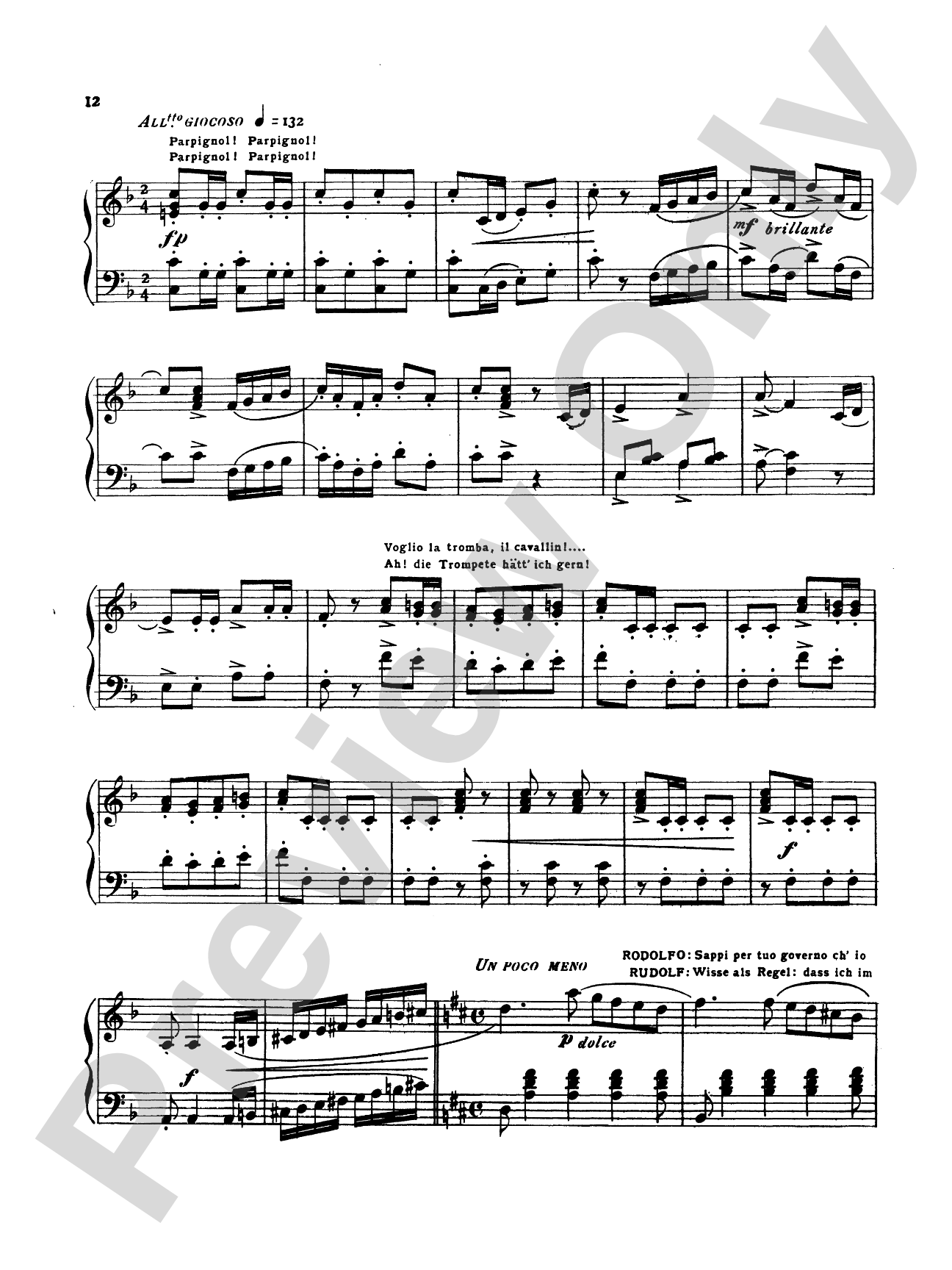
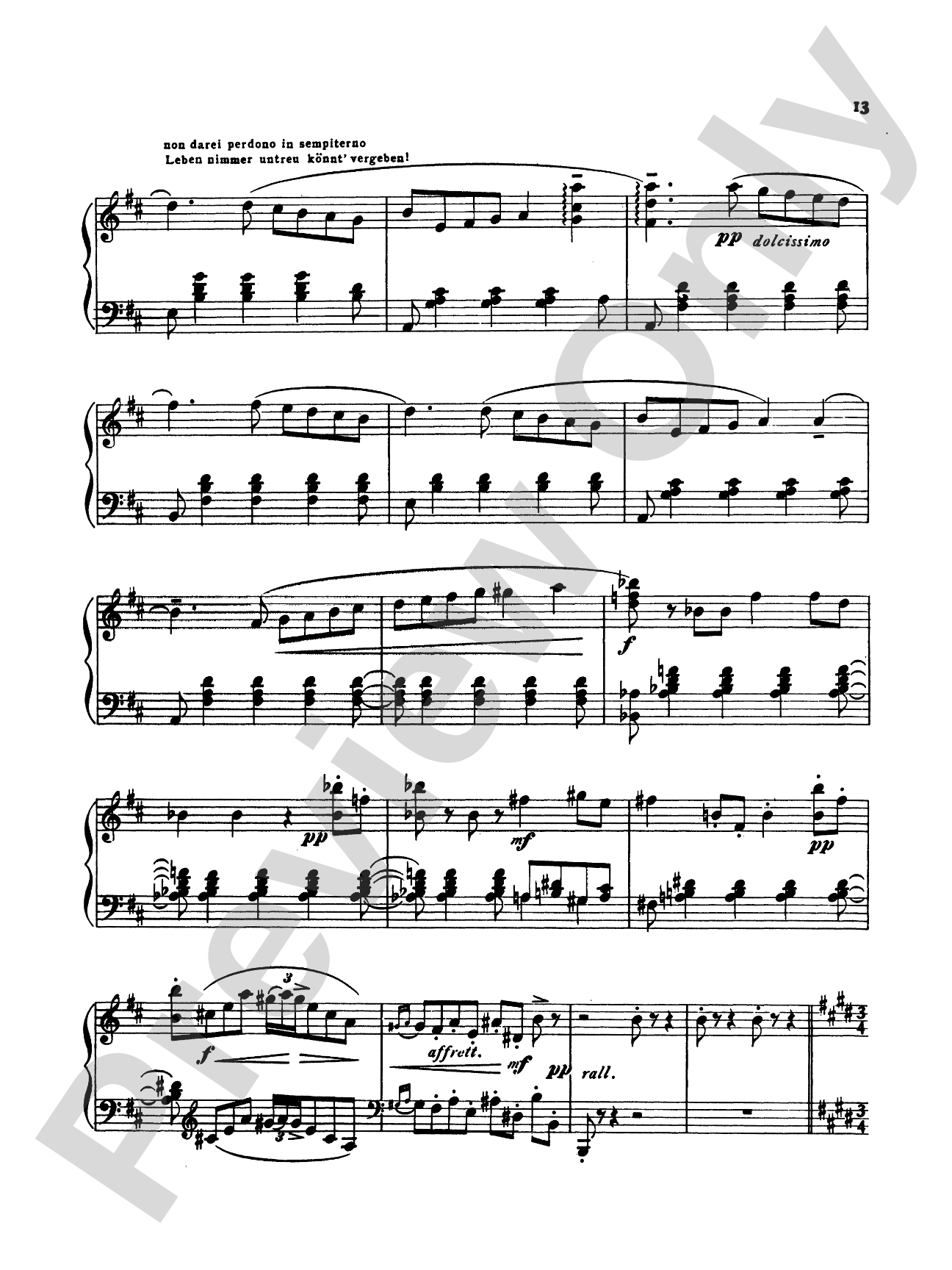
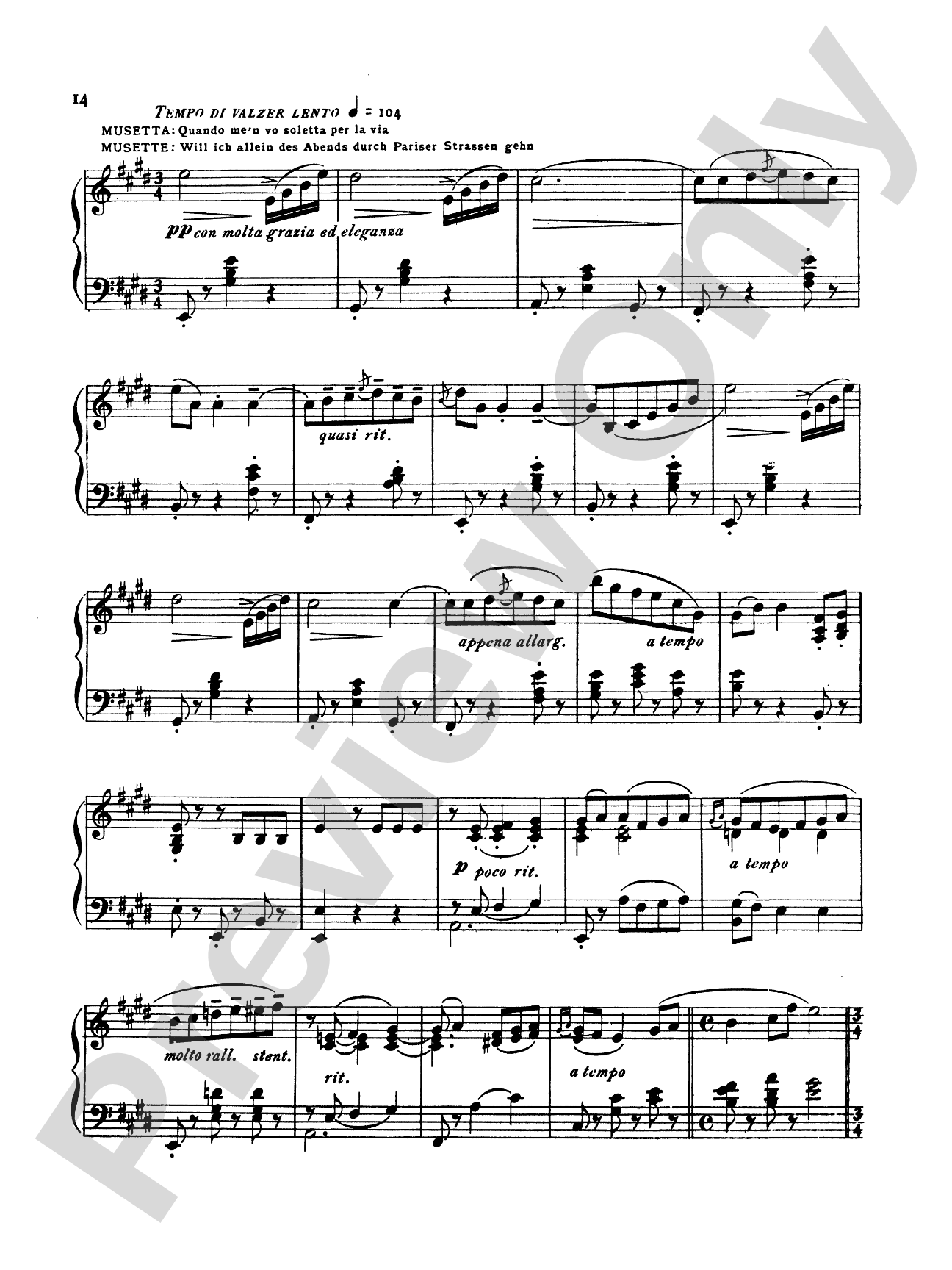
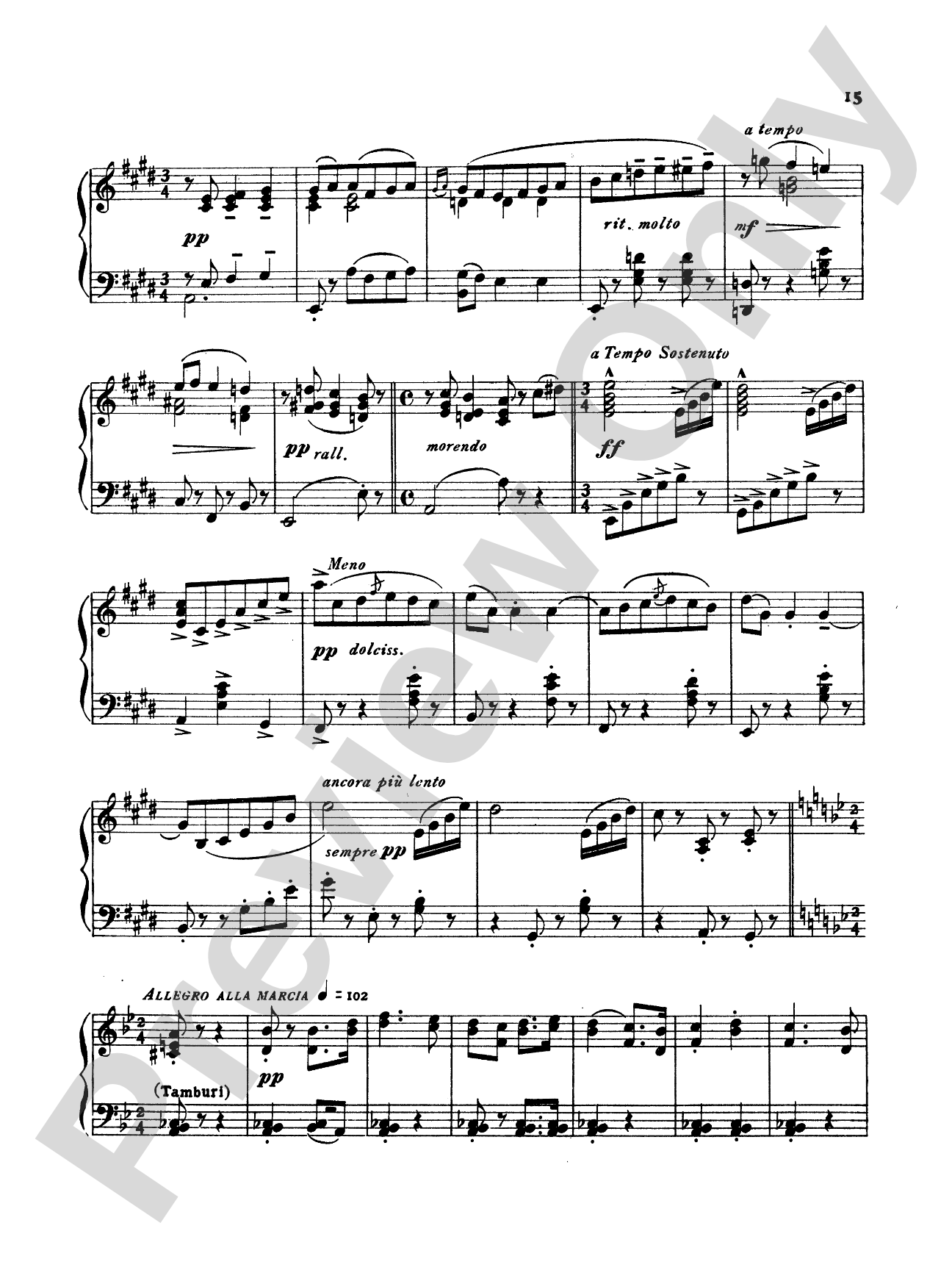
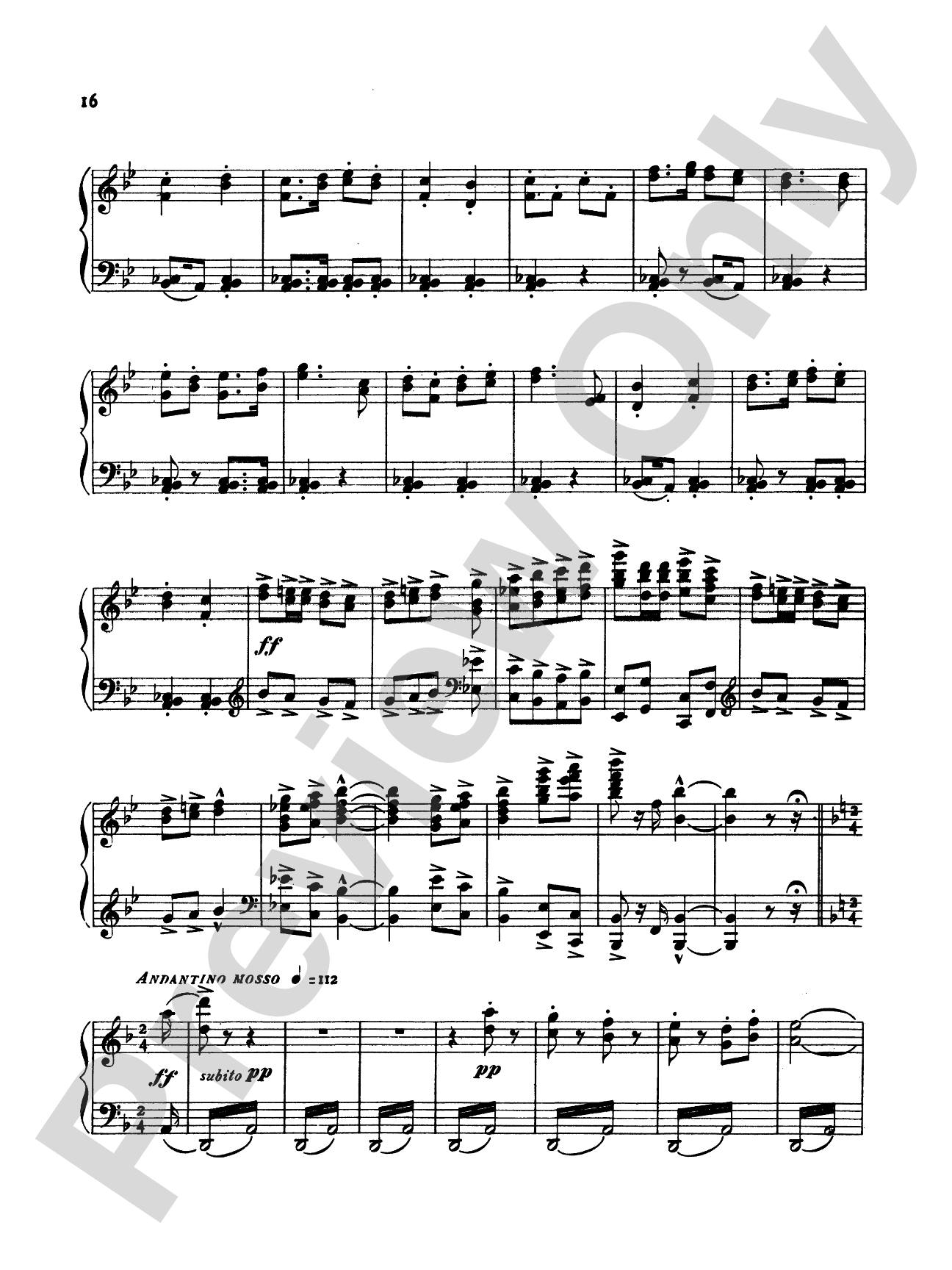
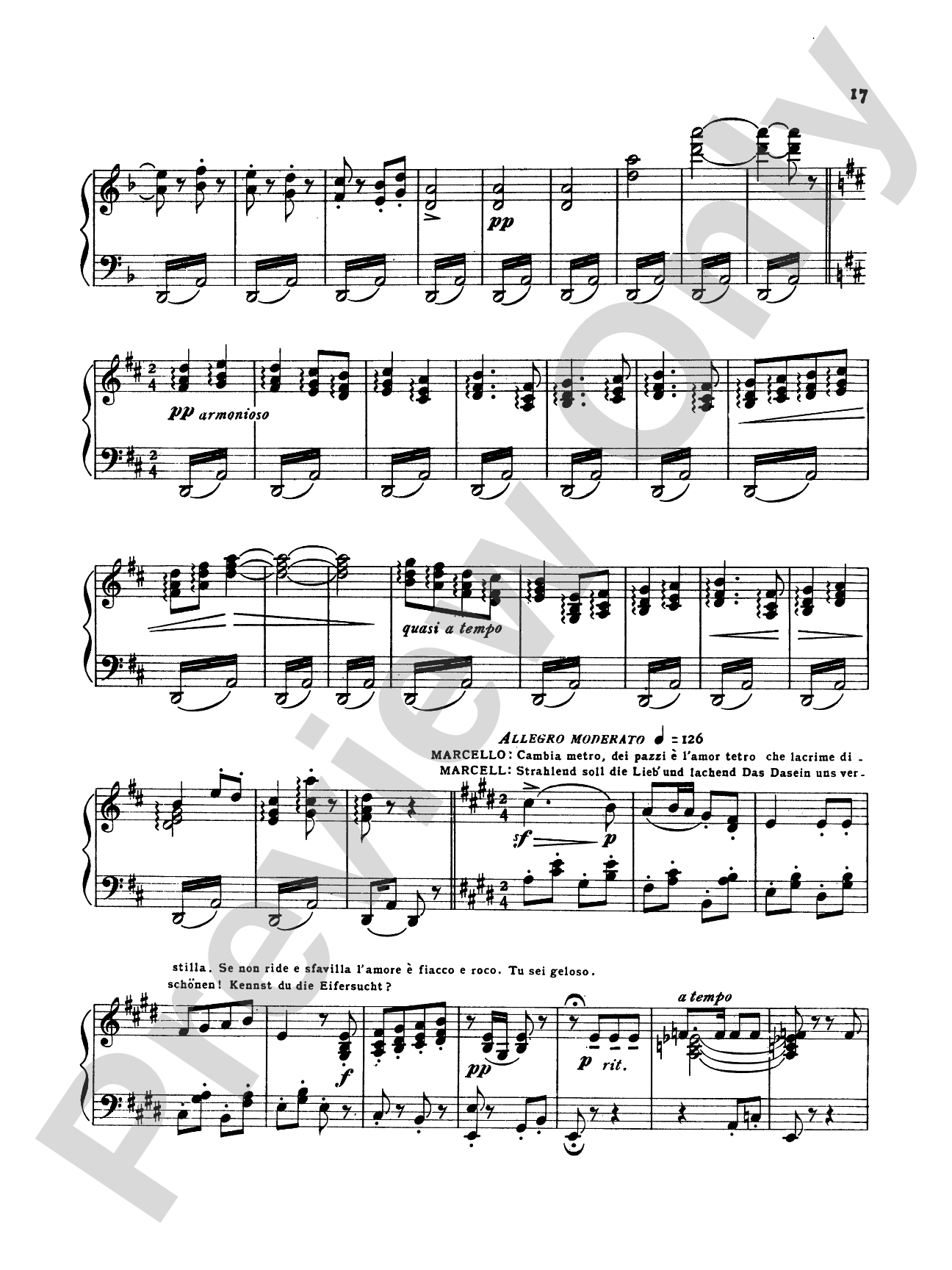
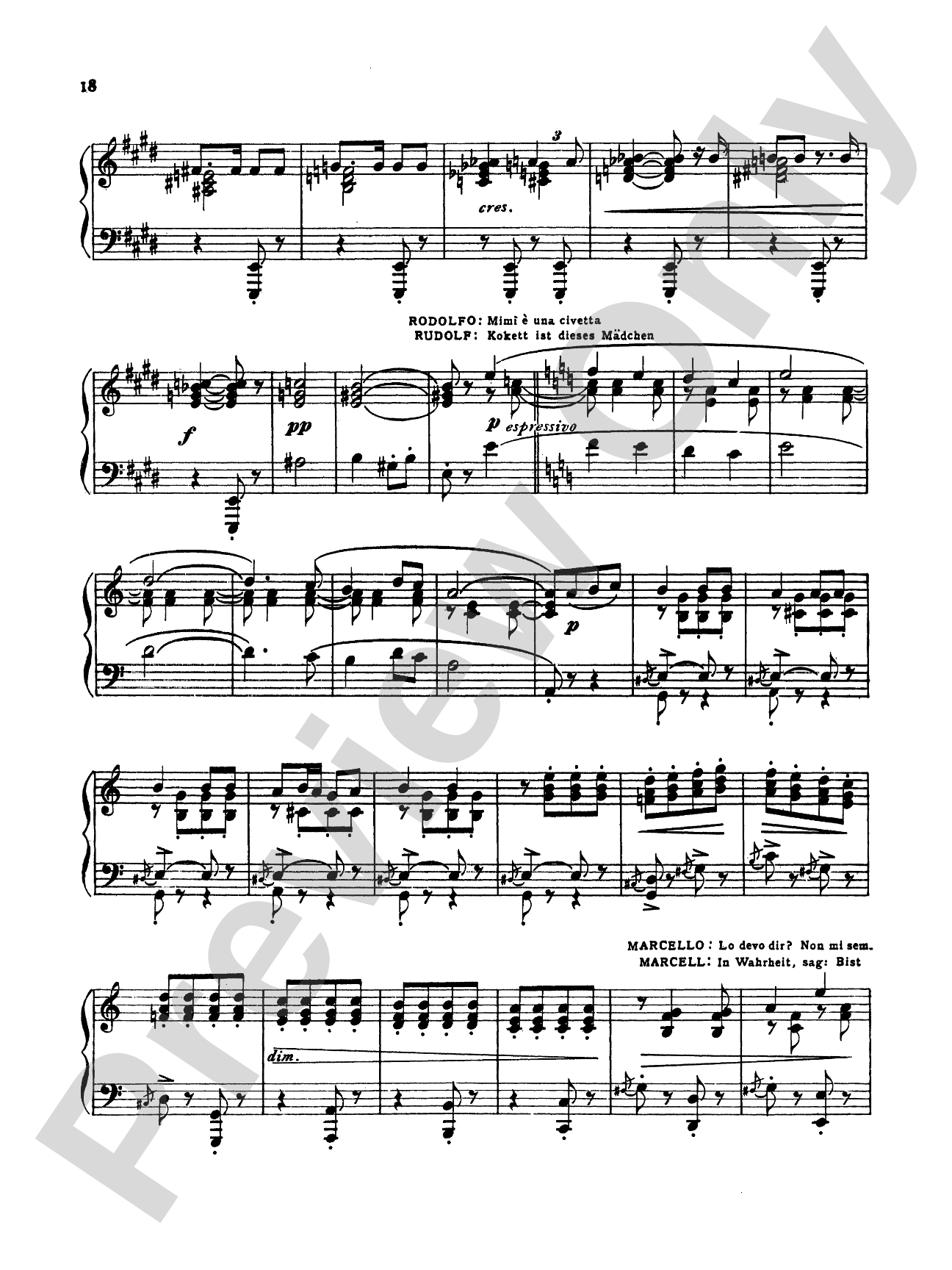
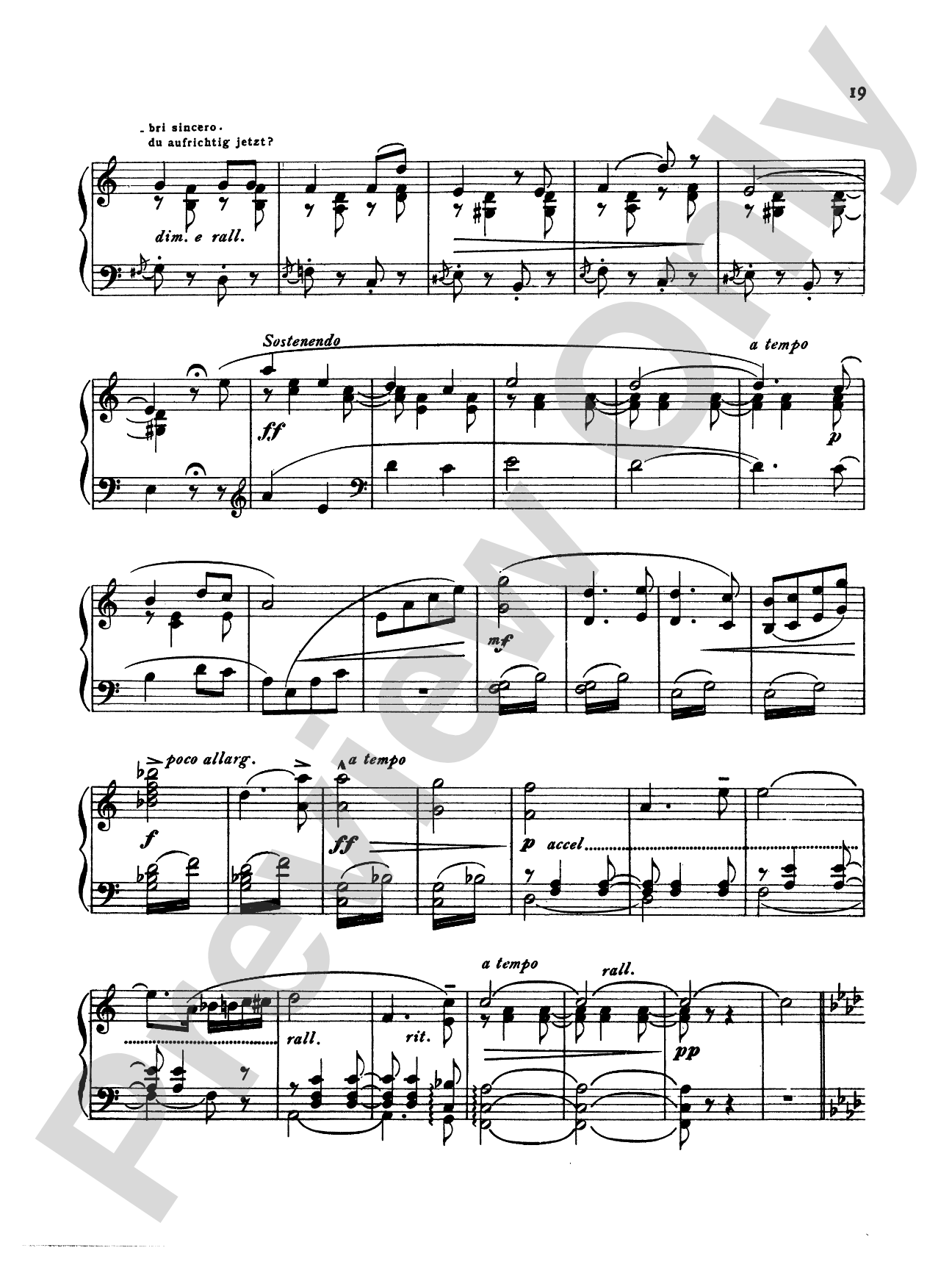
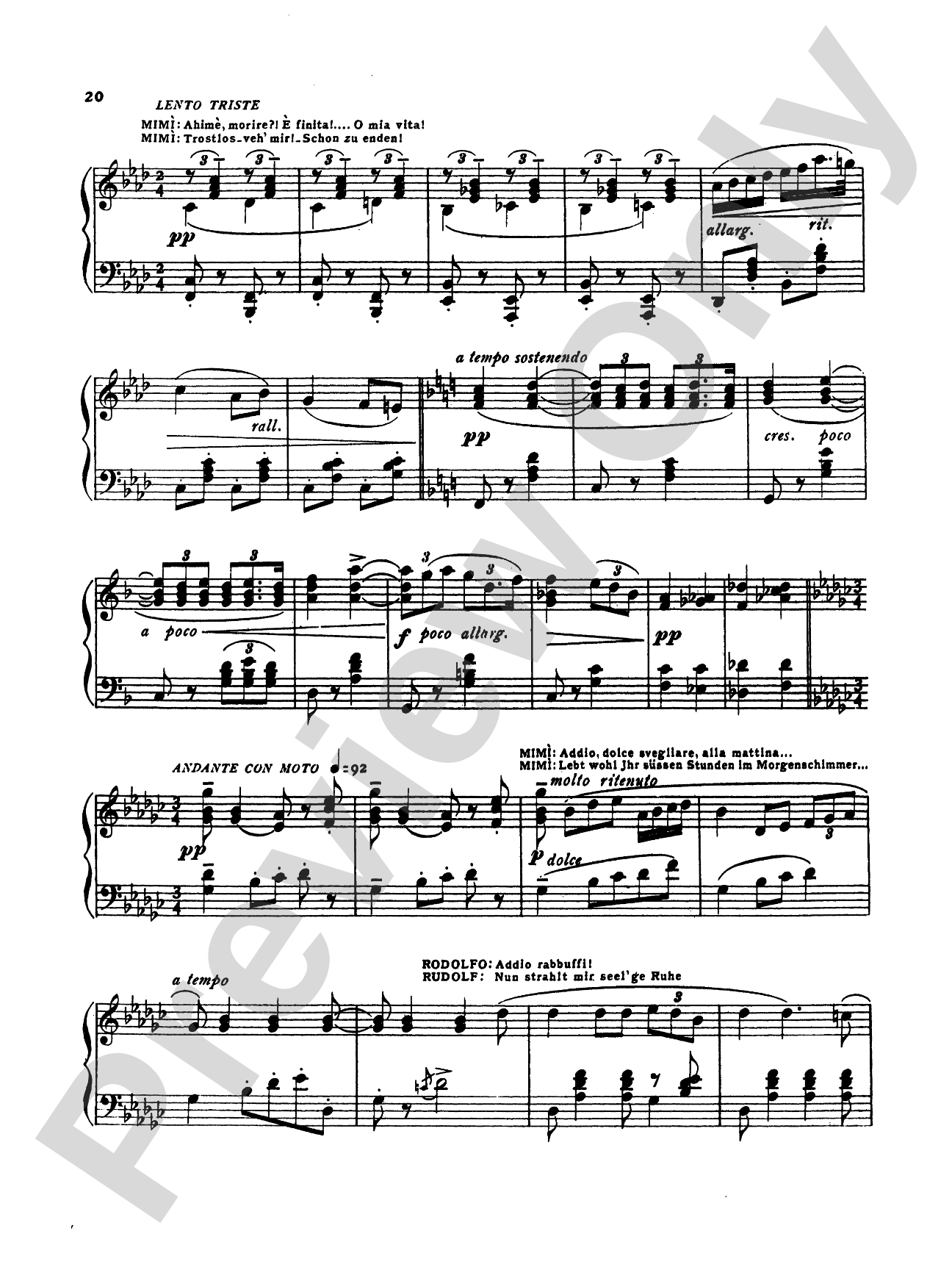
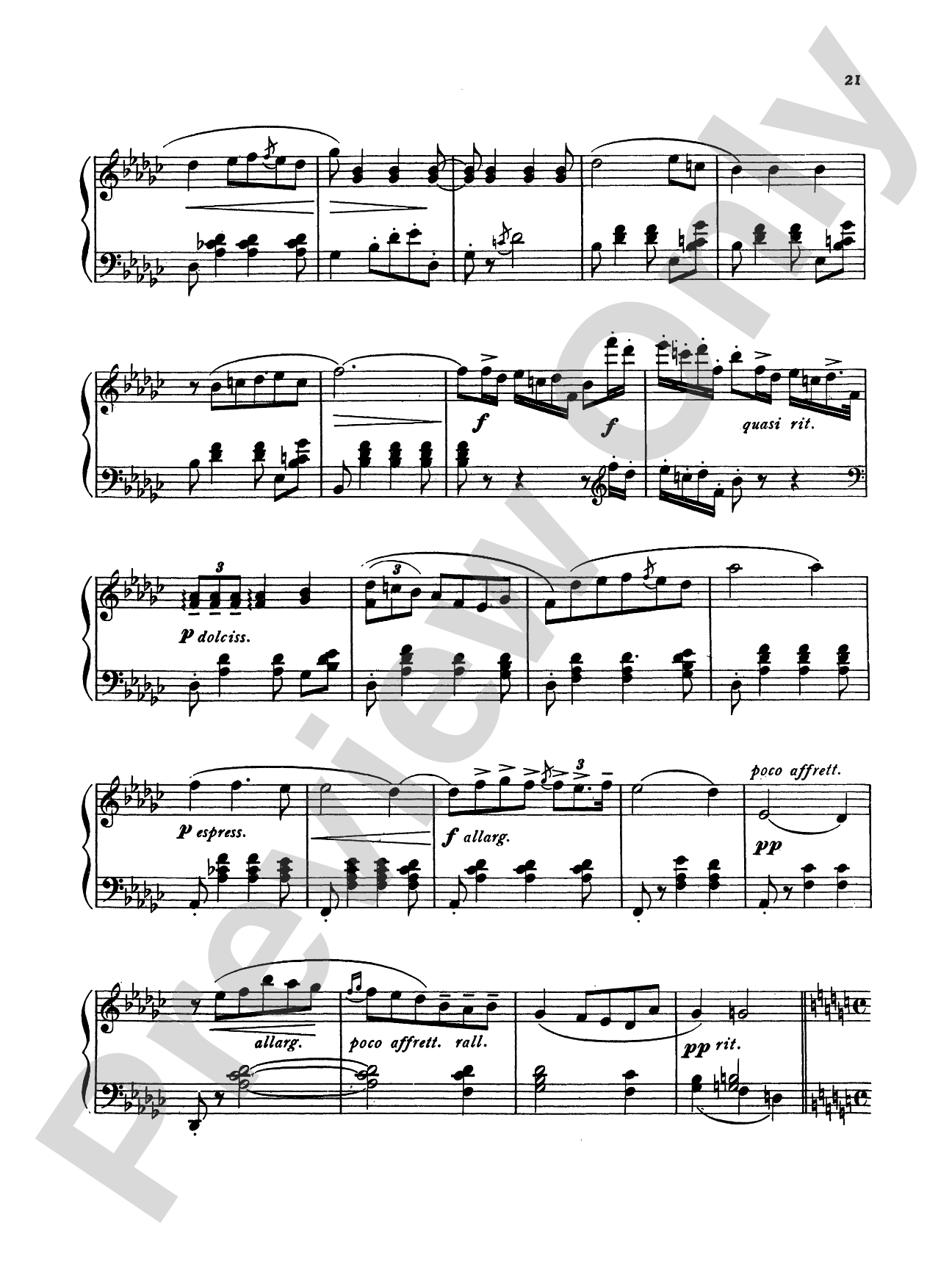
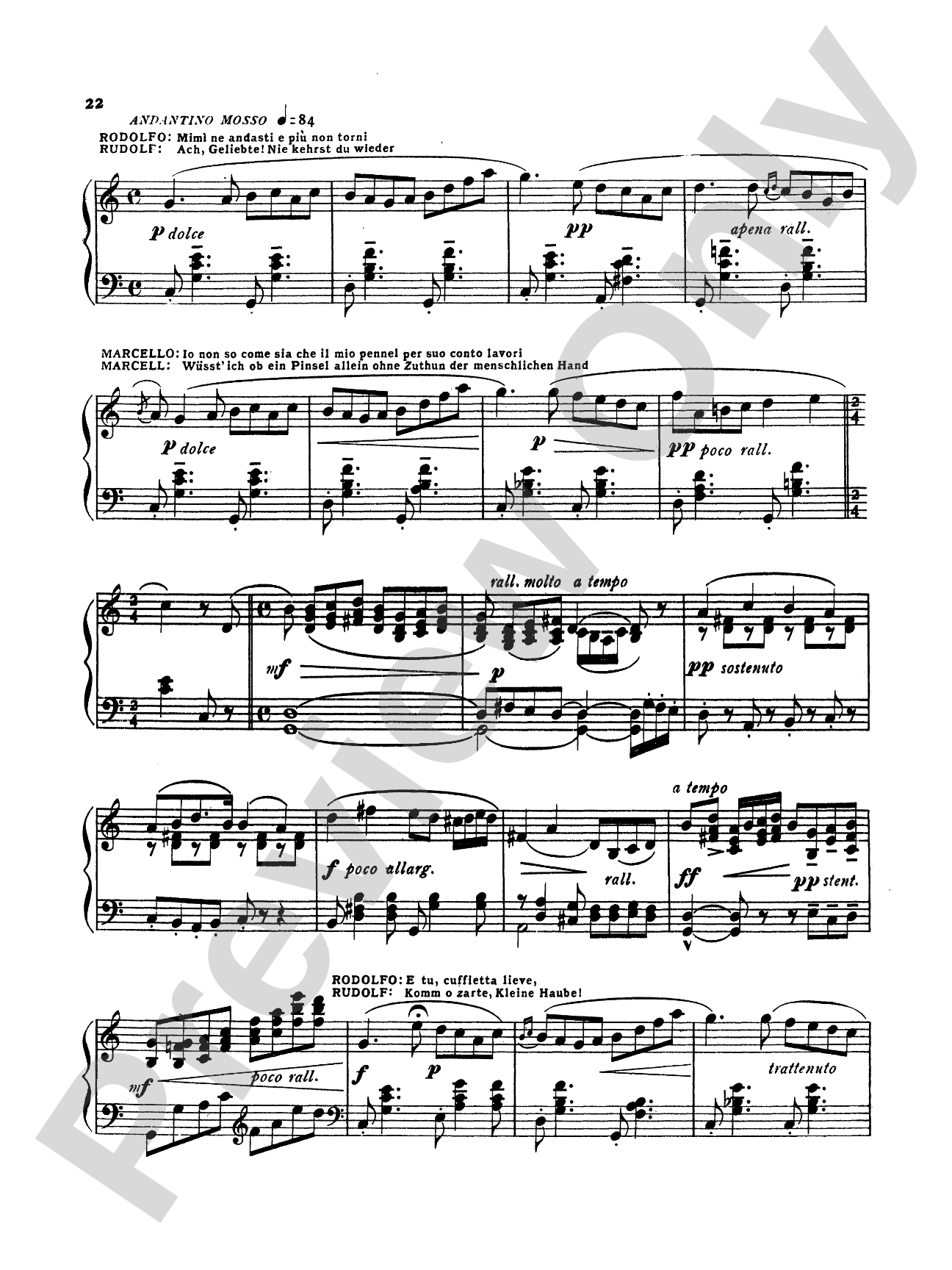
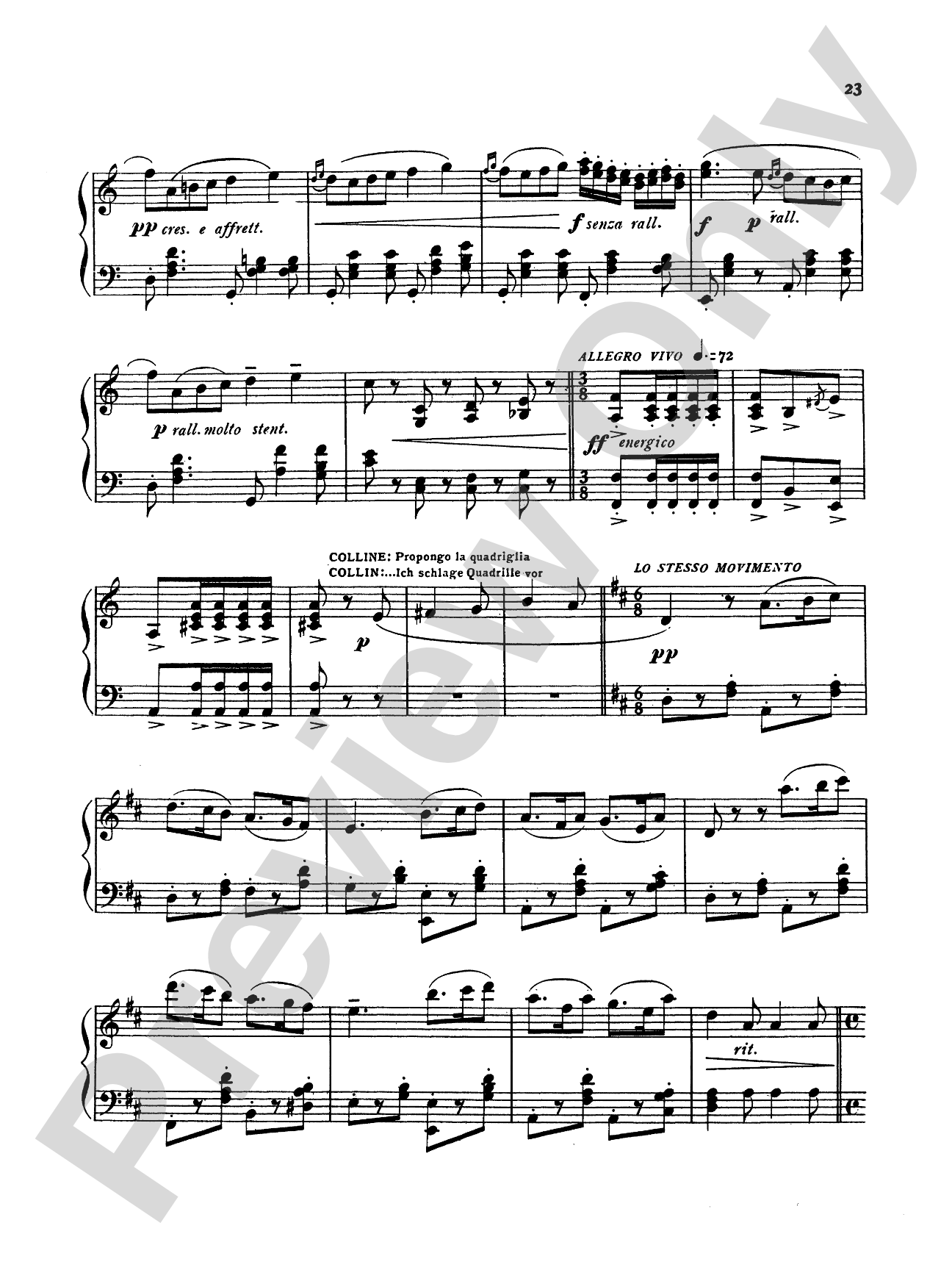
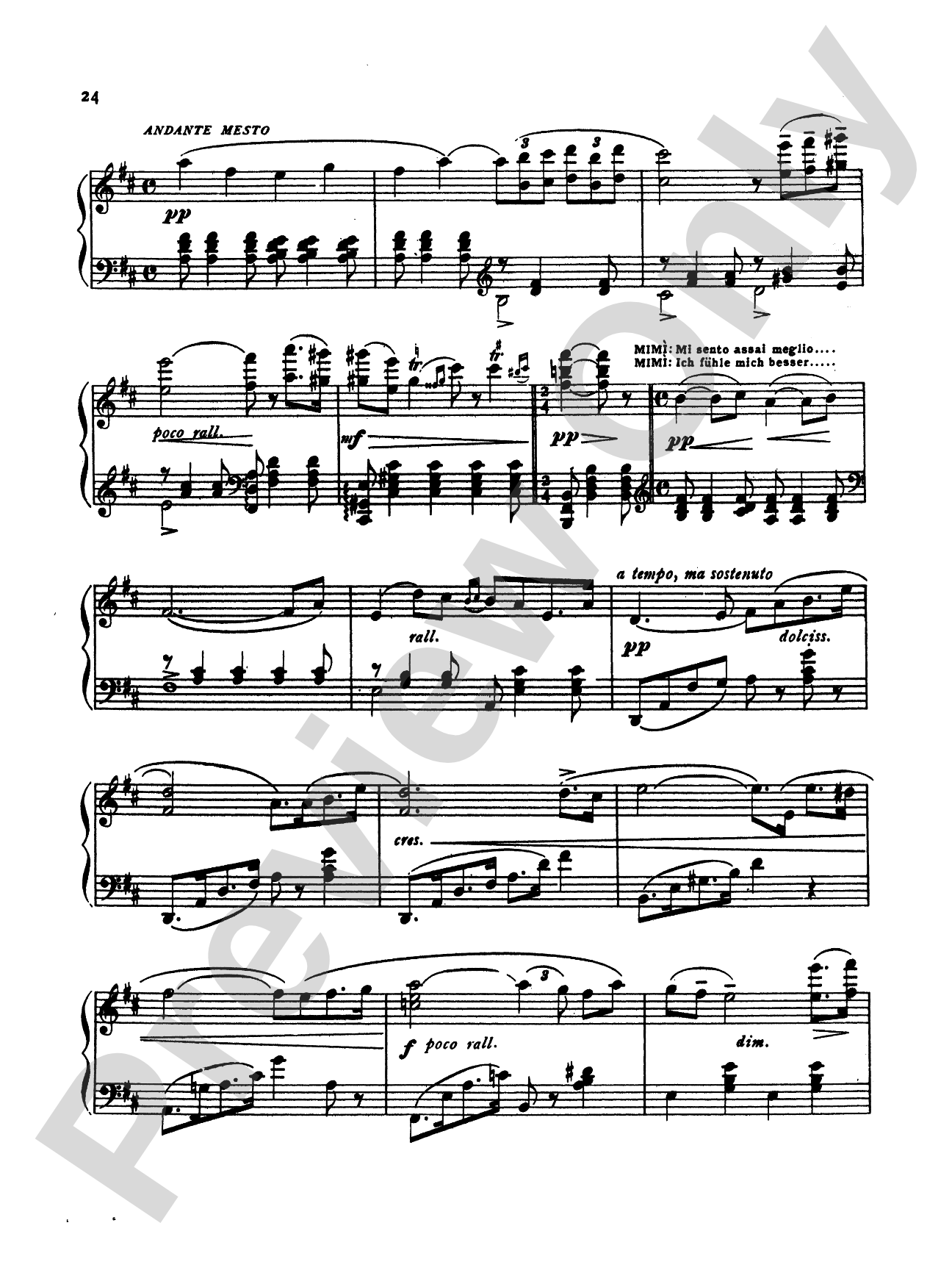
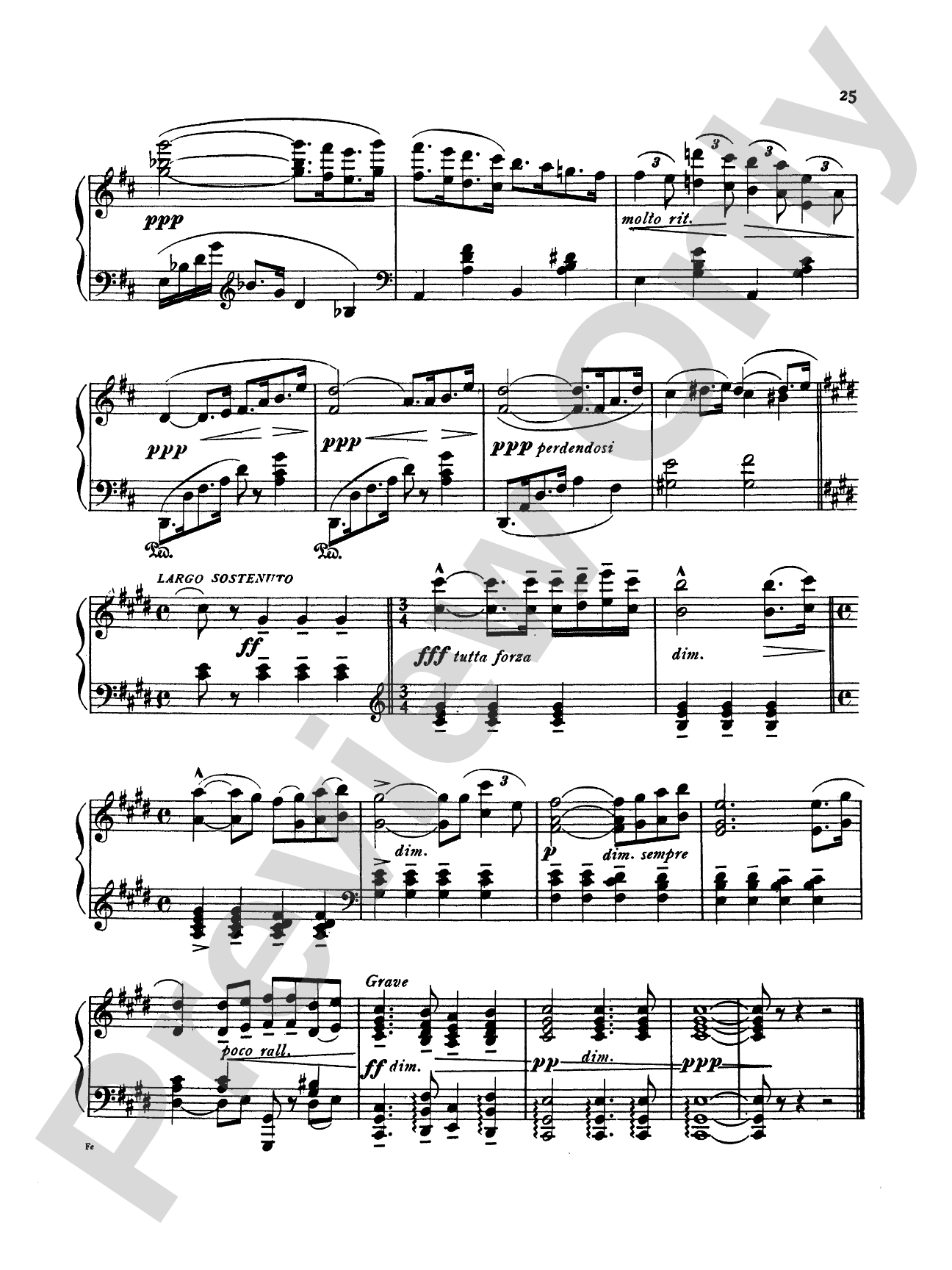


Puccini: La Boheme Fantasy (Transcr. Bernhard Wolff): Piano
By Giacomo Puccini / transcr. Bernhard Wolff
Level: Intermediate / Advanced
Item: 00-PK-0003794

$9.95
Pickup currently not available
Buy Extra Parts (Digital PDF Download)
| Product | Price | Quantity |
|---|---|---|
| Puccini: La Boheme Fantasy (Transcr. Bernhard Wolff) | $8.95 |
Parts Added to Cart!
Related Items
La Boheme Fantasy: Piano |
$9.95
|
View |
Description
Expertly arranged piano solo from our Kalmus Edition.


Don't just read it, hear it, play along with it, and watch your students grow with it. In MakeMusic Cloud, Puccini: La Boheme Fantasy (Transcr. Bernhard Wolff): Piano comes alive with professional accompaniment, adjustable tempo, and built-in practice tools that turn solo practice into real progress.
Open in the Player
Jump straight in and assign it today.
Start Your Free Trial
Open this title and explore the full library in minutes.
Sample Audio
No sample audio found.
Sample Video
No sample videos found.
Additional Details
Series:
Kalmus Edition
Publisher:
Alfred Music
Page Count:
28
SKU:
00-PK-0003794
More about this title
About the Composer: Giacomo Puccini
Giacomo Puccini (1858-1924) was an Italian composer who dominated the operatic stage of the late 19th and early 20th centuries. His gift for lyric melody and dramatic orchestration made works like La Bohème, Tosca, and Madama Butterfly staples of the repertoire, performed thousands of times annually across the world.
For pianists, Puccini's vocal lines present an irresistible challenge: translating the soaring, human quality of sung melody into keyboard texture while maintaining the warmth and expressive freedom that define his style. His operas contain some of the most memorable tunes in music, making piano arrangements of his work both accessible and deeply satisfying to perform.
Why we love this
Bernhard Wolff's transcription captures the emotional core of La Bohème without requiring an orchestra or voice, making this opera's most beloved moments available for solo recital. The 28-page arrangement respects Puccini's harmonic language while writing idiomatically for the piano, so listeners hear the familiar melodies and pianists have genuinely musical material to work with, not a note-for-note reduction.
What to expect
Lush, yearning, and steeped in the melody-driven elegance of late Romanticism. The opening sections breathe with the intimacy of a private confession, while the fantasy's contrasting sections pulse with warmth and dramatic momentum. You'll find yourself returning to the famous love themes again and again, each one a reminder of why Puccini's music has moved audiences for over a century.
Who it's for
Intermediate to advanced pianists preparing a solo recital or looking to add operatic repertoire to their performing library. This transcription is equally valuable for students building facility with Romantic-era harmonic language and for pianists seeking repertoire that sits comfortably on stage without requiring an ensemble.
How to get the most out of it
- Shape the melodic lines with the warmth and phrasing you'd hear from a tenor soloist; resist the urge to rush through Puccini's lyric passages, even at a moderate tempo.
- Balance the arrangement's inner voices carefully in moments where the melody sits in the middle register; a clear soprano line does not mean ignoring the accompaniment's voice leading.
- Allow rubato in the opera's most recognizable moments (the famous love duet material) to match the flexibility you'd hear in a sung performance, but return to a steady pulse during more rhythmically driven sections.
- Pedal judiciously to blend harmonic changes without creating a wash; Puccini's chords are often colorful and deserve definition.
How to use it
Program this as a substantial solo work on a mixed recital, where its operatic character and length (28 pages) provide a complete musical statement. It pairs naturally with other Romantic piano works or with art song, bridging the worlds of lyric opera and the concert hall. For studio teachers, it offers advanced students a chance to engage with orchestral reduction and operatic phrasing in a single, rewarding work.
Skills your students will build
- Rendering operatic vocal lines idiomatically on keyboard
- Balancing melody and accompaniment across multiple registers
- Phrasing and rubato in Romantic-era music
- Harmonic complexity and voice leading in late 19th-century tonal music
- Pedaling for color and blend in transcribed orchestral material