
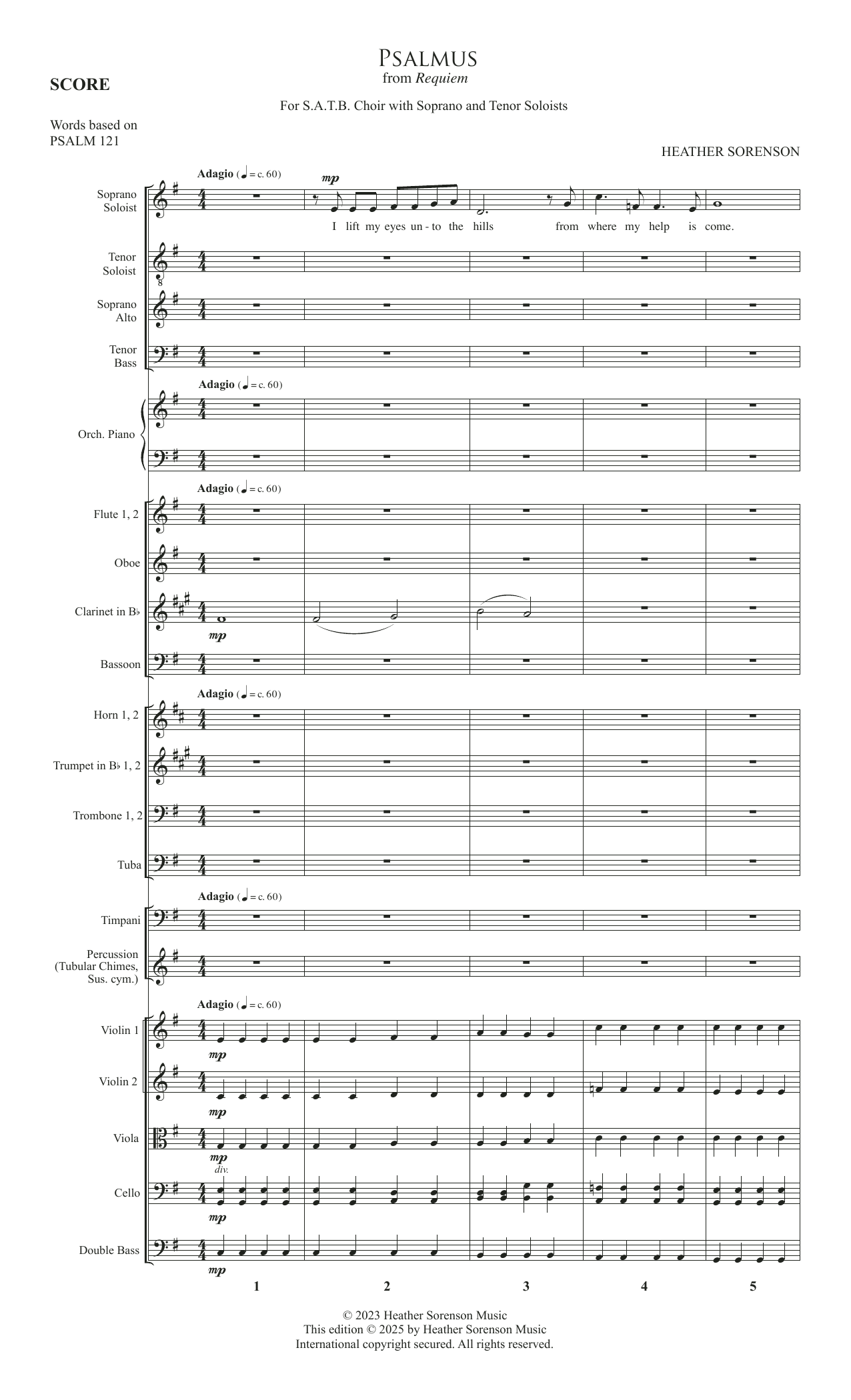

Psalmus (from Requiem) (Full Orchestra): Choral Instrumental Pak
By Heather Sorenson
Item: 35-PK01686215
$84.95
Pickup currently not available
Buy Extra Parts (Digital PDF Download)
Parts Added to Cart!
Description
Full Orchestra score and parts
A cherished movement from Requiem, "Psalmus" is now available as a stand-alone anthem. This stately and elegant SATB work, featuring soprano and tenor soloists beautifully, captures the timeless words of Psalm 121: "I lift my eyes unto the hills." Lush harmonies and soaring melodies create moments of worship, comfort and inspiration, moving the hearts of both musicians and listeners. Accompanied by piano or orchestra (available in both full and chamber orchestrations), "Psalmus" is a profound addition to any worship service or concert program.


Psalmus (from Requiem) (Full Orchestra): Choral Instrumental Pak isn't in MakeMusic Cloud just yet...but it could be. Let us know you'd like to see it, and you'll help shape what comes next. In the meantime, start a free trial and dive into thousands of interactive titles your students can play along with today.
Request This Title
Tell us you want it.
Start Your Free Trial
Explore everything that's ready to play right now.
Sample Audio
No sample audio found.
Sample Video
No sample videos found.
Additional Details
Publisher:
Hal Leonard
SKU:
35-PK01686215
More about this title
About the Composer: Heather Sorenson
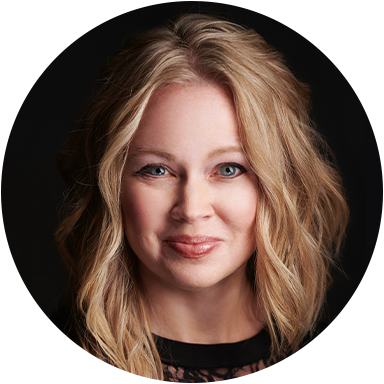
Heather Sorenson has built an international reputation as a composer and arranger whose music appears regularly in churches, concert halls, and educational settings across the globe. Based in Dallas, she is equally fluent in traditional and contemporary sacred music, often weaving both idioms together in ways that have become distinctly her own. Her recent commissions span significant institutions: Texas A&M University, the John F. Kennedy Memorial Foundation, and Carnegie Hall's premiere of her oratorio EXODUS.
Beyond her prolific output as a composer, Sorenson has shaped music education through classroom teaching at Grace Academy of Dallas, adjunct work at Baylor University, and ongoing master class instruction in piano and songwriting. She is a sought-after guest conductor and speaker at churches and conferences nationwide, and continues to direct benefit concerts supporting causes important to her. When not traveling as a guest artist and lecturer, she maintains her composition schedule from her home in the Dallas area.
Why we love this
Sorenson crafts soloists' lines with real singability, whether your soprano and tenor have extensive training or genuine enthusiasm and modest range. The orchestration choices feel inevitable rather than ornamental; every instrumental voice serves the text and supports the choir rather than competing with it. This is music that inspires both the ensemble singing it and the congregation hearing it.
What to expect
There is an undeniable peacefulness in these measures. Lush harmonic progressions unfold beneath soaring melodic lines, creating the sensation of lifting one's gaze upward as the psalmist describes. The orchestral accompaniment provides both grandeur and intimacy, allowing listeners to feel both held and elevated.
Who it's for
This work serves worship services, community choral concerts, and sacred music festivals looking for an anthem that honors liturgical tradition without sounding archaic. It works equally well for intermediate to advanced choirs with modest solo talent, making it accessible to many programs while remaining rewarding for experienced musicians.
How to get the most out of it
- Balance the soprano soloist's opening phrase against the orchestra; these introductory moments set the meditative tone that sustains the entire piece. Rehearse the string section separately if needed to ensure they sit beneath rather than overwhelm.
- Shape the choral lines with long phrases that honor the liturgical text. This music asks for legato singing and consistent breath support, especially in the middle sections where sustained harmonies create the work's lushness.
- Let the tenor soloist breathe naturally and expressively in his passages. Sorenson's writing gives him room to shape the melody, so avoid over-conducting these moments.
- Select your orchestration (full or chamber) based on the acoustic properties of your performance space. A smaller sanctuary may sing more beautifully with the chamber version, while a cathedral benefits from the fuller sound.
How to use it
"Psalmus" works beautifully as the centerpiece of a sacred music program, particularly in a concert that pairs it with shorter liturgical works or congregational hymn arrangements. It also serves as an excellent processional anthem for worship services during seasons of prayer and thanksgiving. Consider programming it alongside instrumental works that share its contemplative quality, allowing the entire program to breathe at a measured, meditative pace.
Skills your students will build
- Singing sustained, lush chords in four parts while maintaining independent vocal lines
- Responding to subtle orchestral accompaniment without losing choral blend
- Interpreting sacred text with expressive singing and appropriate phrasing
- Balancing solo vocal parts within a choir context
- Reading and executing stylistic nuances in arpeggiated and accompanimental orchestration