
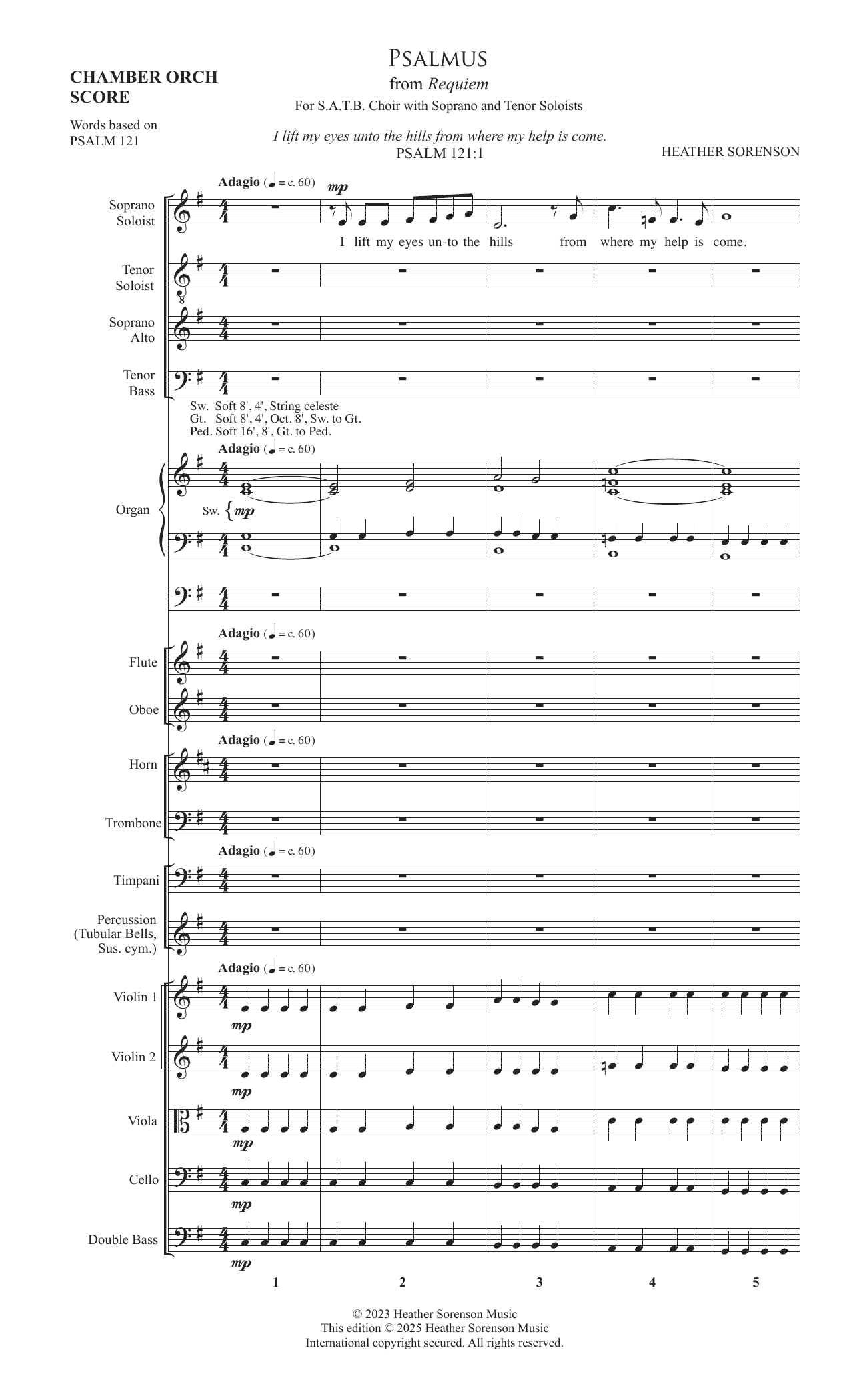

Psalmus (from Requiem) (Chamber): Choral Instrumental Pak
By Heather Sorenson
Item: 35-PK01686147
$74.95
Pickup currently not available
Buy Extra Parts (Digital PDF Download)
Parts Added to Cart!
Description
Chamber score and parts
A cherished movement from Requiem, "Psalmus" is now available as a stand-alone anthem. This stately and elegant SATB work, featuring soprano and tenor soloists beautifully, captures the timeless words of Psalm 121: "I lift my eyes unto the hills." Lush harmonies and soaring melodies create moments of worship, comfort and inspiration, moving the hearts of both musicians and listeners. Accompanied by piano or orchestra (available in both full and chamber orchestrations), "Psalmus" is a profound addition to any worship service or concert program.


Psalmus (from Requiem) (Chamber): Choral Instrumental Pak isn't in MakeMusic Cloud just yet...but it could be. Let us know you'd like to see it, and you'll help shape what comes next. In the meantime, start a free trial and dive into thousands of interactive titles your students can play along with today.
Request This Title
Tell us you want it.
Start Your Free Trial
Explore everything that's ready to play right now.
Sample Audio
No sample audio found.
Sample Video
No sample videos found.
Additional Details
Publisher:
Hal Leonard
SKU:
35-PK01686147
More about this title
About the Composer: Heather Sorenson
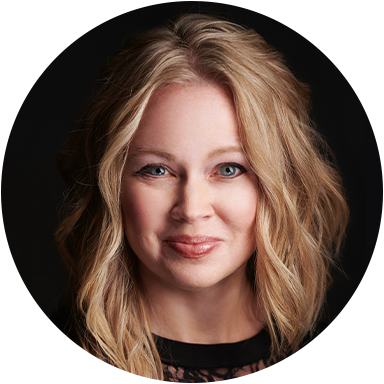
Heather Sorenson brings a rare fluency to both sacred and contemporary idioms, a versatility that has made her one of the most performed composers in worship settings today. Based in Dallas, she has built a career composing and arranging works for churches, universities, and concert halls worldwide, while maintaining an active role as a guest conductor, clinician, and master class instructor. Her commissions span prestigious venues including Carnegie Hall and have been performed at Texas A&M University and the John F. Kennedy Memorial Foundation.
Beyond the concert hall, Sorenson has shaped music education directly, having taught elementary music at Grace Academy of Dallas and served as an adjunct professor at Baylor University. She remains deeply involved in the music education community, leading workshops at conferences and universities annually. When not composing, she channels her energy into benefit concert performances that support causes close to her heart.
Why we love this
Sorenson extracts profound emotional weight from Psalm 121 without resorting to oversized orchestration or theatrical gestures. The soloists shine in passages that feel intimate rather than showy, and the chamber instrumentation makes this accessible for churches and schools operating without a full orchestra budget.
What to expect
Psalmus unfolds with unhurried dignity, its harmonies generous and warm. The text finds its musical counterpart in ascending phrases and moments of luminous spaciousness, creating an atmosphere of quiet reassurance.
Who it's for
Worship directors seeking substantive anthem material that works for both liturgical and concert contexts will find Psalmus equally at home in a Sunday service or a formal choral concert. It suits ensembles with capable soloists and pianists or small orchestra accompaniment.
How to get the most out of it
- Balance the soprano and tenor solos so they emerge naturally from the harmonic texture rather than sitting on top of it. This keeps the piece centered on the liturgical text.
- Let the lush harmonies breathe; resist the urge to rush through sustained chords. Slow, deliberate releases create the meditative quality the music asks for.
- Use the chamber orchestration to highlight specific harmonic moments. Strategic instrumental doubling of voice parts can clarify inner lines without overwhelming the choir.
How to use it
Pair this with other Sorenson works to create a cohesive aesthetic within a longer program, or use it as the centerpiece of a worship service focused on psalms and scripture songs. Its meditation on refuge and strength makes it particularly suitable for Lenten or advent observances.
Skills your students will build
- Sustaining vowels across extended phrase lengths
- Blending soprano and tenor soloists with four-part harmony
- Responding to lush harmonic movement with dynamic sensitivity
- Interpreting text expression within a sacred context