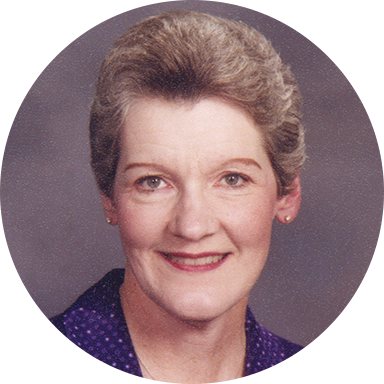
Cindy Berry grew up in Houston, Texas, where she studied at Houston Baptist University before establishing herself as a prolific composer and arranger of sacred choral music, children's musicals, and piano works. Throughout her career, she has been recognized with multiple ASCAP Special Awards and maintains an active schedule as a clinician, leading composer workshops and seminars across the country.
Berry's work is deeply rooted in her faith and her role as both church musician and educator. Alongside her husband Bruce, a Minister of Music, she serves at First Baptist Church in Killeen, Texas, where she directs the children's choir and serves as pianist. Her compositions consistently reflect her conviction that music functions as an act of worship.
Why we love this
Berry's handling of text and harmonic language strikes a balance between accessibility and genuine musical substance, making this arrangement feel celebratory without straying into sentimentality. The seven-page scope gives you room to build momentum and shape the arc, and the SATB voicing sits comfortably for mixed choirs of varying experience levels.
What to expect
The piece carries the warmth and sincerity of a hymn reimagined for four-part texture. There's a sense of gratitude woven throughout, moving between moments of reflection and affirmation without becoming overly dramatic or sentimental.
Who it's for
This octavo works for adult church choirs, community choirs with mixed experience, and high school or college ensembles preparing sacred repertoire for concert or liturgical settings. It's equally suitable for choirs seeking material that doesn't require soloists or specialized technical demands while still offering musical maturity.
How to get the most out of it
Establish the text as your primary interpretive guide. Berry's setting emphasizes words of gratitude, so clarity of diction directly supports the emotional arc.
Map the dynamic trajectory early in rehearsal rather than waiting for final run-throughs. This piece benefits from intentional shaping across its length.
Balance the soprano and alto lines carefully in passages where they move in parallel motion. Both voices deserve presence without one drowning the other.
How to use it
Pair this with other sacred works for a concert exploring themes of gratitude, or use it as the centerpiece of a service-music program during the fall season. Its moderate length makes it an excellent choice for inclusion in a diverse concert that balances longer multi-movement works with shorter, focused statements.
Skills your students will build
SATB voice leading and blend in four-part texture
Text interpretation and diction in sacred choral music
Dynamic shaping and phrase architecture across a multi-section form
Ensemble balance when inner voices carry secondary musical material
You May Also Like
Scan to Complete Your Purchase
Use your phone's camera to scan the code below
You'll log in on your phone and the order will be added to your account