
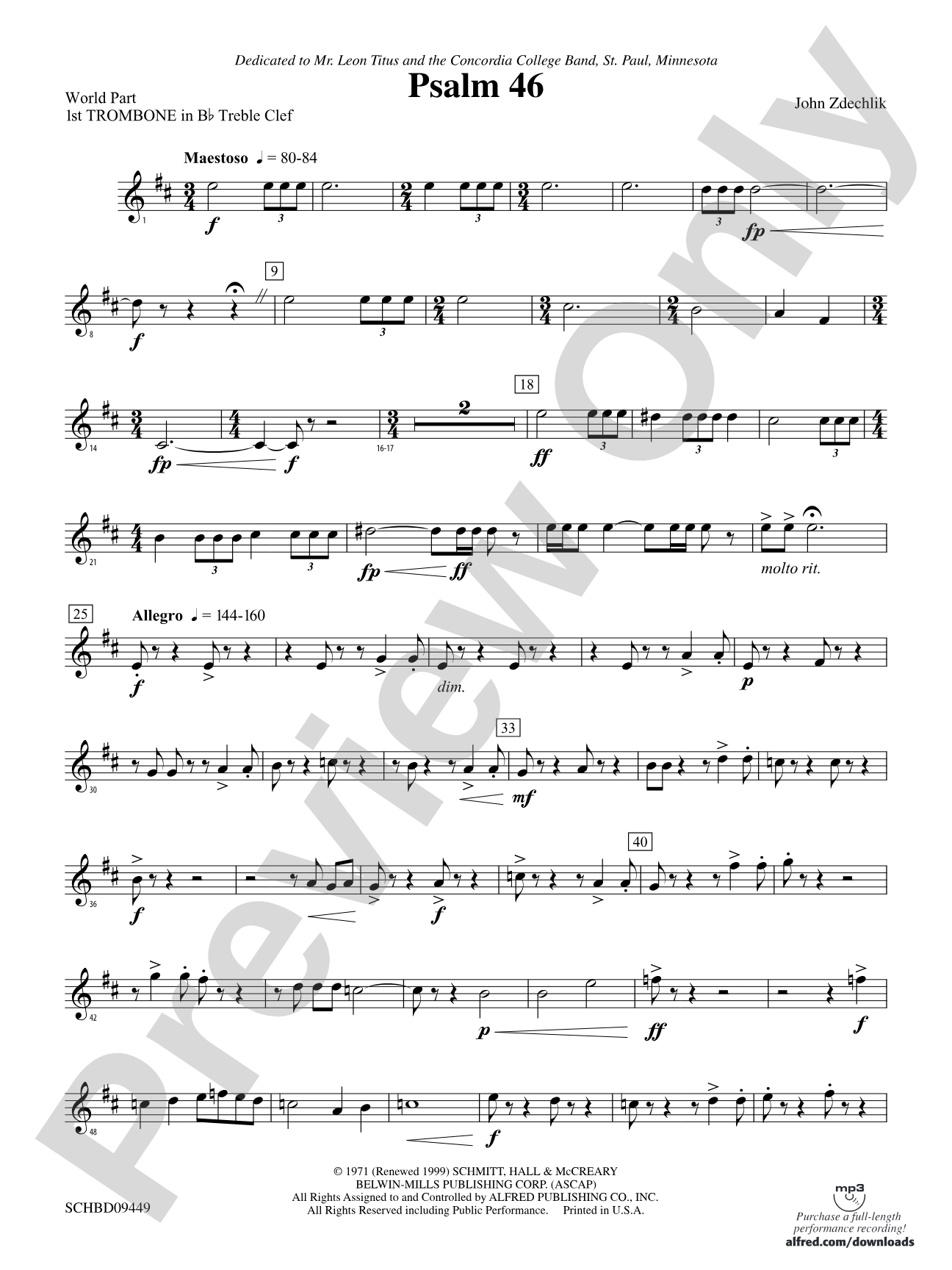
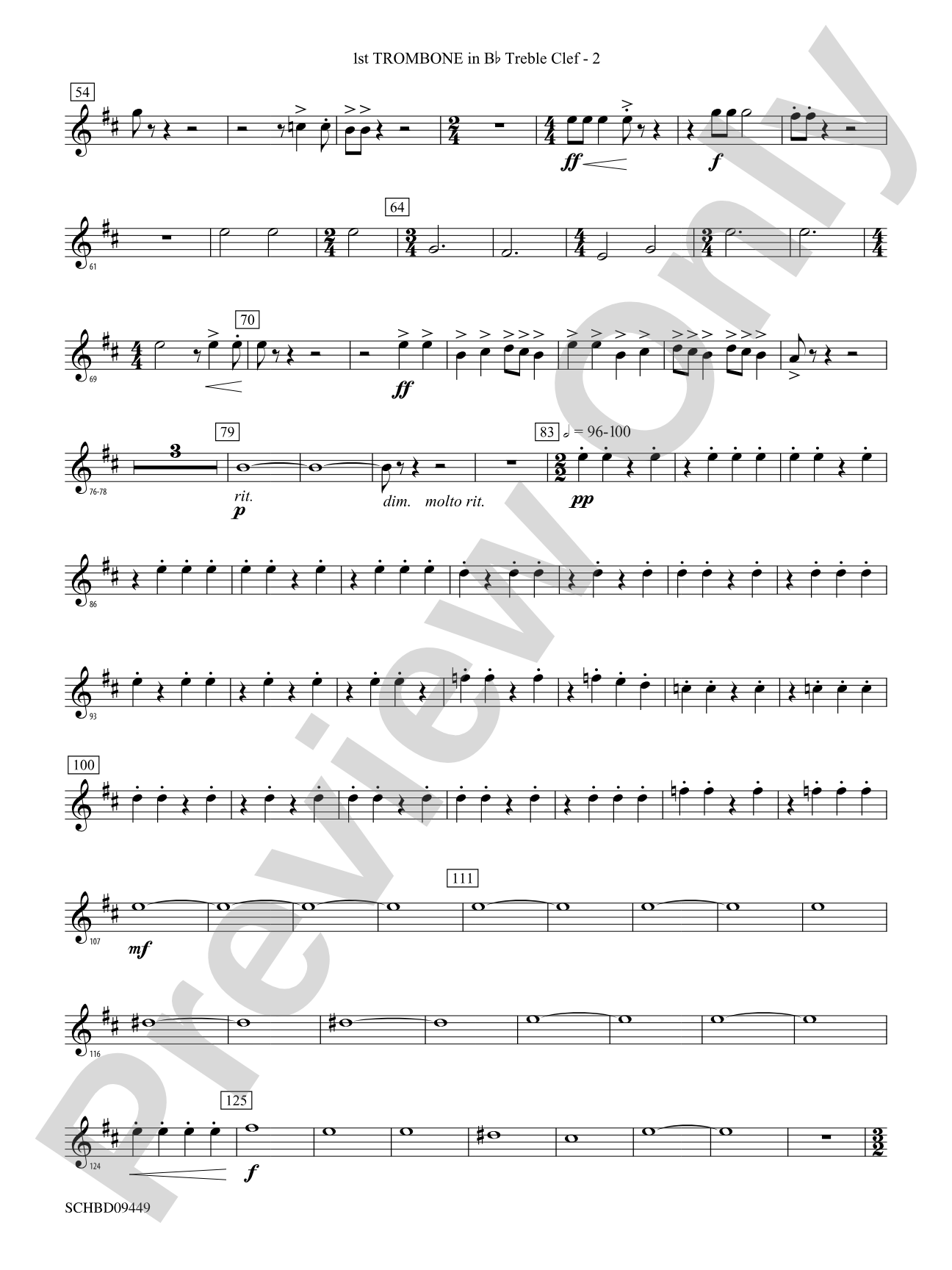
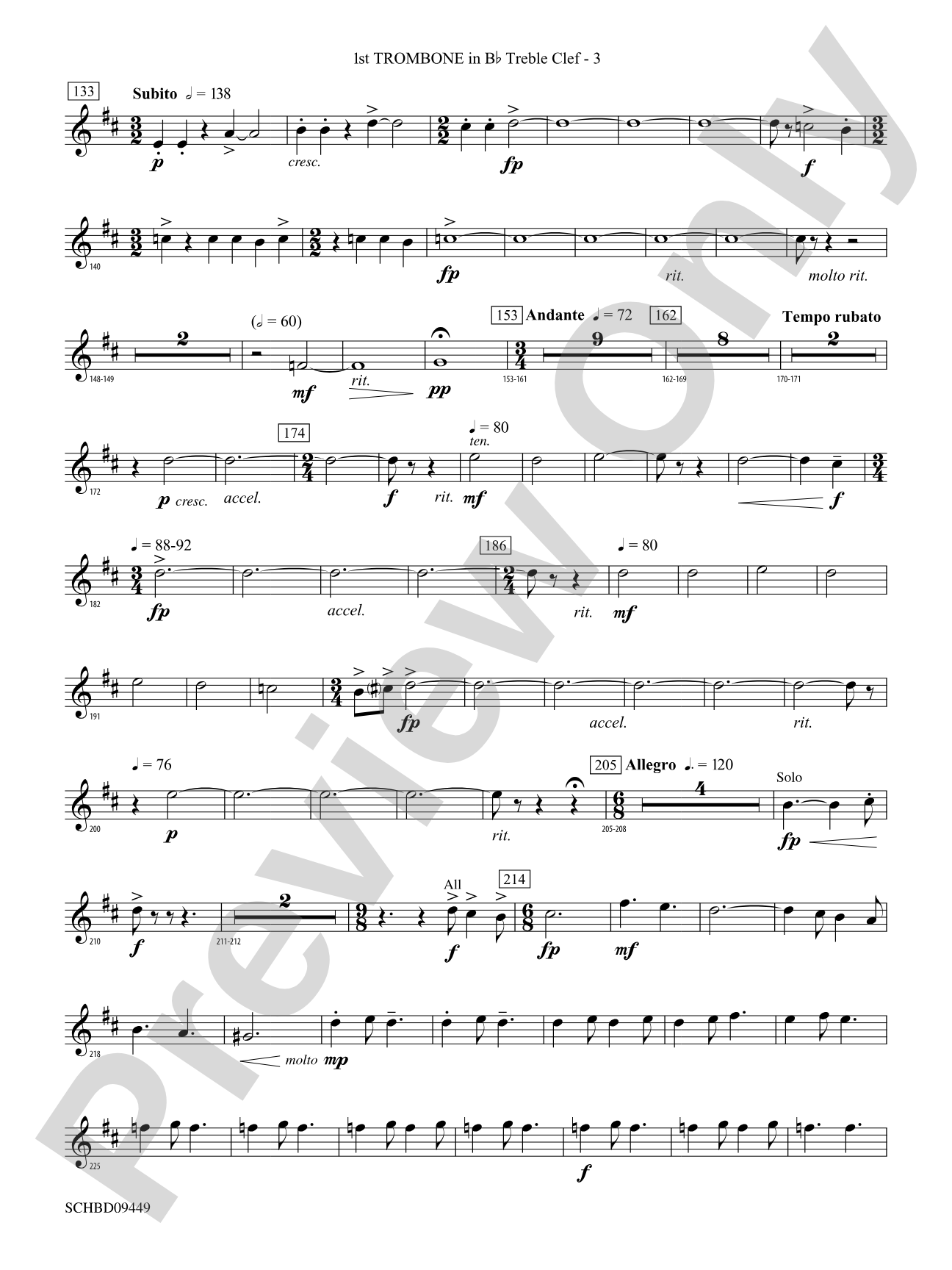
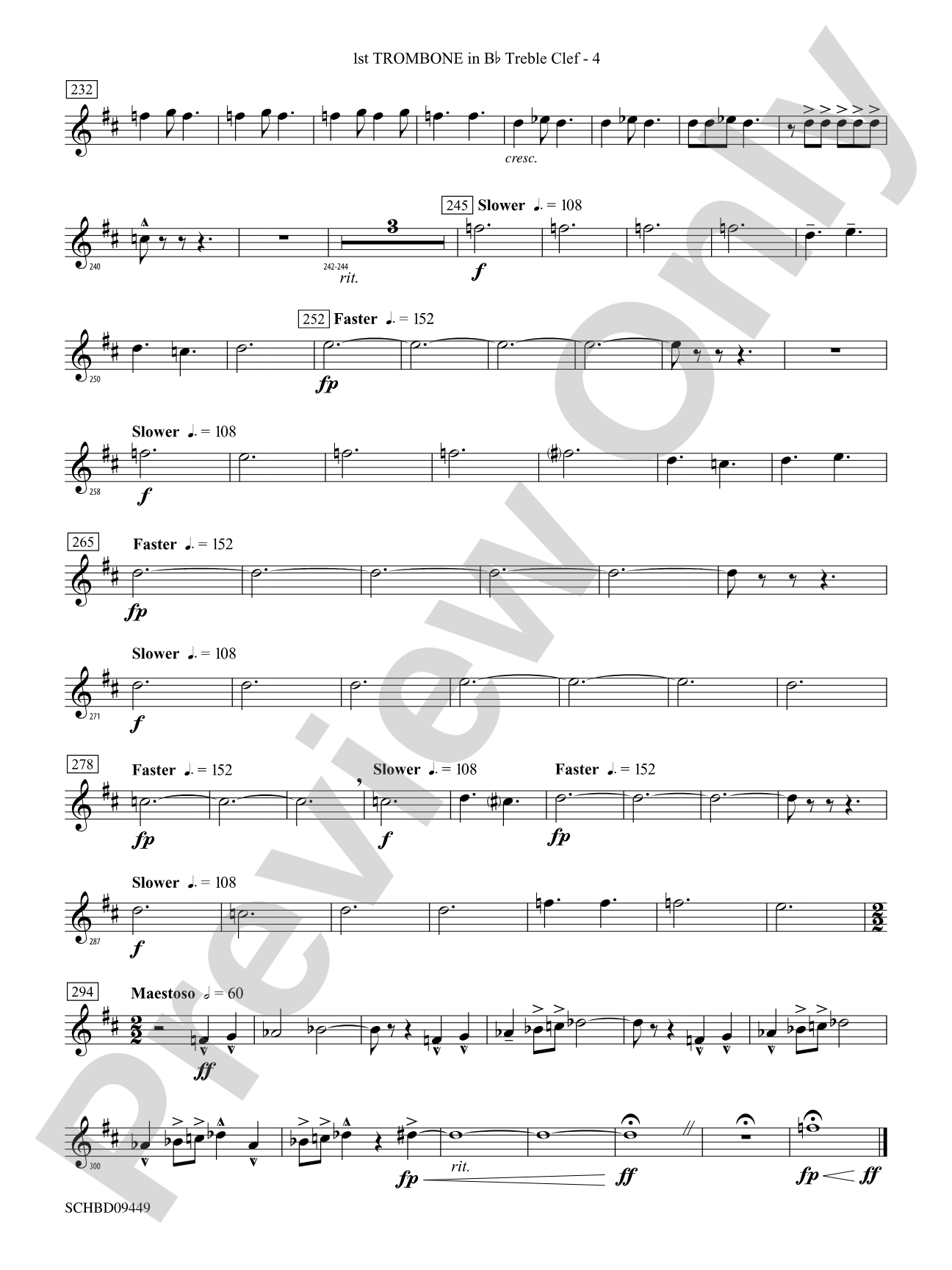

Psalm 46: (wp) 1st B-flat Trombone T.C.
By John Zdechlik
Grade: 3 (Medium Easy)
Item: 00-PC-0002553_wpTN1TC
$3.00
Pickup currently not available
Description
Psalm 46 is based upon the chorale melody from "A Mighty Fortress is our God," the best known Martin Luther hymn which was composed sometime between 1527 and 1529. The hymn's words paraphrase Psalm 46. Zdechlik's setting is divided into four major sections with a wide variety of styles and meters that draw to a powerful heroic conclusion. The work, originally published in 1971, is dedicated to Mr. Leon Titus and the Concordia College Band, St. Paul, Minnesota. (9:18) This title is available in MakeMusic Cloud.


Don't just read it, hear it, play along with it, and watch your students grow with it. In MakeMusic Cloud, Psalm 46: (wp) 1st B-flat Trombone T.C. comes alive with professional accompaniment, adjustable tempo, and built-in practice tools that turn solo practice into real progress.
Open in the Player
Jump straight in and assign it today.
Start Your Free Trial
Open this title and explore the full library in minutes.
Sample Audio
1
Audio File
--:--
0:00
0:00
Sample Video
No sample videos found.
Additional Details
Series:
Belwin Classic Band
Publisher:
Alfred Music
Page Count:
320
SKU:
00-PC-0002553_wpTN1TC
More about this title
About the Composer: John Zdechlik
John Zdechlik (1939-2012) was an American composer and conductor whose works for wind ensemble and concert band remain central to American band literature. Known for his gift for melody and structural clarity, Zdechlik composed pieces that challenge young musicians without overwhelming them, making him a mainstay in school and university band programs across the country.
Zdechlik's arrangements and original compositions often drew on hymn tunes and folk melodies, grounding them in rich harmonic textures and varied orchestration. His works have earned recognition at state and national band contests, and his music continues to be performed widely in educational settings.
Why we love this
Zdechlik's setting takes a beloved chorale and reshapes it across four distinct sections with contrasting meters and textures, giving players something genuinely new to discover each time through. The Grade 3 level sits right at that sweet spot where students can execute the technical demands while staying focused on musicality and architecture rather than mechanics alone. You get a work substantial enough for contest or festival consideration without the complexity that derails learning.
What to expect
A chorale that refuses to stay still. The familiar hymn tune returns again and again, but each time it wears different clothes—sometimes processional and stately, sometimes broken into fragments and scattered across the ensemble, finally gathering itself into an affirmation that feels hard-won rather than assumed. The work invites reverence without sentimentality.
Who it's for
Directors of Grade 3 concert bands and high school ensembles building contest and festival programming. Music students preparing work that builds confidence through strong melodic material while developing their ability to recognize and execute structural variety.
How to get the most out of it
- Shape the chorale melody's natural phrasing across the various instrumental families as sections shift; think of it as relay handoffs rather than separate statements so the hymn tune remains a throughline.
- Balance the heroic conclusion carefully so the ensemble builds genuine dramatic weight without losing clarity in the multiple parts moving together.
- Mark sectional transitions clearly in rehearsal, as the meter and style changes require deliberate resets in ensemble thinking and counting.
- Attend to the harmonic color Zdechlik creates in different orchestrations of the same material; the contrasts between sections depend on consistent voicing within each.
How to use it
Program this as a concert centerpiece that signals maturity and musical depth without requiring virtuosity. It works well paired with a secular classical piece and a contemporary work, creating a balanced evening that demonstrates the breadth of band literature. The piece's contest-festival credentials also make it a natural fit for competitive programming in spring.
Skills your students will build
- Reading and performing multiple meter changes (3/4, 4/4, and asymmetrical divisions) in a single work
- Voice leading and part independence as the chorale melody migrates across instrument families
- Dynamic and textural control through sectional orchestration changes
- Phrase shaping and architectural listening across a work with varied structural sections