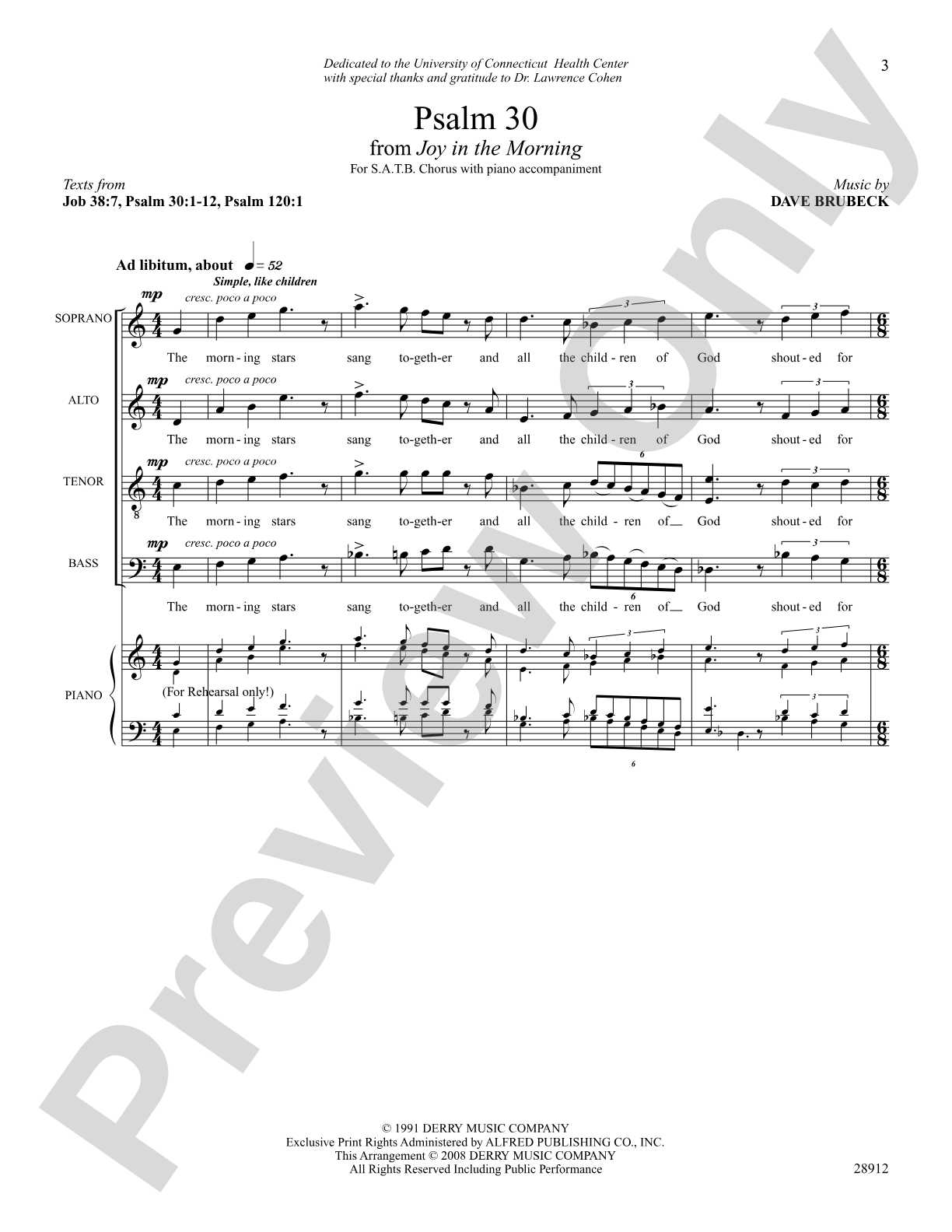
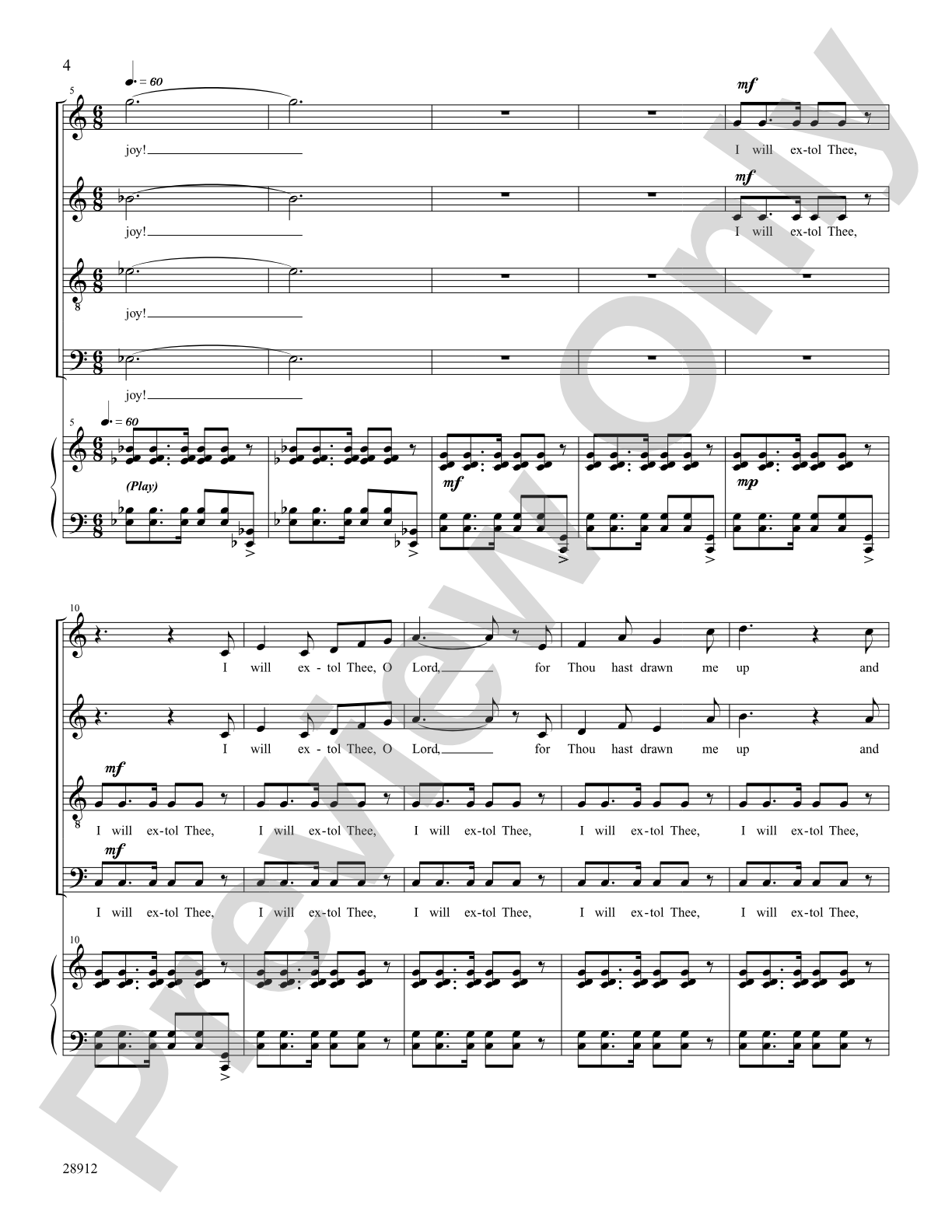
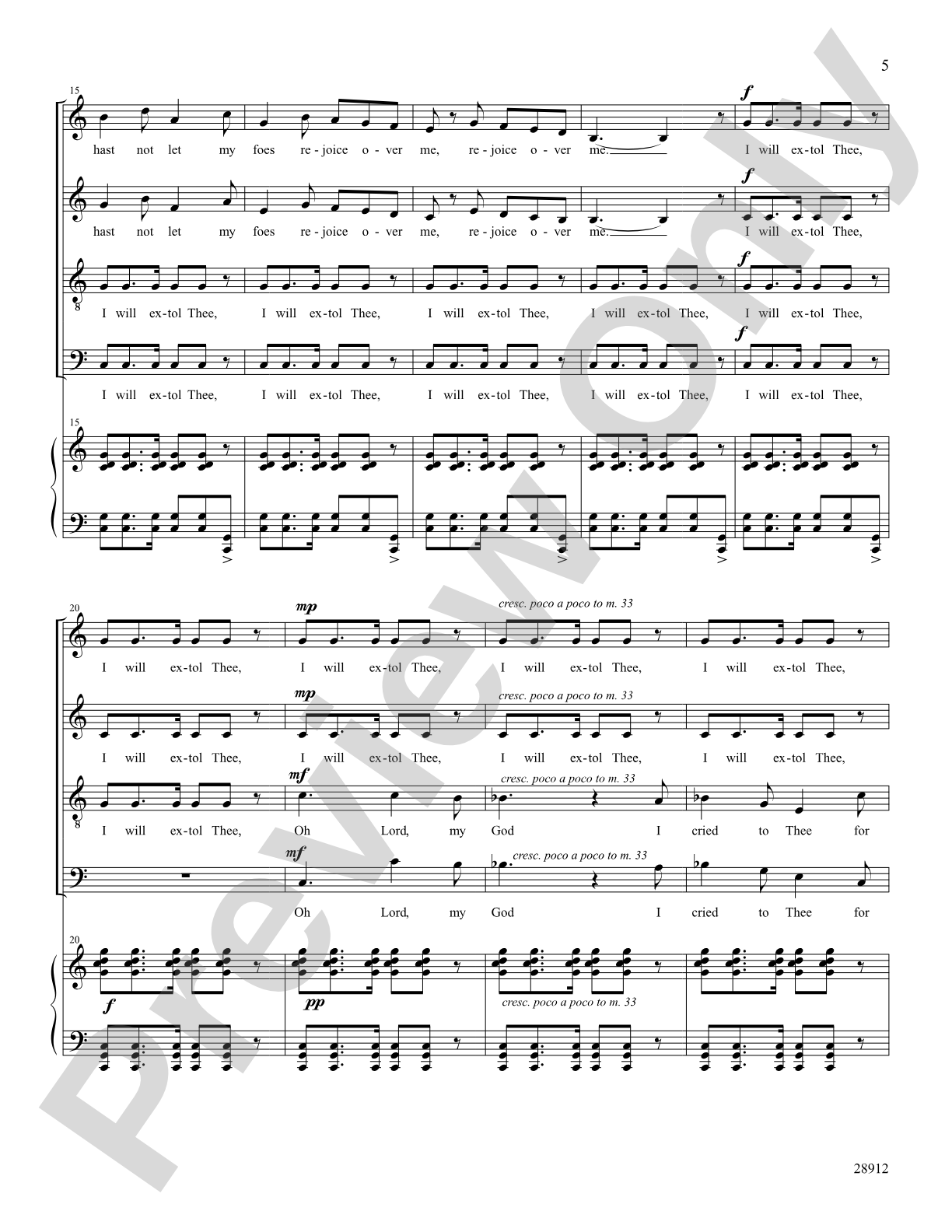
Psalm 30 Sheet Music Preview

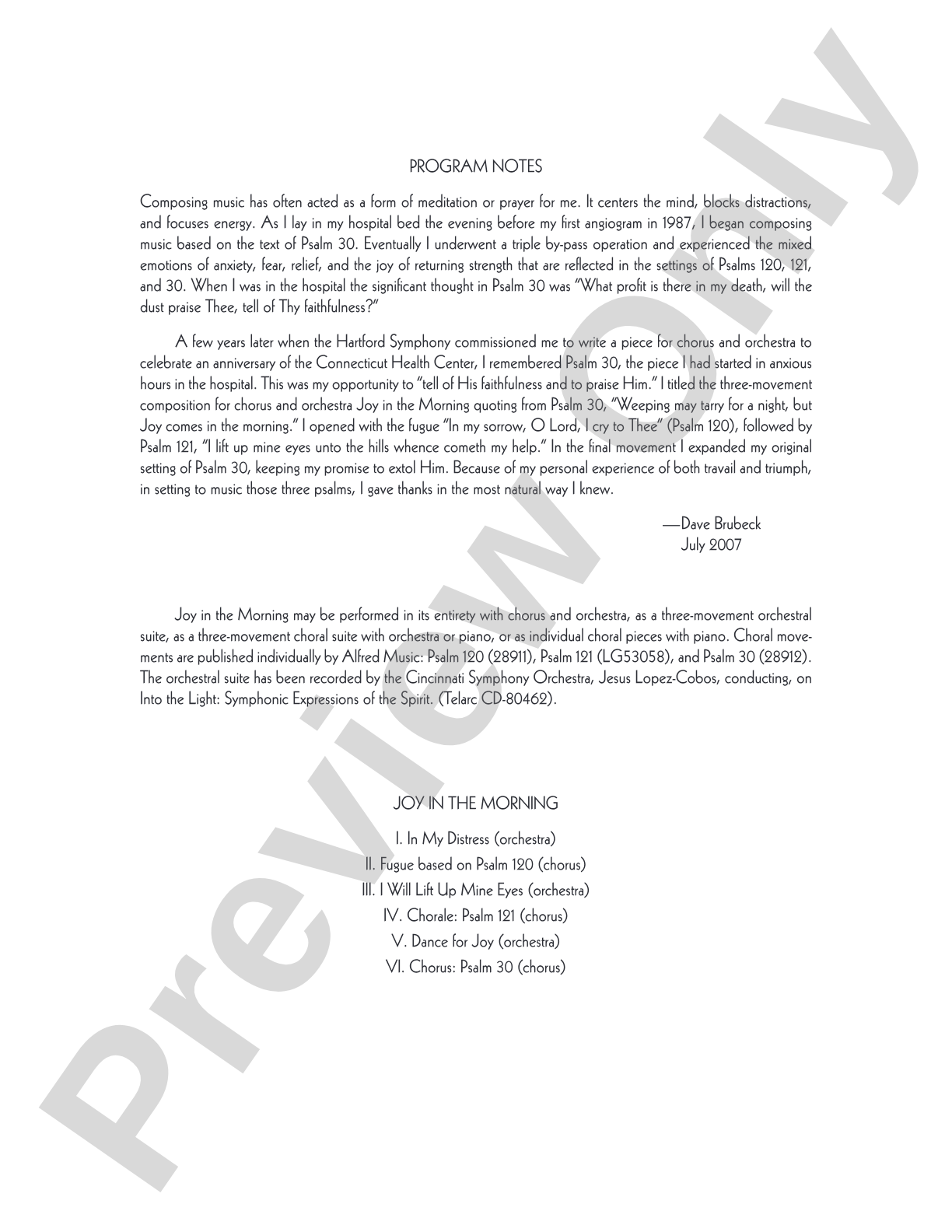
Psalm 30: SATB Choral Octavo

By Dave Brubeck

Item: 00-PO-0004387

Digital Download
$3.50

Minimum order quantity: 20 copies

Description

Psalm 30: SATB Choral Octavo isn't in MakeMusic Cloud just yet...but it could be. Let us know you'd like to see it, and you'll help shape what comes next. In the meantime, start a free trial and dive into thousands of interactive titles your students can play along with today.

Sample Audio
No sample audio found.
Sample Video
Additional Details
Series: Lawson-Gould: The Dave Brubeck Series
Publisher: Alfred Music
Page Count: 20
SKU: 00-PO-0004387

More about this title

About the Composer: Dave Brubeck

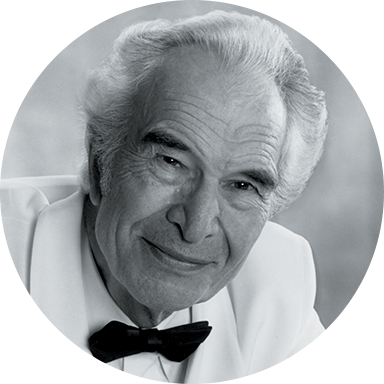
Dave Brubeck

Dave Brubeck stands as one of the twentieth century's most significant figures in jazz piano, equally celebrated for his fully composed concert works. His improvisational mastery informed a diverse catalog that encompasses choral literature, hymns, orchestral compositions, chamber music, and large-scale works for chorus and orchestra. His album "Time Out" became the first jazz record to sell over a million copies, while his composition "Take Five" achieved iconic status. Beyond his musical innovations, Brubeck was instrumental in advancing racial integration in American music during the mid-twentieth century.

Following his World War II service, Brubeck studied composition with Darius Milhaud at Mills College, an experience that shaped his lifelong approach to fusing jazz vernacular with classical forms. His sacred works, including the mass "To Hope!" and oratorios such as "The Voice of the Holy Spirit" and "Beloved Son," have been performed and recorded internationally by major ensembles. His contributions earned him the Presidential Medal of the Arts, a Grammy Lifetime Achievement Award, and induction into the American Classical Music Hall of Fame in 2003.

Why we love this

Brubeck's sacred choral writing brings the harmonic sophistication and rhythmic vitality of his jazz background into the church music repertoire. Psalm 30 demonstrates how a master improviser approaches text setting and four-part harmony, creating a work that rewards careful rehearsal with genuine musical substance. Directors working in this octavo will find material that respects singers' musicianship while offering fresh interpretive possibilities.

What to expect

The work carries the calm assurance of its source text, yet with a modern harmonic sensibility that prevents it from feeling predictable. Brubeck's jazz-informed voice brings warmth and subtle rhythmic sophistication to the psalm, creating sacred music that feels both deeply rooted and freshly composed.

Who it's for

This octavo serves directors seeking to introduce contemporary sacred choral literature with substantial musical content. It works well for intermediate to advanced church choirs and college/university ensembles comfortable with twentieth-century compositional language and harmonic vocabulary.

How to get the most out of it

  • Attend to Brubeck's jazz-influenced harmonic language, particularly unexpected chord progressions. These moments should feel intentional and controlled rather than accidental; shape phrases to highlight the harmonic interest.
  • Balance the SATB texture so no single voice dominates. Brubeck's writing often distributes thematic material across parts, requiring all sections to listen actively to one another.
  • Approach the text with clarity and reverence befitting the psalm. The spiritual content deserves attention equal to the musical architecture.
  • Use the recorded accompaniment (if available) as a rehearsal tool to lock tuning and rhythmic precision, but encourage singers to develop independence from it well before performance.

How to use it

Program this as a centerpiece for a service focused on thanksgiving or trust in God's protection. Its twenty pages and intermediate demands place it well in a liturgical season where you want to showcase the choir's capabilities alongside other repertoire. It also works effectively in concert settings that pair classical and contemporary sacred music.

Skills your students will build

  • Reading twentieth-century harmonic language (extended tertian chords, chromatic voice leading)
  • Balancing multiple independent melodic lines in SATB texture
  • Interpreting jazz-influenced rhythmic and harmonic inflections in a sacred context
  • Sustaining ensemble intonation through complex chord progressions
  • Connecting music to text in a contemporary compositional style

You May Also Like