Psalm 148 Sheet Music Preview

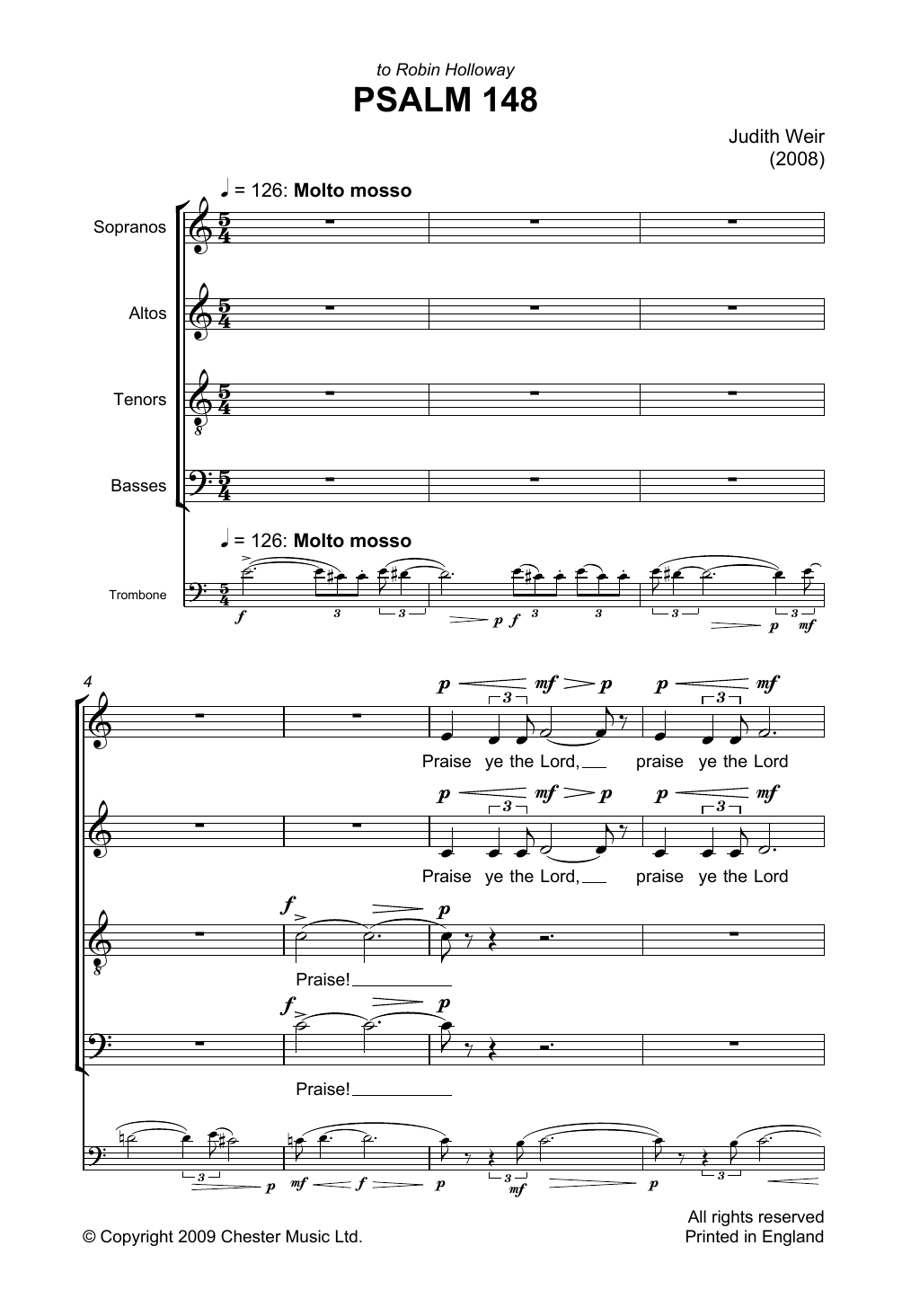
Psalm 148: Choral Octavo

As performed by Judith Weir

Item: 35-DS00337886

Digital Download
$2.99
Description

Psalm 148: Choral Octavo isn't in MakeMusic Cloud just yet...but it could be. Let us know you'd like to see it, and you'll help shape what comes next. In the meantime, start a free trial and dive into thousands of interactive titles your students can play along with today.

Sample Audio
No sample audio found.
Sample Video
Additional Details
Publisher: Hal Leonard
Page Count: 26
SKU: 35-DS00337886

More about this title

About the Artist: Judith Weir

Judith Weir is a Scottish composer whose vocal music stands out for its clarity, intelligence, and deep engagement with text. Her choral works draw on her background in both classical composition and a keen ear for the expressive possibilities of the human voice across ensemble settings.

Why we love this

Weir's setting of Psalm 148 brings freshness to this ancient text without sacrificing the spiritual weight it carries. The writing is singable across mixed voice sections while maintaining harmonic interest that keeps the choir engaged; it's the kind of piece that sounds more complex than it actually is to learn.

What to expect

The music feels both grounded and luminous, with harmonies that feel inevitable rather than imposed. There is a sense of contemplation throughout, with moments where the full choir texture creates real grandeur without becoming bombastic.

Who it's for

This octavo works for mixed choirs at intermediate to advanced levels who want repertoire that honors liturgical tradition while avoiding period clichés. It suits ensembles preparing for sacred music festivals, church services, or concert programs featuring contemporary approaches to spiritual texts.

How to get the most out of it

  • Shape the text naturally by attending to phrase contours rather than mechanical accent patterns; Weir's lines follow speech rhythm closely.
  • Balance the voices so that no single part disappears into the texture, even in fuller passages; each voice should feel like it's contributing a distinct musical line.
  • Let the harmonic progressions breathe; resist rushing through chord changes, as they often carry the emotional arc of the text.

How to use it

Pair this with other contemporary settings of psalms or biblical texts to create a thematic concert block, or use it as an anchor for a program exploring how modern composers approach sacred music. Its 26 pages allow sufficient scope to serve as a standalone feature rather than a filler piece.

Skills your students will build

  • Reading contemporary harmonic language rooted in functional tonality
  • Sustaining long phrase shapes that prioritize text declamation
  • Balancing individual voice parts within a cohesive ensemble texture
  • Responding to subtle dynamic and tonal shading cues in the score

You May Also Like