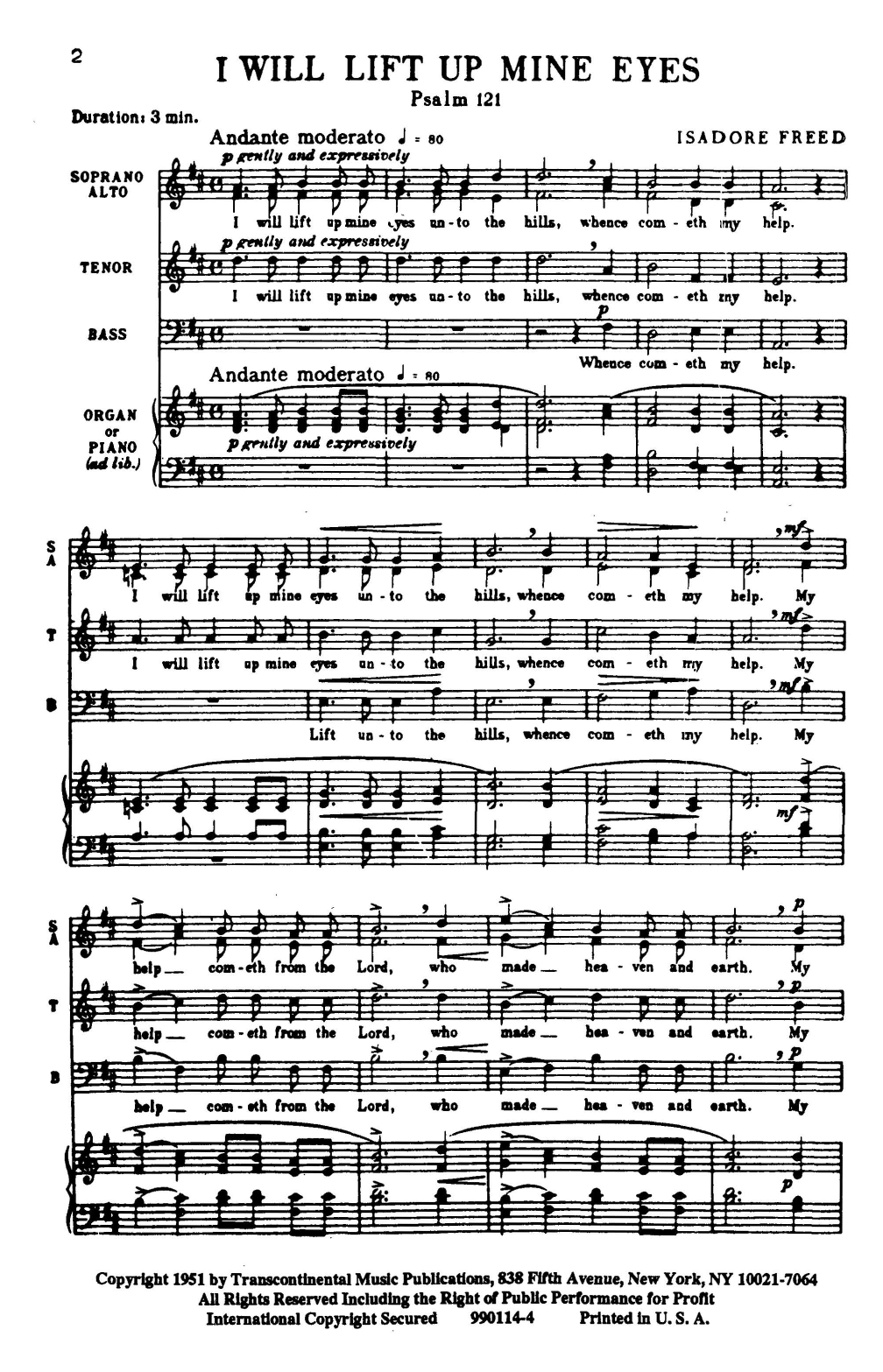
Psalm 121: I Will Lift Up Mine Eyes (from Three Psalms) Sheet Music Preview

Psalm 121: I Will Lift Up Mine Eyes (from Three Psalms): SATB Choral Octavo

By Isadore Freed

Item: 35-DS01456640

Digital Download
$2.99
Description

Psalm 121: I Will Lift Up Mine Eyes (from Three Psalms): SATB Choral Octavo isn't in MakeMusic Cloud just yet...but it could be. Let us know you'd like to see it, and you'll help shape what comes next. In the meantime, start a free trial and dive into thousands of interactive titles your students can play along with today.

Sample Audio
No sample audio found.
Sample Video
Additional Details
Publisher: Hal Leonard
Page Count: 4
SKU: 35-DS01456640

More about this title

About the Composer: Isadore Freed

Isadore Freed (1900-1960) was an American composer and conductor whose work bridged European modernism and American choral traditions. He held leadership roles at several conservatories and composed prolifically across vocal and instrumental genres, drawing particular inspiration from Jewish liturgical music and folk idioms.

Why we love this

Freed's setting of Psalm 121 captures the text's quiet confidence without resorting to bombast. The contemporary harmonic language feels accessible rather than forbidding, making it an excellent choice for choirs ready to move beyond familiar arrangements but still seeking emotional directness.

What to expect

Introspective and grounded. The opening carries a sense of prayer offered without urgency, supported by harmonies that shift subtly underneath. By the close, the piece gathers a quiet dignity that feels earned rather than imposed.

Who it's for

SATB choirs with developing musicianship who have tackled basic contemporary idioms and are ready for something with harmonic depth. This works well for concert programming or sacred music series where you want repertoire that feels modern without alienating your audience.

How to get the most out of it

  • Let the text shape your phrasing. The opening 'I will lift up mine eyes' needs space and lift in the voice, not heaviness.
  • Balance the voices so that inner lines remain audible; Freed's harmonies deserve clarity.
  • Approach dynamic shifts gradually rather than abruptly. This piece breathes best when transitions feel inevitable.

How to use it

Pair this with other American choral works from the mid-twentieth century, or position it as a centerpiece in a program exploring settings of the Psalms across stylistic periods. It also serves well as an opener for a concert, establishing an contemplative mood from the first phrase.

Skills your students will build

  • Reading contemporary harmonic language with extended tertian chords
  • Maintaining lyrical phrasing while navigating disjunct intervallic writing
  • Balancing ensemble blend when inner voices carry significant material
  • Interpreting text with restraint and nuance rather than dramatic intensity

You May Also Like