
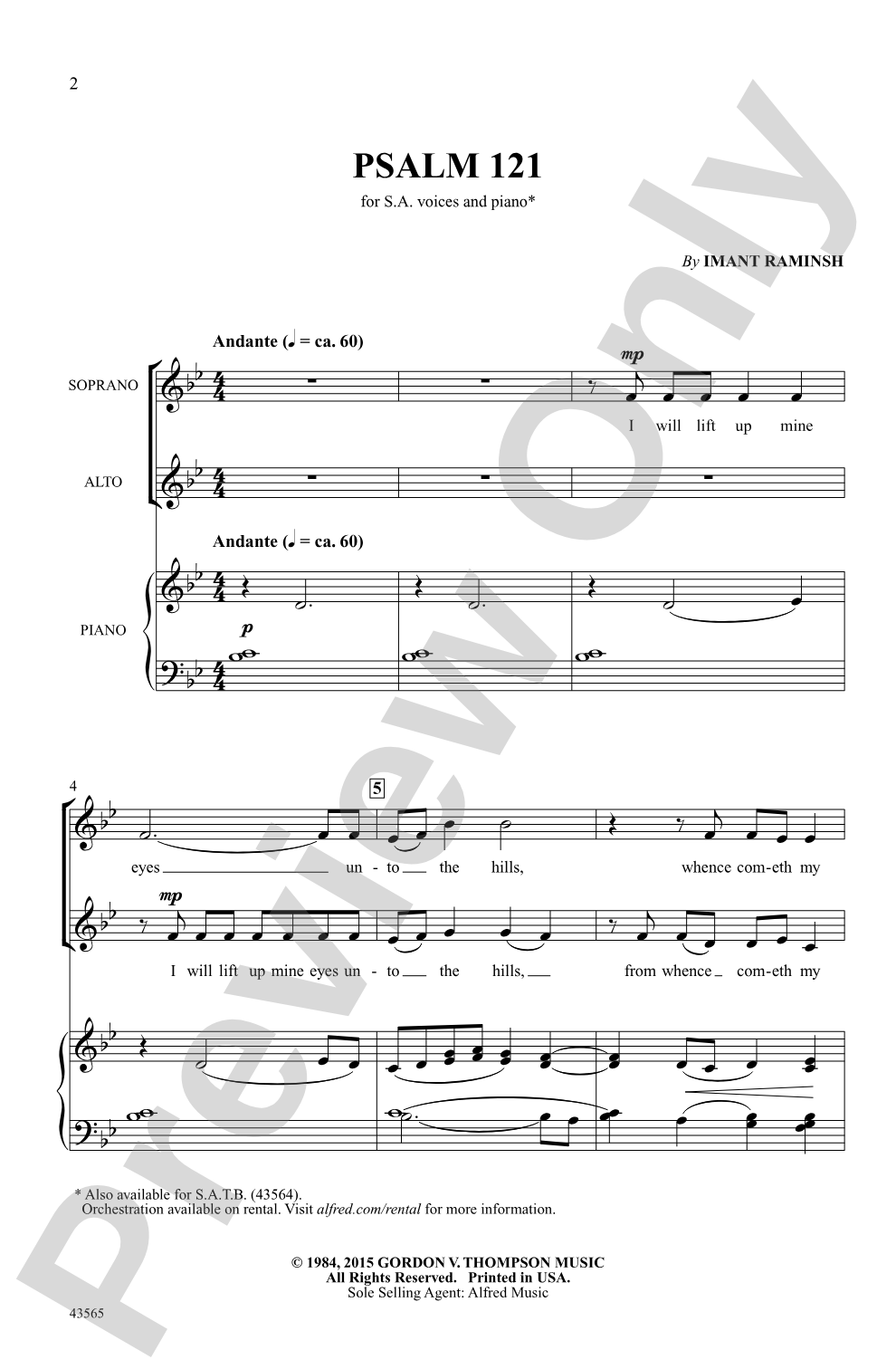
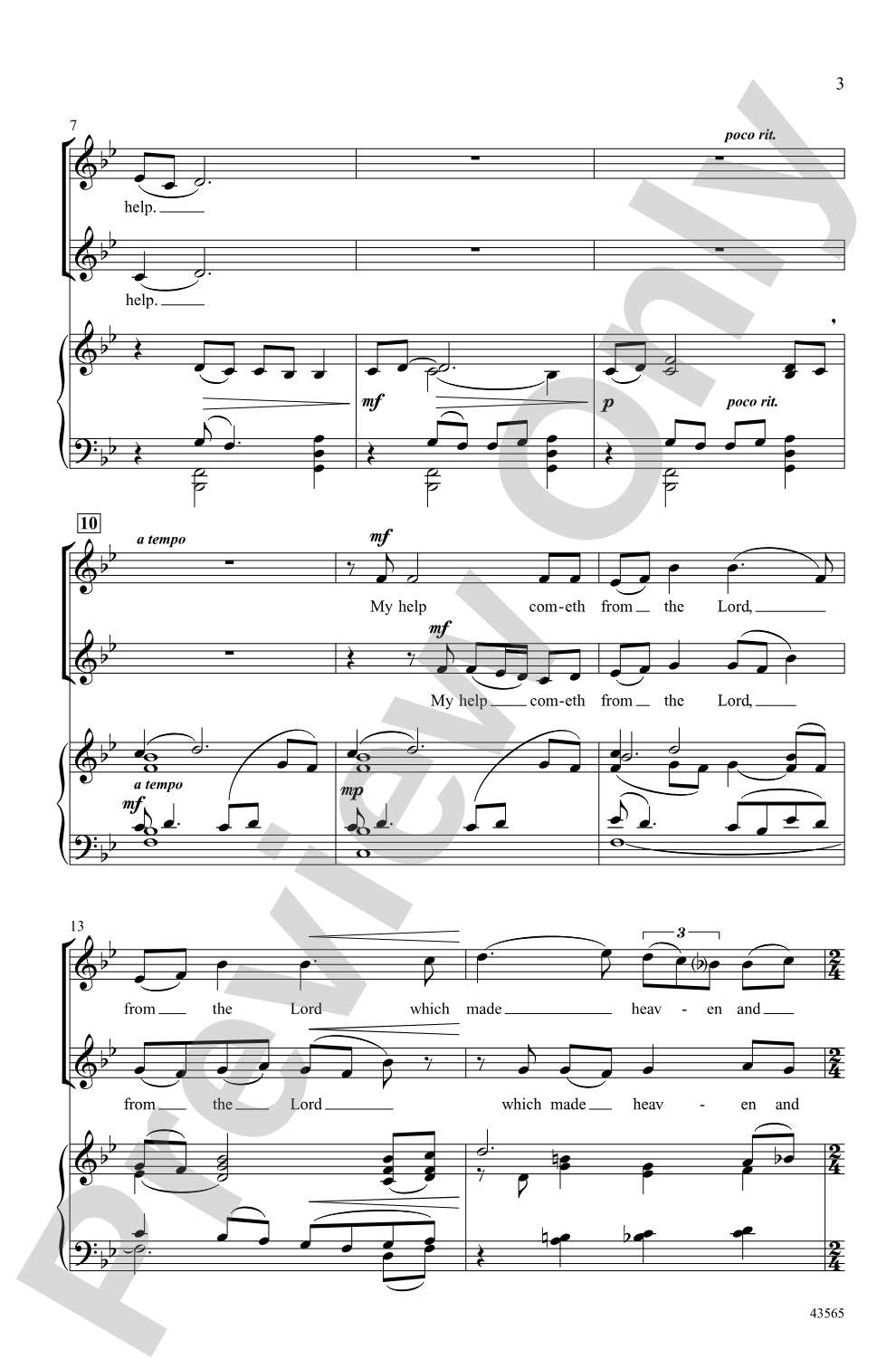

Psalm 121: SA Choral Octavo
By Imant Raminsh
Item: 00-PO-0008047
$1.90
Minimum order quantity: 20 copies
Pickup currently not available
Description
Lawson-Gould is proud to present two new editions of this Gordon V. Thompson classic. Recording provided by Centrediscs and the Vancouver Chamber Choir, Jon Washburn, Conductor. Optional rental orchestration available presser.com/request-rental.


Psalm 121: SA Choral Octavo isn't in MakeMusic Cloud just yet...but it could be. Let us know you'd like to see it, and you'll help shape what comes next. In the meantime, start a free trial and dive into thousands of interactive titles your students can play along with today.
Request This Title
Tell us you want it.
Start Your Free Trial
Explore everything that's ready to play right now.
Sample Audio
1
Audio File
--:--
0:00
0:00
Sample Video
No sample videos found.
Additional Details
Series:
Lawson-Gould
Publisher:
Alfred Music
Page Count:
12
SKU:
00-PO-0008047
More about this title
About the Composer: Imant Raminsh
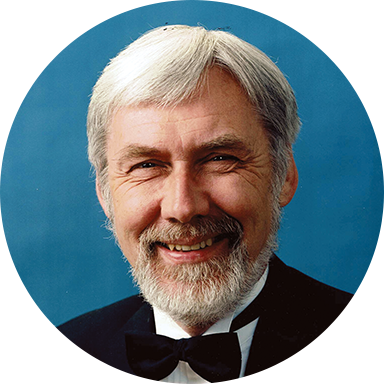
Imant Raminsh grew up in Latvia before his family relocated to Canada in 1948, where he studied composition and conducting at institutions including the Royal Conservatory in Toronto, the University of Toronto, and the University of British Columbia. His compositional voice ranges across solo, chamber, choral, symphonic, and operatic genres, with performances documented across six continents in venues from Roy Thomson Hall to Carnegie Hall to the Forbidden City. He founded several ensembles including the Prince George Symphony and NOVA Children's Choir, and has earned recognition including the Outstanding Choral Composition Award from the Association of Canadian Choral Communities and Officer status in Latvia's Order of the Three Stars.
Raminsh's deep engagement with nature informs much of his work. His seasonal work as a park naturalist in British Columbia shaped his compositional sensibility, and his partnership with poet Beck Strube has produced collaborative works that merge text and music with particular care. He holds membership in the Canadian Music Centre and the Canadian League of Composers, with his works published through major houses including Boosey & Hawkes, Walton Music, and others.
Why we love this
Raminsh's treatment of this spiritual text sits comfortably in the repertoire without feeling derivative; the writing breathes naturally across the SA voicing, giving singers room to shape phrases without excessive technical demands. The inclusion of a professional recording from the Vancouver Chamber Choir conducted by Jon Washburn provides singers with an excellent interpretive model and removes guesswork about tempo and character. With optional orchestration available, this works equally well as an intimate a cappella moment in a concert or as a larger staged work.
What to expect
The piece wraps around the reassurance of Psalm 121 with quiet strength. Raminsh's writing feels grounded and meditative rather than showy, allowing the text about watching over you to settle into listeners' ears without melodrama. There's a sense of stillness and attentiveness throughout.
Who it's for
SA choirs seeking sacred repertoire that doesn't condescend to developing singers and directors programming concerts that include both unaccompanied and orchestrated options within the same work. This sits well in churches, school choirs, and community ensembles with singers who can hold their own musically but appreciate clear, singable writing.
How to get the most out of it
- Listen to the Centrediscs recording before the first rehearsal so your singers hear how the piece inhabits silence and space rather than filling every moment with sound.
- Pay particular attention to vowel consistency between the two voice parts, especially in unison or near-unison passages where blend determines whether phrases land as unified or muddled.
- Consider the arc across all twelve pages as a single gesture rather than stopping between sections; sustained phrase momentum gives the text room to resonate.
How to use it
Place this early in a concert where it can establish a reflective mood before moving to contrasting material, or use it as a closing benediction if your program follows a contemplative arc. The optional orchestration makes it flexible; perform it a cappella for a more intimate concert setting or add strings and winds if you're building toward a fuller sound in the second half.
Skills your students will build
- Singing SA voicing with secure intonation and blend
- Sustaining longer phrases with consistent breath support
- Responding to text inflection within a sacred context
- Balancing part independence with ensemble unity