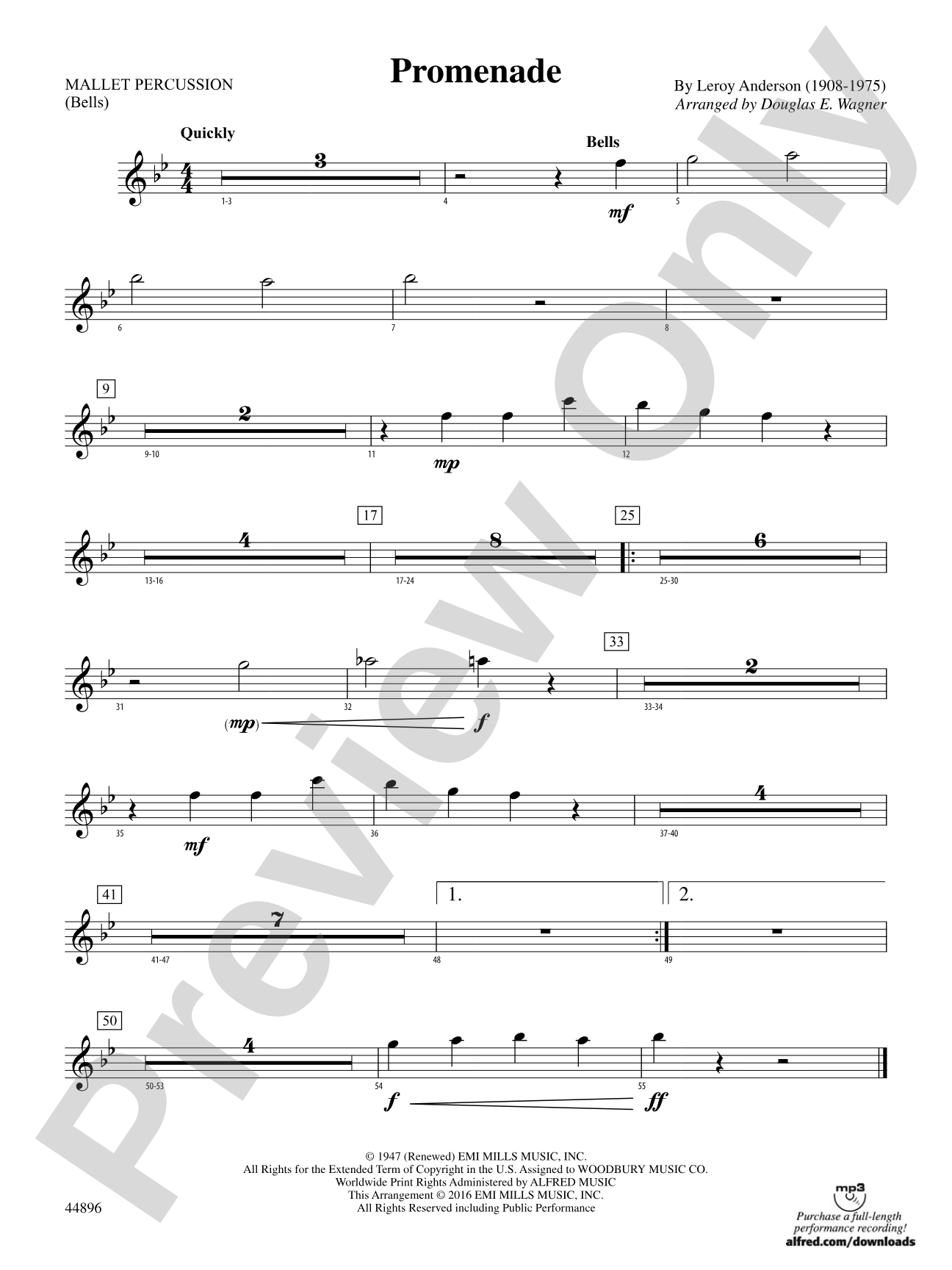
Promenade: Mallets Sheet Music Preview

Promenade: Mallets

By Leroy Anderson / arr. Douglas E. Wagner

Grade: 1 (Very Easy)

Item: 00-PC-0017390_M1

Digital Download
$3.00
Description
A musical depiction of a leisurely stroll through a park, this Leroy Anderson original composition was first performed by the Boston Pops. A perfect introduction to the endless variety found in Anderson's work for your beginning band. (2:00)

Don't just read it, hear it, play along with it, and watch your students grow with it. In MakeMusic Cloud, Promenade: Mallets comes alive with professional accompaniment, adjustable tempo, and built-in practice tools that turn solo practice into real progress.

Sample Audio
0:00
0:00
Sample Video
Additional Details
Series: Pop Beginning Band
Publisher: Alfred Music
Page Count: 130
SKU: 00-PC-0017390_M1

More about this title

About the Composer: Leroy Anderson

Leroy Anderson (1908-1975) was an American composer and conductor whose gift for melody and orchestration made him a defining voice in American light music. His prolific output of pops repertoire for orchestra, band, and smaller ensembles became staples of concert programming, and his work with the Boston Pops under Arthur Fiedler helped establish that ensemble's international reputation.

Anderson's compositions are instantly recognizable for their wit, charm, and impeccable craftsmanship. He possessed an extraordinary ability to paint vivid scenes and capture human experience through purely instrumental music, without ever resorting to bombast or pretense. His pieces remain essential teaching tools because they demonstrate how elegant orchestration and clear musical ideas can engage listeners of all ages.

Why we love this

Anderson's music reveals itself generously to young ensembles. This piece captures everything a beginning band needs to experience: clear phrasing, transparent orchestration, and genuine musical content that never condescends. The Grade 1 adaptation preserves the charm and character of the original while removing technical barriers, so your students play real music with real shape from day one.

What to expect

Imagine a sunny afternoon in a public garden, unhurried and observant. The music has genuine warmth without sentimentality, with little moments of character and detail that reward careful listening. There is contentment here, and a kind of musical ease that comes from perfect clarity of purpose.

Who it's for

This score and parts are designed for beginning concert bands developing fundamental ensemble skills. It works equally well in middle school introductory programs, high school ninth-grade bands, or community groups building confidence and listening skills together.

How to get the most out of it

  • Shape each phrase with gentle dynamic contours rather than playing at a single volume throughout. Anderson's melodies sing best when they breathe.
  • Maintain a relaxed, walking tempo that matches the leisurely mood. Rushing will lose the stroll entirely; allow space between musical ideas.
  • Balance the melody against supporting voices so listeners hear the main tune clearly. Check that accompanimental parts sit underneath rather than competing for attention.
  • Connect repeated figures smoothly across sections. What might look like simple repetition becomes musical when each restatement has slightly different color or emphasis.

How to use it

Open a concert with this piece to establish an inviting tone and set an accessible standard for musical behavior. It pairs beautifully alongside other light Anderson works or as a complement to European marches and folk arrangements. Consider programming it early in the rehearsal year when young ensembles are still building confidence with basic technique.

Skills your students will build

  • Balance between melody and accompaniment
  • Shaping musical phrases with dynamic direction
  • Reading independent concert band parts
  • Maintaining steady tempo across sectional entrances and transitions
  • Responding to conductor gesture with ensemble precision
  • Understanding harmonic function through transparent orchestration

You May Also Like