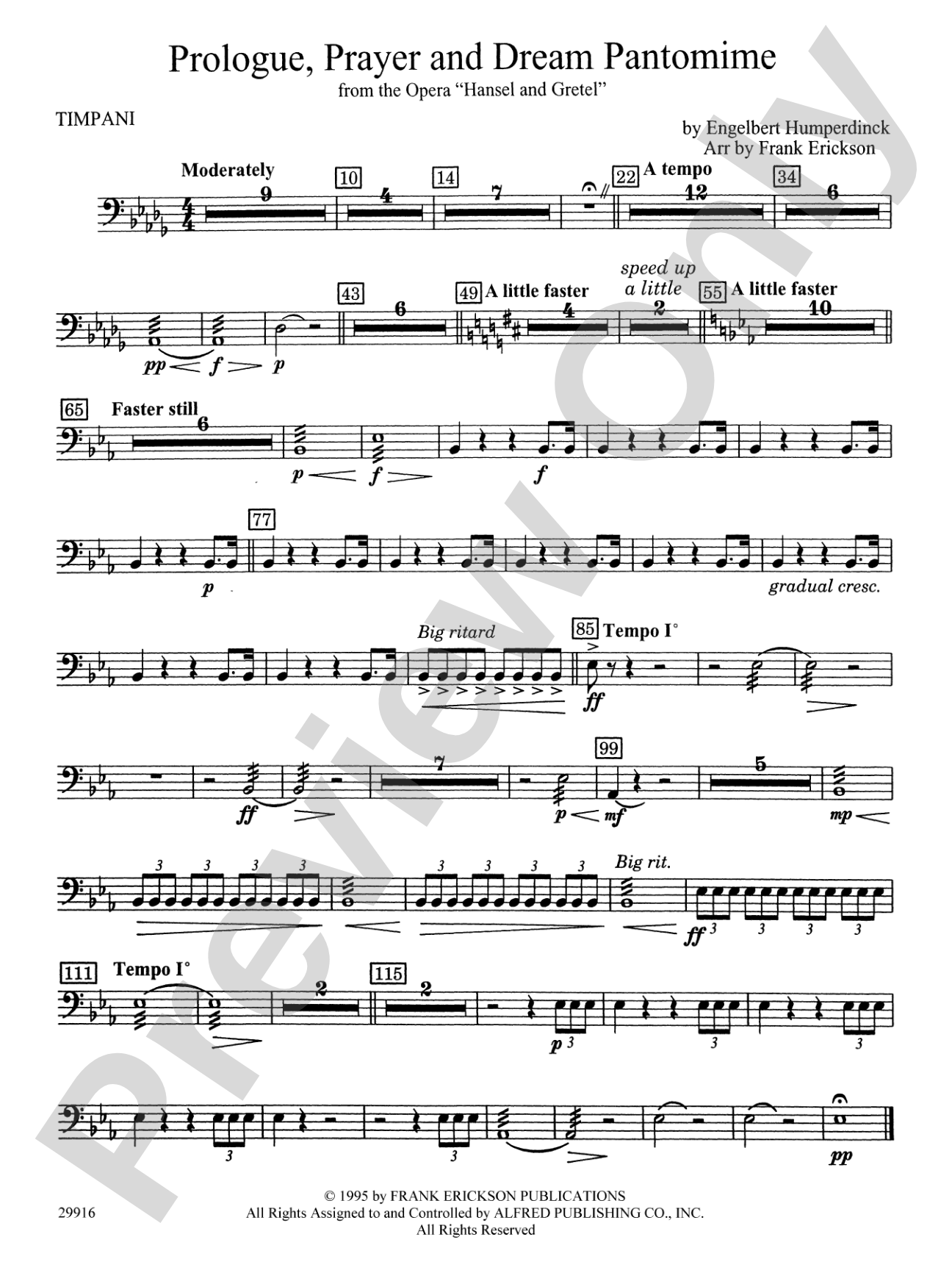
Prologue Prayer and Dream Pantomime (from the opera Hansel and Gretel): Timpani Sheet Music Preview

Prologue Prayer and Dream Pantomime (from the opera Hansel and Gretel): Timpani

By Engelbert Humperdinck / arr. Frank Erickson

Grade: 2 (Easy)

Item: 00-PC-0001639_TMP

Digital Download
$3.00
Description
This arrangement is derived from the music in Act 2 with Hansel and Greta lost and lying down to sleep in the woods. The Prologue begins with the sandman sprinkling sand on to the children's eyes. Hansel and Gretle respond by singing their Evening Prayer. In the Dream Pantomime a ladder reaches down from heaven and 14 angels are seen to surround the sleeping children.

Don't just read it, hear it, play along with it, and watch your students grow with it. In MakeMusic Cloud, Prologue Prayer and Dream Pantomime (from the opera Hansel and Gretel): Timpani comes alive with professional accompaniment, adjustable tempo, and built-in practice tools that turn solo practice into real progress.

Sample Audio
No sample audio found.
Sample Video
Additional Details
Series: Frank Erickson Publications
Publisher: Alfred Music
Page Count: 256
SKU: 00-PC-0001639_TMP

More about this title

About the Composer: Engelbert Humperdinck

Engelbert Humperdinck (1854-1921) was a German composer who revolutionized opera by embracing Wagner's harmonic language while maintaining accessibility and emotional directness. His opera Hansel and Gretel, premiered in 1893, became one of the most frequently performed operas worldwide and remains a cornerstone of music education, valued for its rich orchestration, memorable melodies, and deeply human storytelling.

Humperdinck's gift for orchestral color and his ability to depict magical, fantastical scenes through music made his work ideal for adaptation and educational performance. The opera's themes of innocence, protection, and redemption resonate across generations and continue to inspire arrangements for student ensembles.

Why we love this

Frank Erickson's Grade 2 arrangement captures the emotional arc of this iconic scene without overwhelming young musicians. The piece moves effortlessly from the mysterious, delicate Prologue into the dreamlike pantomime, giving your band a chance to explore nuance and storytelling at an accessible level. Directors appreciate how the arrangement preserves Humperdinck's harmonic richness while keeping parts manageable across the full ensemble.

What to expect

The opening unfolds like a gentle spell being cast, with sparse, delicate textures as the sandman works his magic on sleeping children. As the Evening Prayer emerges, warmth and tenderness fill the sound. The Dream Pantomime carries a sense of wonder and protection, with ascending harmonies that suggest heavenly presence.

Who it's for

Concert bands at the Grade 2 level seeking repertoire that balances accessibility with genuine musical substance. This arrangement works well for groups ready to move beyond simple march forms into pieces that demand musicality, balance, and expressive control.

How to get the most out of it

  • Shape the Prologue with restraint; the sandman's presence should feel intimate and magical rather than grand. Encourage players to listen across sections and balance the ensemble so no single voice overwhelms the dreamlike texture.
  • Allow the Evening Prayer to sing through with warmth and directness. This moment calls for lyrical phrasing and careful attention to breath points, even in an instrumental setting.
  • The Dream Pantomime section benefits from clarity in rhythmic precision while maintaining a flowing, almost floating quality. Think of the angels' descent as deliberate but weightless.
  • Use the conductor score to map out dynamic and tempo relationships across both movements; the transition from prayer to dream requires careful attention so the change feels organic rather than abrupt.

How to use it

Program this alongside other Romantic-era miniatures to create a concert segment devoted to beauty and storytelling at the operatic level. It pairs naturally with themed concerts exploring fairy tales or dreamlike narratives. The piece also serves as an excellent mid-year or spring performance option when bands have developed sufficient technical control and musical maturity.

Skills your students will build

  • Balancing transparent textures across multiple instrumental families
  • Sustaining lyrical phrasing in an instrumental context
  • Executing dynamic control at soft volumes (ppp to p passages)
  • Reading and responding to conductor cues in multi-sectional forms
  • Understanding harmonic progression and resolution in Romantic-era writing

You May Also Like