
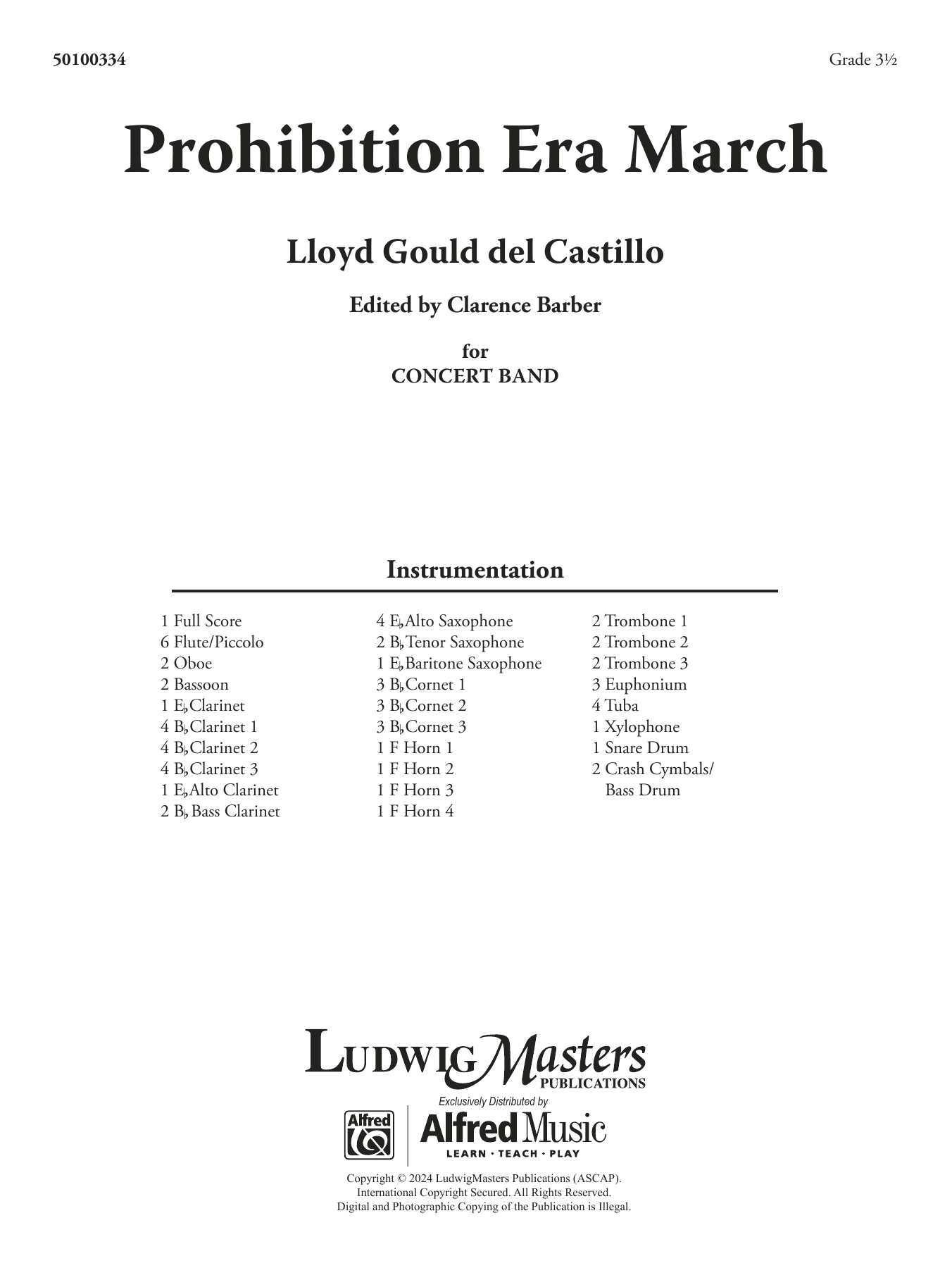

Prohibition Era March (arr. Clarence Barber): Concert Band Conductor Score & Parts
By L.G. del Castillo / Arranged by Clarence Barber
Item: 35-PK01498818
$80.00
Pickup currently not available
Buy Extra Parts (Digital PDF Download)
Parts Added to Cart!
Description
A uniquely styled arrangement of a march popular in the early days of the Prohibition era, this features an optional xylophone solo the first time through the Trio. Just the sort of different march to make your concert a little spicy.


Prohibition Era March (arr. Clarence Barber): Concert Band Conductor Score & Parts isn't in MakeMusic Cloud just yet...but it could be. Let us know you'd like to see it, and you'll help shape what comes next. In the meantime, start a free trial and dive into thousands of interactive titles your students can play along with today.
Request This Title
Tell us you want it.
Start Your Free Trial
Explore everything that's ready to play right now.
Sample Audio
No sample audio found.
Sample Video
No sample videos found.
Additional Details
Publisher:
Hal Leonard
SKU:
35-PK01498818
More about this title
Why we love this
Clarence Barber's arrangement captures the swagger and irreverence of Prohibition-era popular music without leaning on tired clichés. The optional xylophone solo in the Trio gives you a natural way to feature a student soloist, and the whole piece has enough character to stand out on a concert without demanding technical fireworks from your ensemble.
What to expect
Roaring Twenties energy filtered through a concert band lens. There's a lightheartedness and clever orchestration that feels more like a speakeasy than a parade, with the xylophone solo adding a moment of shimmering sophistication.
Who it's for
Concert bands looking to program something with genuine historical flavor and personality. This works well for groups seeking marches that move beyond the standard patriotic or ceremonial repertoire, especially those who enjoy the sass of early jazz and popular music idioms.
How to get the most out of it
- Lean into the rhythmic swagger of the opening. This isn't a stiff ceremonial march; let the syncopation breathe and push the pocket slightly forward.
- If you're featuring the xylophone solo, give that student multiple rehearsals to lock in the part and build confidence. The spotlight is brief but needs to land cleanly.
- Balance the full band sections with clarity in the Trio. The xylophone line deserves a transparent texture around it, so watch your inner voice voicing.
How to use it
Pair this with other pieces that capture American vernacular music to create a program themed around early twentieth-century songwriting and arranging. It makes an excellent opener or closer for a concert; the historical specificity and quirky charm give audiences something to talk about.
Skills your students will build
- Phrasing syncopated rhythms with groove rather than rigidity
- Supporting a featured soloist within ensemble texture
- Balancing transparency and fullness in ensemble writing
- Understanding march form with idiomatic popular music language