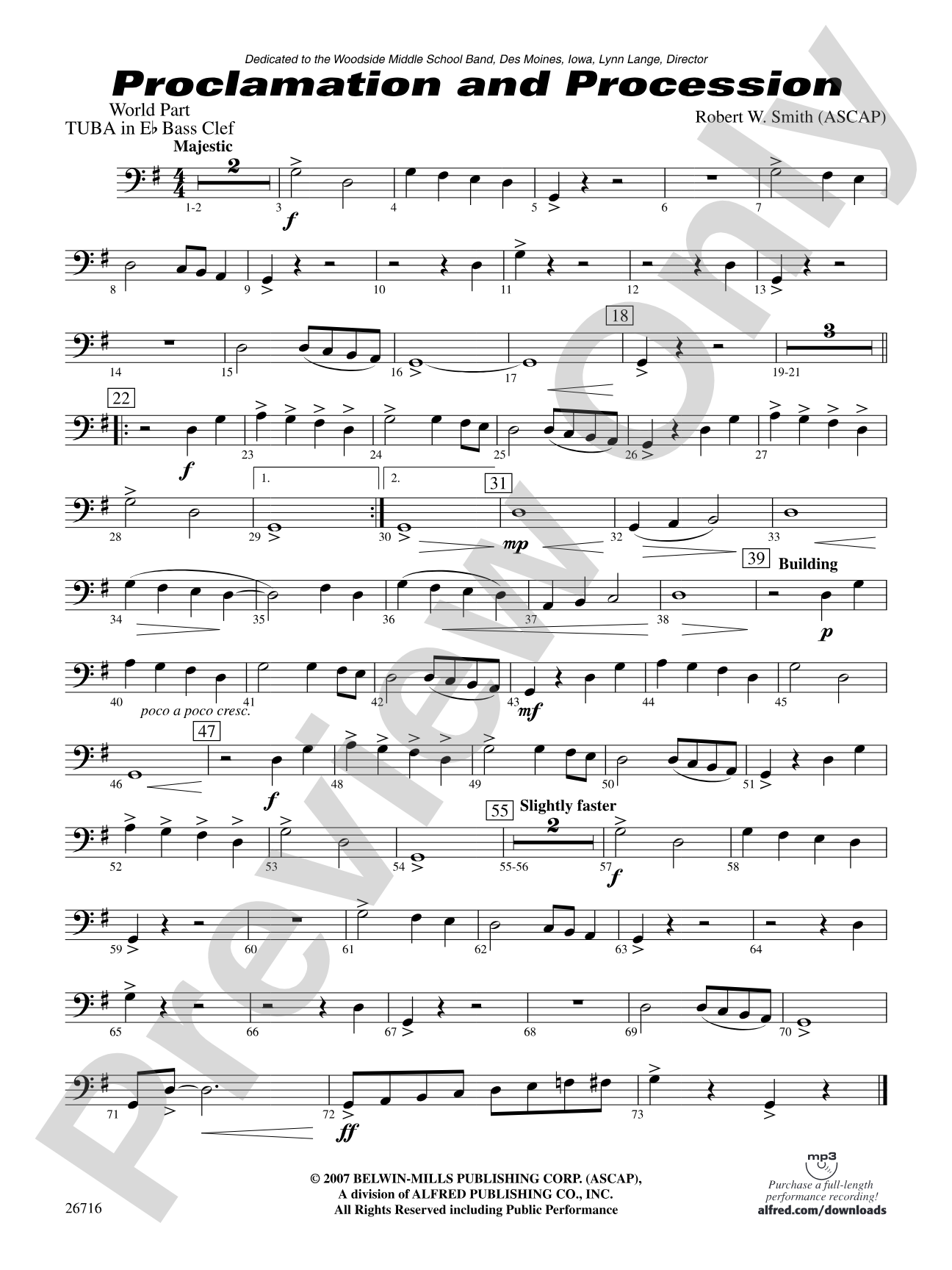
Proclamation and Procession: (wp) E-flat Tuba B.C. Sheet Music Preview

Proclamation and Procession: (wp) E-flat Tuba B.C.

By Robert W. Smith

Grade: 2 (Easy)

Item: 00-PC-0001189_wpTBEBC

Digital Download
$3.00
Description
Robert W. Smith's Proclamation and Procession is certain to make your ensemble sound its best. Bold and commanding, the work opens with a majestic fanfare and develops the heroic theme in a variety of textures, building to an energetic conclusion. Scored to accompany Band Expressions™ Book Two, but perfect for any developing band, here's a sure winner for both concerts and contests. This title is available in MakeMusic Cloud.

Don't just read it, hear it, play along with it, and watch your students grow with it. In MakeMusic Cloud, Proclamation and Procession: (wp) E-flat Tuba B.C. comes alive with professional accompaniment, adjustable tempo, and built-in practice tools that turn solo practice into real progress.

Sample Audio
0:00
0:00
Sample Video
Additional Details
Series: Band Expressions
Publisher: Alfred Music
Page Count: 68
SKU: 00-PC-0001189_wpTBEBC

More about this title

About the Composer: Robert W. Smith

Robert W. Smith

Robert W. Smith stands among the most performed composers of concert band repertoire in America, with over 400 publications spanning original works, arrangements, and educational pieces. His compositions have traveled across continents, from European concert halls to the Olympic Games, and have become foundational works in developing band programs worldwide. Smith holds degrees in music education from Troy State University and a master's degree from the University of Miami.

Beyond the concert hall, Smith's music has appeared on major television broadcasts, opening ceremonies, and iconic American events. His symphonic works—including The Divine Comedy and The Odyssey—demonstrate his gift for writing music that engages both musicians and audiences. As a conductor and clinician, he has worked extensively throughout North America, Europe, Asia, and Australia, bringing his understanding of ensemble development directly to programs at all levels.

Why we love this

Smith writes for developing ensembles with genuine understanding of what middle-school musicians can accomplish. The fanfare opening gives your band an immediate sense of occasion and confidence, while the varied textures throughout keep the ensemble engaged without overwhelming section-specific challenges. This is the kind of piece that sounds impressive to an audience and genuinely rewarding to play.

What to expect

Proclamation and Procession opens with ceremonial grandeur, establishing a heroic character that feels both authoritative and approachable. The varied textures unfold naturally, allowing listeners to follow the musical argument, and the energetic conclusion provides genuine satisfaction without demanding virtuosity.

Who it's for

Grade 2 concert bands that want a showpiece with genuine musicality and structural interest. Whether you're preparing for a winter or spring concert or looking for contest material with broad appeal, this work sits at the sweet spot between accessibility and impact.

How to get the most out of it

  • Shape the opening fanfare with clarity and precision; the majestic character depends on clean articulation across all sections rather than volume alone.
  • Bring out the heroic theme as it passes between sections, treating each iteration as a moment to highlight different voice leading and orchestration.
  • Control the build toward the conclusion carefully; the energy should feel purposeful and building, not rushed.

How to use it

This works as a concert opener that sets a strong tone for your program, or as a closer that leaves audiences with a sense of accomplishment. If you're using Band Expressions Book Two in your curriculum, this provides a natural capstone piece that reinforces concepts from the method without feeling disconnected from concert life.

Skills your students will build

  • Executing articulation in fanfare style passages
  • Following thematic development across different instrumental voices
  • Controlling dynamic growth and energy management over longer phrases
  • Balancing ensemble sound during scoring with multiple simultaneous melodic lines

You May Also Like