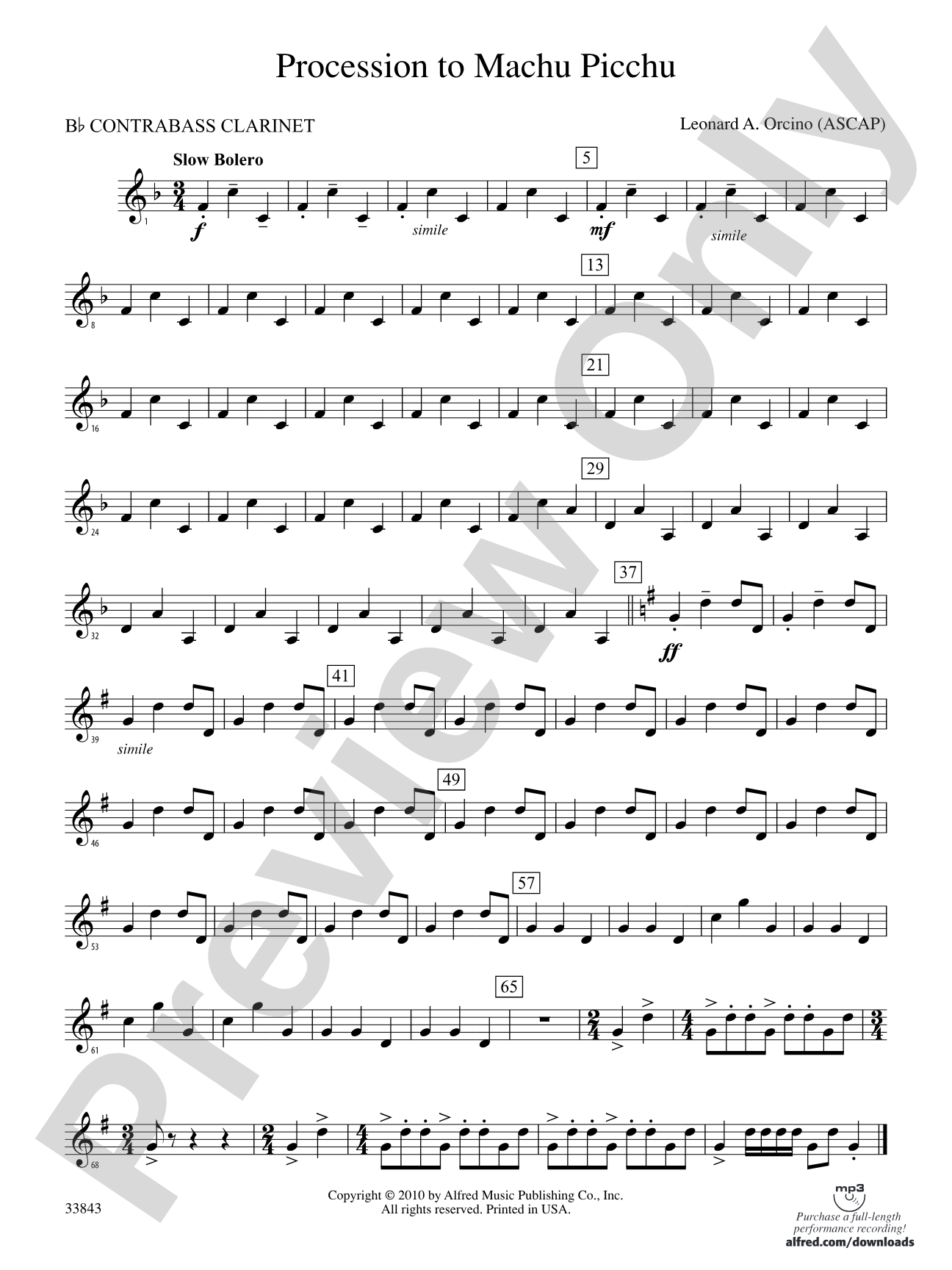
Procession to Machu Picchu: (wp) B-flat Contrabass Clarinet Sheet Music Preview

Procession to Machu Picchu: (wp) B-flat Contrabass Clarinet

By Leonard A. Orcino

Grade: 2 (Medium Easy)

Item: 00-PC-0014574_wpBCBC

Digital Download
$3.00
Description
Machu Picchu is the site of a pre-Columbian (1462AD) Inca ruin, often referred to as "The Lost City of the Incas." It is situated on a mountain ridge 8000 feet above the Urubamba Valley in Peru. American historian Hiram Bingham rediscovered the site and brought it to the attention of the world in 1911. Machu Picchu is now considered one the seven wonders of the modern world and is a highly visited tourist destination.

Procession to Machu Picchu is written in a bolero style and brings to life visions of the Incas as they marched to the summit over 500 years ago.

Don't just read it, hear it, play along with it, and watch your students grow with it. In MakeMusic Cloud, Procession to Machu Picchu: (wp) B-flat Contrabass Clarinet comes alive with professional accompaniment, adjustable tempo, and built-in practice tools that turn solo practice into real progress.

Sample Audio
0:00
0:00
Sample Video
Additional Details
Series: Young Symphonic
Publisher: Alfred Music
Page Count: 128
SKU: 00-PC-0014574_wpBCBC

More about this title

Why we love this

Orcino captures the grandeur and ceremonial atmosphere of an Incan procession without overcomplicating the ensemble's technical demands. The bolero style gives Grade 2 bands a chance to explore Latin rhythmic conventions while maintaining clarity and control, making this both musically rewarding and achievable.

What to expect

The piece evokes a steady, ceremonial procession unfolding at elevation. You hear the climb and the determination of the Incas moving across the mountain ridge, carried forward by the hypnotic pulse of the bolero and the warmth of the orchestration.

Who it's for

Grade 2 concert bands seeking repertoire that balances cultural substance with technical accessibility. Directors programming a concert with a thematic focus on world music, travel, or Americana will find this piece an engaging centerpiece.

How to get the most out of it

  • Shape the bolero rhythm with intention. The characteristic habanera pulse needs a relaxed but steady foundation from the low reeds and brass; resist the urge to rush, especially in slower passages.
  • Balance the melodic voices carefully across the ensemble. With a full conductor score and parts, track which sections carry the main theme at each moment so the texture remains transparent.
  • Bring out the character of the opening. Let the band hear the imagery of the march beginning; this musical setup shapes everything that follows.
  • Adjust articulation to match the bolero style. Smoother tonguing in wind passages will feel more authentic than crisp, detached articulation throughout.

How to use it

Pair this with other Latin or world music selections to create a unified concert theme, or use it as a standalone feature in a pops or light classical program. The Grade 2 level makes it suitable for mid-year programming when young ensembles are building confidence.

Skills your students will build

  • Latin rhythmic interpretation, especially bolero style conventions
  • Ensemble balance and blend across wind and brass sections
  • Maintaining steady tempo within a relaxed, processional character
  • Reading from full score parts in a multi-movement concert band format

You May Also Like