Procession of the Sardar: 1st F Horn Sheet Music Preview

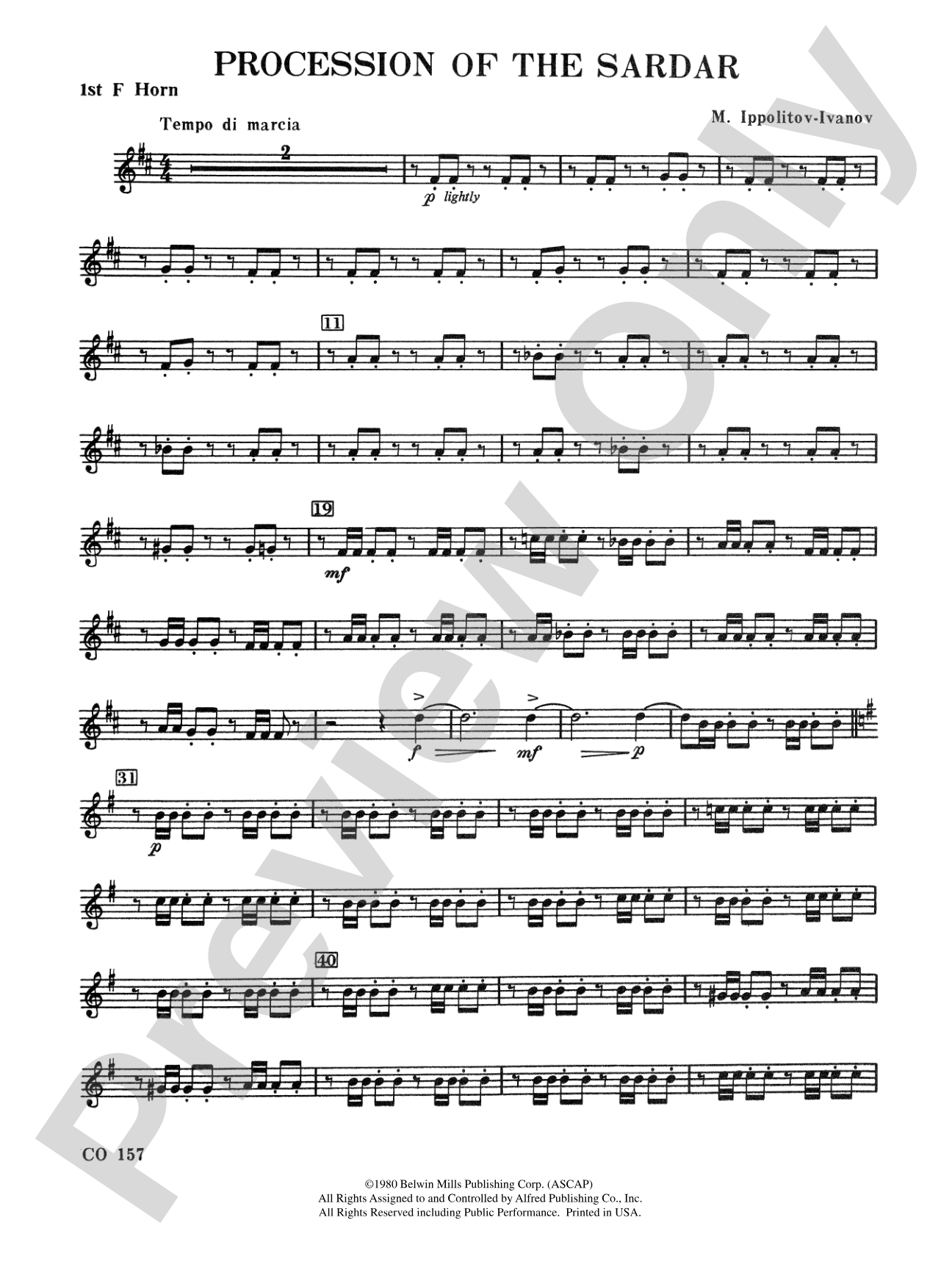
Procession of the Sardar: 1st F Horn

From Caucasian Sketches

By Mikhail Ippolitov-Ivanov / arr. Merle J. Isaac

Grade: 3.5

Item: 00-PC-0002346_H1

Digital Download
$3.00
Description
From the Caucasian Sketches by Ippolitov-Ivanov, this familiar melody is given a splendid arrangement by Merle Isaac. A piece that could highlight any concert.

Don't just read it, hear it, play along with it, and watch your students grow with it. In MakeMusic Cloud, Procession of the Sardar: 1st F Horn comes alive with professional accompaniment, adjustable tempo, and built-in practice tools that turn solo practice into real progress.

Sample Audio
0:00
0:00
Sample Video
Additional Details
Series: Belwin Concert Full Orchestra
Publisher: Alfred Music
Page Count: 176
SKU: 00-PC-0002346_H1

More about this title

About the Composer: Nicolai Ippolitov-Ivanov

Nicolai Ippolitov-Ivanov (1859, 1935) was a Russian composer and conductor who built his reputation on orchestral works that capture the color and drama of the Caucasus region. His time as a conductor in Moscow and his travels through the Caucasus informed much of his compositional voice, which blends Russian romanticism with exotic harmonic and melodic elements. The Caucasian Sketches remain his most performed works in concert and educational settings.

Why we love this

Merle Isaac's arrangement preserves the grandeur and accessibility of the original while giving every section a moment to shine. The Grade 3.5 level keeps the technical demands manageable without sacrificing the piece's ceremonial brilliance, making it realistic for strong high school and community orchestras to prepare it soundly in a single semester.

What to expect

A stately march emerging from mist, full of proud, burnished brass and swelling string harmonies. The familiar melody unfolds without hurry, inviting the listener into a world of color and pageantry that feels both exotic and deeply human.

Who it's for

Orchestras at the Grade 3, 4 level looking for a legitimate concert piece with recognition value and straightforward but satisfying orchestration. This works equally well for contest or festival settings where a polished, professional-sounding result matters.

How to get the most out of it

  • Balance the sustained harmonic texture in the strings against the melodic line; the procession only lands when both layers are clearly audible.
  • Shape the opening with natural momentum rather than rushing. Let the ceremonial character emerge from controlled tempo, not speed.
  • Check woodwind doublings carefully during the tutti passages. Slight dynamic shaping within those doubling parts prevents the texture from feeling muddy.
  • Secure the rhythm section's coordination early. The piece's processional character depends on steady, unified pulse from brass and percussion.

How to use it

Consider this for a concert opening or as the centerpiece of a themed program exploring Russian composers or arrangements of masterworks. Its moderate length and clear formal structure also make it valuable as a pacing anchor in a longer concert when you need a piece that lands with impact without exhausting your players.

Skills your students will build

  • Balancing multiple lines of equal importance in dense harmonic textures
  • Sustaining lyrical melodic lines without sentimentality
  • Coordinating brass and woodwind doublings for clarity
  • Executing a steady, ceremonial tempo without rushing
  • Dynamic control across large sections to prevent fatigue and loss of focus

You May Also Like