
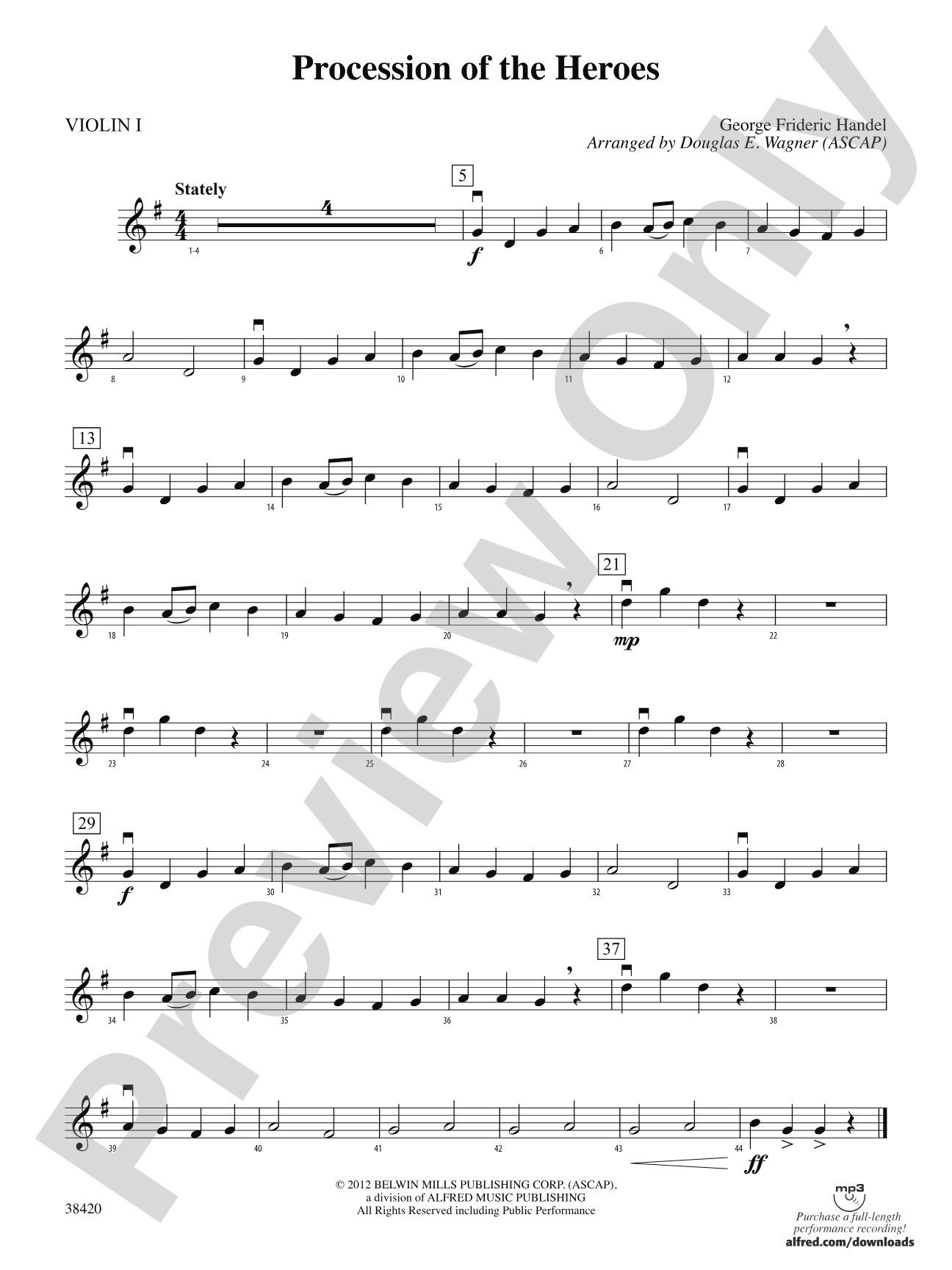

Procession of the Heroes: 1st Violin
By George Frideric Handel / arr. Douglas E. Wagner
Grade: 1.5
Item: 00-PC-0015487_VN1
$5.99
Pickup currently not available
Description
The depth and richness of lower strings are brought center stage in this regal- sounding work. The music is adapted from the aria, "Heroes, When with Glory Burning," taken from the oratorio, Joshua. Players will quickly embrace the spirit of the music, as ample repetition throughout makes their mastery of it even easier. A perfect confidence-building selection for younger players, and a great programming choice for any concert!


Don't just read it, hear it, play along with it, and watch your students grow with it. In MakeMusic Cloud, Procession of the Heroes: 1st Violin comes alive with professional accompaniment, adjustable tempo, and built-in practice tools that turn solo practice into real progress.
Open in the Player
Jump straight in and assign it today.
Start Your Free Trial
Open this title and explore the full library in minutes.
Sample Audio
1
Audio File
--:--
0:00
0:00
Sample Video
No sample videos found.
Additional Details
Series:
Belwin Beginning String Orchestra
Publisher:
Alfred Music
Page Count:
72
SKU:
00-PC-0015487_VN1
More about this title
About the Composer: George Frideric Handel
George Frideric Handel (1685-1759) composed across every major genre of his time: operas, oratorios, concertos, and keyboard works that defined the Baroque era. His melodies are instantly memorable, built on clear harmonic structures and generous repetition, which made his music accessible to audiences then and now. Handel's oratorios, particularly those with biblical subjects like Joshua, showcase his gift for writing music that combines grandeur with singability, qualities that translate beautifully to string arrangements for young players.
Why we love this
Douglas E. Wagner's arrangement honors Handel's gift for memorable melody while placing the violas and cellos in the spotlight, giving lower string players material that sounds genuinely important rather than accompaniment-bound. The relentless repetition builds confidence without sacrificing musical substance; young players hear themselves master something with real Baroque character. At Grade 1.5, this hits the sweet spot where ensemble members can sound polished quickly and enjoy a concert-ready piece that audiences recognize and respect.
What to expect
The piece moves with ceremonial grandeur, as if witnessing a procession of dignified figures. Lower strings sing a warm, confident melody that feels almost vocal in its shape and phrasing, supported by upper strings that add luminous texture without overwhelming. There's something fundamentally reassuring about music this clear and well-proportioned, which is part of why Handel's work endures in education.
Who it's for
String orchestras in their first or second year of ensemble playing will find this arrangement exactly right: the technical demands stay manageable, but the musical payoff feels substantial. Viola and cello players especially benefit, as they carry the primary material and experience what it means to be the melodic voice rather than the harmonic support.
How to get the most out of it
- Balance the upper strings lightly so the cellos and violas can project their themes without drowning in the violin texture; this arrangement only works if the lower voices remain prominent throughout.
- Maintain a steady, dignified tempo that allows the regal character to shine; rushing the pulse undermines the processional quality that gives the piece its power.
- Shape each melodic phrase with gentle dynamics rather than playing at one volume; even simple repetitions gain interest when each statement breathes slightly differently.
How to use it
Open a concert with this as a processional entry point into a Baroque or classical themed program, or use it as a contrasting lighter moment in a mixed repertoire concert. The piece works equally well as a festival selection where confident execution and musical character matter more than technical flash, and it pairs naturally with other Grade 1-2 works from the Belwin Beginning String Orchestra series.
Skills your students will build
- Playing sustained melodic lines with shape and direction
- Balancing ensemble texture to highlight primary voices
- Responding to conductor gesture during repeated material to maintain musical interest
- Reading standard Baroque articulation and phrasing conventions
- Building confidence in a full concert arrangement at an early ensemble level