Phillip Keveren is a composer and arranger with a gift for writing accessible yet musically substantive works across multiple genres. His output spans classical arrangements, original compositions, and educational pieces that balance technical interest with performability, making him a trusted voice in music education publishing.
Why we love this
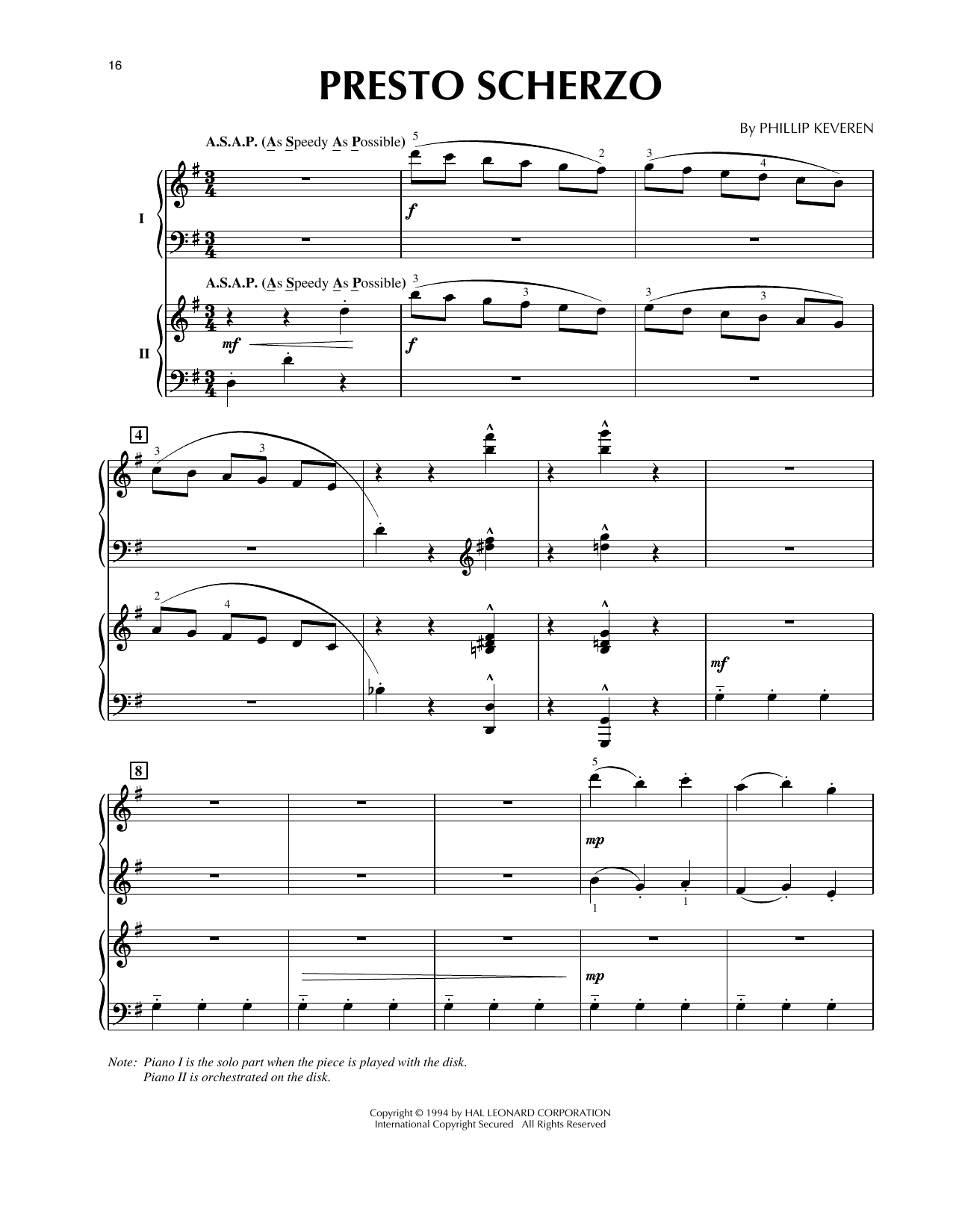
Two pianos unlock a different kind of energy than a single instrument, and Keveren harnesses that dynamic brilliantly here. The scherzo form gives students a chance to dig into playful, rhythmically engaging writing without the weight of a full sonata cycle, and 12 pages is long enough to matter without overstaying its welcome.
What to expect
Bright and propulsive, with the kind of rhythmic drive that keeps both players on their toes. The two-piano texture creates a sense of conversation or friendly competition, trading melodic lines and building momentum through clever interplay rather than brute force.
Who it's for
Piano students working toward intermediate repertoire who benefit from the collaborative challenge of two-piano writing. This works equally well as a recital piece for advanced elementary students or as an engaging program opener for a chamber concert.
How to get the most out of it
Establish clear communication between the two pianists before rehearsal. Mark cues in both parts so neither player surprises the other during texture shifts or rhythmic transitions.
Lock the opening tempo early and keep it steady. Scherzo movements live and die by rhythmic precision, especially when two keyboards are trading material.
Balance the two keyboard lines by ear rather than by dynamics marking alone. One part may need to sit slightly behind the other depending on your room acoustics and piano weights.
How to use it
Open a student recital with this to set an energetic tone, or pair it with a slower work to create natural programming contrast. It also serves as a rewarding duet project for two students at similar levels who thrive on coordinated playing.
Skills your students will build
Ensemble listening and balance between two independent parts
Maintaining steady tempo under rhythmic complexity
Reading and executing scherzo form and its characteristic meter
Coordinating with another performer across two instruments
Voice leading and part independence in classical keyboard writing
You May Also Like
Scan to Complete Your Purchase
Use your phone's camera to scan the code below
You'll log in on your phone and the order will be added to your account