

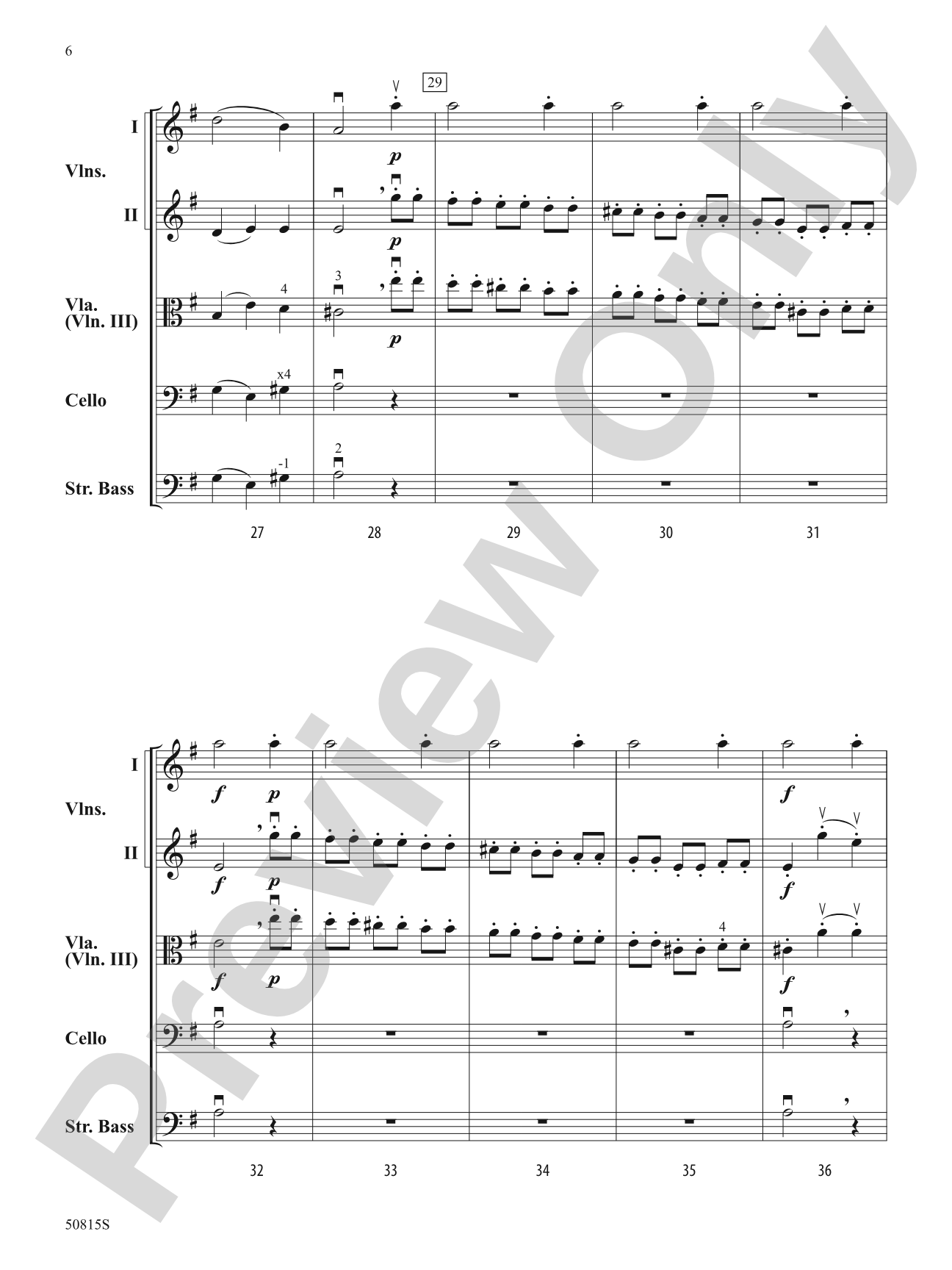
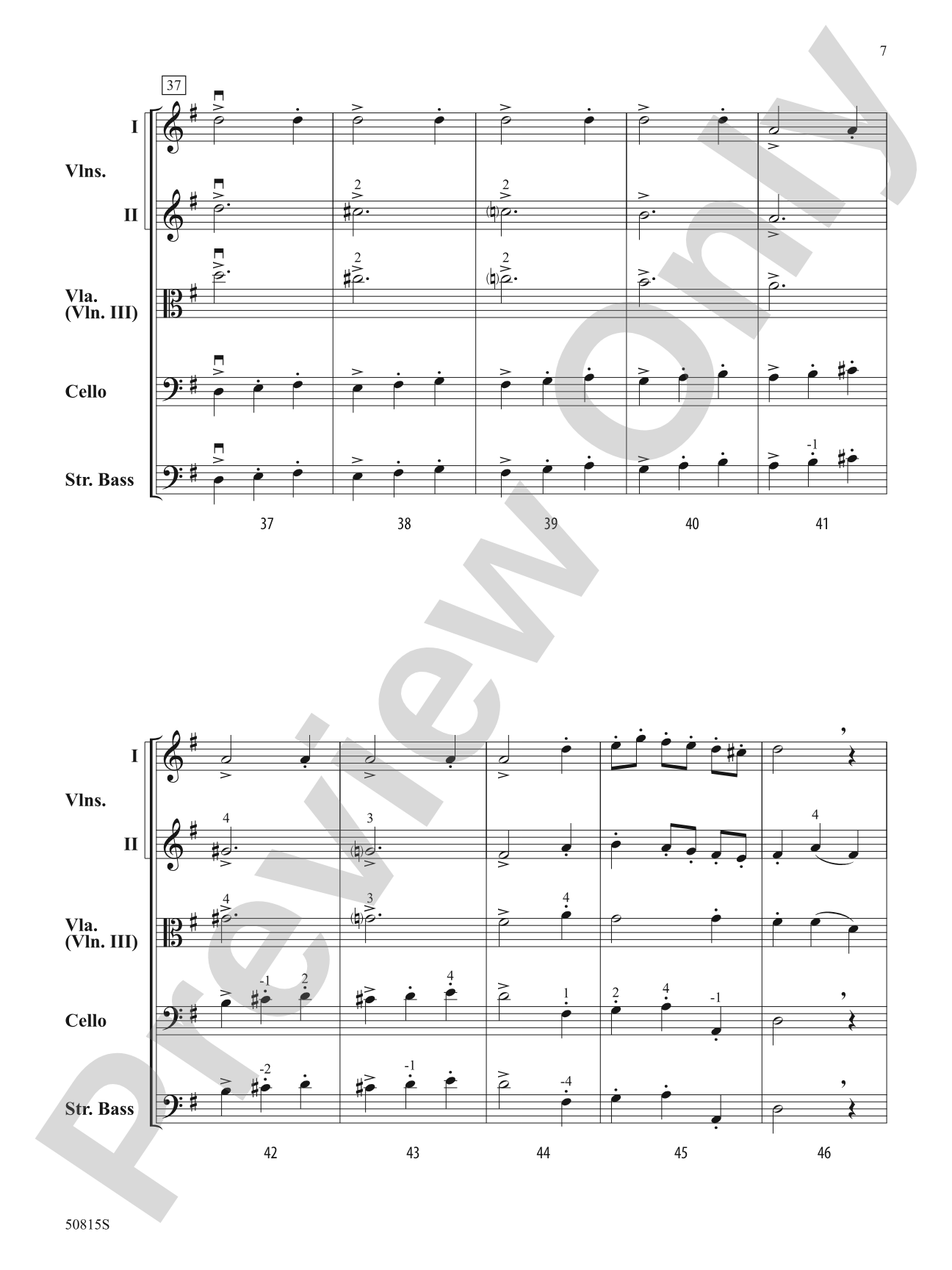
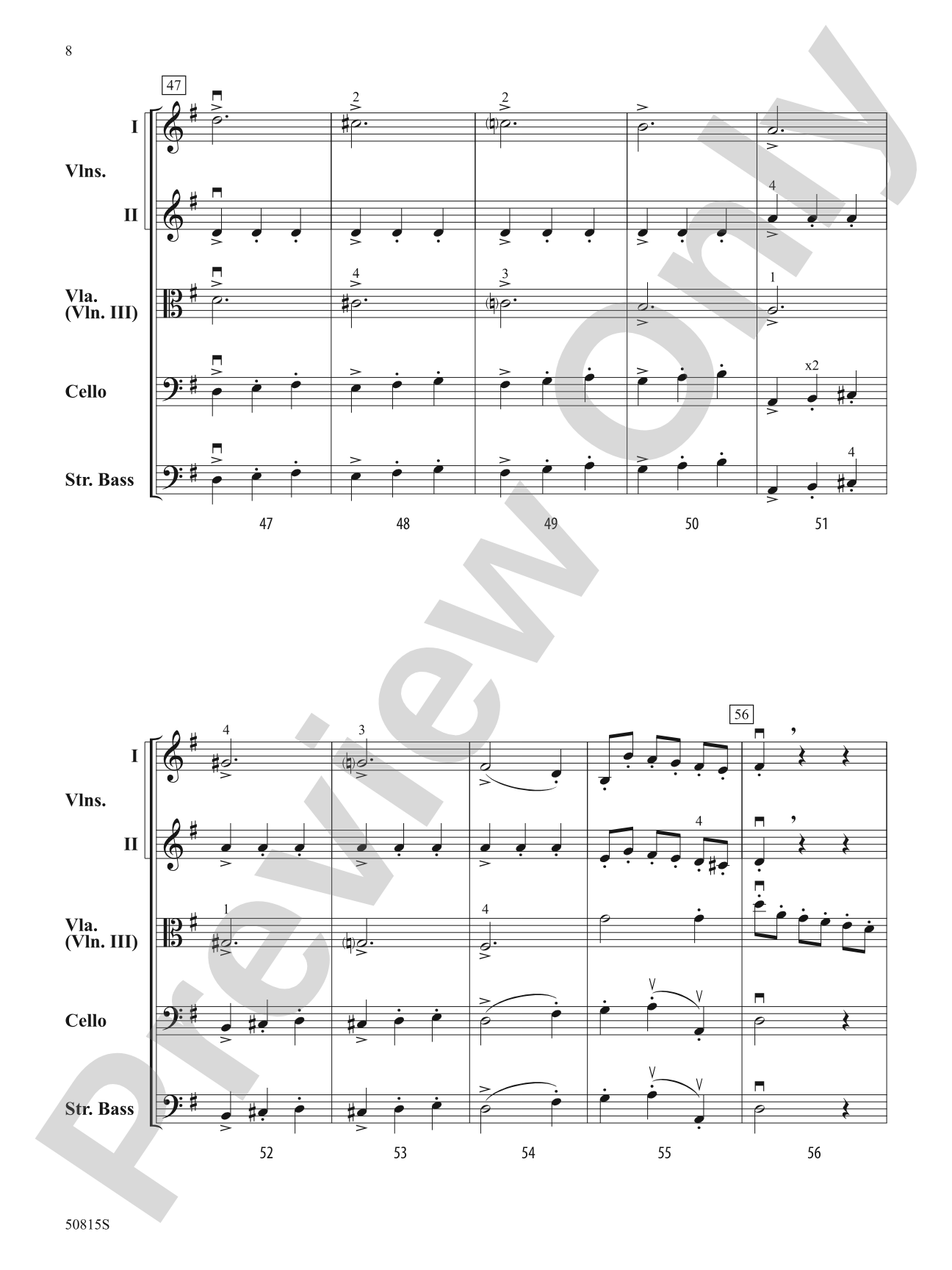
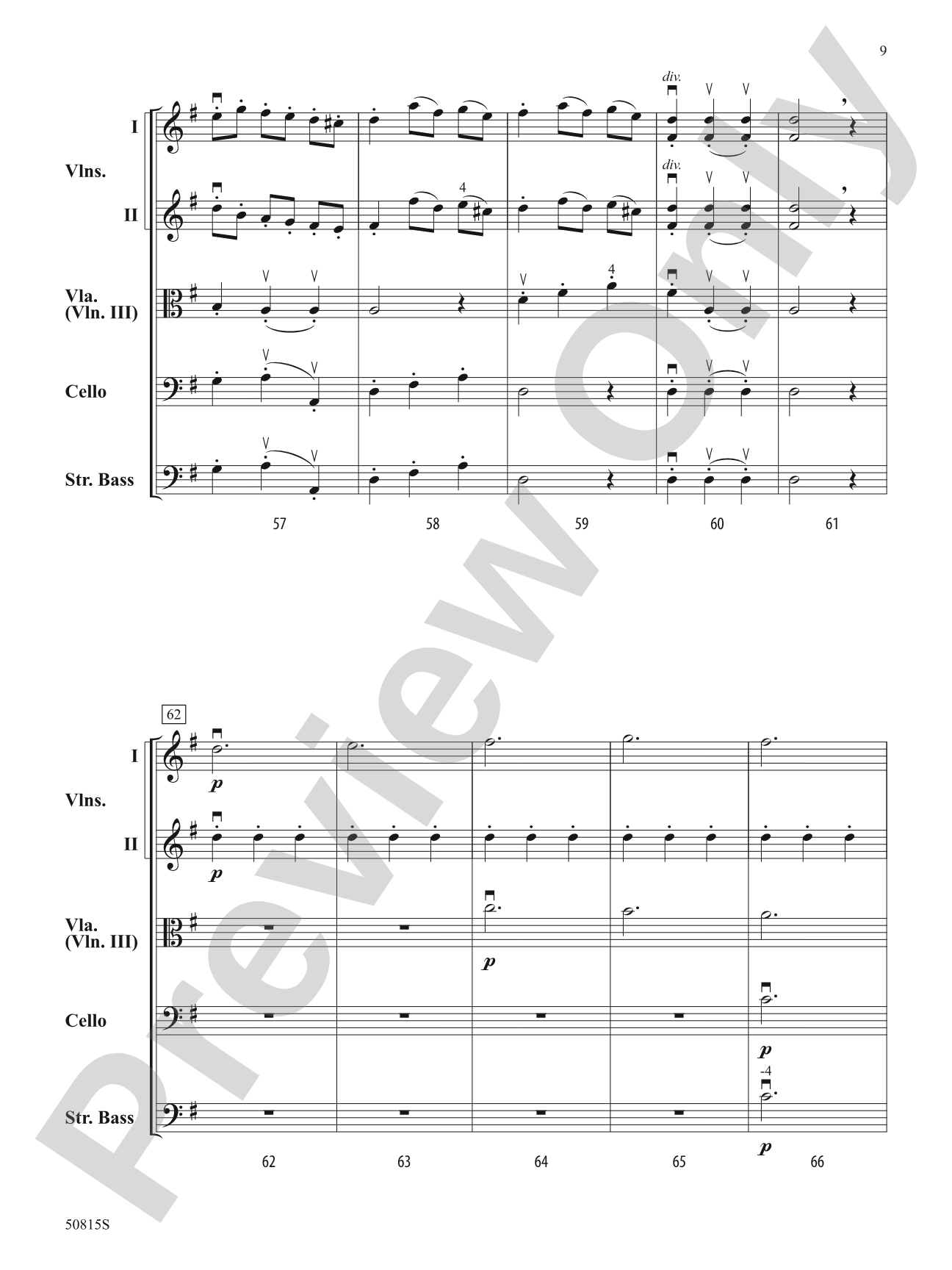
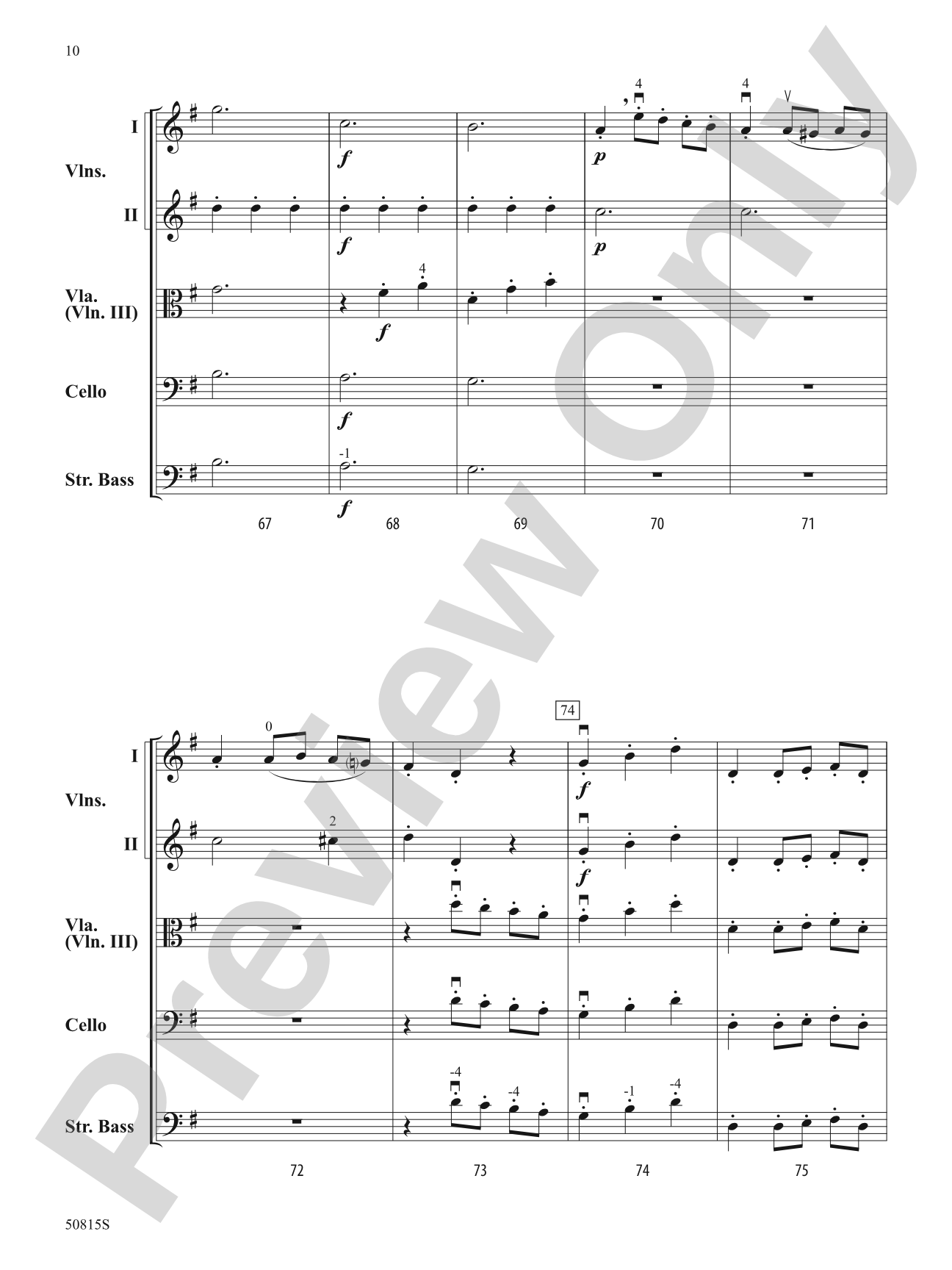
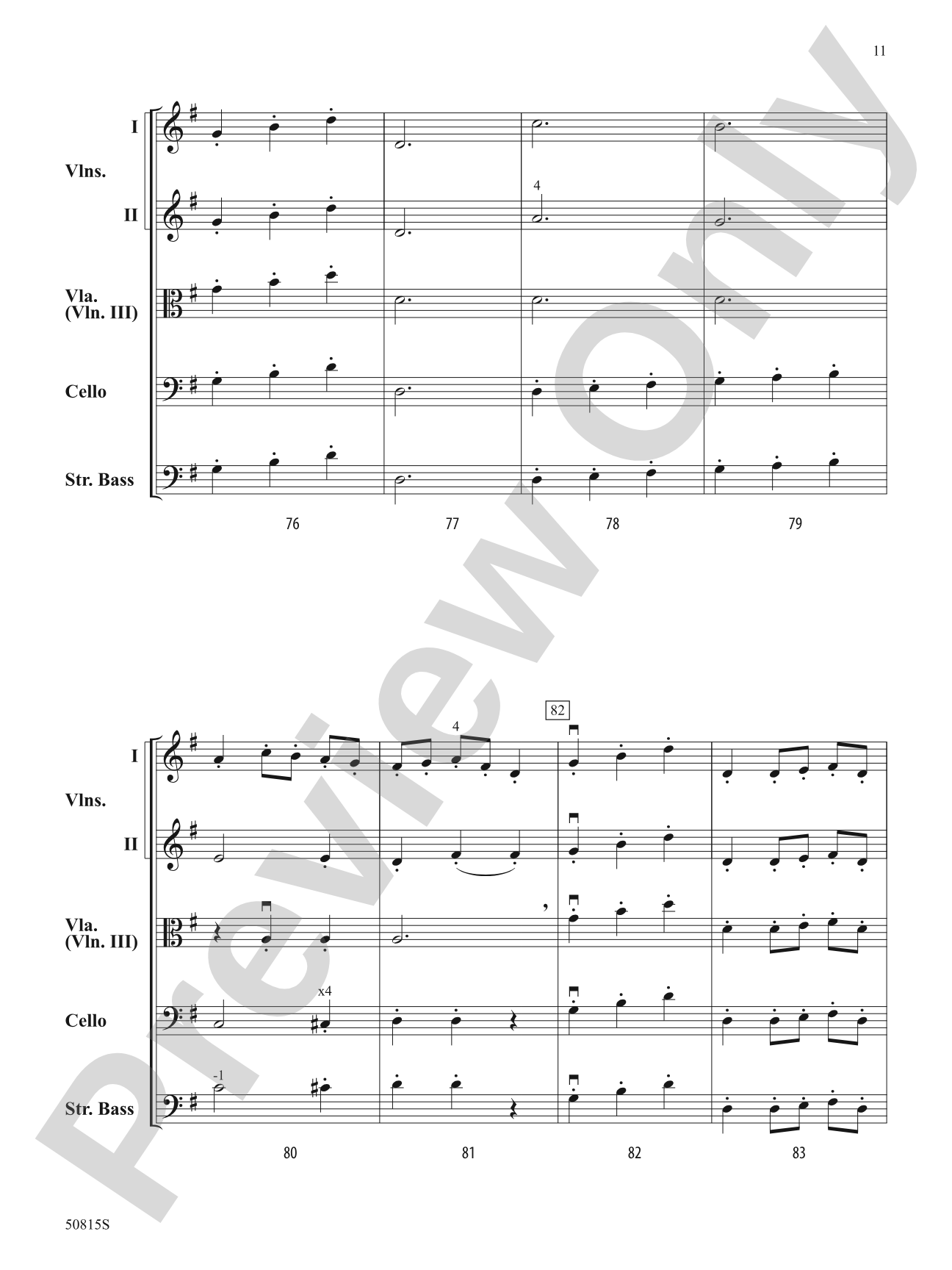
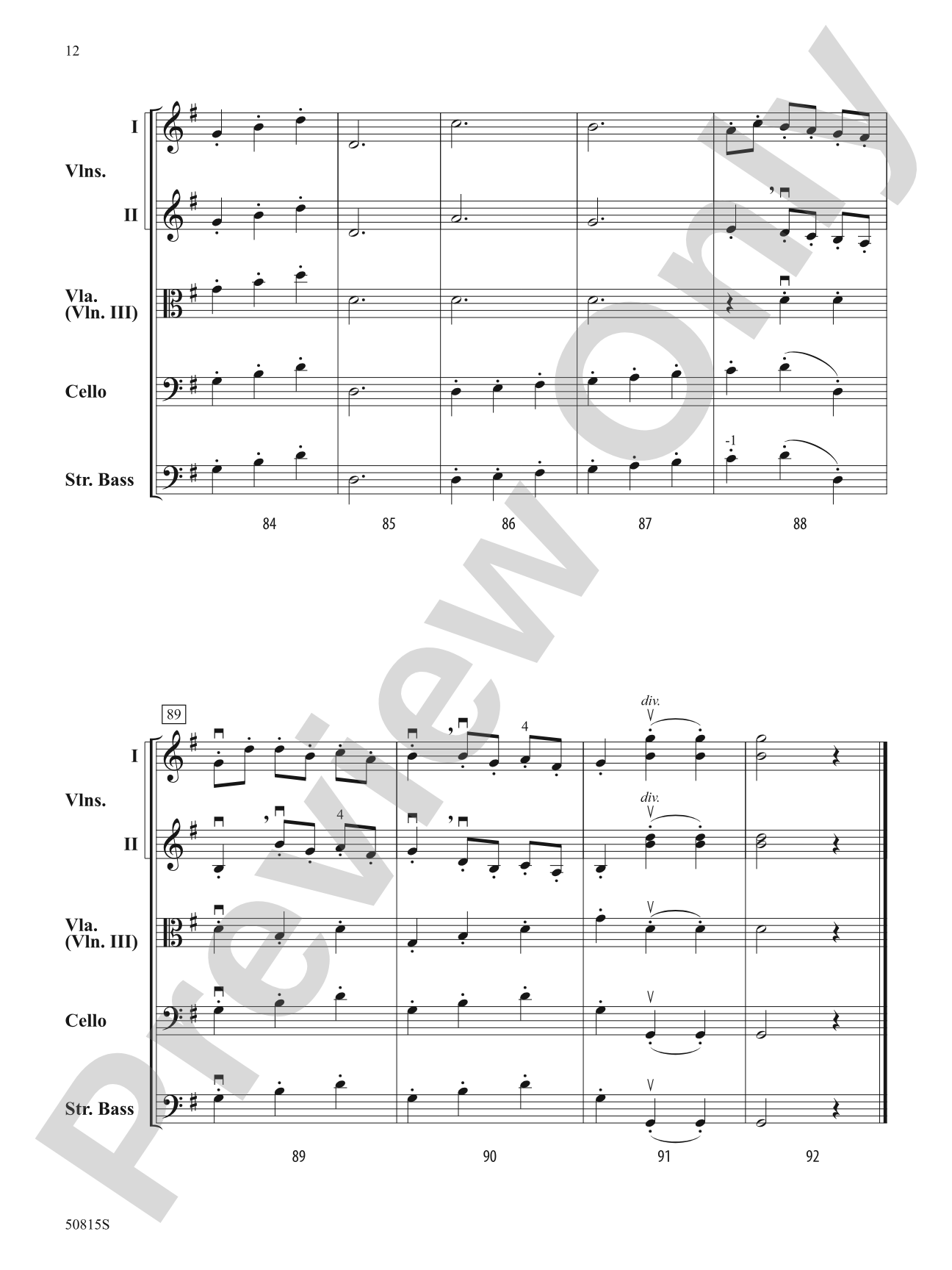

Presto: String Orchestra Conductor Score & Parts
From Symphony No. 1, K. 16
By Wolfgang Amadeus Mozart / arr. Anthony Granata
Grade: 2.5
Item: 00-PK-0008983

$60.00
Pickup currently not available
Buy Extra Parts (Digital PDF Download)
| Product | Price | Quantity |
|---|---|---|
| Presto: Score | $10.00 | |
| Presto: 1st Violin | $3.00 | |
| Presto: 2nd Violin | $3.00 | |
| Presto: 3rd Violin (Viola [TC]) | $3.00 | |
| Presto: Viola | $3.00 | |
| Presto: Cello | $3.00 | |
| Presto: String Bass | $3.00 |
Parts Added to Cart!
Description
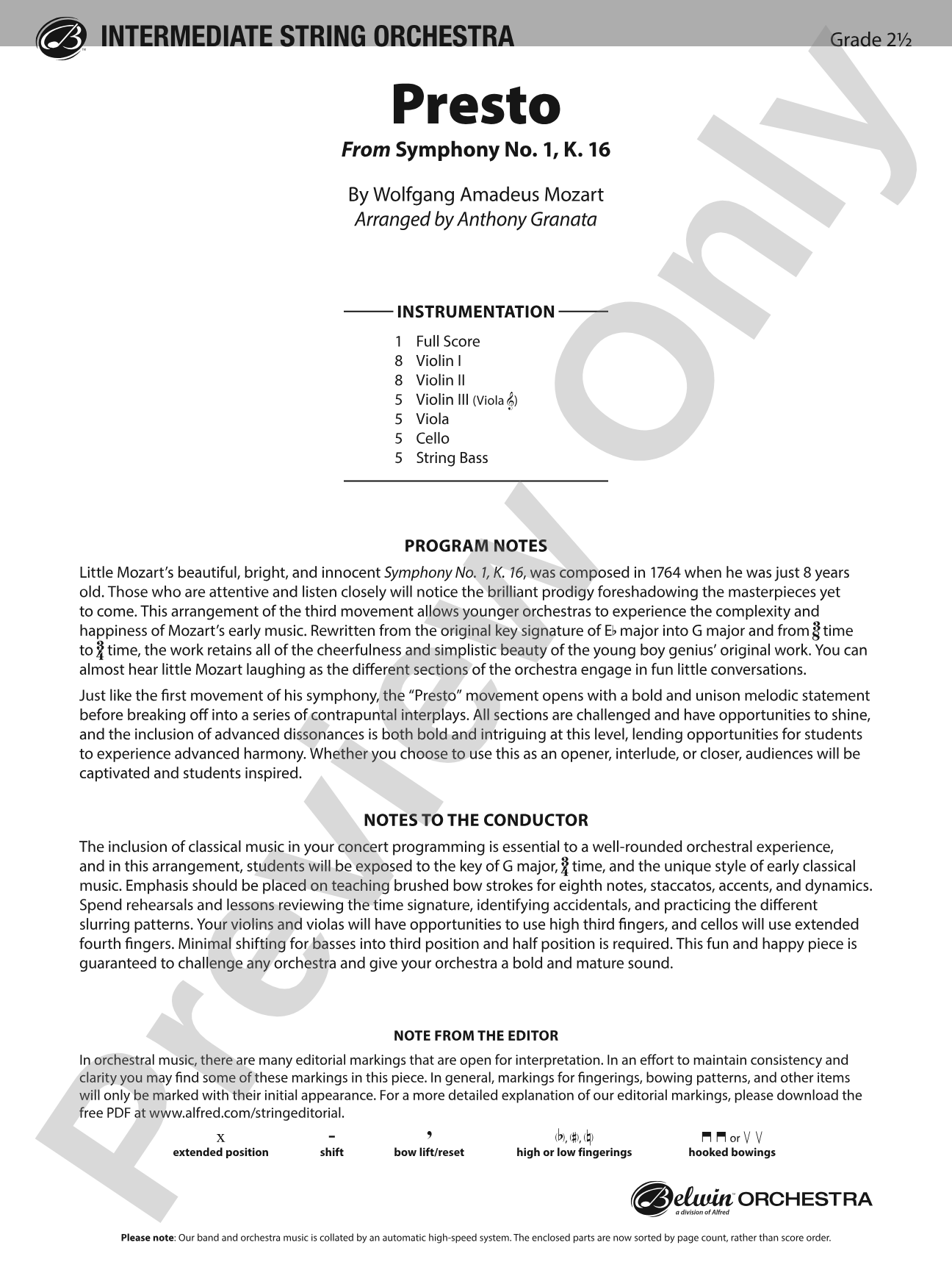
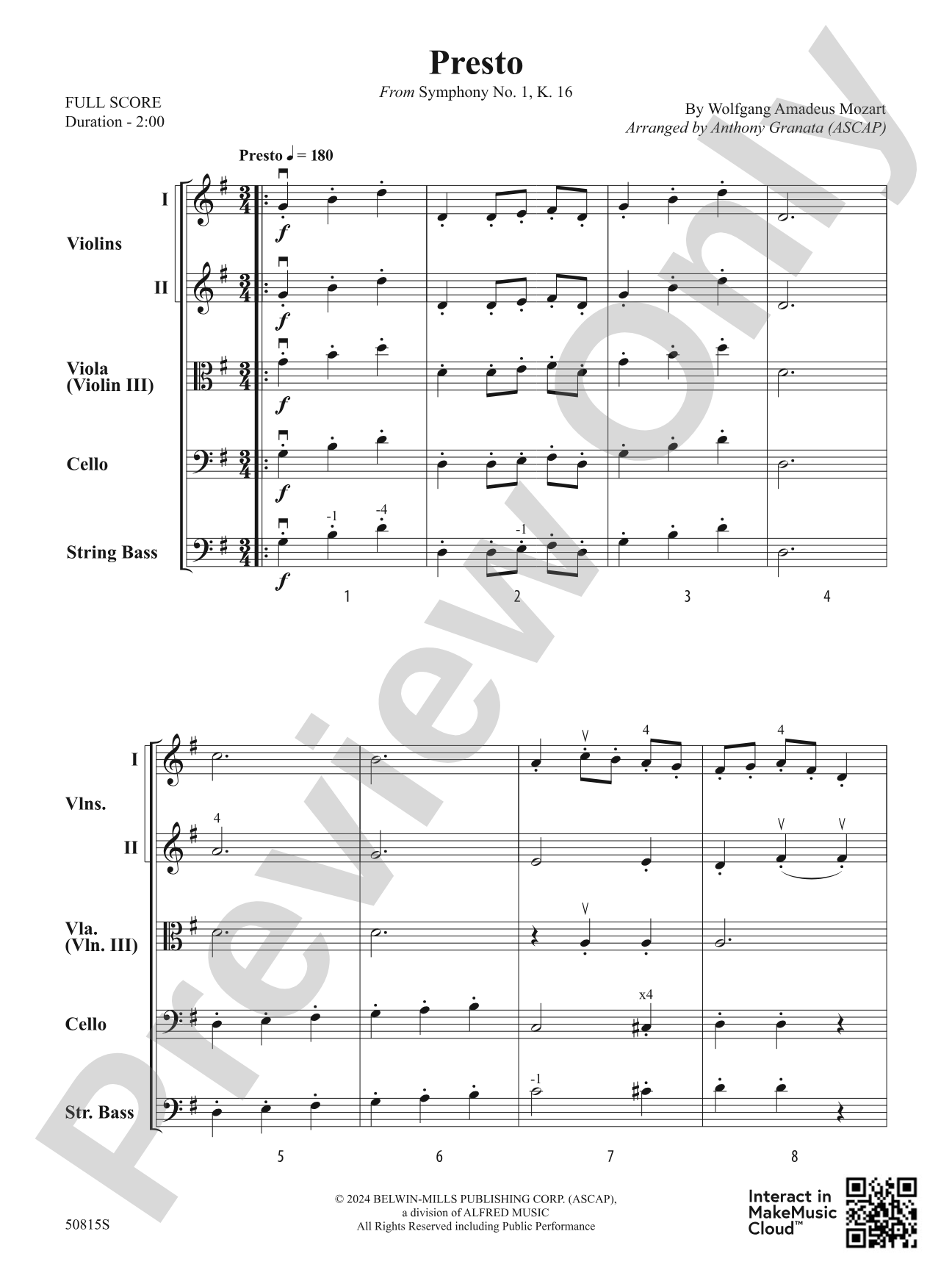
While his father was critical of his son's earliest works, audiences and musicians have grown to love and adore the simplistic beauty of young Mozart's first symphony. The third movement, "Presto" (from Symphony No. 1, K. 16), by Wolfgang Amadeus Mozart and arranged by Anthony Granata, is a perfect choice for late beginner and early intermediate orchestras. Re-written from the original key of E-flat major to G major, the work foreshadows the great masterpieces yet to come. Your students will be enticed and challenged by the young genius's first symphony, including original articulations, hooked bowings, accidentals, and dynamics. (2:00)


Don't just read it, hear it, play along with it, and watch your students grow with it. In MakeMusic Cloud, Presto: String Orchestra Conductor Score & Parts comes alive with professional accompaniment, adjustable tempo, and built-in practice tools that turn solo practice into real progress.
Open in the Player
Jump straight in and assign it today.
Start Your Free Trial
Open this title and explore the full library in minutes.
Sample Audio
1
Audio File
--:--
0:00
0:00
Sample Video
Additional Details
Series:
Belwin Intermediate String Orchestra
Publisher:
Alfred Music
SKU:
00-PK-0008983
More about this title
About the Composer: Wolfgang Amadeus Mozart
Wolfgang Amadeus Mozart (1756-1791) began composing before age five and completed his first symphony at age eight during a family tour of Europe. His early works, though dismissed by some contemporaries as mere curiosities of a child prodigy, reveal the compositional instincts that would define his later genius: clear melodic invention, harmonic sophistication, and structural command. This first symphony stands as a window into the mind of a young musician already thinking like a master.
Why we love this
Granata's arrangement opens the door to authentic Mozart for orchestras that might otherwise skip the symphonic repertoire entirely. The transposition to G major and careful voice leading keep technical demands reasonable while preserving the movement's infectious energy and the articulative details that make Mozart's writing distinctive. Students encounter real compositional craft at an accessible level, building confidence for more ambitious works ahead.
What to expect
Spirited and elegant, with the characteristic Mozartian lightness of touch. The movement sparkles with perpetual motion and frequent dynamic shifts, creating an impression of youthful exuberance tempered by formal restraint. Despite its brevity, it carries genuine wit and musical substance.
Who it's for
Late beginner and early intermediate string orchestras seeking repertoire that combines historical significance with musical reward. Directors building programs around canonical masters will find this arrangement an excellent introduction to symphonic form without the complexity of Mozart's mature works.
How to get the most out of it
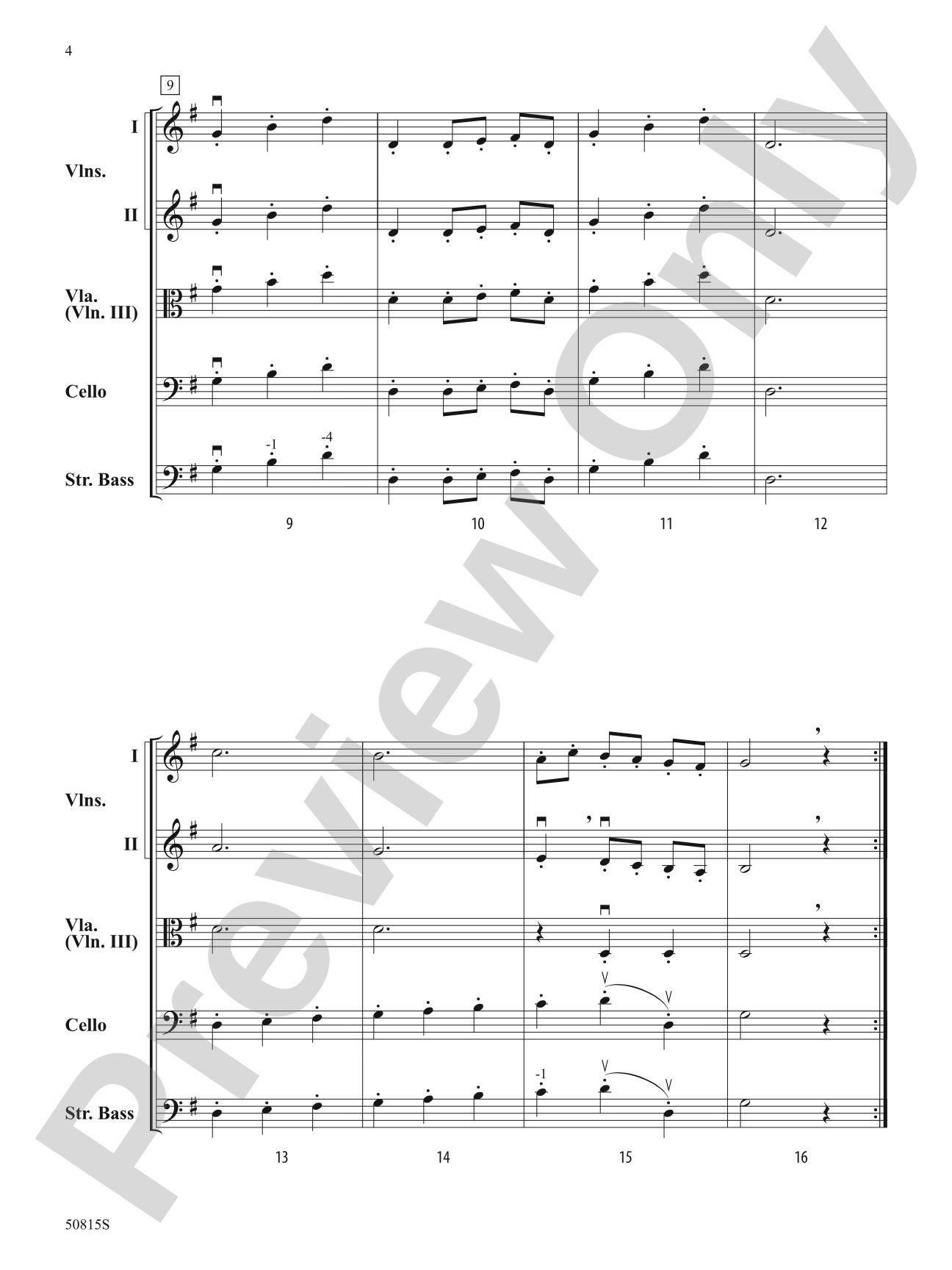
- Shape the perpetual eighth-note figures with gentle dynamic swells rather than metronomic regularity; let the melody breathe through the accompaniment.
- Observe the original articulations and hooked bowings as written; these details distinguish Mozart's orchestration from generic string writing and reward careful attention.
- Balance the movement's tempo in relation to the surrounding work; at roughly two minutes, the Presto should feel propulsive but not rushed, leaving room for the ensemble to execute the articulations cleanly.
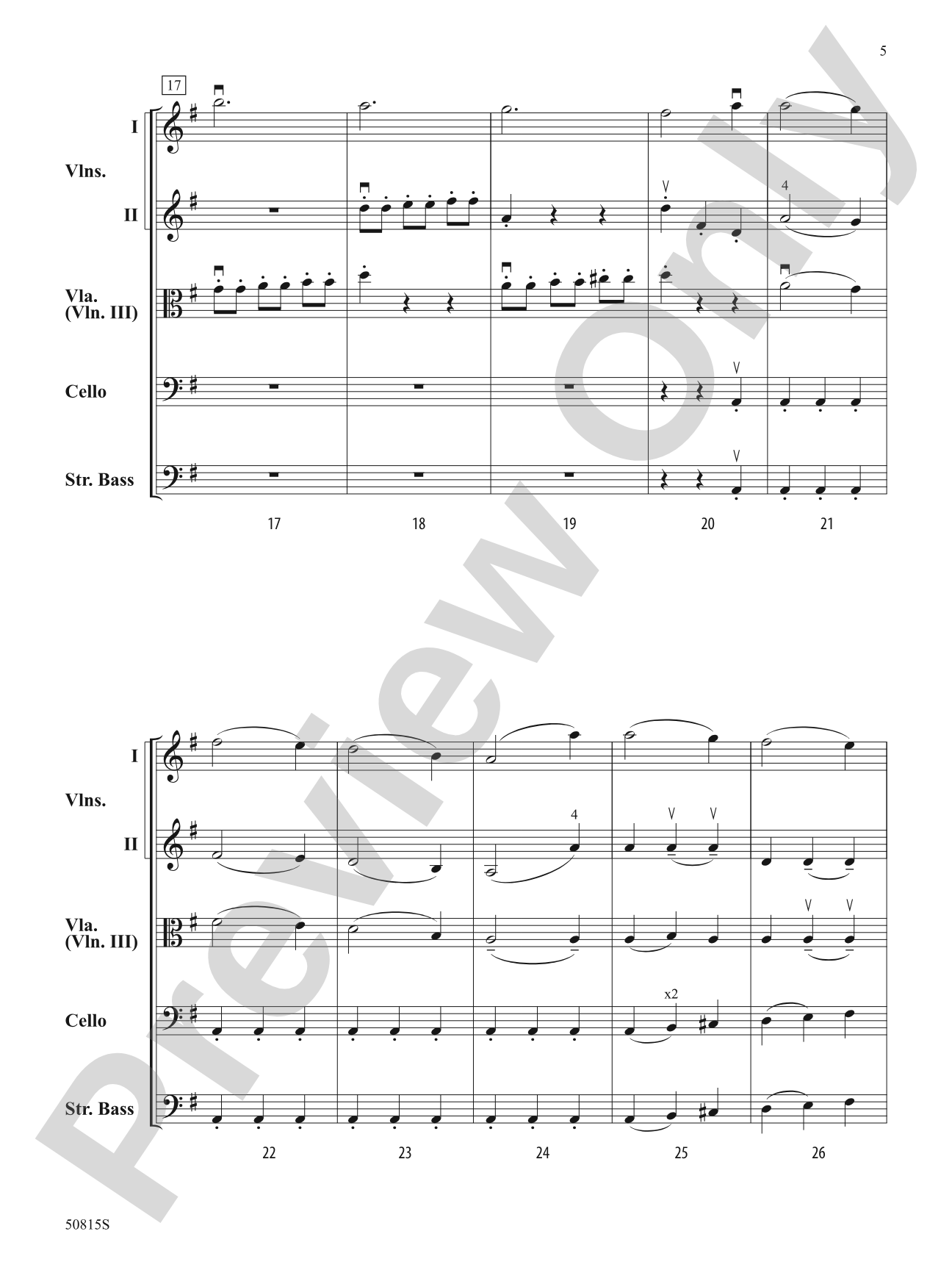
- Ensure accidentals land with clarity, especially in the transition passages; they often signal harmonic color and should not disappear into the texture.
How to use it
Pair this as a concise opener or closer on a concert featuring other Baroque or Classical works, or use it to introduce students to the symphony as a form. Its two-minute duration makes it ideal for festival competitions or as a palate-cleanser between heavier contemporary pieces.
Skills your students will build
- Reading articulations and hooked bowings in Classical style
- Balancing perpetual motion figures against the melodic line
- Executing clean accidentals and harmonic color changes
- Achieving ensemble clarity at brisk tempos
- Understanding symphonic form at the movement level