

Premier Piano Course, Technique 5: Piano
By Dennis Alexander, Gayle Kowalchyk, E. L. Lancaster, Victoria McArthur, and Martha Mier
Level: 5
Item: 00-PB-0002499
$9.99
Pickup currently not available
Related Items
Premier Piano Course, Technique 5: Piano Book |
$9.99
|
View |
Description
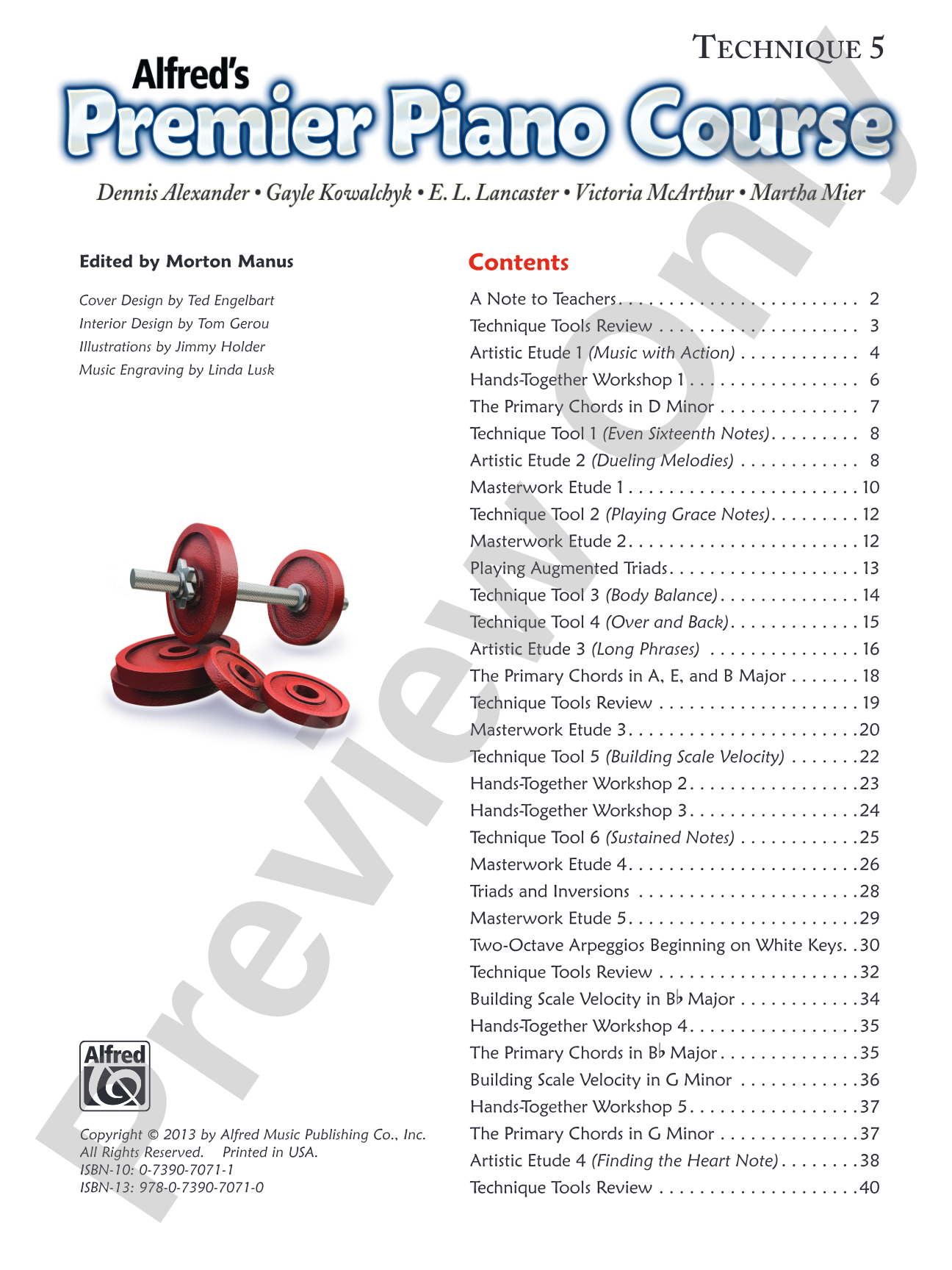
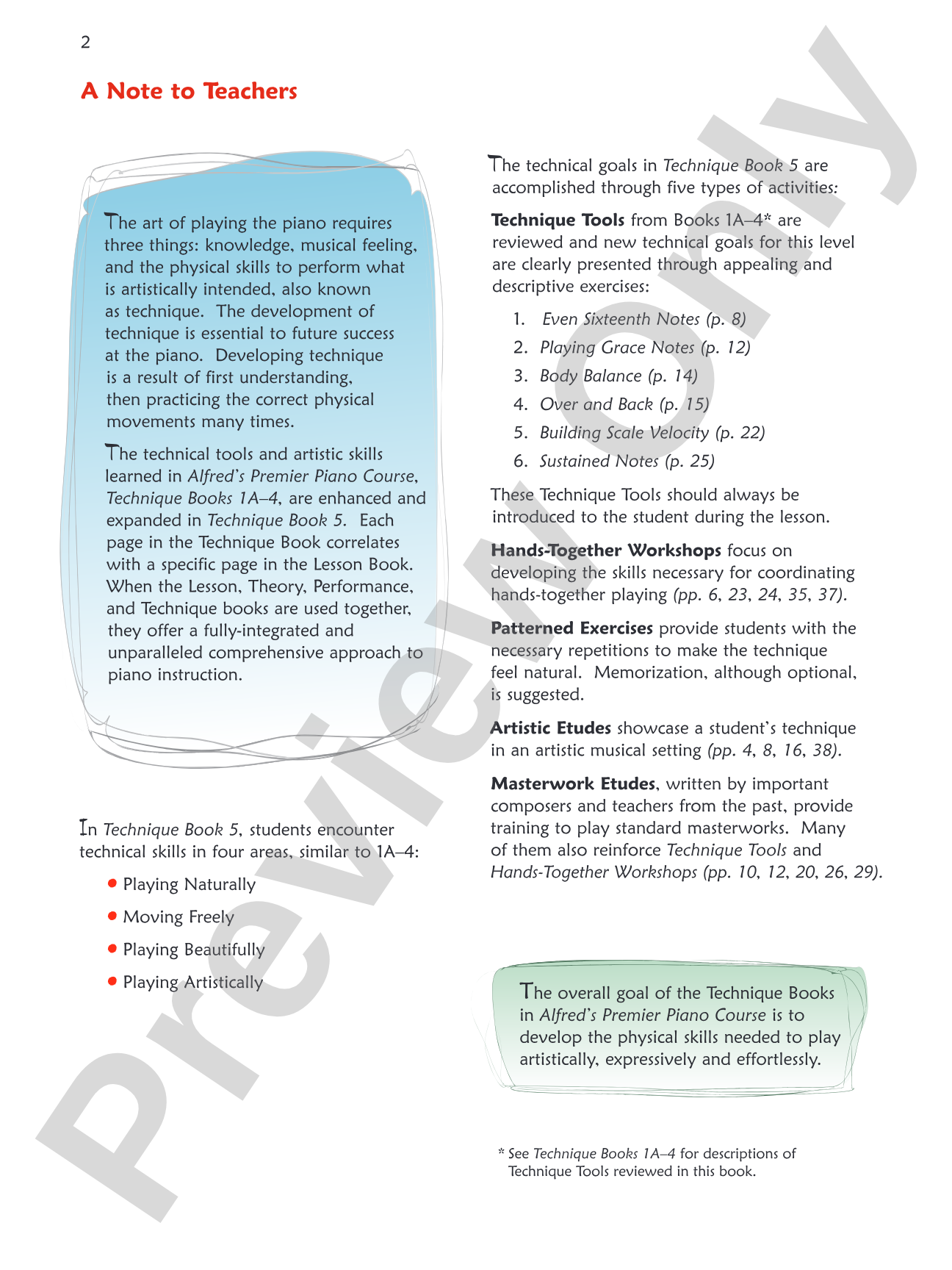
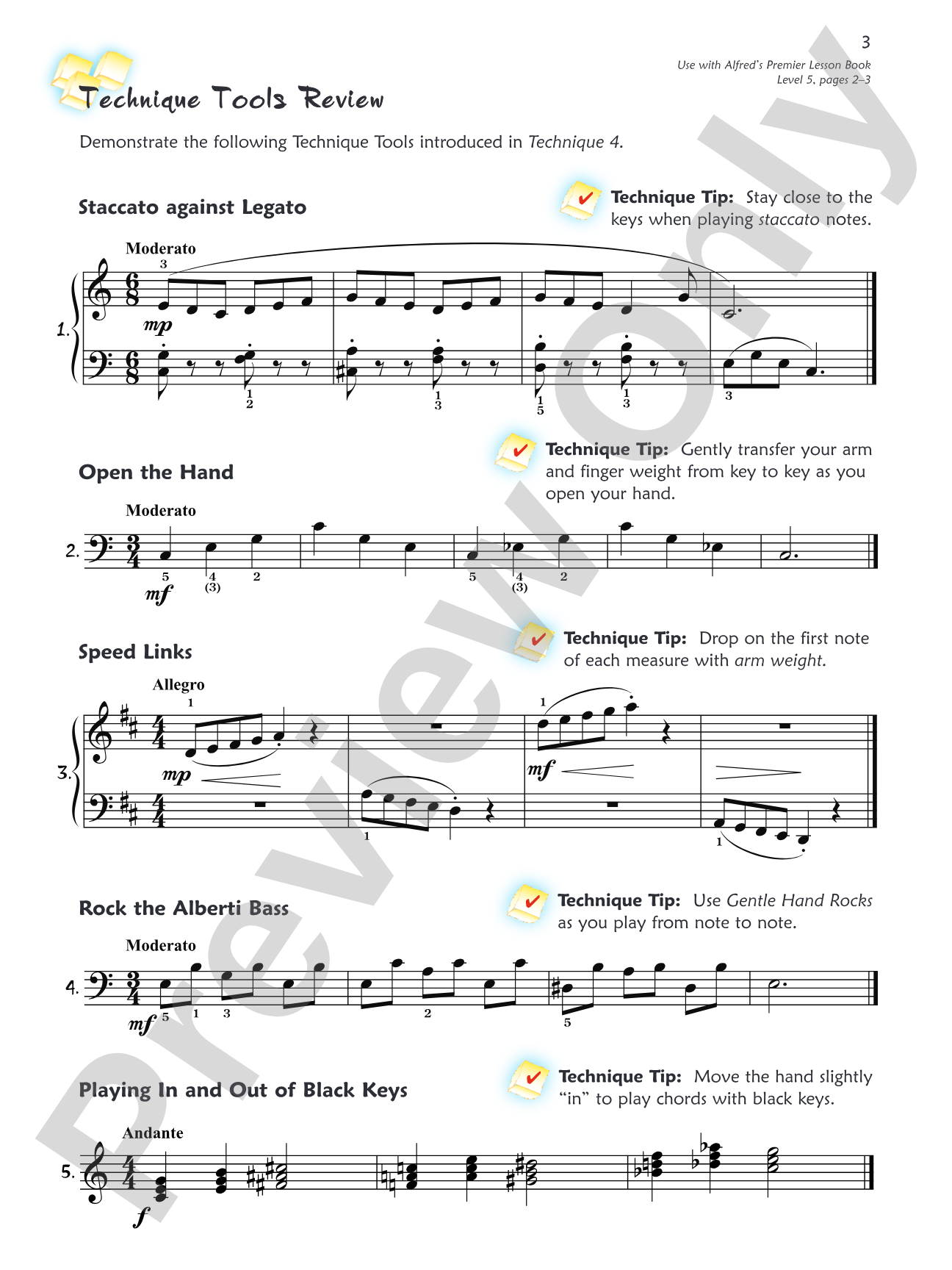
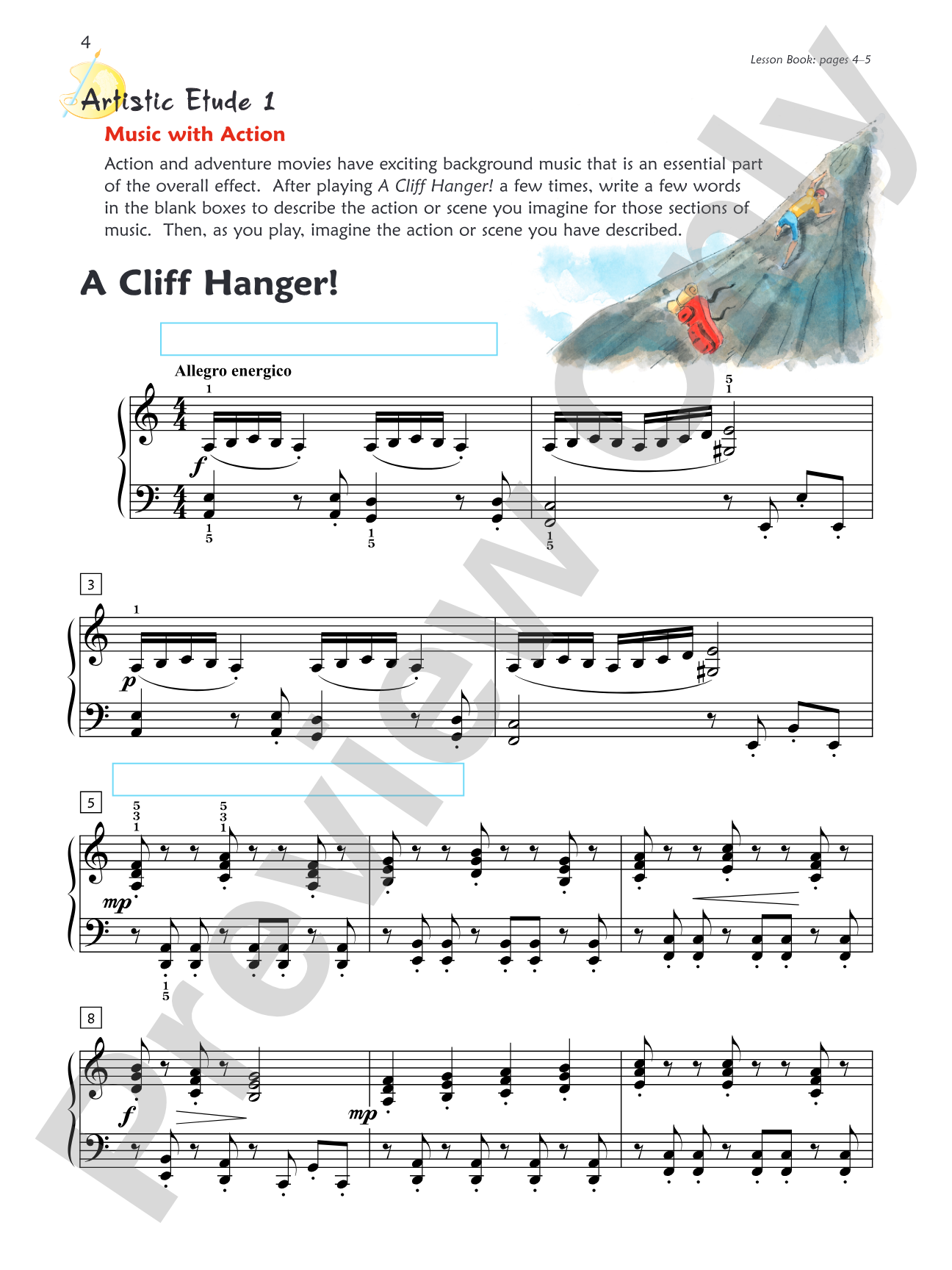
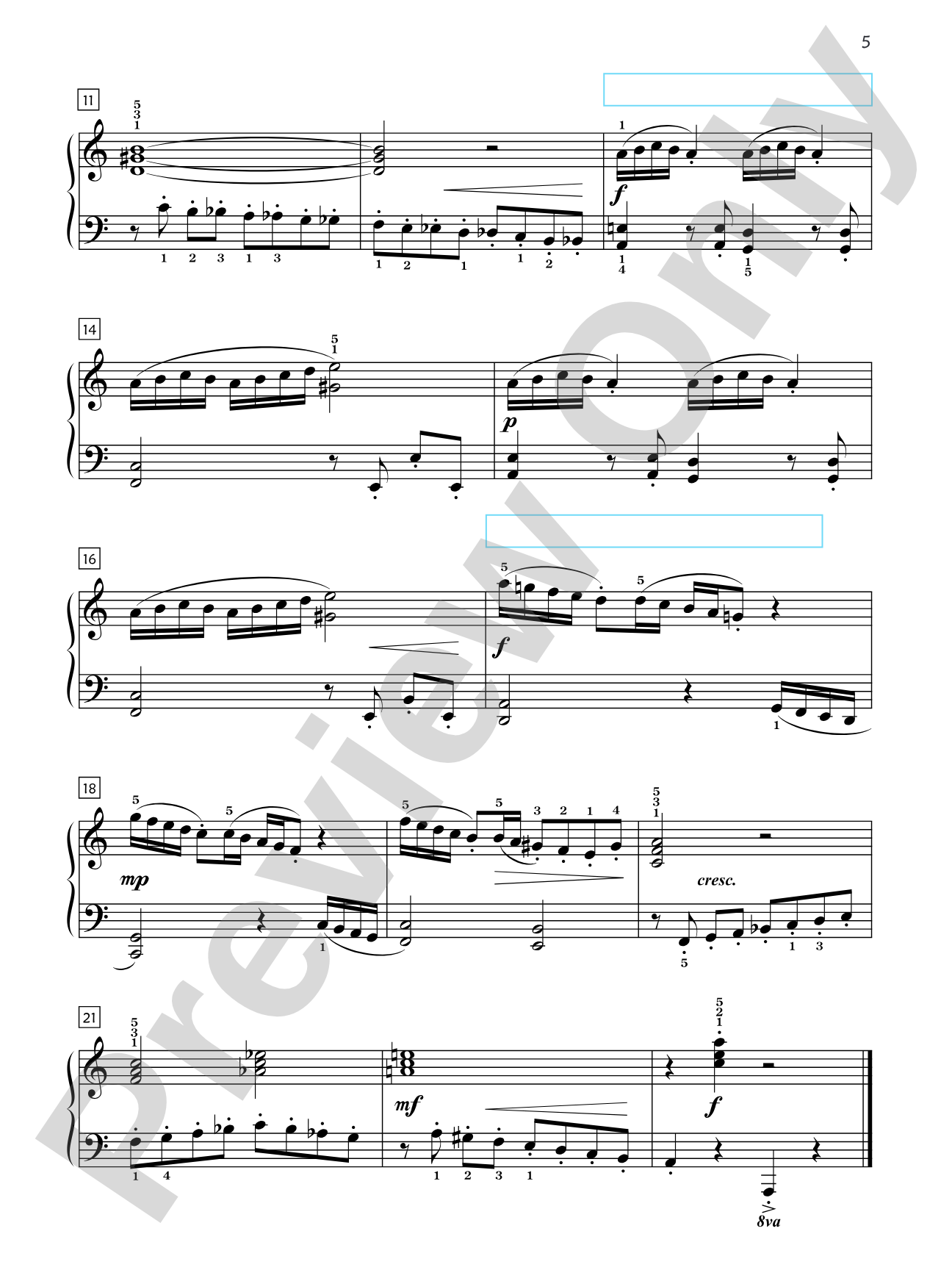
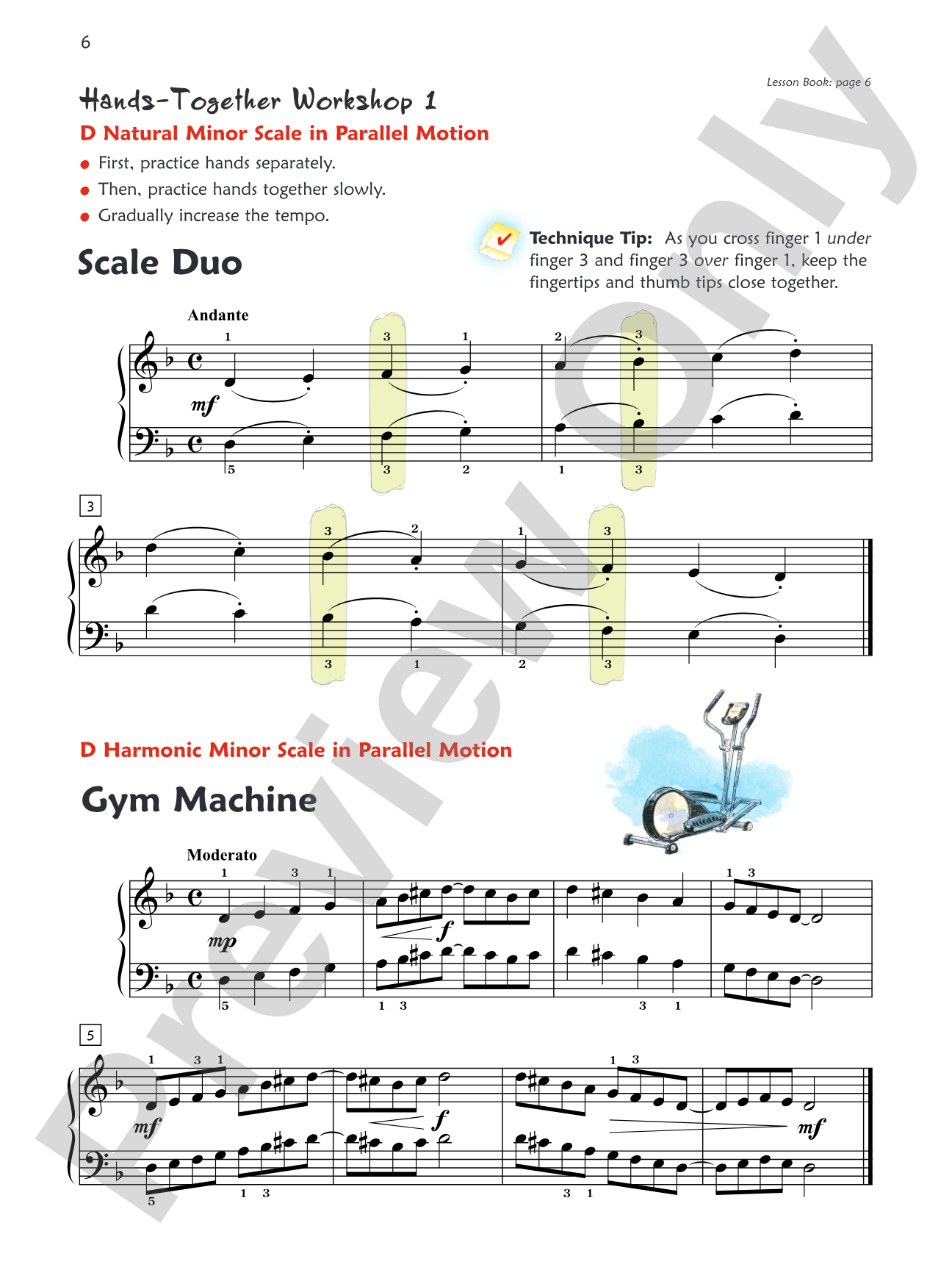
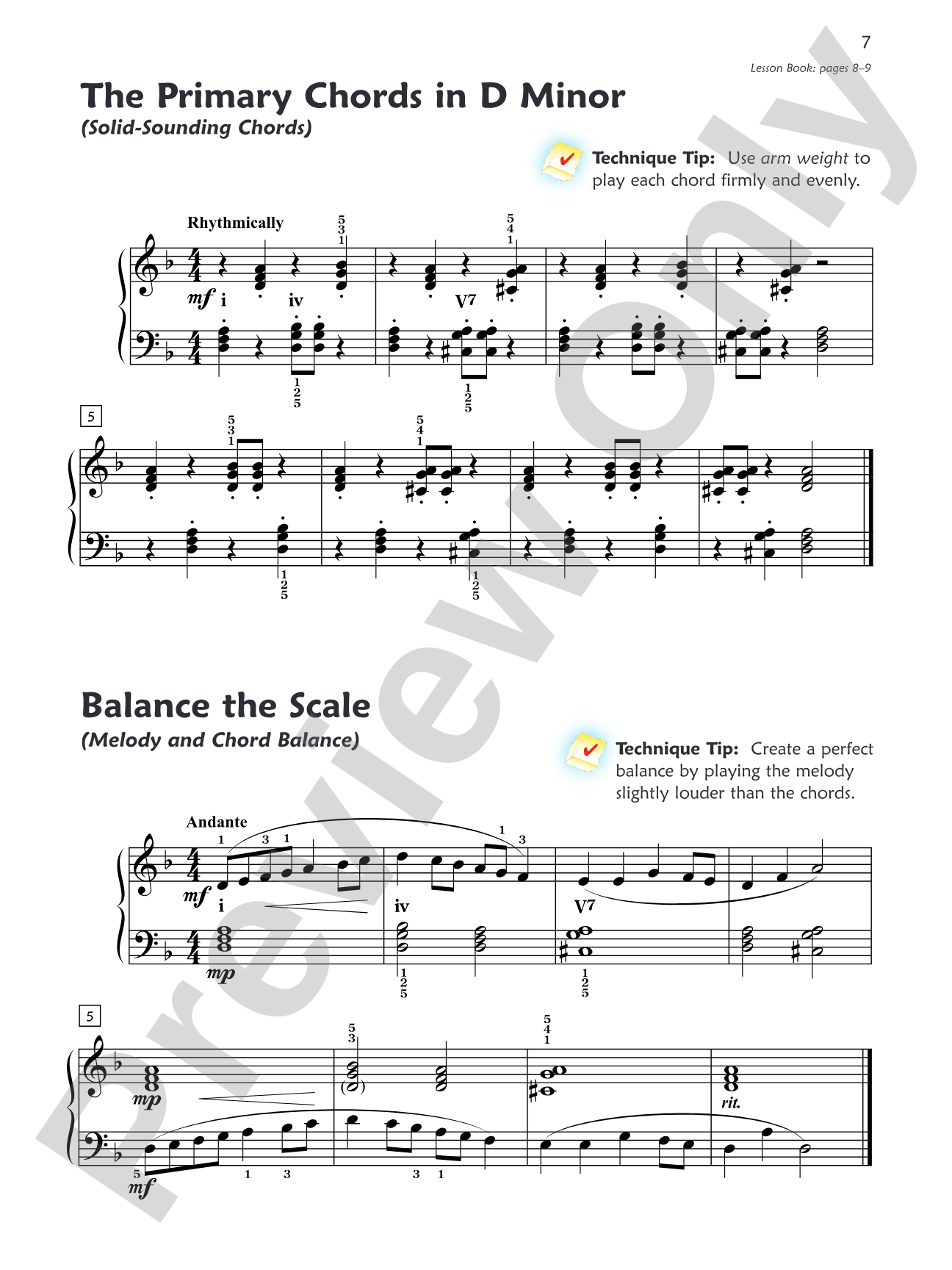
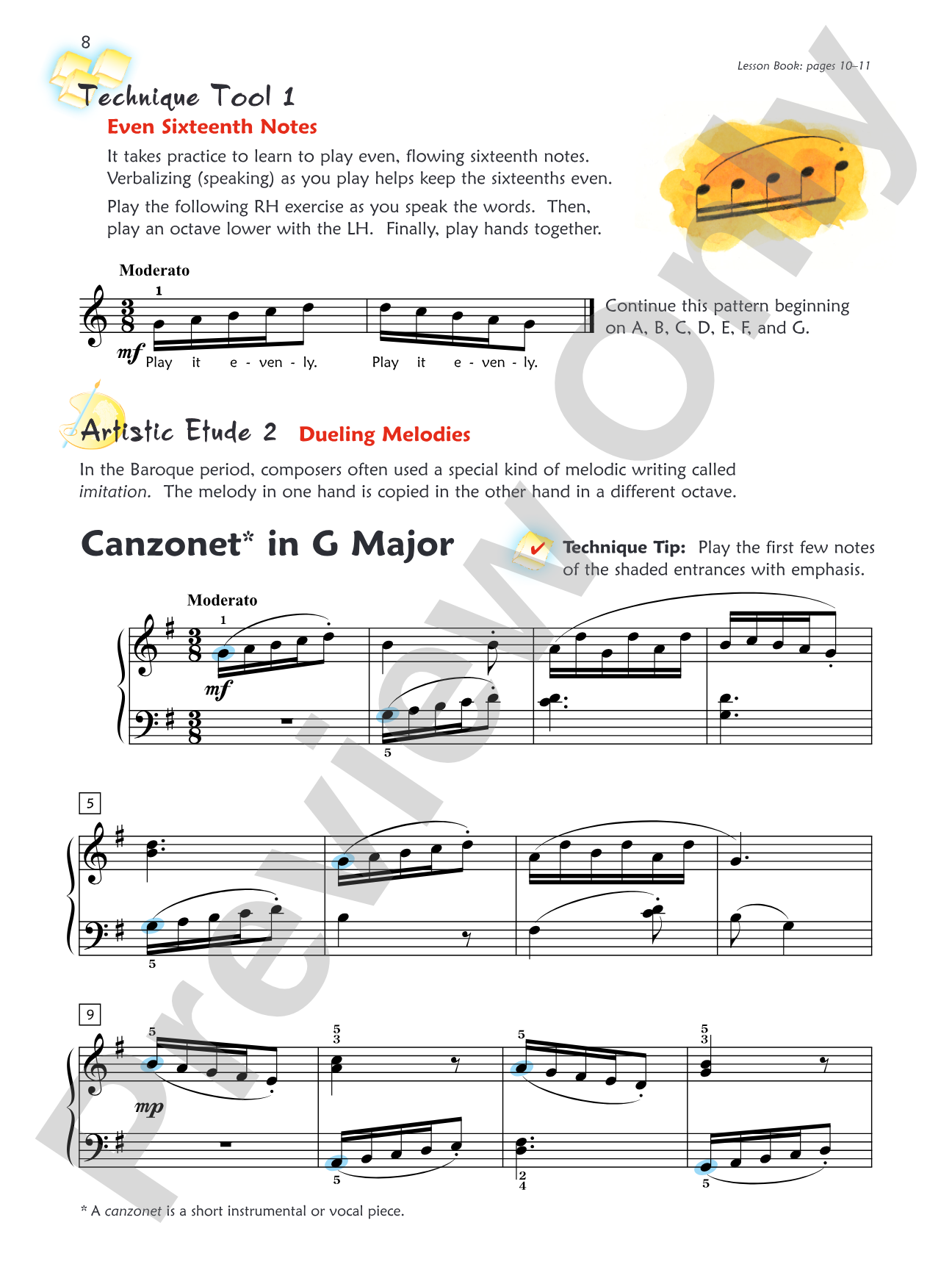
Technique 5 continues and expands on the technical and artistic tools learned in Technique books 1A--4. The six new Technique Tools introduced are: Even Sixteenth Notes, Playing Grace Notes, Body Balance, Over and Back, Building Scale Velocity, and Sustained Notes. Artistic Etudes showcase a student's technique in an expressive musical setting, and Hands-Together Workshops focus on developing the skills necessary for coordinating hands-together playing. Masterwork Etudes provide training to play standard masterworks. Each page in the Technique Book correlates with a specific page in the Lesson Book.


Discover MakeMusic Cloud: thousands of interactive titles your students can play along with today.
Sample Audio
No sample audio found.
Sample Video
No sample videos found.
Additional Details
Series:
Premier Piano Course
Publisher:
Alfred Music
Page Count:
40
SKU:
00-PB-0002499
More about this title
About the Composer: Dennis Alexander

Dennis Alexander has shaped music education for over four decades through his work as both a composer and pedagogue. After 24 years teaching piano pedagogy at the University of Montana, where he chaired the piano department, Alexander built an extraordinary catalog of more than 400 educational compositions for Alfred Music Publishing. His work has established him as one of the most widely performed educational composers in the world, recognized for pieces that genuinely engage young pianists while building real technical foundation.
Beyond the page, Alexander maintained an active performance life as soloist, accompanist, and chamber musician, appearing at Carnegie Recital Hall and collaborating with internationally recognized artists. He has served as clinician at state and national conventions, judged international competitions, and toured extensively throughout Asia and North America. His commissions from numerous music organizations reflect the deep respect his colleagues hold for his understanding of what young pianists need to thrive.
Why we love this
This book's architecture is what sets it apart. Six focused Technique Tools (grace notes, sixteenth-note evenness, scale velocity, hand balance, and others) appear first in isolation, then immediately reappear in Artistic Etudes where students discover how these tools actually sound and feel in real musical contexts. That bridge from exercise to expression is what students remember.
What to expect
Structured yet musical. Each Technique Tool arrives with purpose and immediately proves itself in an expressive setting rather than remaining abstract. Students encounter grace notes, faster scales, and hand independence not as isolated drills but as musical devices they'll encounter in real pieces.
Who it's for
Technique 5 serves students who have completed Levels 1A through 4 and are ready to refine their hand independence and expressive control. Use this book alongside the corresponding Premier Piano Course Lesson 5 for a coordinated technical and musical curriculum. It works well for students approaching the early intermediate repertoire threshold and needing stronger fundamental skills before tackling more complex pieces.
How to get the most out of it
- Record your students playing the Artistic Etudes as they progress through the book. Playback reveals intonation and rhythmic consistency issues that are harder to hear in real time, and students gain confidence seeing their own technical growth across the five-week unit.
- Assign the Hands-Together Workshops as homework the week before you introduce the corresponding etude. This removes coordination anxiety from the lesson and lets you focus on tone and interpretation when the student sits down to perform.
- Layer the Masterwork Etudes into your lesson sequence one etude per week rather than clustering them at the end. Spacing them out gives technique time to settle into muscle memory before students tackle unfamiliar repertoire.
- Have students isolate the specific Technique Tool being featured in each Artistic Etude before playing the whole piece. Naming what you're working on ("Today we're focusing on the grace note articulation in measures 8 and 12") sharpens their listening and intention.
How to use it
Integrate this into your regular lesson rotation as the technical spine of Level 5 study. The 40-page format works for steady weekly progress without overwhelming a typical student's practice load. If you're preparing students for certificates, competitions, or recital readiness at the early intermediate level, this book's progression from isolated skills to coordinated playing accelerates preparation time.
Skills your students will build
- Even sixteenth-note articulation and control
- Grace note execution with proper timing and release
- Scale velocity building through systematic finger work
- Hand balance and posture maintenance across technical passages
- Hands-together coordination in parallel and contrary motion
- Expressive playing within technical constraints
- Score reading across left and right hand staves simultaneously