

Premier Piano Course, Technique 2B: Piano
By Dennis Alexander, Gayle Kowalchyk, E. L. Lancaster, Victoria McArthur, and Martha Mier
Level: 2B
Item: 00-PB-0001068
$9.99
Pickup currently not available
Related Items
Premier Piano Course, Technique 2B: Piano Book |
$9.99
|
View |
Description
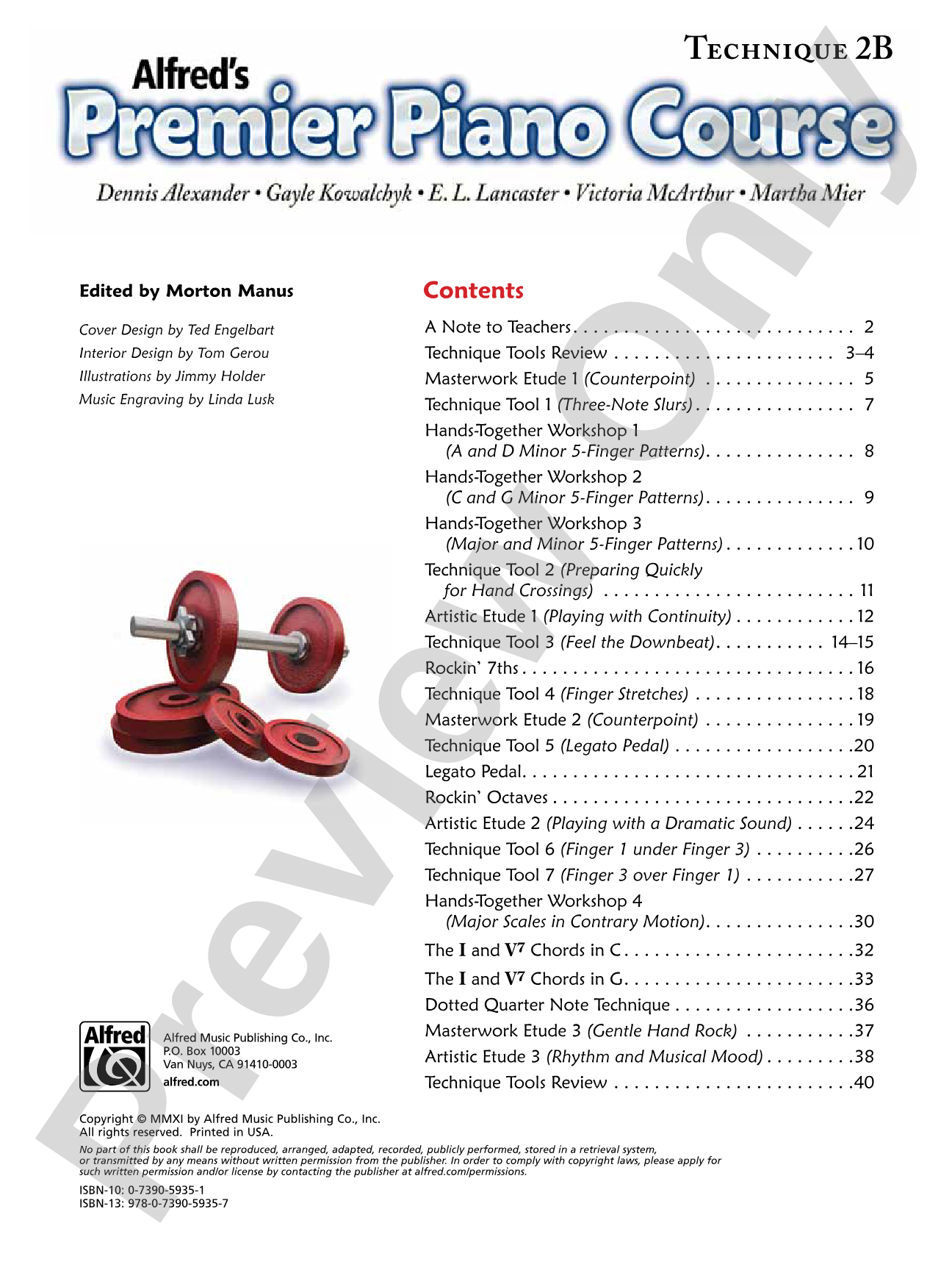
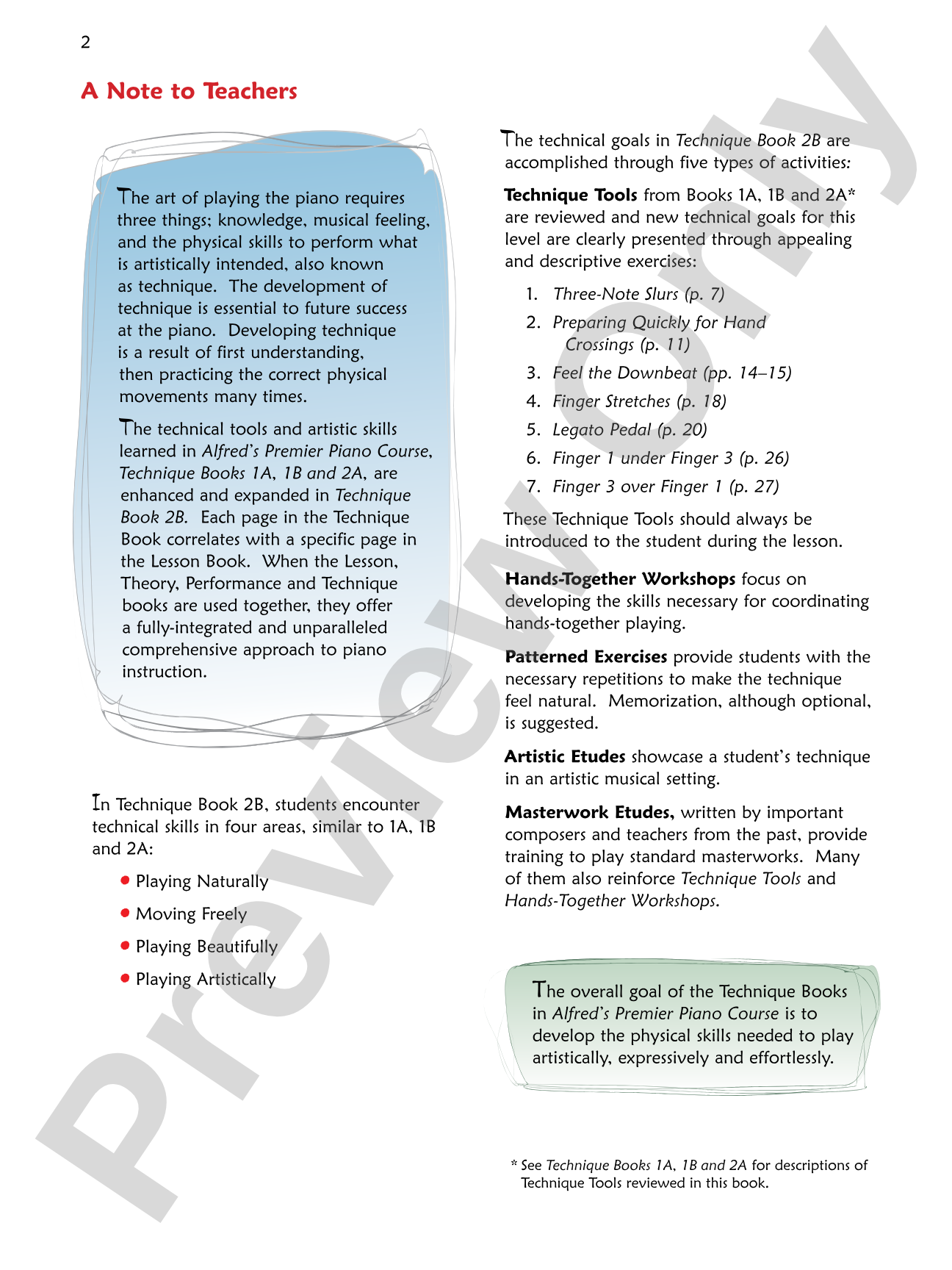
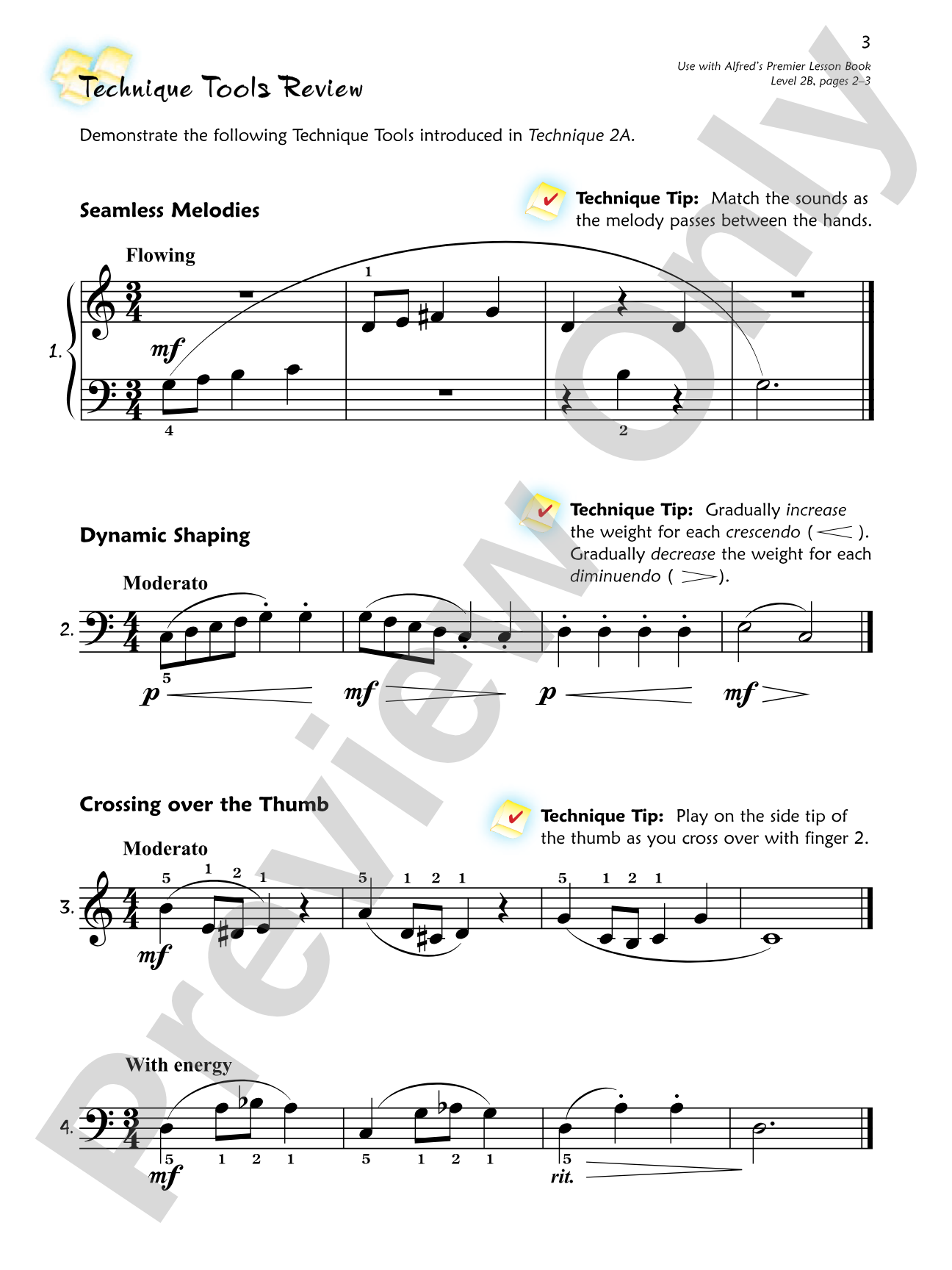
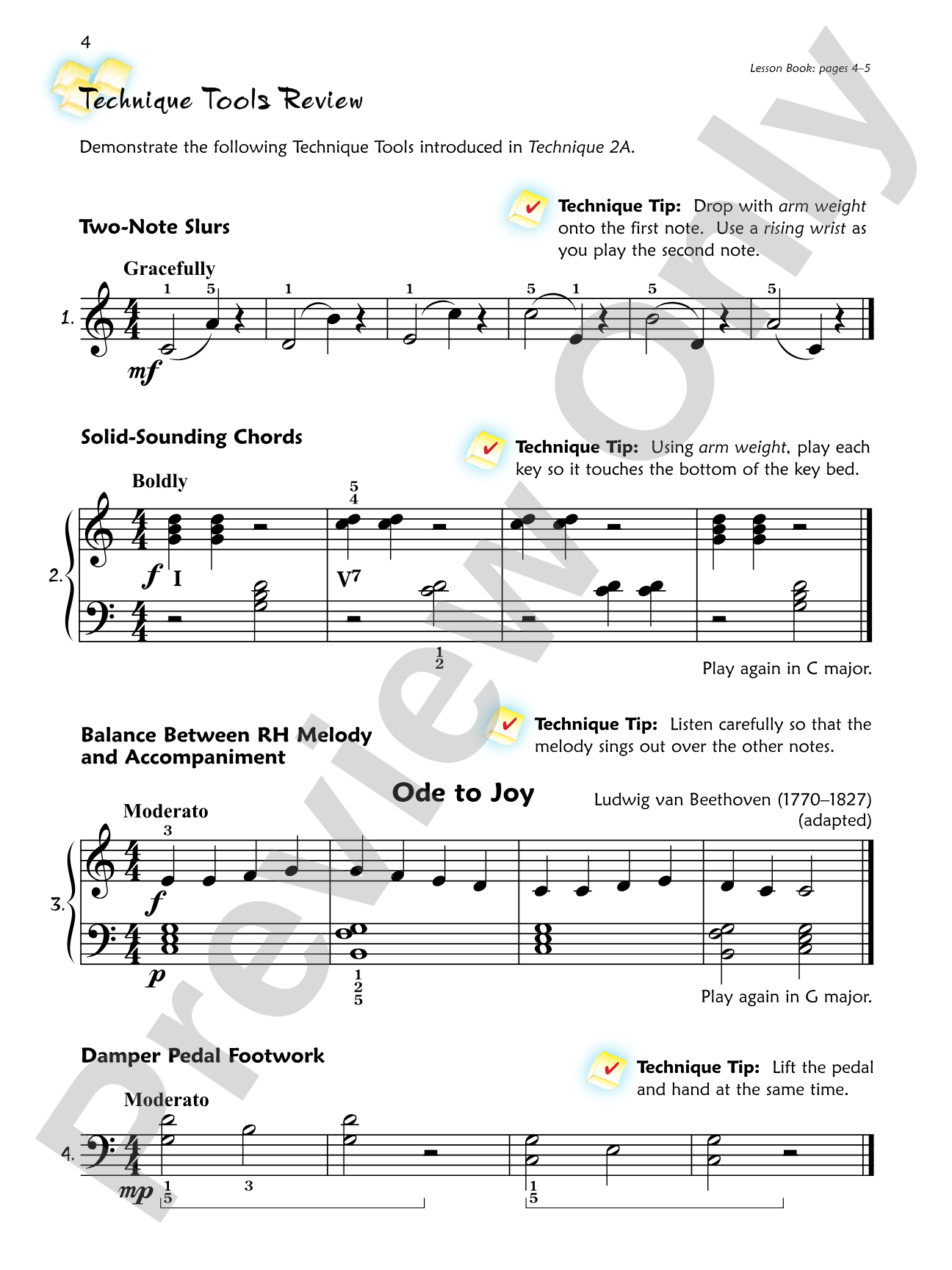
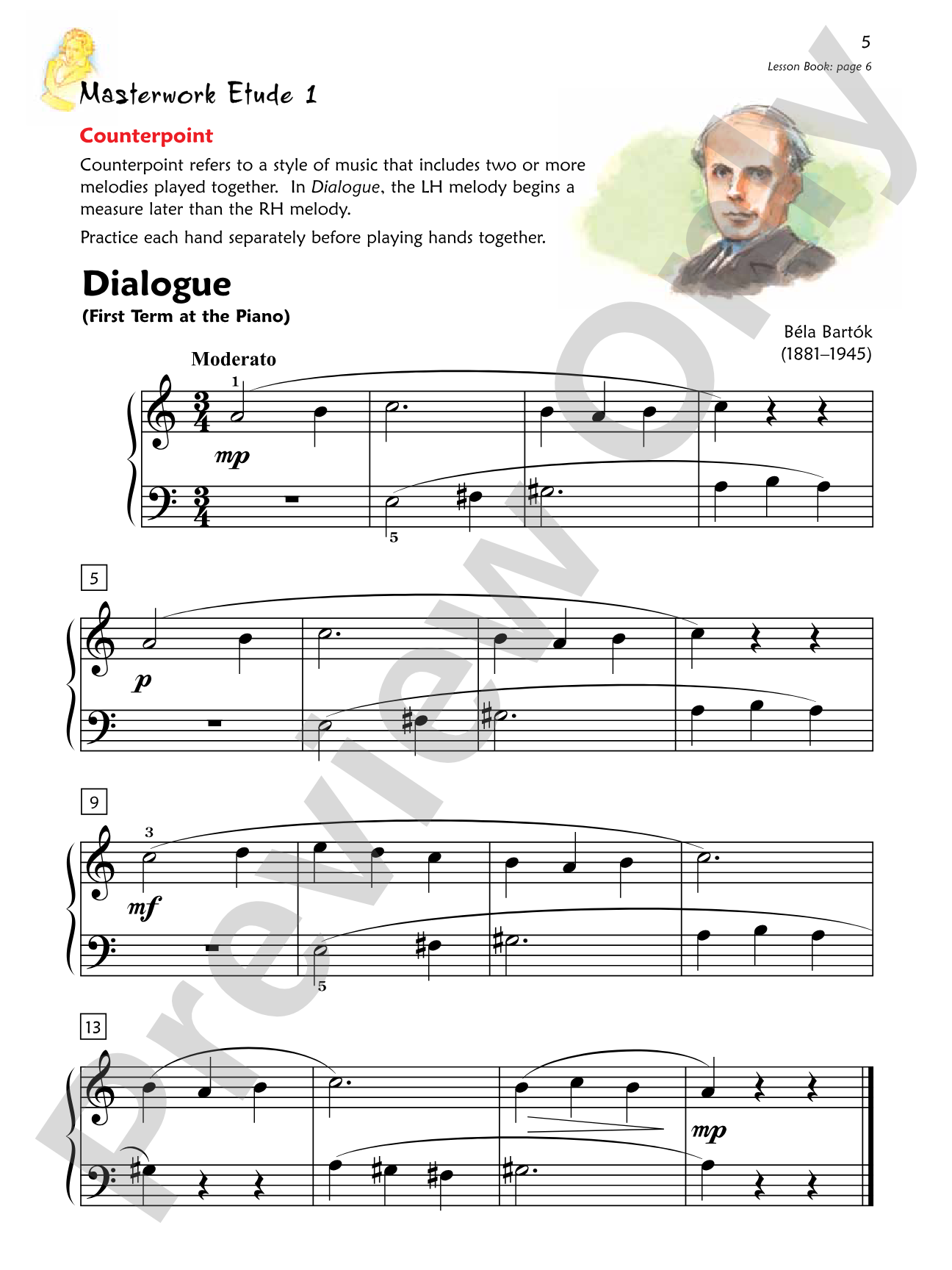
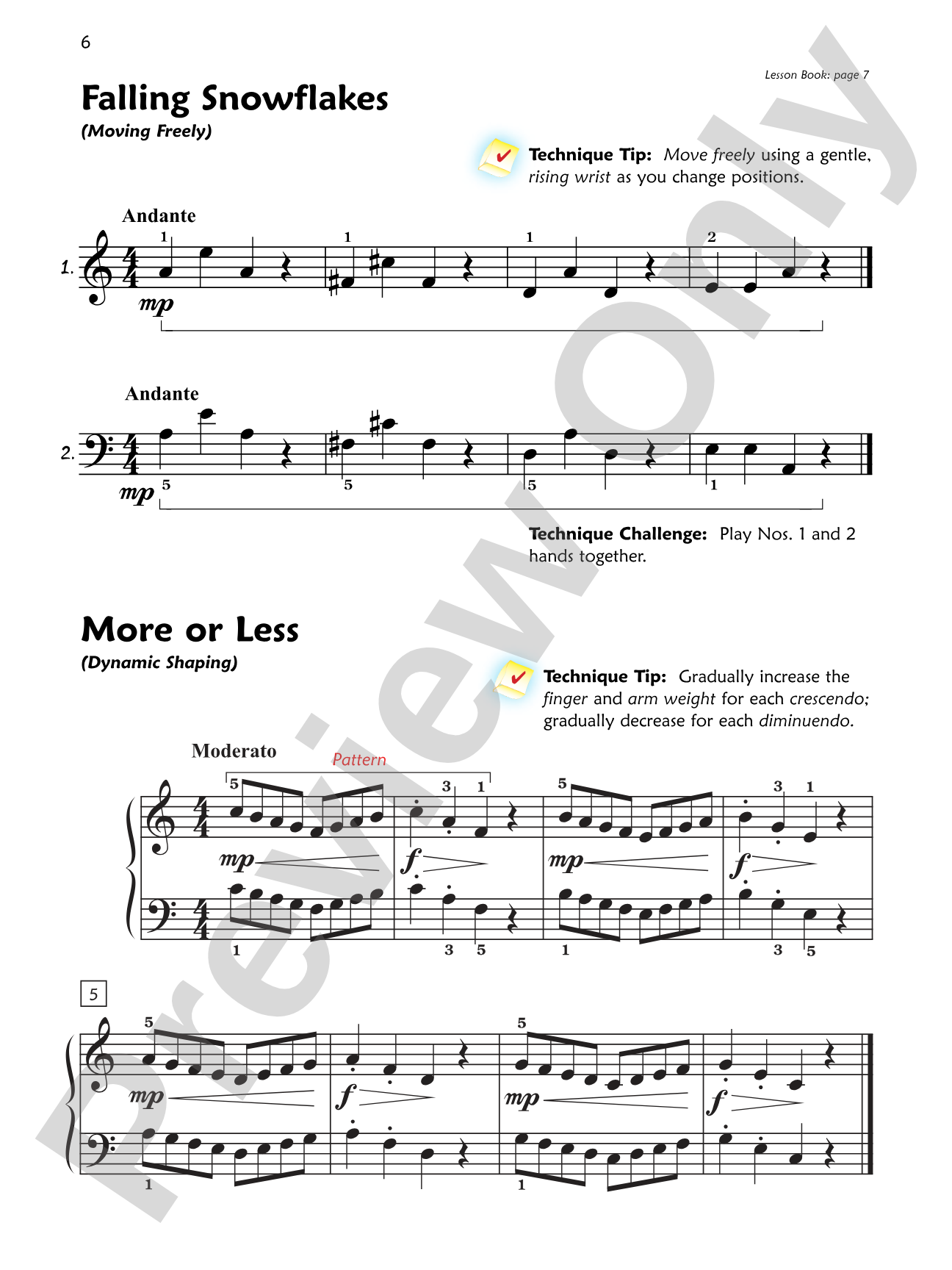
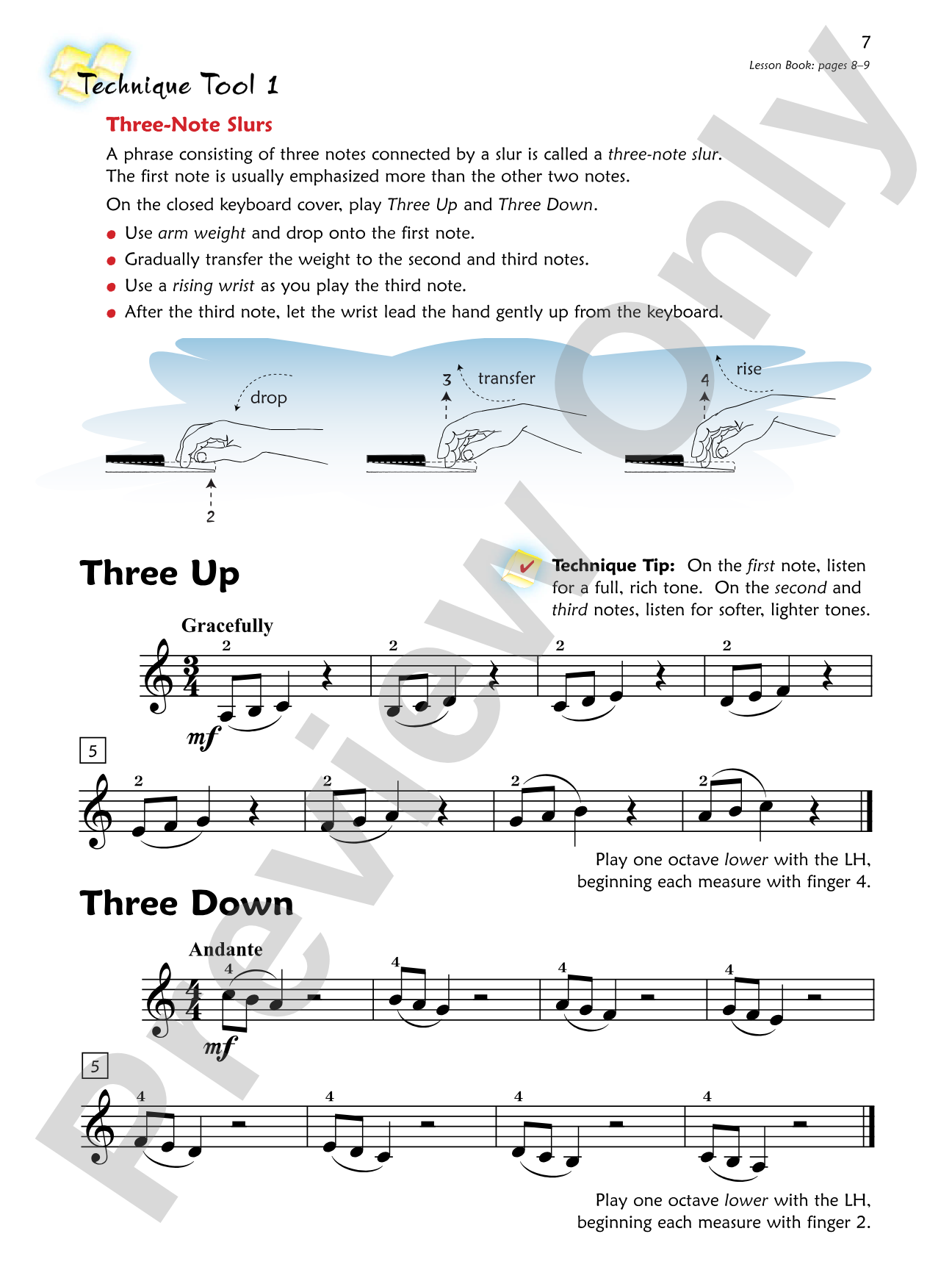
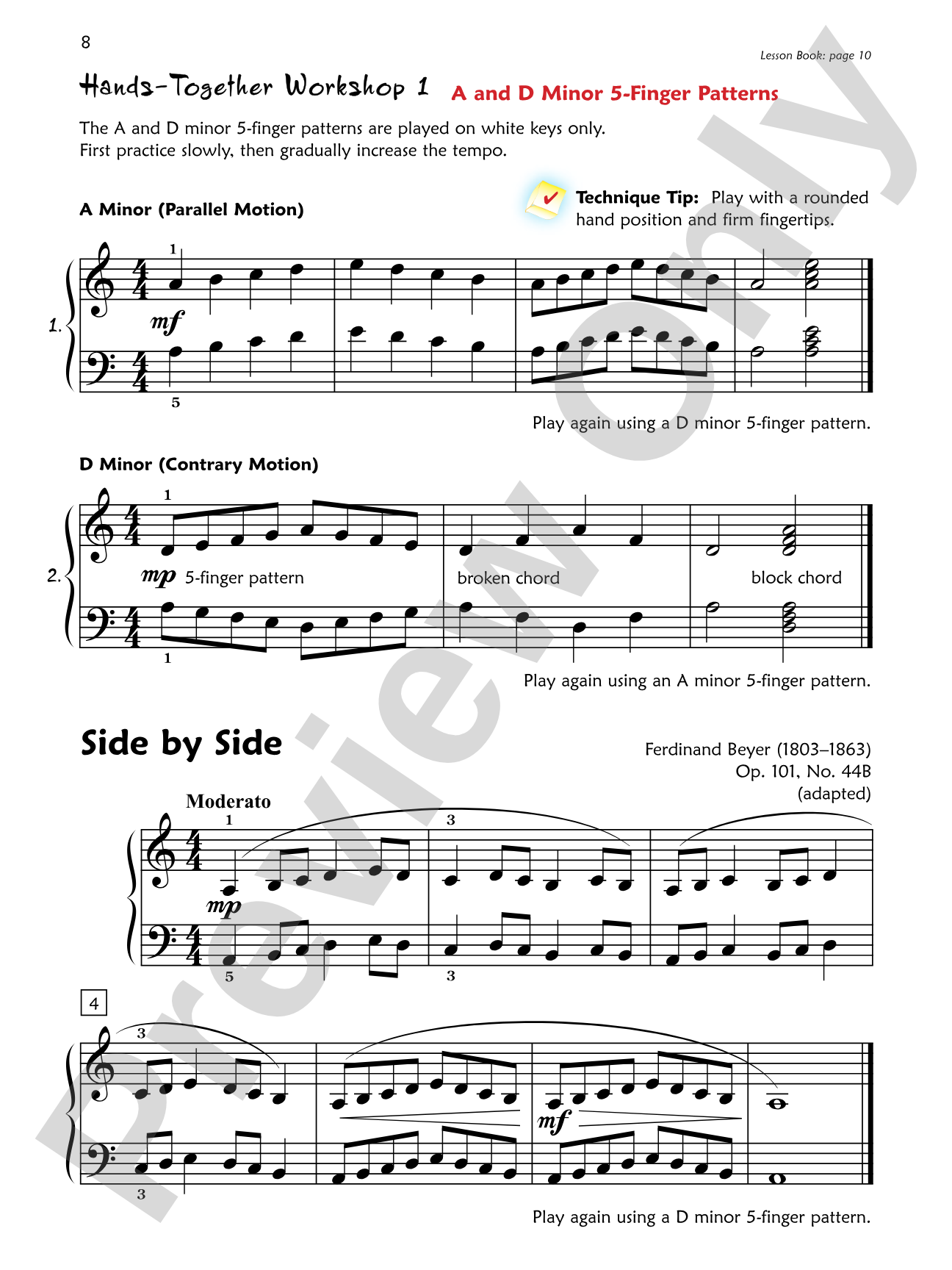
Technique 2B continues and expands on the technical and artistic tools learned in Technique books 1A, 1B, and 2A. The seven new Technique Tools introduced are: three-note slurs, preparing quickly for hand crossings, feel the downbeat, finger stretches, legato pedal, finger 1 under finger 3, and finger 3 over finger 1. Artistic Etudes showcase a student's technique in an expressive musical setting, and Hands-Together Workshops focus on developing the skills necessary for coordinating hands-together playing. Masterwork etudes provide training to play standard masterworks. Each page in the Technique Book correlates with a specific page in the Lesson Book.


Premier Piano Course, Technique 2B: Piano isn't in MakeMusic Cloud just yet...but it could be. Let us know you'd like to see it, and you'll help shape what comes next. In the meantime, start a free trial and dive into thousands of interactive titles your students can play along with today.
Request This Title
Tell us you want it.
Start Your Free Trial
Explore everything that's ready to play right now.
Sample Audio
No sample audio found.
Sample Video
No sample videos found.
Additional Details
Series:
Premier Piano Course
Publisher:
Alfred Music
Page Count:
40
SKU:
00-PB-0001068
More about this title
About the Composer: Dennis Alexander

Dennis Alexander has shaped generations of young pianists through his prolific output of educational compositions. Since 1986, his association with Alfred Music has produced over 400 publications and recordings that define what accessible, musically rewarding piano repertoire looks like for developing students. His 24 years teaching piano pedagogy at the University of Montana established him as a leader in understanding how technique and artistry grow together in the practice room.
Beyond the studio, Alexander remains an active performer and clinician, having made his Carnegie Recital Hall debut in 1987 and served as a collaborative artist for recognized soloists and chamber groups. His international reach extends across Asia, where he has performed and adjudicated, bringing his pedagogical philosophy to music teachers worldwide. Based in Albuquerque, he continues composing and touring while maintaining an influential presence in music education.
Why we love this
This technique book refuses to separate mechanics from music. Each of the seven new technique tools arrives wrapped in context, whether through Artistic Etudes that showcase the technique in expressive settings or Hands-Together Workshops that build real coordination skills. The page-by-page correlation with the Lesson Book means students see immediately why they're learning each tool, eliminating the disconnect between technique drills and actual playing.
What to expect
Technique becomes purposeful here, moving beyond isolated exercises into musical moments. Artistic Etudes bring warmth and character to new technical demands, while the Masterwork Etudes connect classroom learning to the literature students will eventually perform. The overall effect is one of gradual mastery: each technique tool arrives when needed, demonstrated in context, and reinforced through varied musical settings.
Who it's for
This is designed for early intermediate pianists who have completed Technique 2A and are ready to deepen their coordination and expressive control. The 40-page progression supports students working through the Level 2B Lesson Book, giving them targeted technical preparation for the repertoire they're learning. Teachers seeking integrated technique and artistry development will find this essential to their curriculum.
How to get the most out of it
- Introduce the three-note slurs by isolating the release point; many students rush the final note of the slur rather than sustaining it through the finger lift.
- When working on hand crossings, use the "feel the downbeat" principle to establish a steady pulse before attempting the crossing itself; rhythmic security makes spatial negotiation easier.
- Apply the legato pedal technique to one Artistic Etude at a time, ensuring students hear the difference between pedal clarity and muddiness before moving forward.
- Have students practice the finger stretches (finger 1 under finger 3 and finger 3 over finger 1) slowly at first, stopping at any point of tension; these are about gradually expanding hand capacity, not forcing.
How to use it
Assign pages from Technique 2B alongside corresponding pages in the Lesson Book to ensure students encounter technique preparation before they meet those demands in their main repertoire. The Masterwork Etudes can anchor recital preparation or serve as stepping stones between Lesson Book pieces and standard concerto or sonatina literature. Some teachers use Artistic Etudes as performance pieces themselves, showcasing how technique serves expressive intent.
Skills your students will build
- Three-note slurs with clean releases
- Hand crossings with preparation and coordination
- Legato pedal technique (distinguishing blur from resonance)
- Finger stretches (finger 1 under finger 3; finger 3 over finger 1)
- Hands-together independence and evenness
- Recognizing downbeats and phrase structure through physical sensation
- Artistic interpretation within technical contexts