

Premier Piano Course, Technique 1B: Piano
By Dennis Alexander, Gayle Kowalchyk, E. L. Lancaster, Victoria McArthur, and Martha Mier
Level: 1B
Item: 00-PB-0001064
$9.99
Pickup currently not available
Related Items
Premier Piano Course, Technique 1B: Piano Book |
$9.99
|
View |
Description
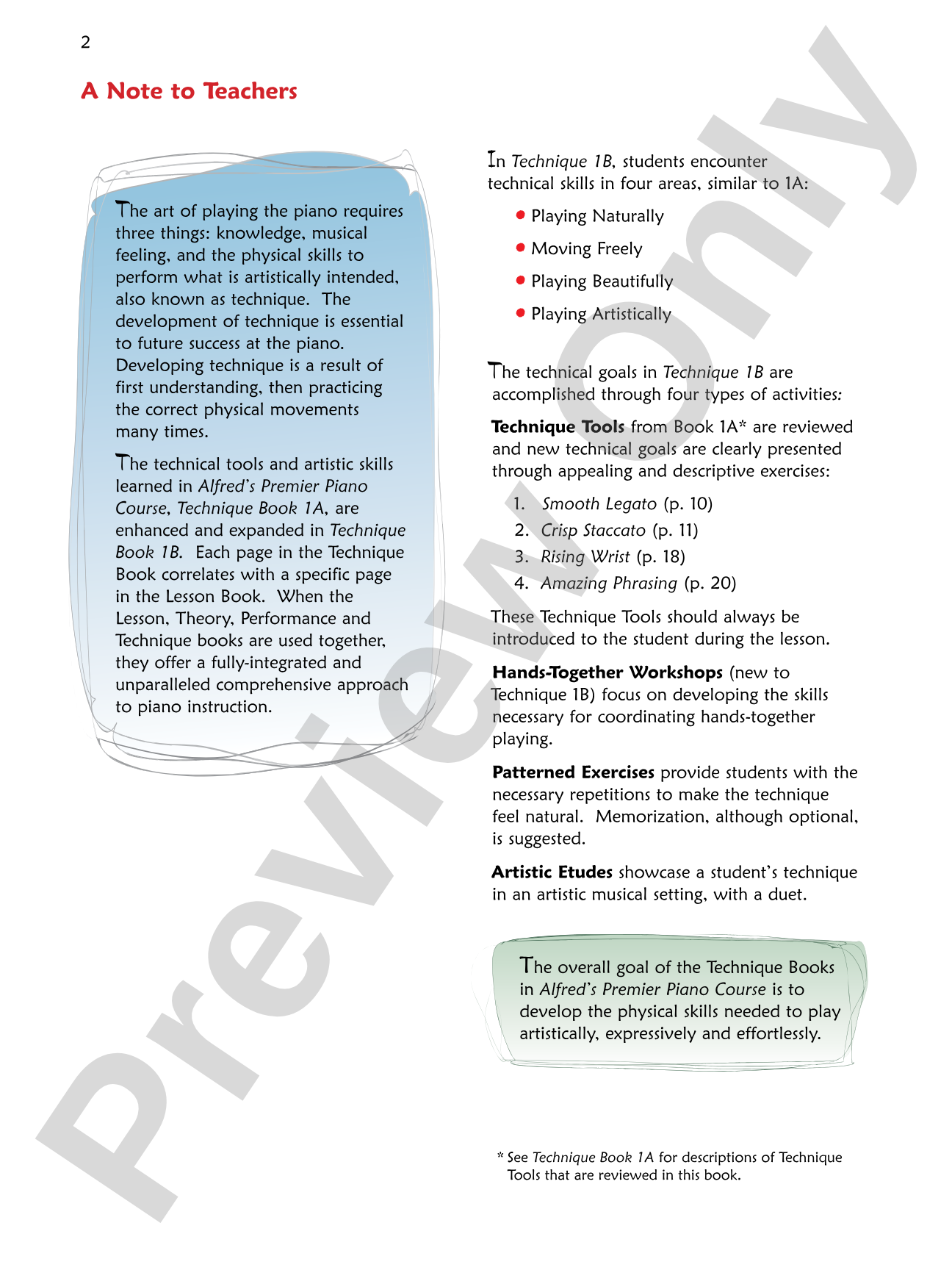
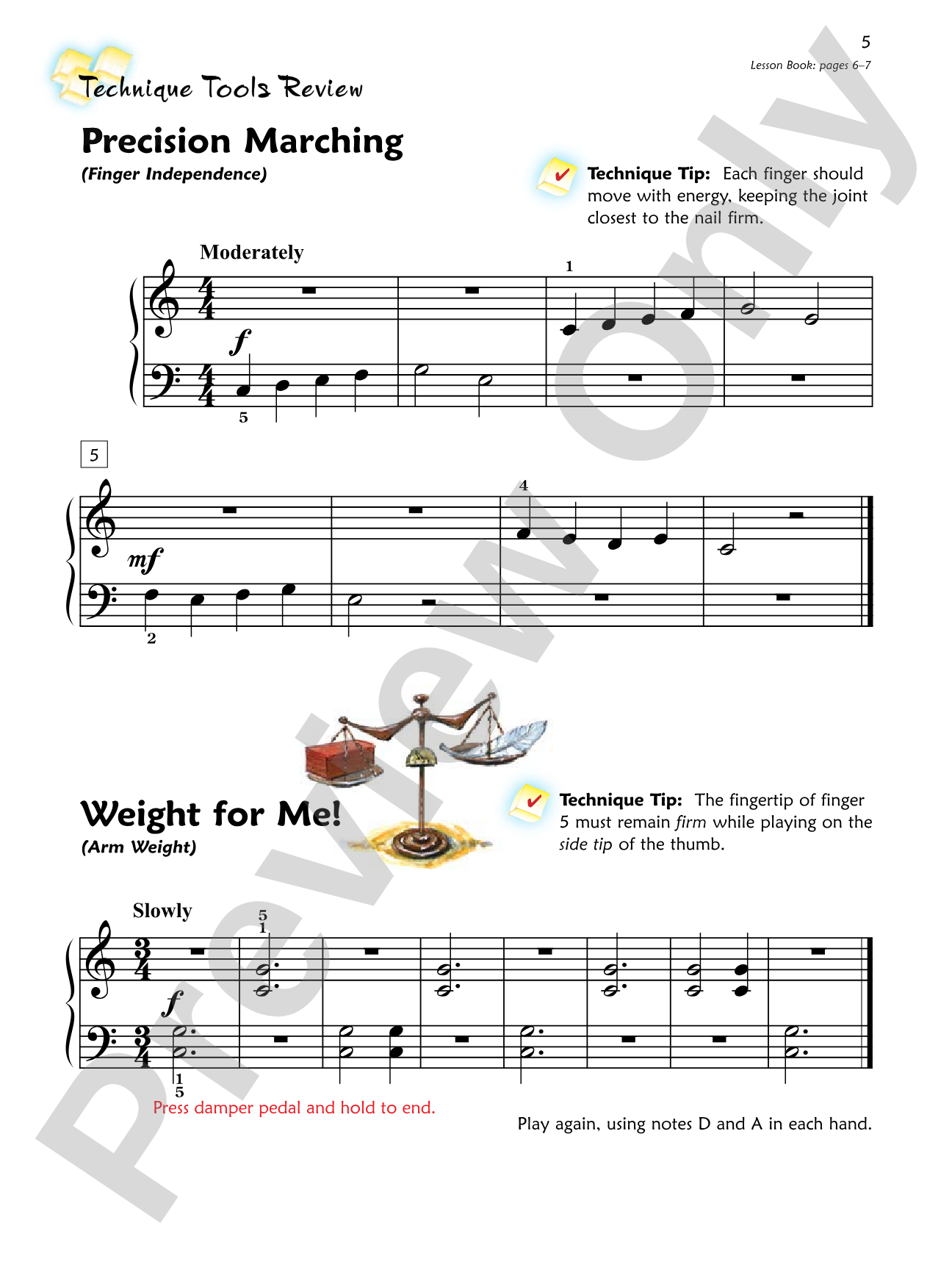
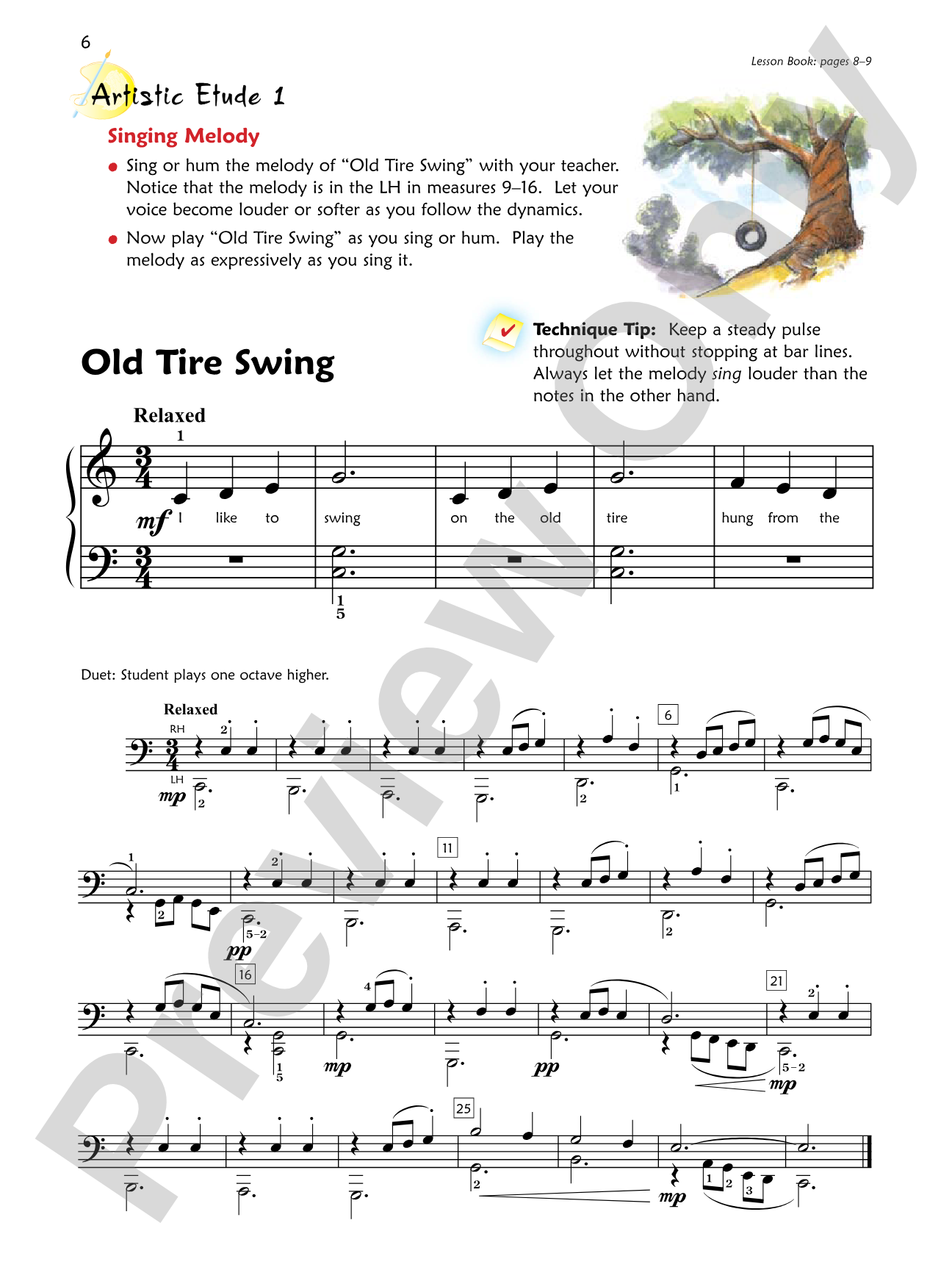
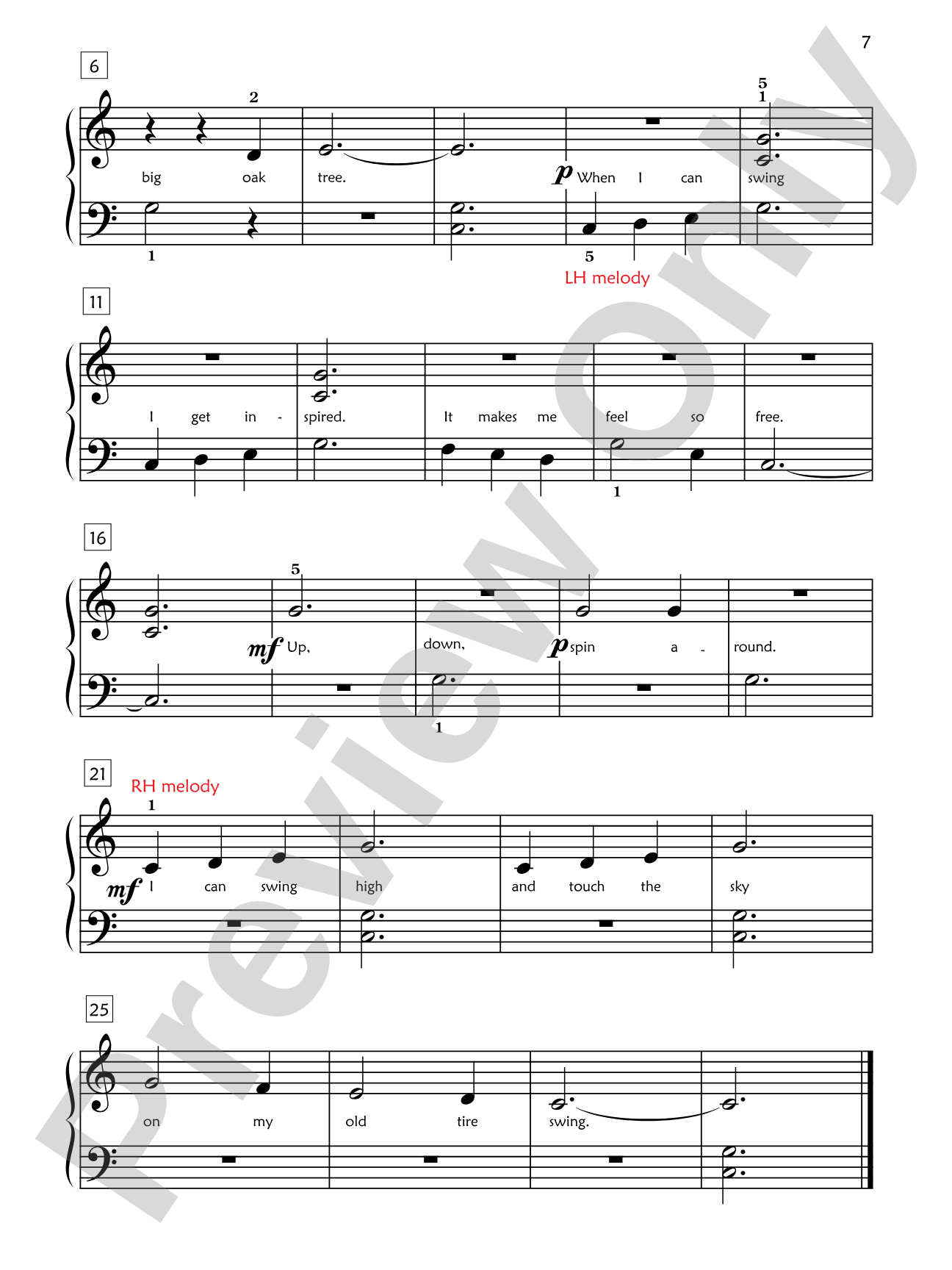
The technical tools and artistic skills learned in Technique 1A are enhanced and expanded in Technique 1B. Four new technique tools are introduced that relate to smooth legato, crisp staccato, rising wrist and amazing phrasing. Patterned exercises provide repetitions that make technique feel natural and artistic etudes showcase a student's technique in an expressive musical setting. New to this level are Hands-Together Workshops that focus on developing the skills necessary for coordinating hands-together playing. Each page in the Technique Book correlates with a specific page in the Lesson Book.


Discover MakeMusic Cloud: thousands of interactive titles your students can play along with today.
Sample Audio
No sample audio found.
Sample Video
No sample videos found.
Additional Details
Series:
Premier Piano Course
Publisher:
Alfred Music
Page Count:
32
SKU:
00-PB-0001064
More about this title
About the Composer: Dennis Alexander

Dennis Alexander has shaped piano pedagogy for decades through his work at the University of Montana, where he taught piano and pedagogy for 24 years before moving to California to continue teaching at Cal State Fullerton and Cal State Northridge. Since 1986, his partnership with Alfred Music Publishing has produced over 400 publications and recordings that have made him one of the most widely performed educational composers in the world. His influence extends beyond the studio: he has served as a clinician at state and national conventions, judged international competitions, and conducted master classes at the MTNA national convention.
Beyond his teaching and composing work, Alexander maintains an active performing career as a soloist, accompanist, and chamber musician. He has collaborated with internationally recognized soloists and has toured throughout Asia, performing recitals and workshops in Singapore, Hong Kong, Malaysia, Indonesia, and South Korea. A former president of the Montana State Music Teachers Association, he continues to compose on commission for organizations across the country while maintaining a private teaching studio.
Why we love this
The Hands-Together Workshops set this book apart from typical technique volumes. Rather than isolating hands separately, these focused exercises build coordination skills at the moment students need them most, making the leap from single-hand facility to true ensemble playing feel natural instead of overwhelming. The patterned approach also works brilliantly for ensemble teaching, repetition builds confidence without tedium, and the artistic etudes prove technique isn't dry mechanics but a gateway to genuine musical expression.
What to expect
These 32 pages feel like progression without overwhelming; each new technique tool opens up musical possibilities rather than adding busywork. The etudes sparkle with character, turning technique building into something that sounds like real music rather than mechanical exercise.
Who it's for
This book belongs with piano students in their first year or so of study who have completed Technique 1A and are ready to expand their technical vocabulary. Teachers using the Premier Piano Course series will find this an essential parallel text for students learning to move beyond basic note-reading into expressive, coordinated playing.
How to get the most out of it
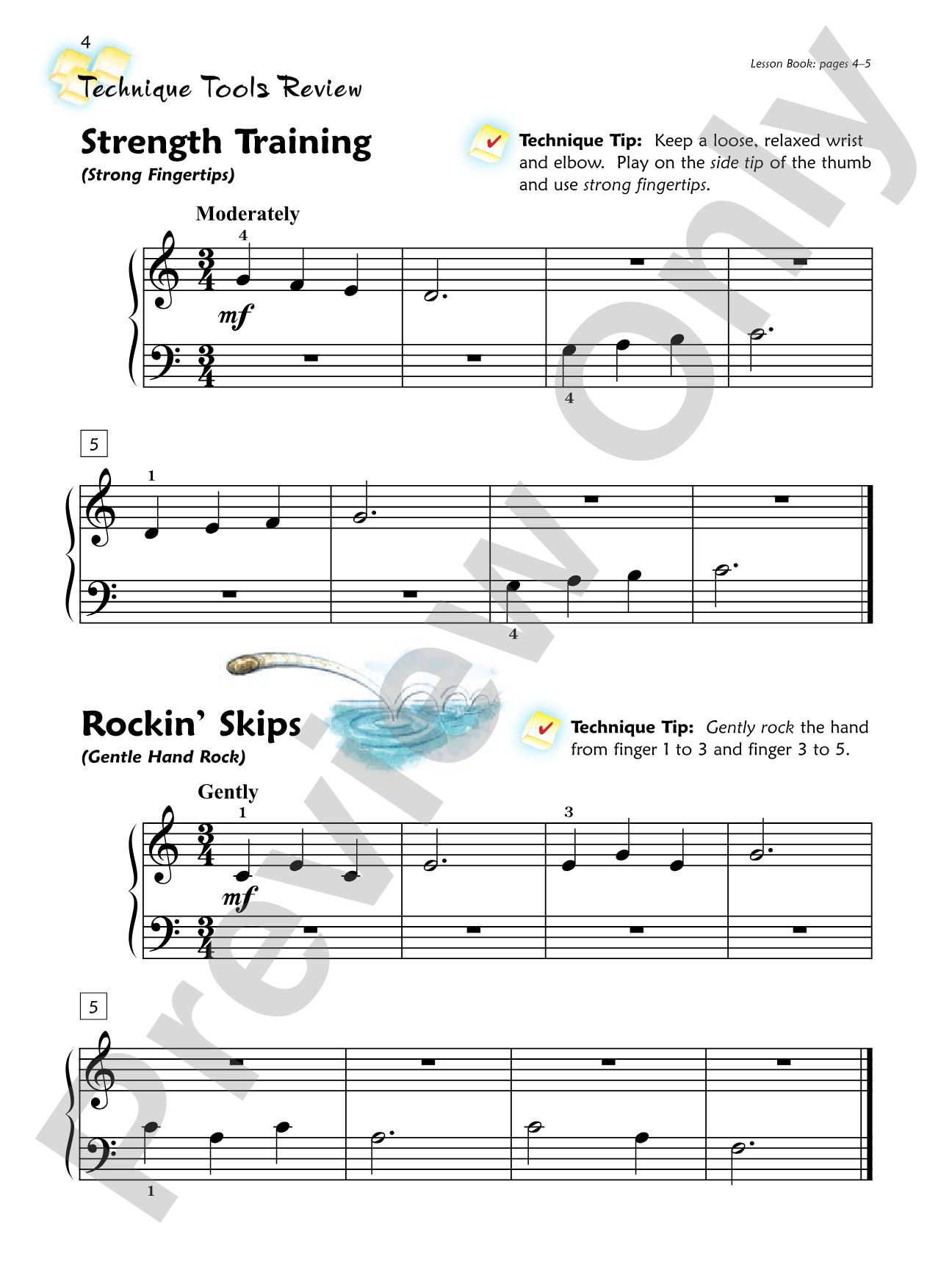
- Approach the patterned exercises as warm-ups before the etudes, using them to establish the technique the etude will then showcase musically rather than treating them as separate work.
- Pay attention to the wrist work emphasized at this level; practice the rising wrist gestures slowly and deliberately in the patterned exercises before applying them at tempo in the etudes.
- Use the Hands-Together Workshops as problem-solving sessions when coordination breaks down, isolating the exact measure where hands lose sync rather than running through the entire piece.
- Focus on the contrasts between legato and staccato passages within each etude, since articulation choices are often what make or break the musical effect at this level.
How to use it
Assign technique exercises from this book directly alongside corresponding pages in Technique 1A and the Lesson Book to keep a student's practice cohesive and purposeful. The expressive etudes work well as recital pieces at the early elementary level, particularly when you want to showcase not just note accuracy but growing musicality and hand control.
Skills your students will build
- Smooth legato playing using proper finger and hand position
- Crisp, controlled staccato articulation
- Rising wrist technique for phrase shaping and accent
- Hands-together coordination and independence
- Musical phrasing and expressive playing within technical frameworks
- Pattern recognition and repetition strategies for building muscle memory