

Premier Piano Course, Sight Reading 1A: Piano Book
$7.99 USD
Sale price
$7.99 USD
Regular price
Skip to product information


Premier Piano Course, Sight Reading 1A: Piano Book
By Carol Matz and Victoria McArthur
Level: 1A
Item: 00-41040
$7.99
One moment…
Description
Sight-Reading 1A develops sight reading skills through activities that reinforce reading concepts and musicality. There are 14 units correlated with Lesson Book 1A, and each unit contains five activities that emphasize note reading, rhythm, playing without stopping, and playing expressively. These activities build sight-reading skills in a simple, fun way.


Premier Piano Course, Sight Reading 1A: Piano Book isn't in MakeMusic Cloud just yet...but it could be. Let us know you'd like to see it, and you'll help shape what comes next. In the meantime, start a free trial and dive into thousands of interactive titles your students can play along with today.
Request This Title
Tell us you want it.
Start Your Free Trial
Explore everything that's ready to play right now.
Sample Audio
No sample audio found.
Sample Video
No sample videos found.
Additional Details
More about this title
About the Authors
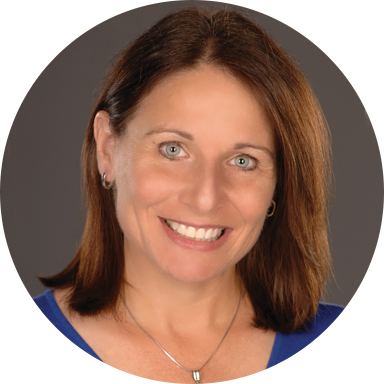
Carol Matz is a prolific composer and arranger who has created more than 300 published works for piano students. As an accomplished piano educator, she brings firsthand teaching experience to everything she writes. Her Famous & Fun series, published by Alfred Music, has become widely recognized in music education circles.
Throughout her career, Matz has shared her expertise through piano teaching workshops across the United States, Canada, England, New Zealand, and Australia. Her compositional training comes from the University of Miami, where she studied composition, arranging, and orchestration. Beyond her piano work, she has written for orchestras, jazz big bands, brass quintets, and string quartets.
In addition to her publishing success, Matz has contributed studio arrangements for various recording artists working in Miami-area studios, demonstrating her versatility across multiple musical contexts.
Throughout her career, Matz has shared her expertise through piano teaching workshops across the United States, Canada, England, New Zealand, and Australia. Her compositional training comes from the University of Miami, where she studied composition, arranging, and orchestration. Beyond her piano work, she has written for orchestras, jazz big bands, brass quintets, and string quartets.
In addition to her publishing success, Matz has contributed studio arrangements for various recording artists working in Miami-area studios, demonstrating her versatility across multiple musical contexts.

Victoria McArthur recently retired from her position as Program Director of Piano Pedagogy and Coordinator of Group Piano at Florida State University's College of Music, a nationally recognized institution. She holds the Permanent Professional Certificate in Piano and Music Theory from the Music Teachers National Association.
Her scholarly contributions span more than 80 publications, including the widely acclaimed Alfred's Premier Piano Course, co-authored with colleagues. Since 2000, she has served as a Keyboard Editor for Alfred Music Publishing and has contributed articles and reviews to leading music education journals, including a long association with Piano Quarterly. Her research appears in prestigious academic texts such as The Science and Psychology of Music Performance, published by Oxford University Press, where she authored the chapter on sight reading.
McArthur continues her teaching career through McArthur & Musical Associates, a successful piano studio in Tallahassee, Florida, where she instructs students of all ages and ability levels in piano and music theory. In 2006, she traveled to Korea to lead piano workshops for Alfred Music Publishing.
Her scholarly contributions span more than 80 publications, including the widely acclaimed Alfred's Premier Piano Course, co-authored with colleagues. Since 2000, she has served as a Keyboard Editor for Alfred Music Publishing and has contributed articles and reviews to leading music education journals, including a long association with Piano Quarterly. Her research appears in prestigious academic texts such as The Science and Psychology of Music Performance, published by Oxford University Press, where she authored the chapter on sight reading.
McArthur continues her teaching career through McArthur & Musical Associates, a successful piano studio in Tallahassee, Florida, where she instructs students of all ages and ability levels in piano and music theory. In 2006, she traveled to Korea to lead piano workshops for Alfred Music Publishing.