

Premier Piano Course, Masterworks 3: Correlated Standard Repertoire: Piano
Correlated Standard Repertoire
Ed. Gayle Kowalchyk and E. L. Lancaster
Level: 3
Item: 00-PB-0000966
$10.99
Pickup currently not available
Related Items
Premier Piano Course, Masterworks 3: Piano Book & Online Audio |
$10.99
|
View |
Description
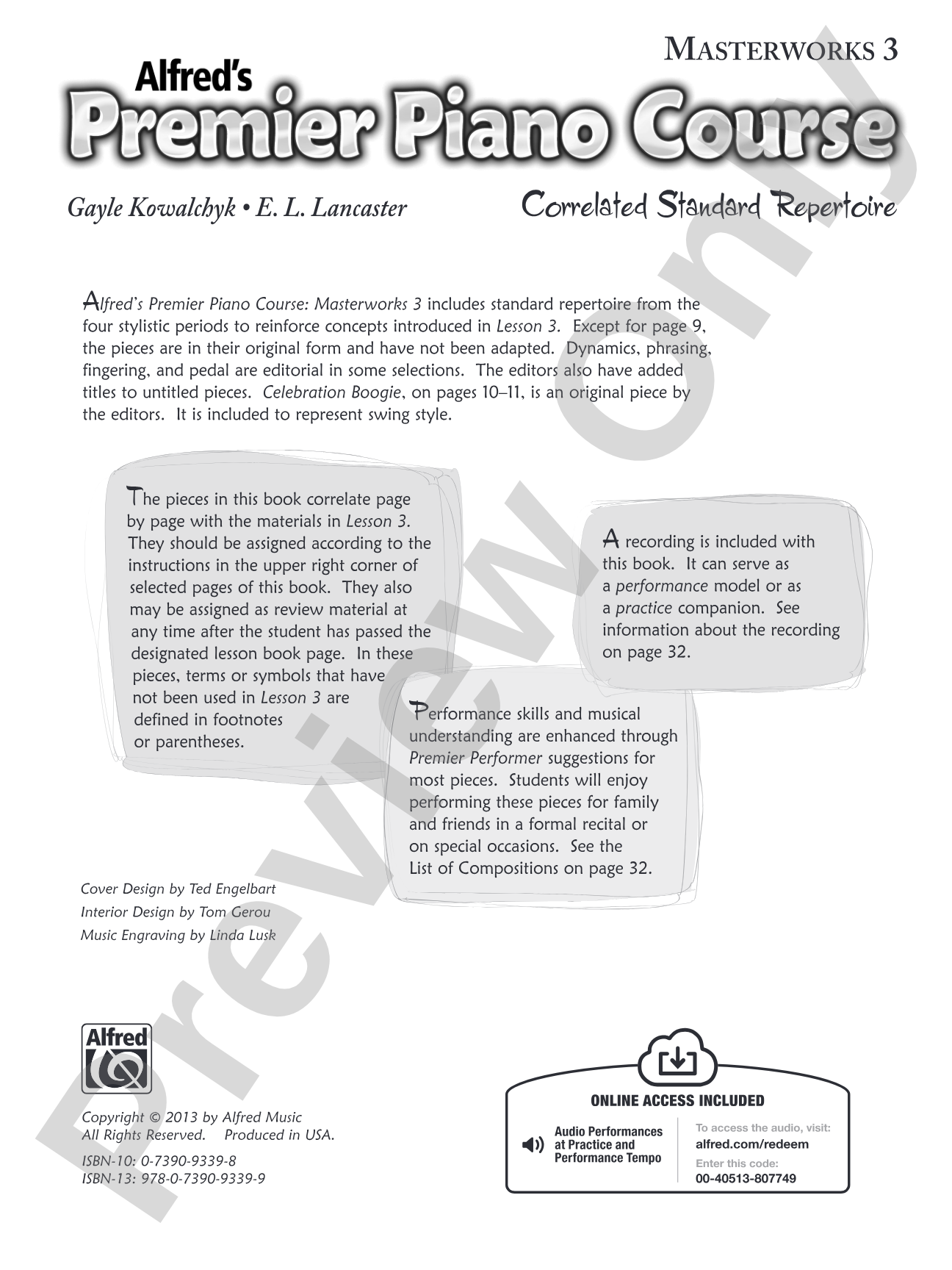
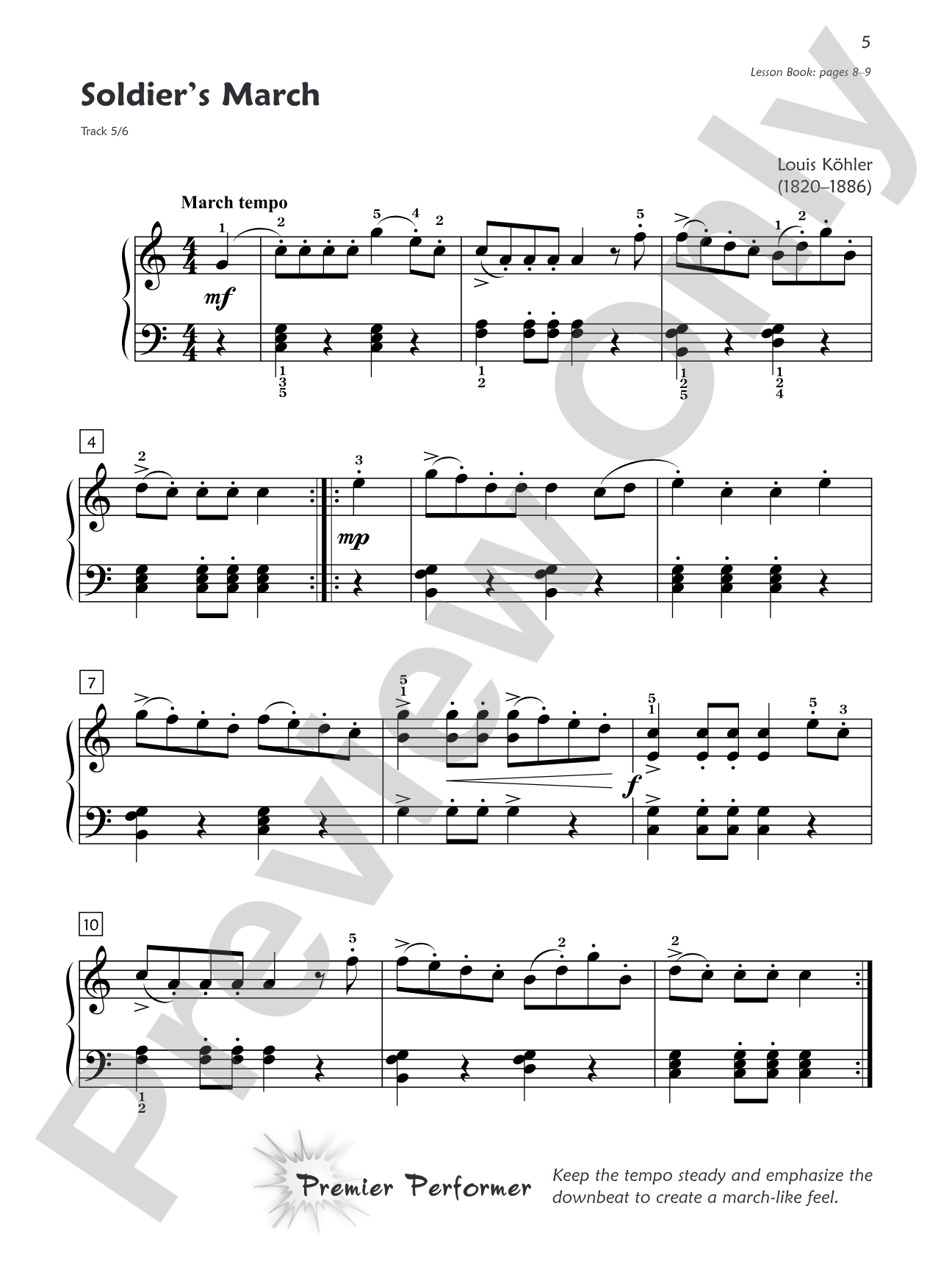
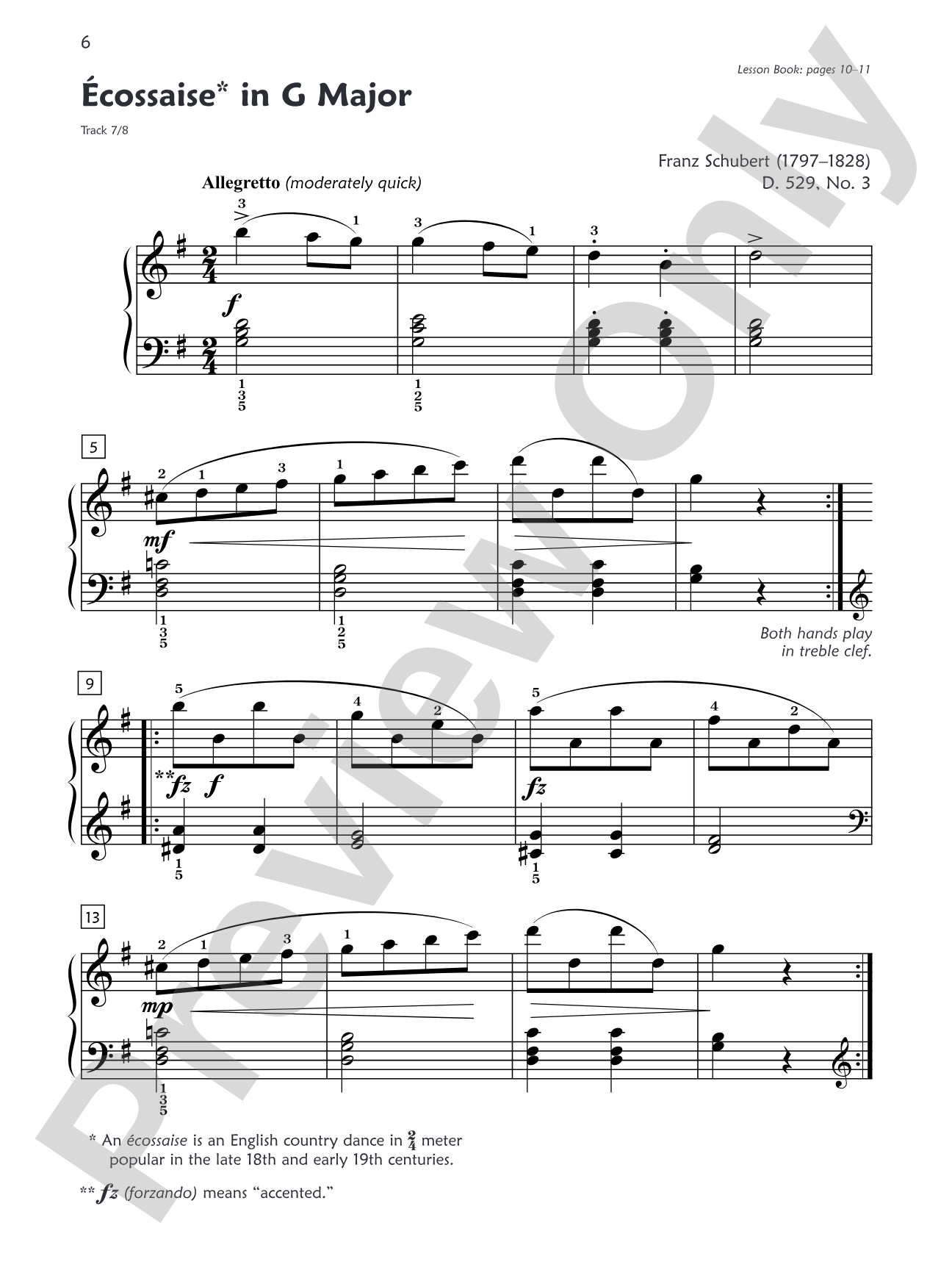
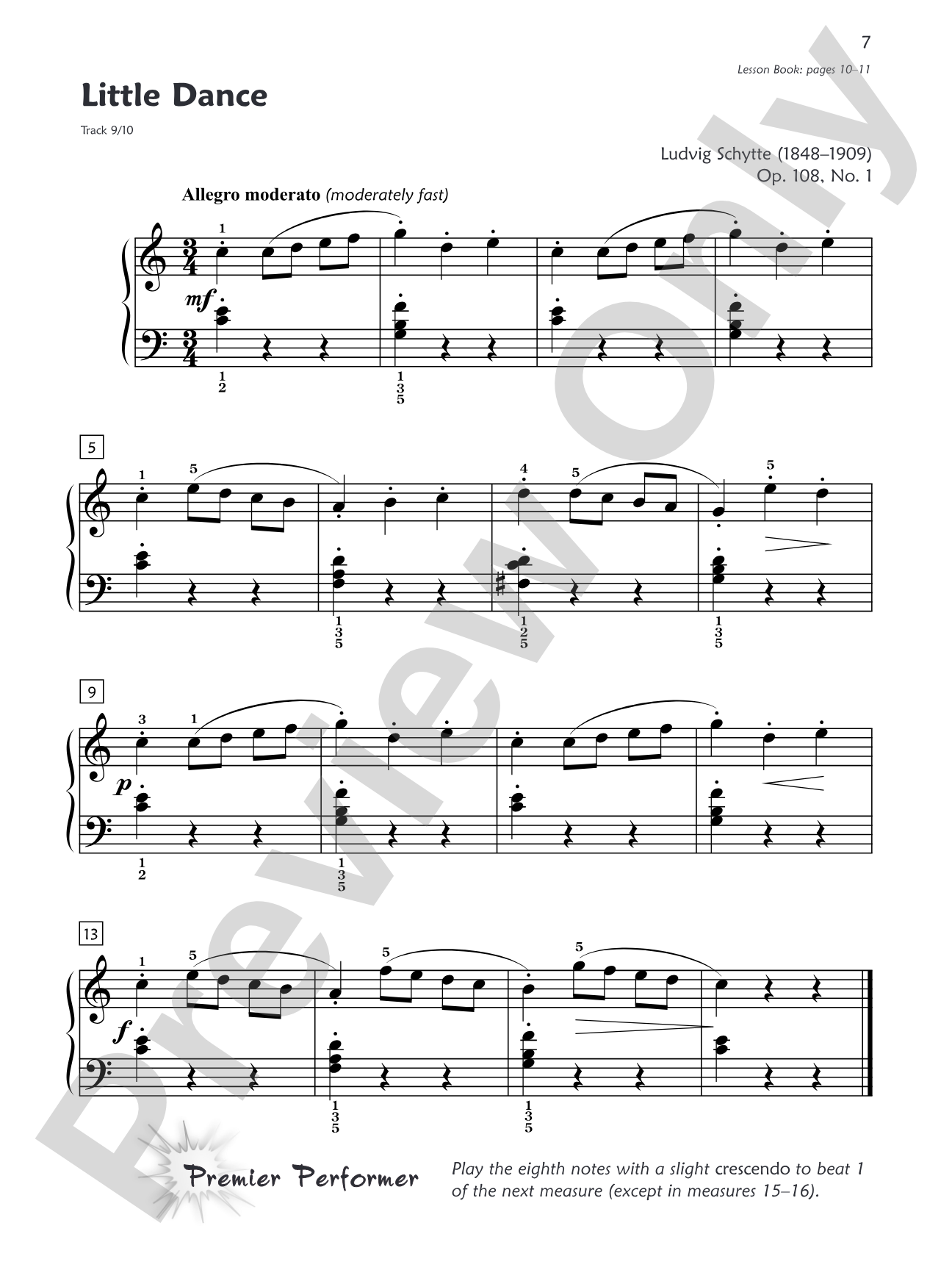
Premier Piano Course Masterworks Book 3 includes standard repertoire from the four stylistic periods to reinforce concepts introduced in Lesson Book 3. Except for "Jazzy Trumpets," the pieces are in their original form and have not been adapted. Dynamics, phrasing, fingering, and pedal are editorial in some selections. The editors have also added titles to untitled pieces. Performance skills and musical understanding are enhanced through Premier Performer suggestions. Students will enjoy performing these pieces for family and friends in a formal recital or on special occasions.


Discover MakeMusic Cloud: thousands of interactive titles your students can play along with today.
Sample Audio
1
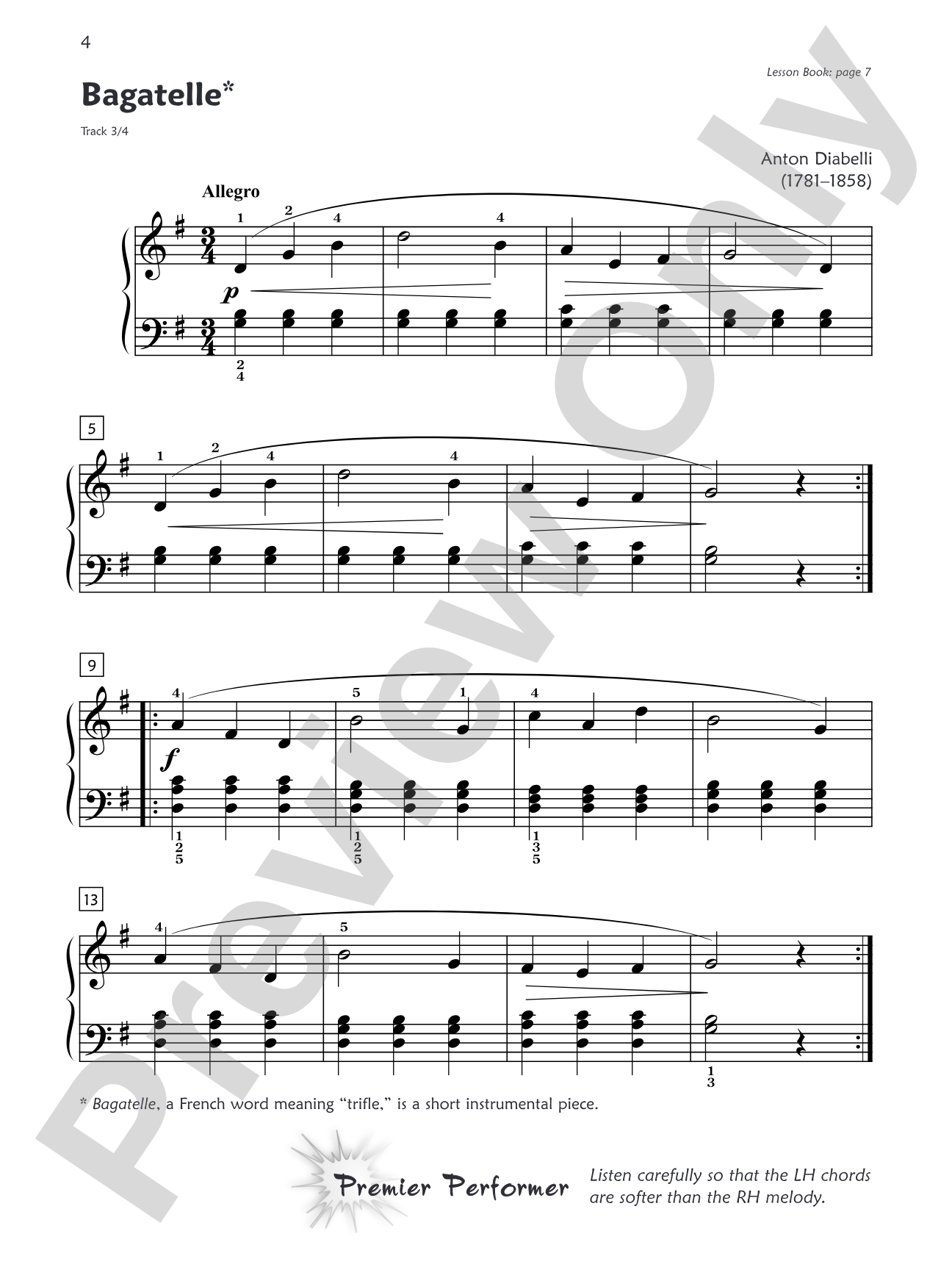
Bagatelle [Performance Tempo]
--:--
2
Bagatelle [Practice Tempo]
--:--
3
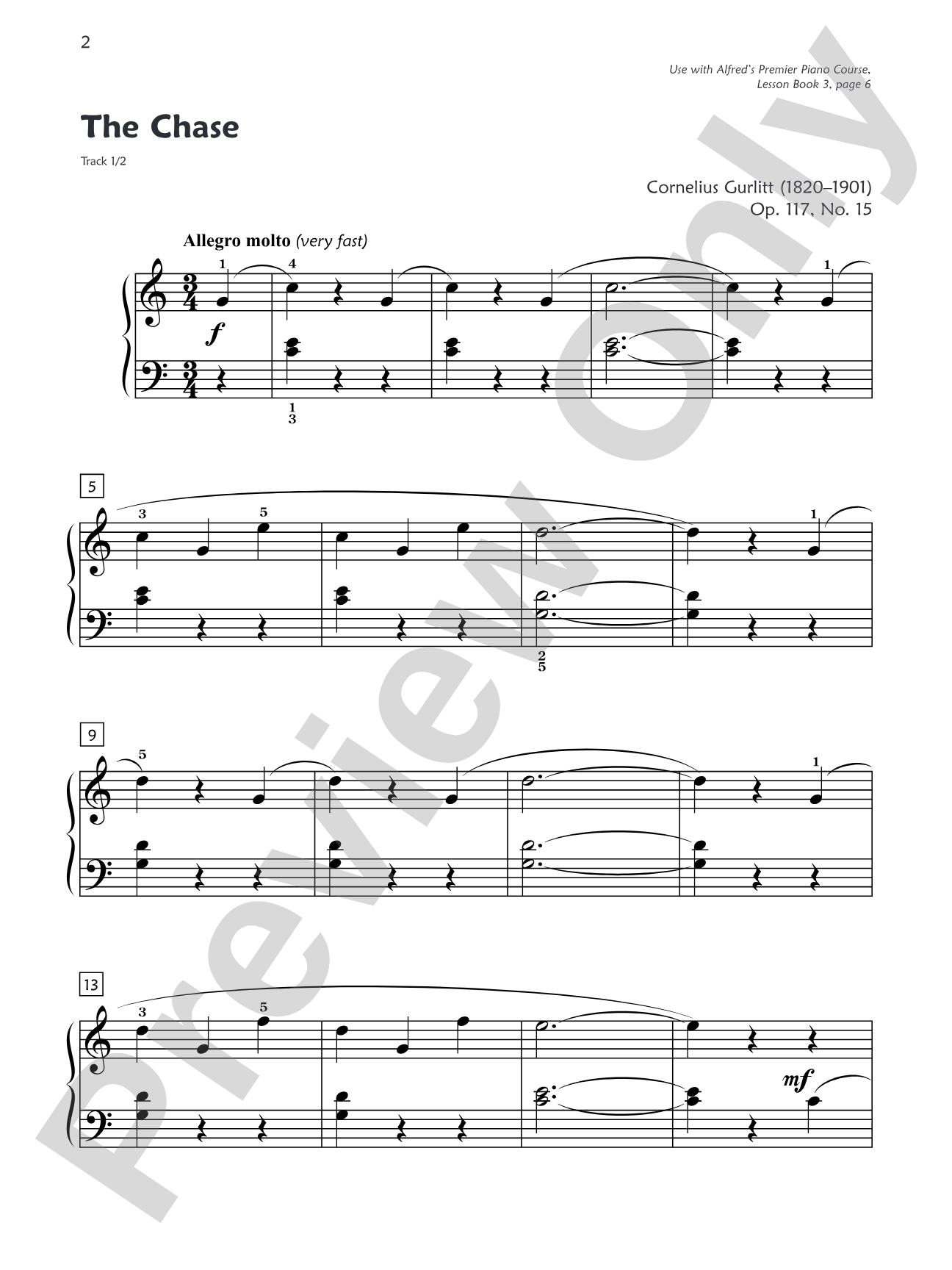
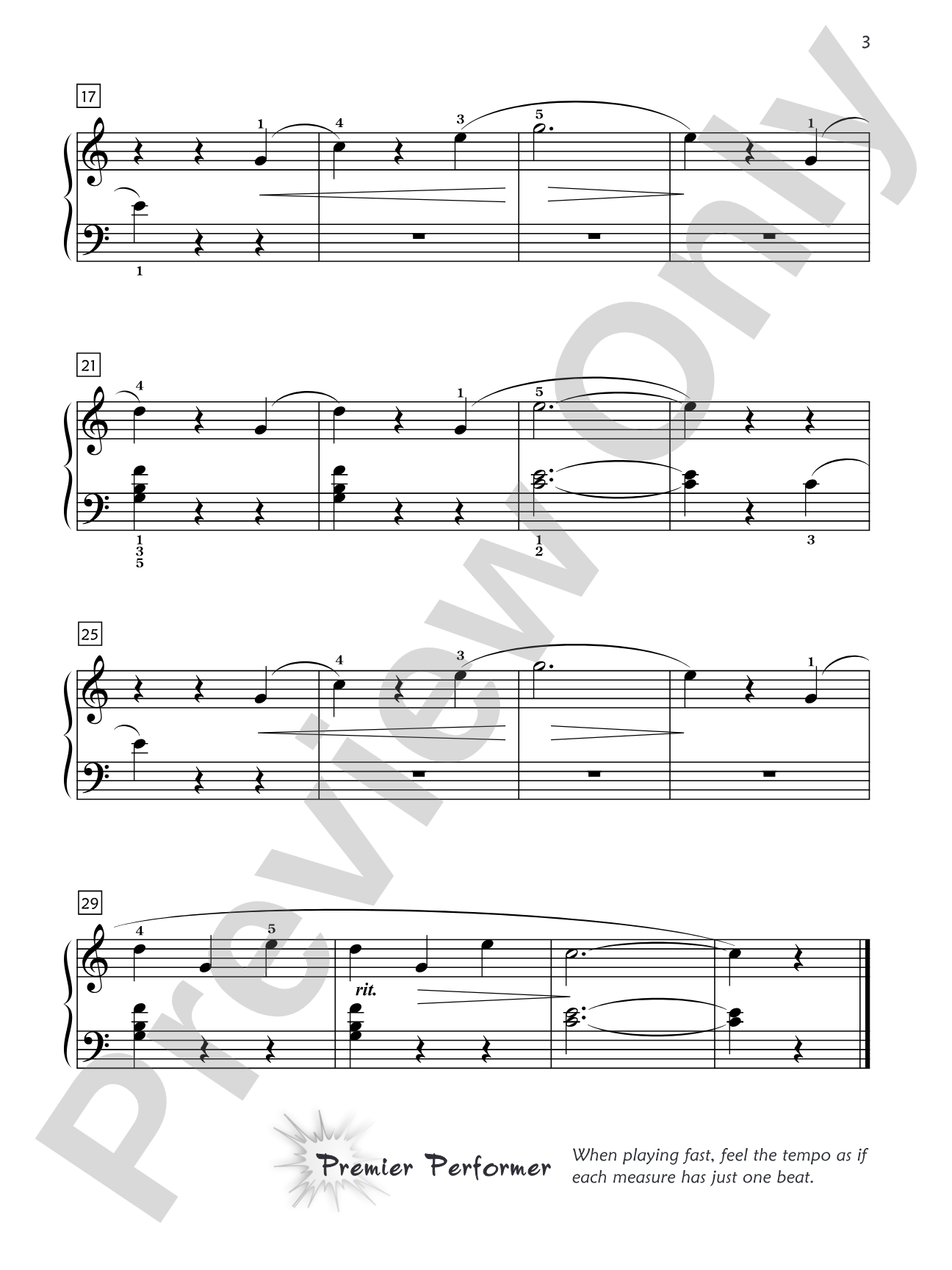
The Chase [Performance Tempo]
--:--
4
The Chase [Practice Tempo]
--:--
Bagatelle [Performance Tempo]
0:00
0:00
Sample Video
No sample videos found.
Additional Details
Series:
Premier Piano Course
Publisher:
Alfred Music
Page Count:
32
SKU:
00-PB-0000966
More about this title
About the Arranger: Tom Gerou

Tom Gerou has established himself as one of the most prolific voices in piano education through his compositions, arrangements, and instructional texts. His published work exceeds 160 titles and spans from foundational reference materials like the Essential Dictionary of Music Notation to comprehensive pedagogical series such as Premier Piano Course: Great Music & Musicians. His arrangements appear consistently across Alfred's extensive piano libraries, having become trusted resources in studios and classrooms nationwide.
Gerou's training at the University of Southern California (Bachelor of Music in composition) and Yale University (Master of Music in composition) shaped his distinctive approach to writing for young pianists. His contributions to music education have been recognized through multiple awards, including two Los Angeles Drama Critics Circle Awards for original theatrical music, a Morton Gould Young Composer Award, and the Jimmy McHugh Composition Prize. He has delivered workshops across North America, Asia, and the Pacific region, sharing his expertise with music educators internationally.
Why we love this
Gerou's curation in this book respects the integrity of established masterworks while making them genuinely playable for intermediate pianists. The editorial additions (thoughtful fingering, pedal markings, dynamics, and phrasing) remove unnecessary barriers without diluting the music, and the inclusion of performance suggestions in the Premier Performer notes transforms practice into deeper musical engagement. This is how standard repertoire should be presented at this level: authentic, accessible, and rich enough to sustain a student's interest through recital preparation.
What to expect
Opening this book feels like stepping into a well-curated museum where each piece speaks clearly. The variety across styles and periods keeps the ear engaged; you might move from the clarity of a Bach prelude to the lyricism of a Romantic intermezzo to the playfulness of a contemporary character piece, each one polished and ready to perform.
Who it's for
Intermediate pianists (approximately Level 3 or grades 4-6 in traditional progression) who are ready to engage with authentic repertoire from Baroque, Classical, Romantic, and Contemporary periods. This book pairs perfectly with Premier Piano Course Lesson Book 3 and serves students who want recital material that feels substantial without overwhelming their technical reach.
How to get the most out of it
- Study the Premier Performer suggestions first; they preview the musical character and interpretive choices before you dive into the score.
- Observe the editorial pedal markings carefully, especially in the Romantic and Contemporary pieces, as they clarify texture and harmonic color at this level.
- Use the fingering as a starting point rather than gospel; if a different fingering serves your hand shape or musical phrase better, adapt it thoughtfully and consistently.
- Balance the pieces across multiple recitals rather than performing all 32 at once; spacing them out allows each work to receive proper preparation and shine individually.
How to use it
Draw individual pieces for holiday recitals, studio showcases, or festival competitions throughout the year; a 32-page collection of this caliber supports consistent programming without repetition across multiple performance opportunities. These pieces also work well as supplementary repertoire alongside your lesson book assignments, allowing students to explore familiar stylistic periods in greater depth.
Skills your students will build
- Sight-reading skills across four major style periods (Baroque, Classical, Romantic, Contemporary)
- Interpretation of editorial pedal markings and their effect on tone color and harmonic blending
- Phrasing and dynamic shaping as written in complete, unpadded scores
- Fingering decisions and hand position efficiency for intermediate-level passages
- Performance confidence through recital-ready arrangements that honor composer intent