

Premier Piano Course, Duet 5: Piano
Ed. Gayle Kowalchyk and E. L. Lancaster
Level: 5
Item: 00-PB-0000971
$9.99
Pickup currently not available
Related Items
Premier Piano Course, Duet 5: Piano Book |
$9.99
|
View |
Description
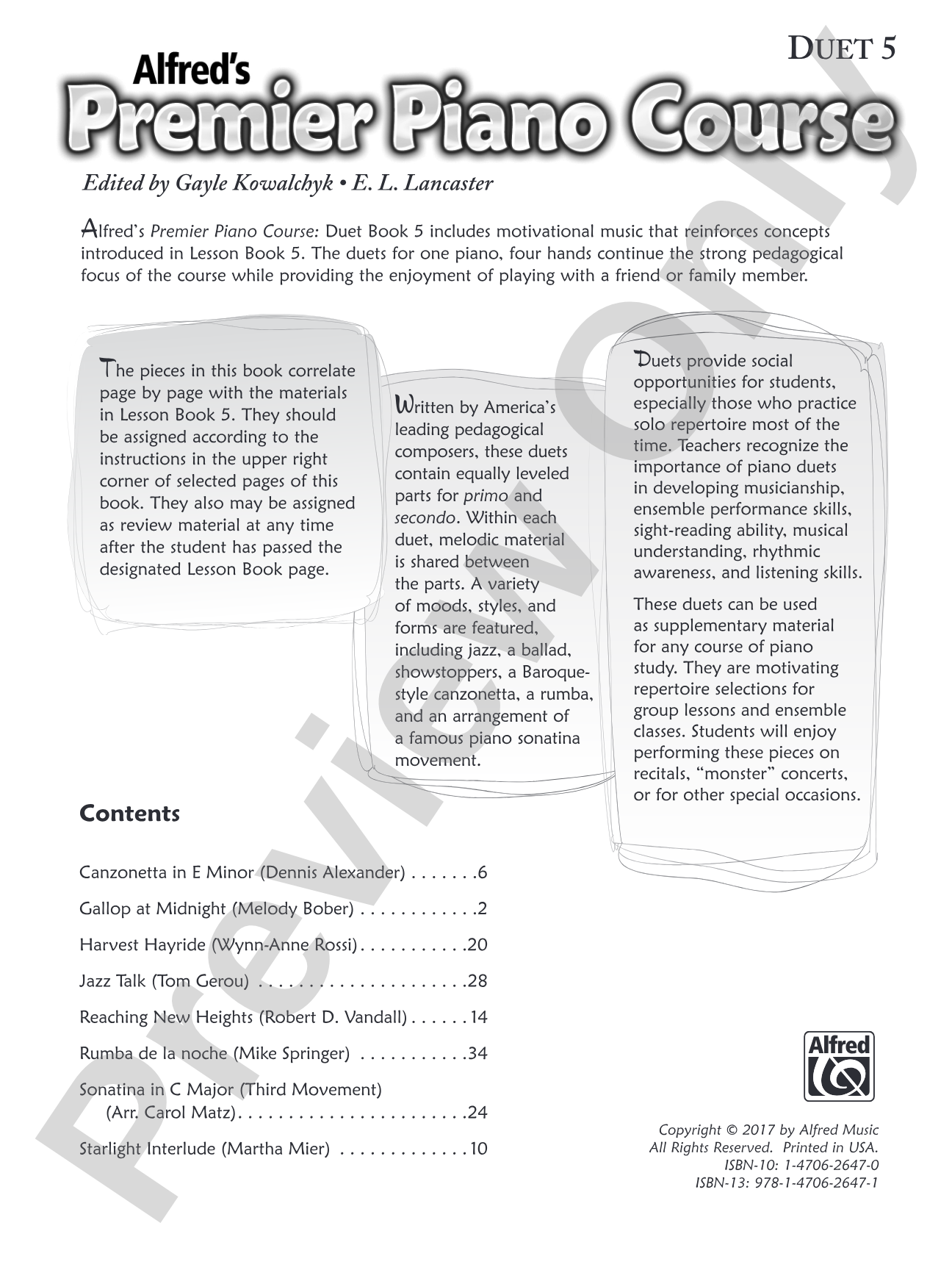
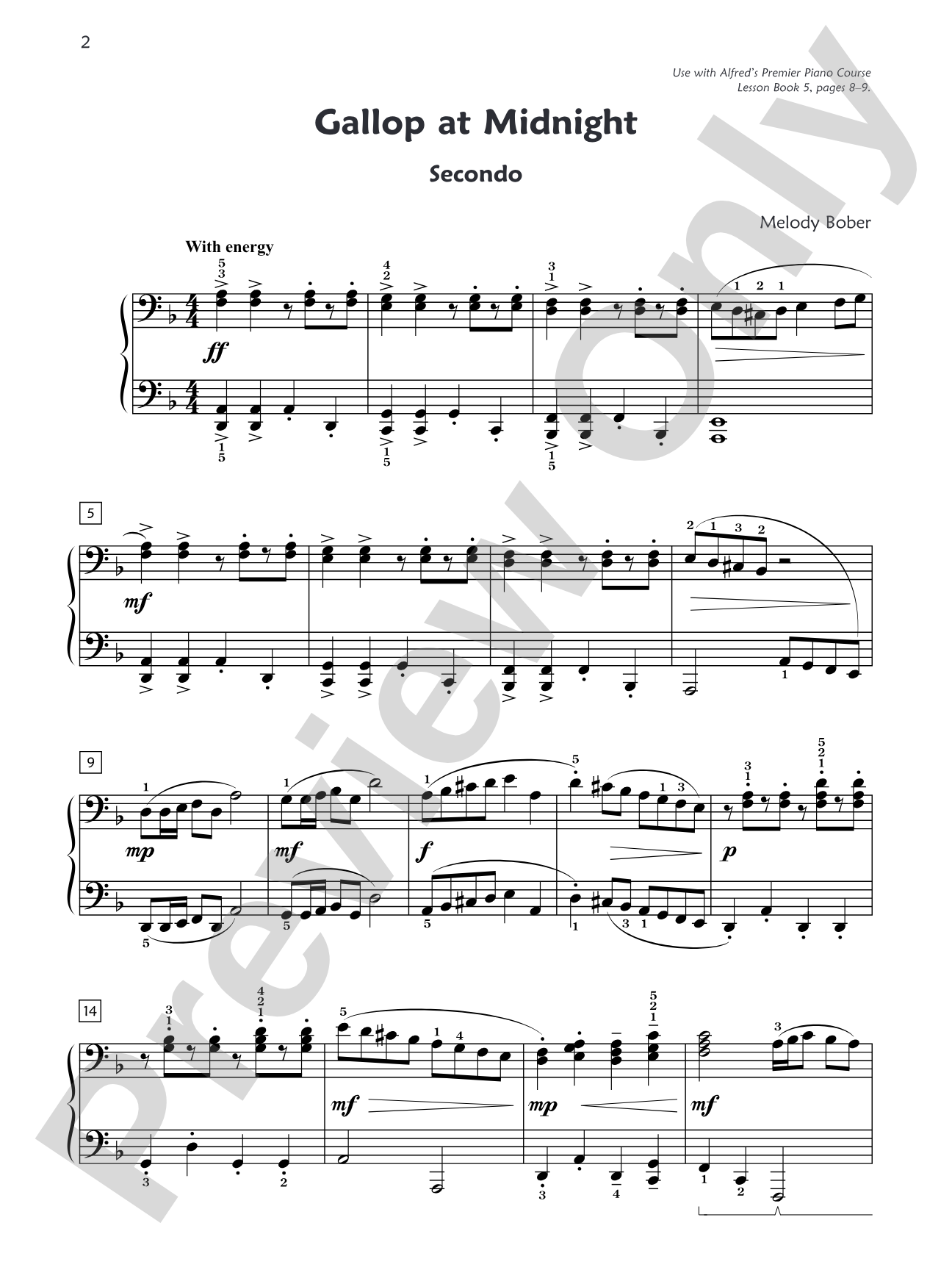
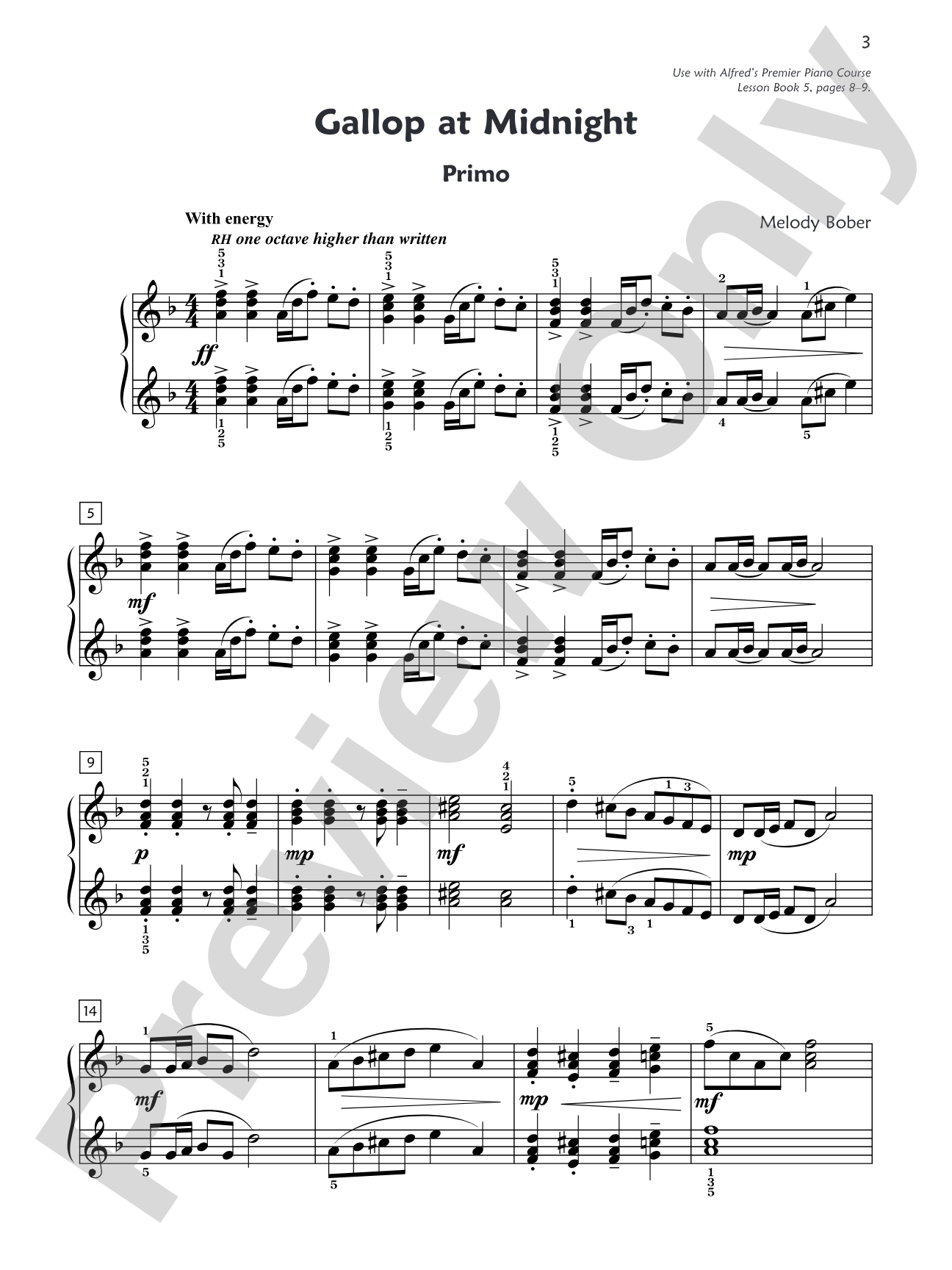
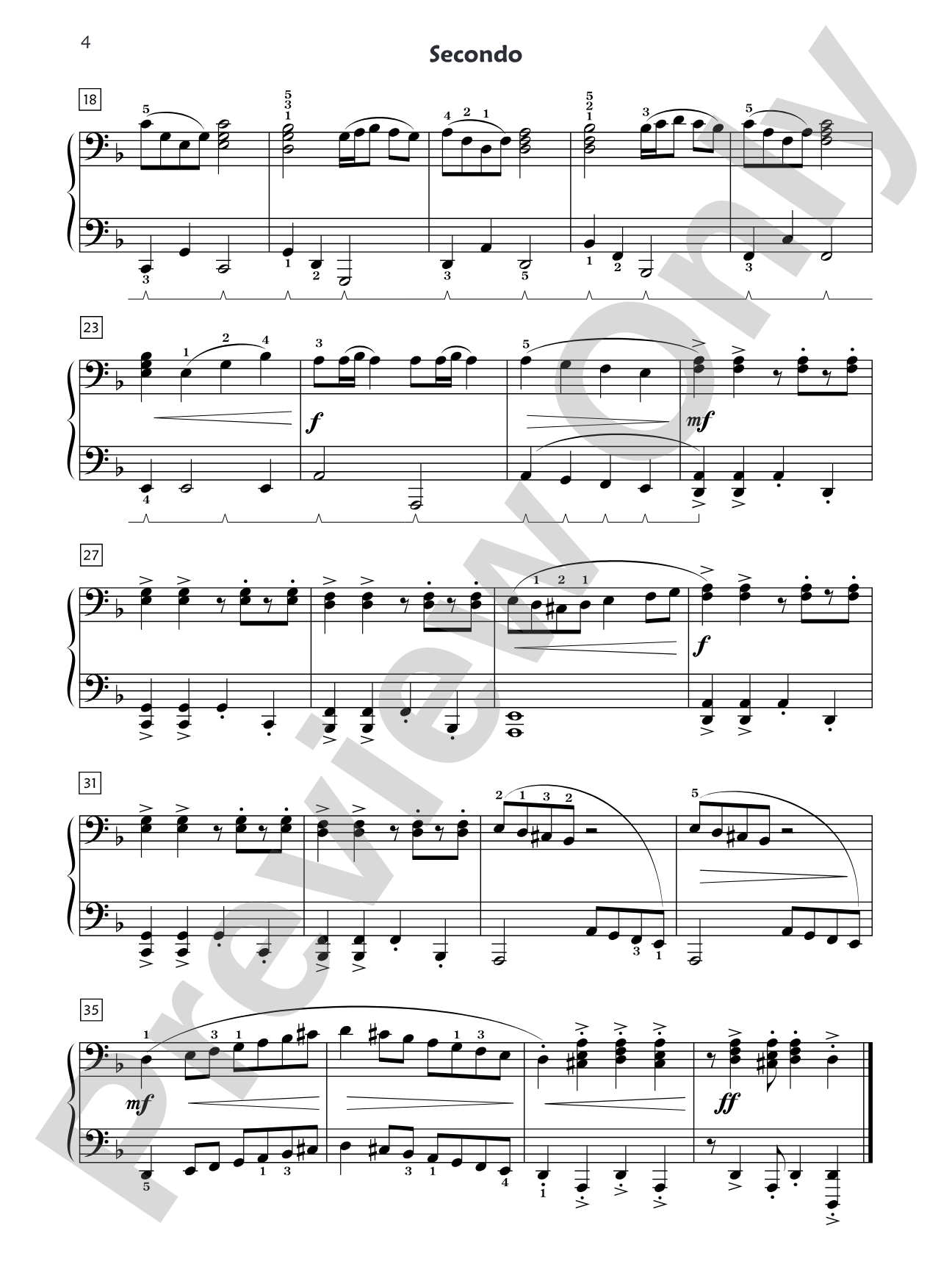
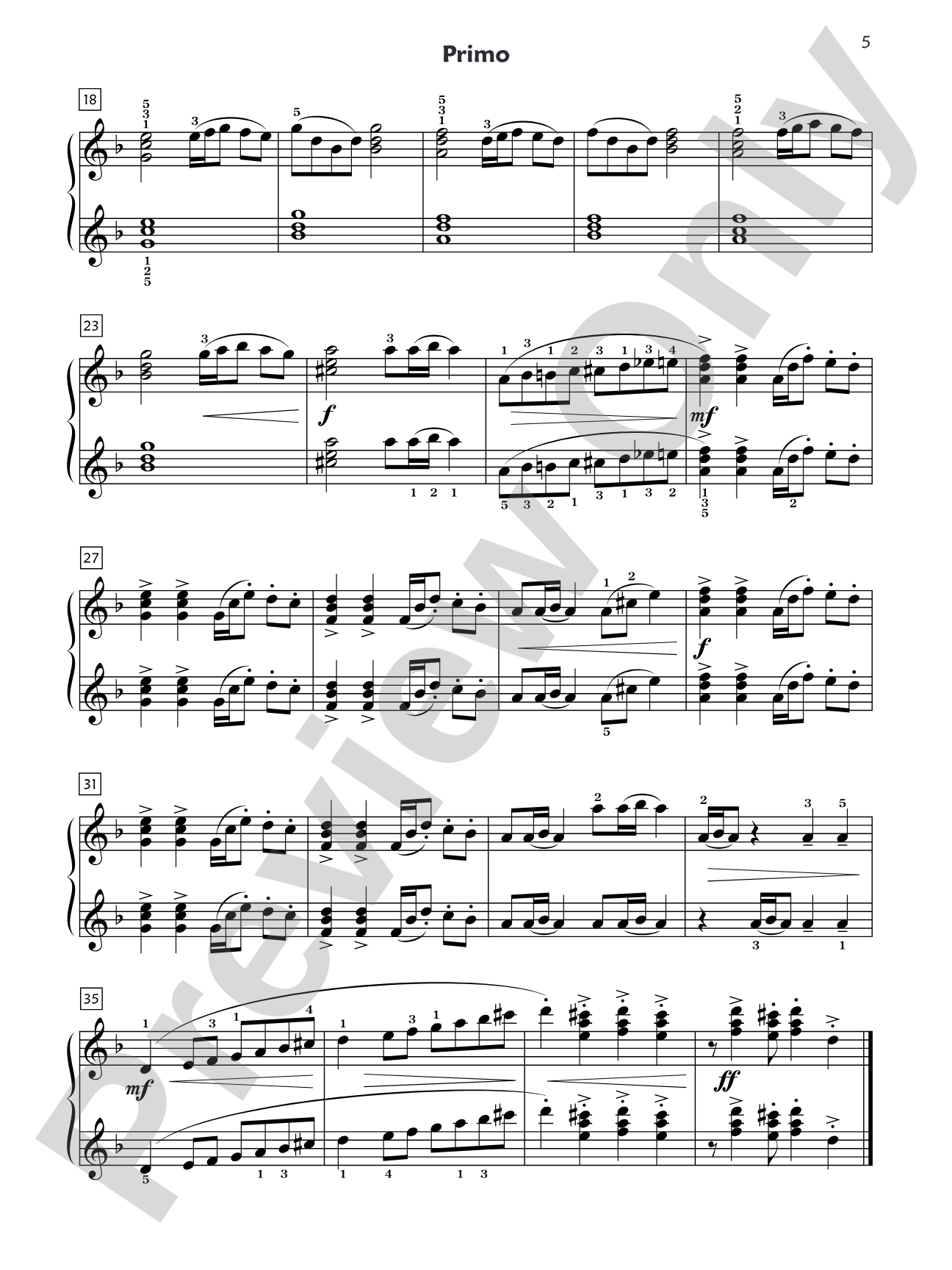
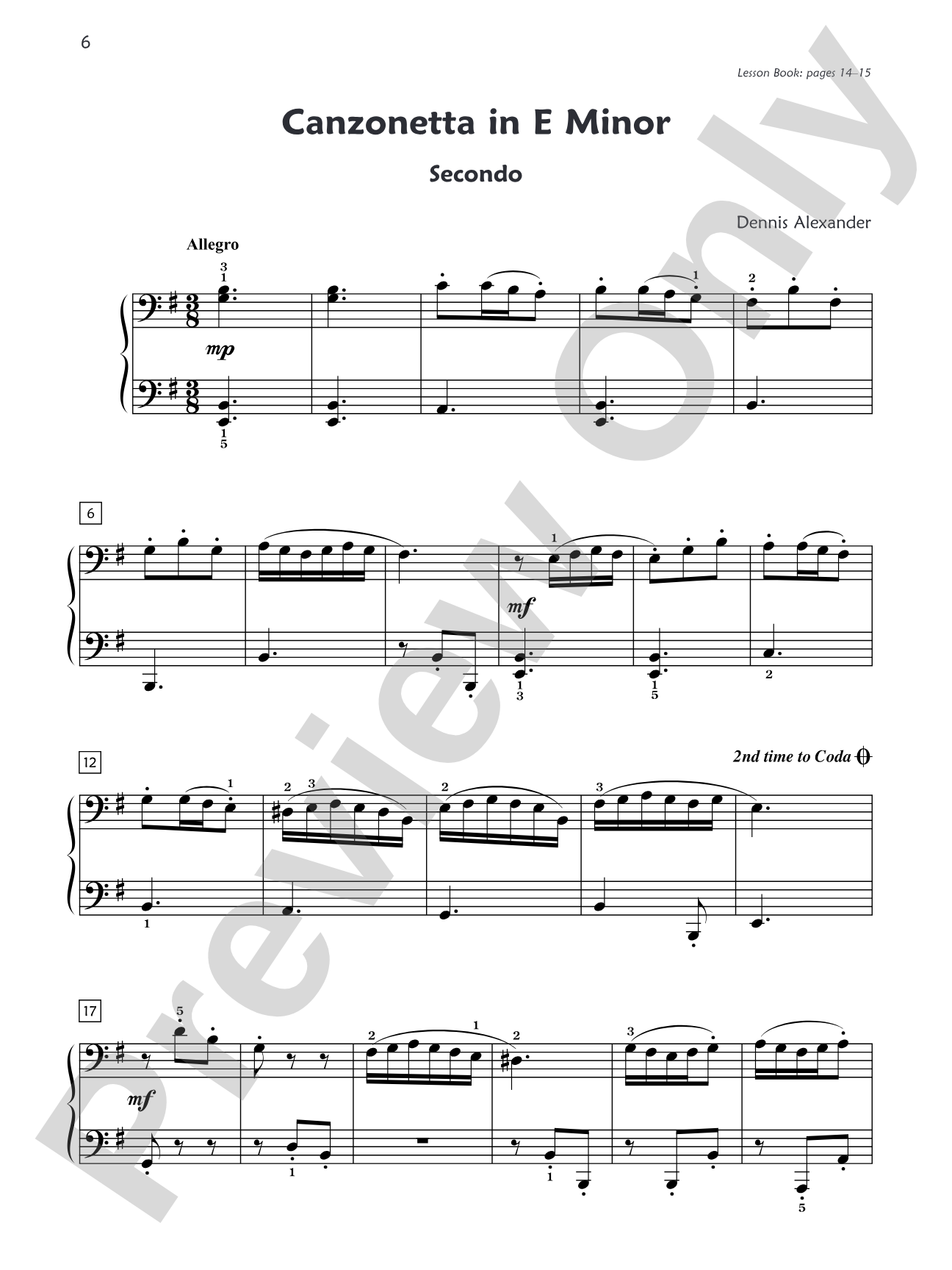
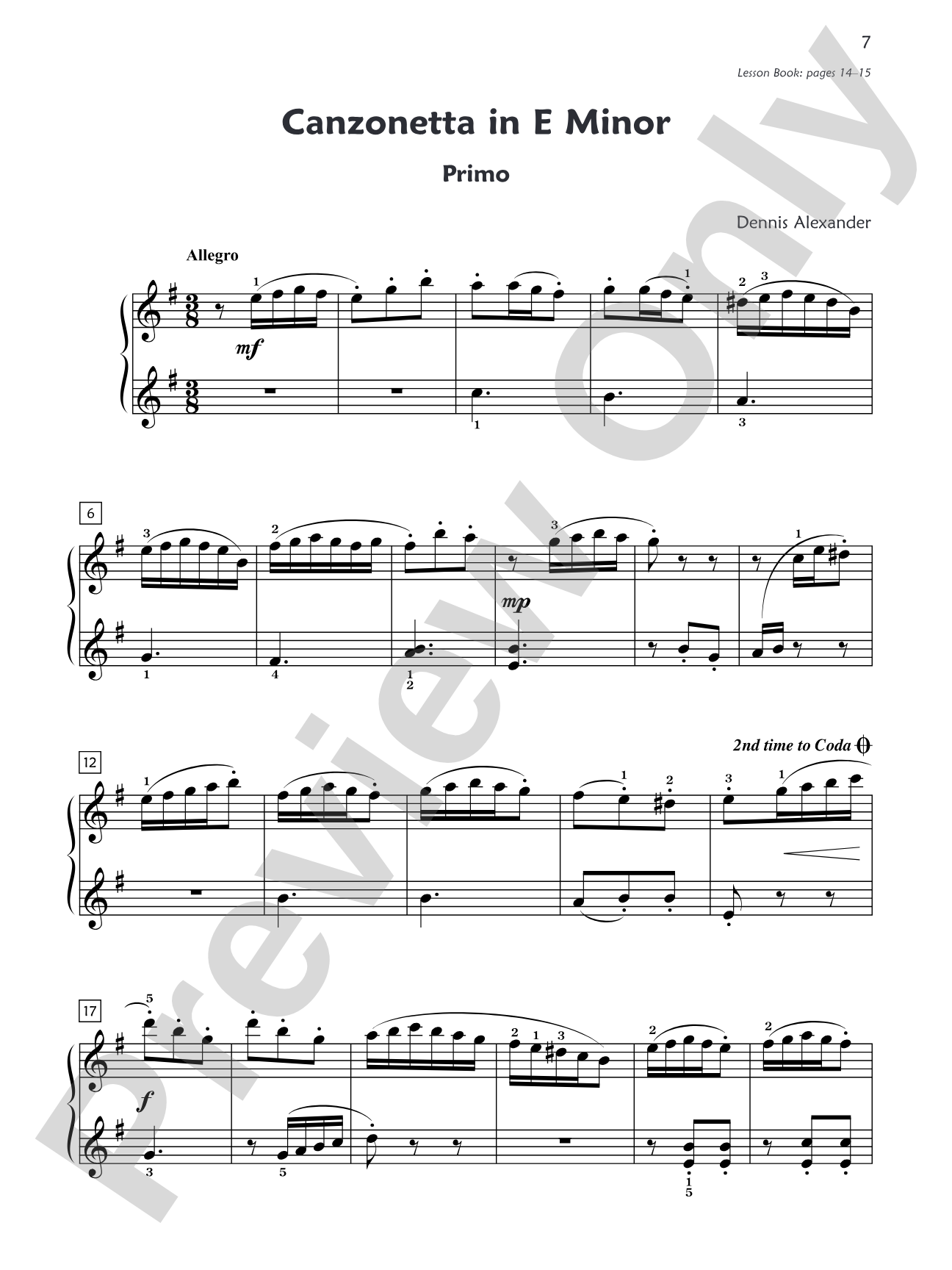
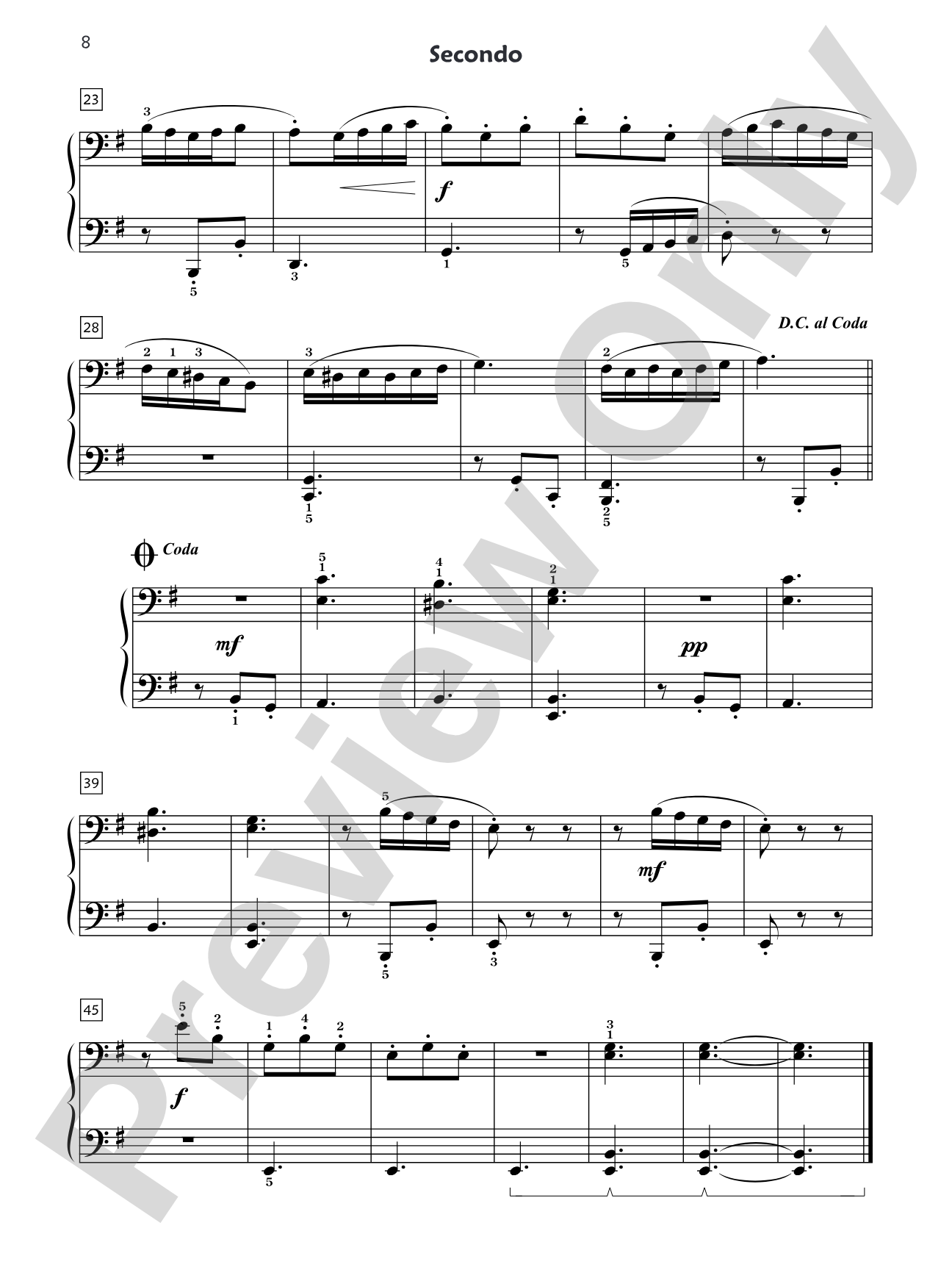
Alfred's Premier Piano Course: Duet Book 5 includes motivational music that reinforces concepts introduced in Lesson Book 5. These duets for one piano, four hands continue the strong pedagogical focus of the course while providing the enjoyment of playing with a friend or family member. Written by America's leading pedagogical composers, these duets contain equally leveled parts for secondo and primo. Within each duet, melodic material is shared between the parts. Styles and forms include a jazz piece, a ballad, showstoppers, a Baroque-style canzonetta, a rumba, and an arrangement of a famous piano sonatina movement. Titles: Canzonetta in E Minor (Dennis Alexander) * Gallop at Midnight (Melody Bober) * Harvest Hayride (Wynn-Anne Rossi) * Jazz Talk (Tom Gerou) * Reaching New Heights (Robert D. Vandall) * Rumba de la noche (Mike Springer) * Sonatina in C Major (Third Movement) (Clementi, Op. 36, No. 1) (Arr. Carol Matz) * Starlight Interlude (Martha Mier).


Premier Piano Course, Duet 5: Piano isn't in MakeMusic Cloud just yet...but it could be. Let us know you'd like to see it, and you'll help shape what comes next. In the meantime, start a free trial and dive into thousands of interactive titles your students can play along with today.
Request This Title
Tell us you want it.
Start Your Free Trial
Explore everything that's ready to play right now.
Sample Audio
No sample audio found.
Sample Video
No sample videos found.
Additional Details
Series:
Premier Piano Course
Publisher:
Alfred Music
Page Count:
40
SKU:
00-PB-0000971
More about this title
About the Creator
Alfred's Premier Piano Course represents the collective work of America's most respected pedagogical composers. Dennis Alexander, Melody Bober, Wynn-Anne Rossi, Tom Gerou, Robert D. Vandall, Mike Springer, Martha Mier, and Carol Matz have each shaped how millions of students experience piano learning through carefully crafted repertoire that balances technical instruction with genuine musical satisfaction.
These composers understand that duet playing transforms a student's relationship with music. Rather than writing simplified versions of standard repertoire, they compose original works that treat both the primo and secondo parts as complete musical voices. Each piece reinforces specific concepts from the core lesson book while maintaining the kind of stylistic variety and melodic interest that keeps students engaged and eager to return to the bench.
Why we love this
This collection refuses to treat duet playing as an afterthought. The shared melodic material between primo and secondo parts ensures that neither player feels relegated to accompaniment; students experience the joy of real musical collaboration from their first duet together. The stylistic range, from Baroque-inspired counterpoint to jazz idioms to Latin rhythms, keeps the material fresh across a full year of study.
What to expect
These duets move between the intimate and the expansive. One moment you're navigating the contrapuntal give-and-take of a Baroque canzonetta; the next you're sweeping through a rumba or gallop that demands energy and rhythmic precision. There's a consistent elegance to the writing, nothing feels clunky or overly didactic, and the variety of styles means each piece occupies its own emotional and musical world.
Who it's for
Young pianists at Level 5 who are ready to explore duet playing without feeling like one hand is less important than the other. This book works equally well for students preparing for recitals, rehearsing with a friend, or performing with a family member at home.
How to get the most out of it
- Establish tempo together before each duet by playing the opening measures slowly, then gradually bringing it up to performance speed. This prevents one player from rushing or dragging.
- Share the melodic material intentionally. Since both primo and secondo carry the tune at different moments, listen across parts to ensure the melody line always sings through, regardless of who's playing it.
- Balance dynamic contrast between the parts. When one player has accompaniment figures, keep the volume restrained enough that the other part's melody stays in focus.
- Practice hands-separately first on your own part, then add the other player once you know your own line well. This cuts rehearsal time and builds confidence.
How to use it
Frame a recital around two or three contrasting duets from this collection to showcase different moods and styles in a single performance. The variety of genres makes these accessible choices for studio recitals, school performances, or informal concert settings where shared playing matters as much as polished technique.
Skills your students will build
- Reading two-staff grand staff notation while tracking a second player's part simultaneously
- Ensemble listening and rhythm synchronization at the piano
- Maintaining independence between primo and secondo voices
- Recognizing stylistic differences (jazz, Baroque, folk-inspired, Latin rhythm) within the same technical level
- Sharing melodic material and supporting another player's phrasing
- Pedal coordination in a duet context