

Premier Piano Course, Duet 4: Piano Duets & Four Hands
Ed. Gayle Kowalchyk and E. L. Lancaster
Level: 4
Item: 00-PB-0000606
$9.50
Pickup currently not available
Related Items
Premier Piano Course, Duet 4: Piano Book |
$9.50
|
View |
Description
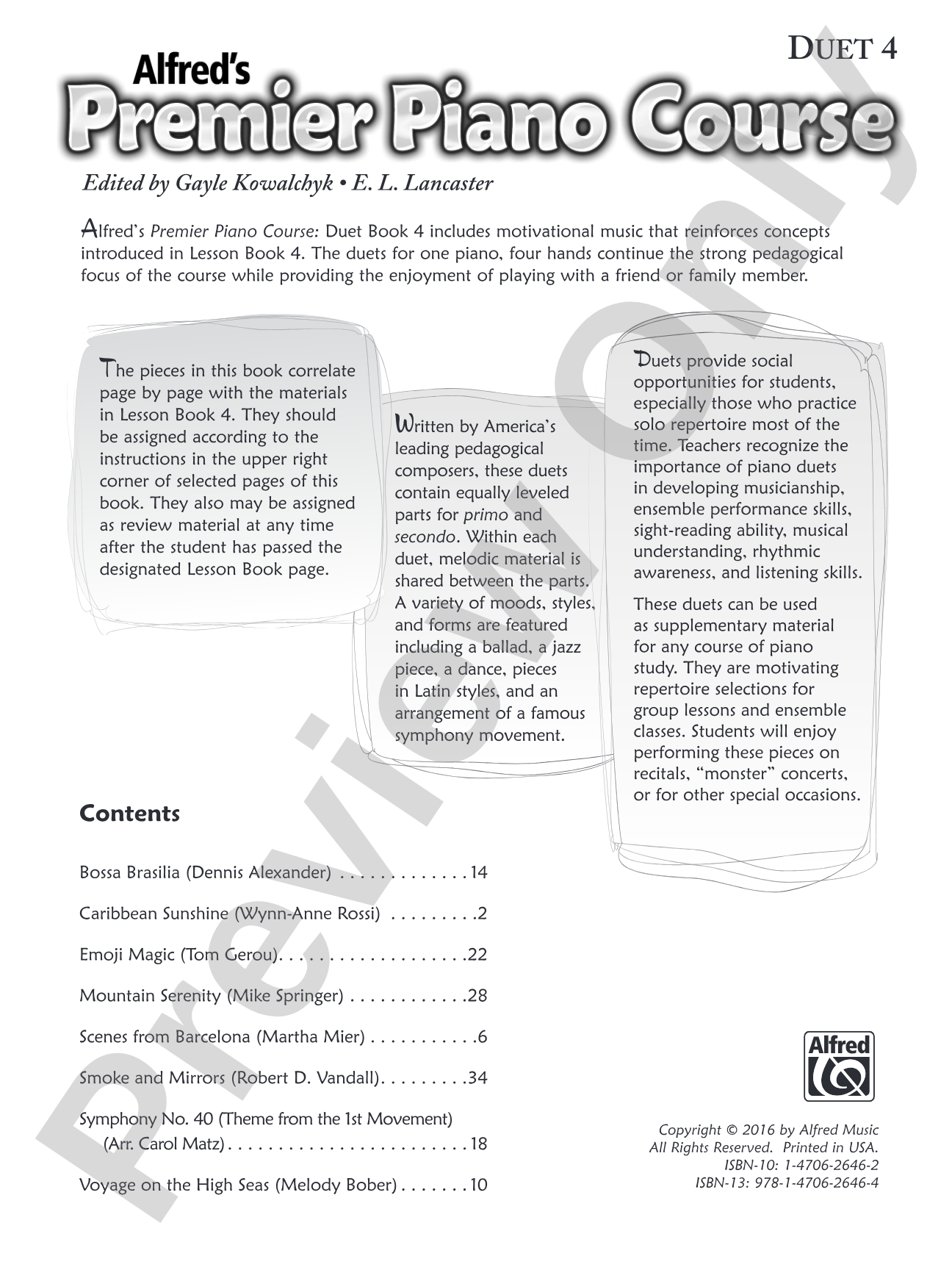
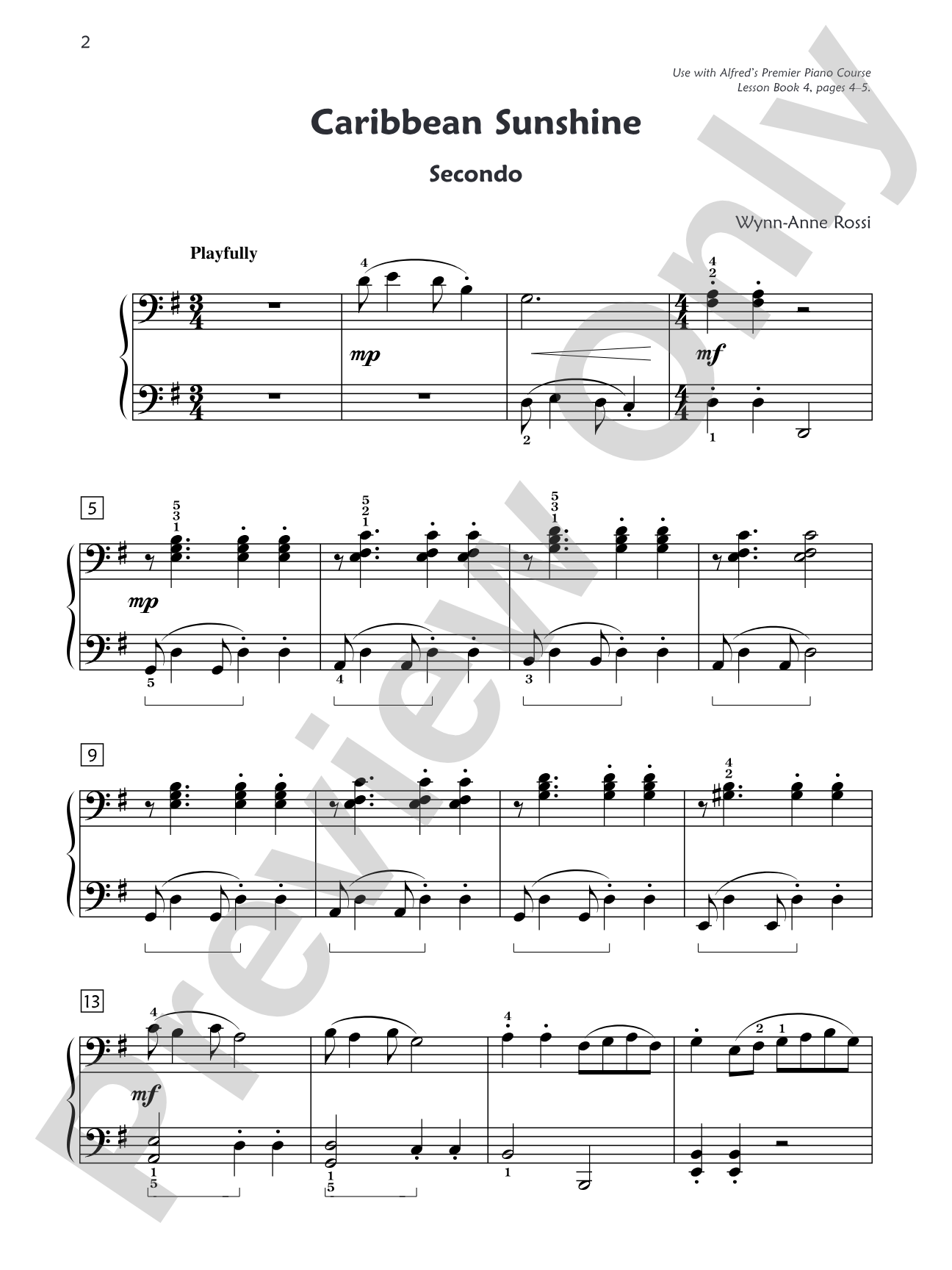
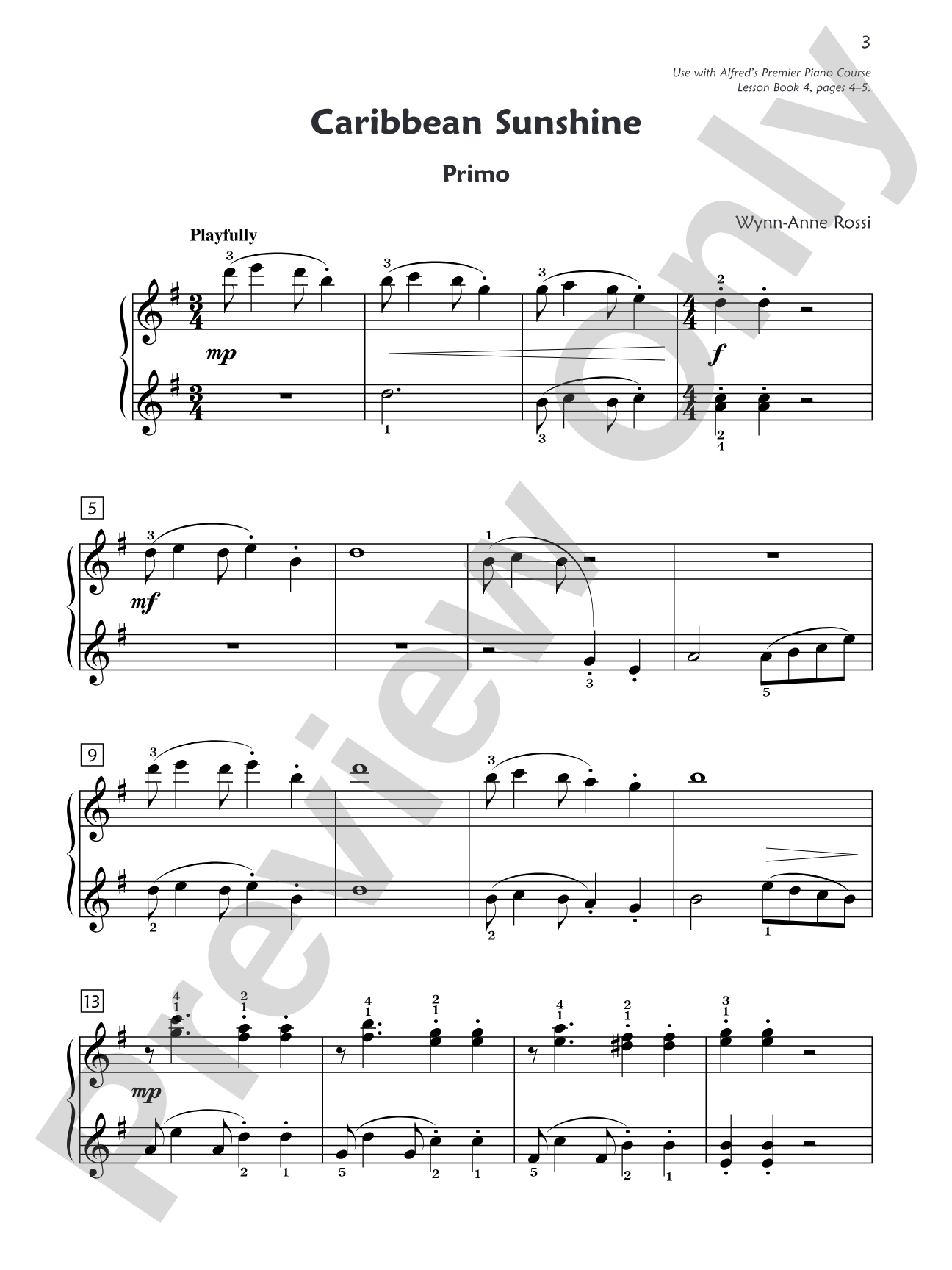
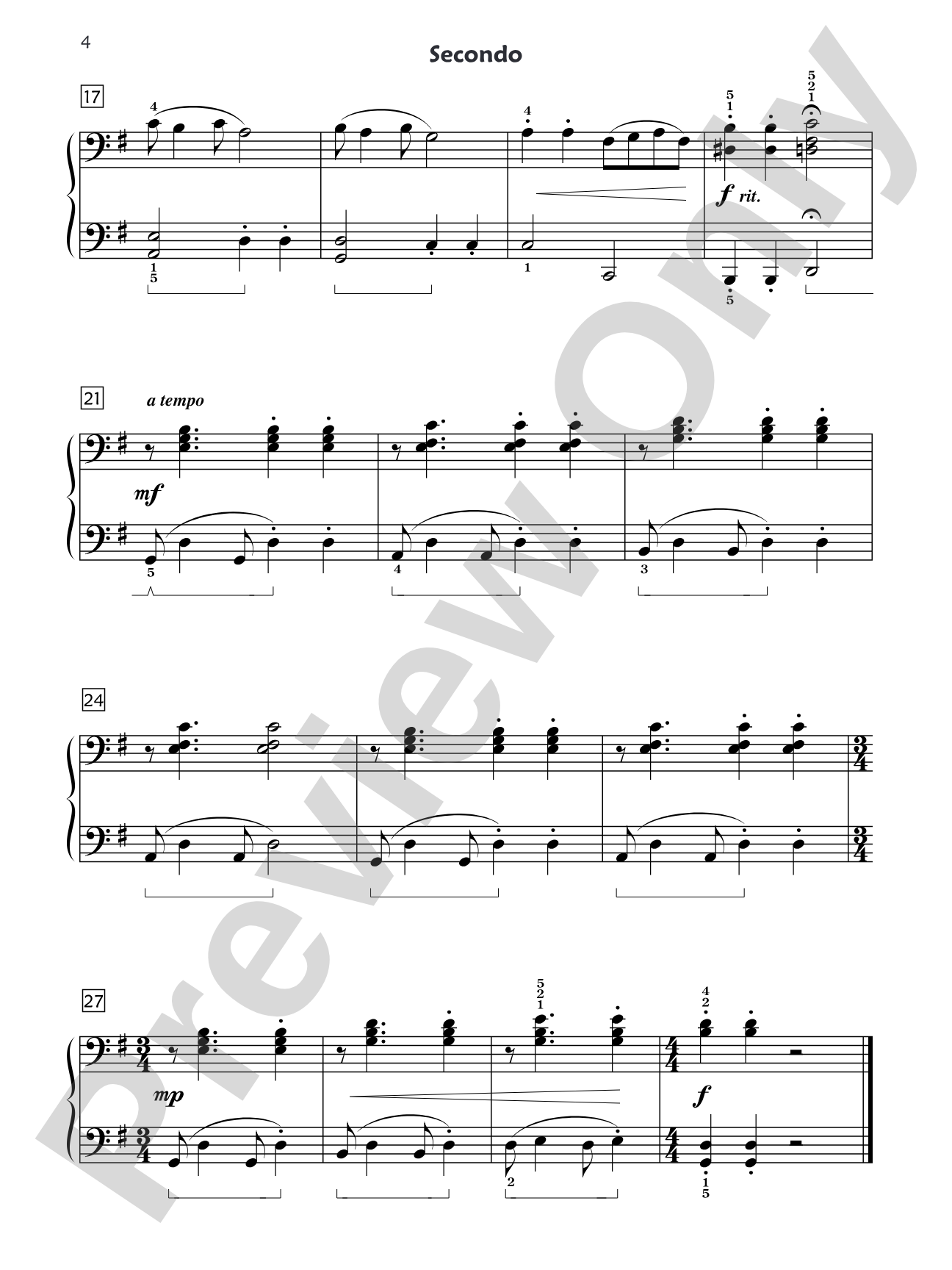
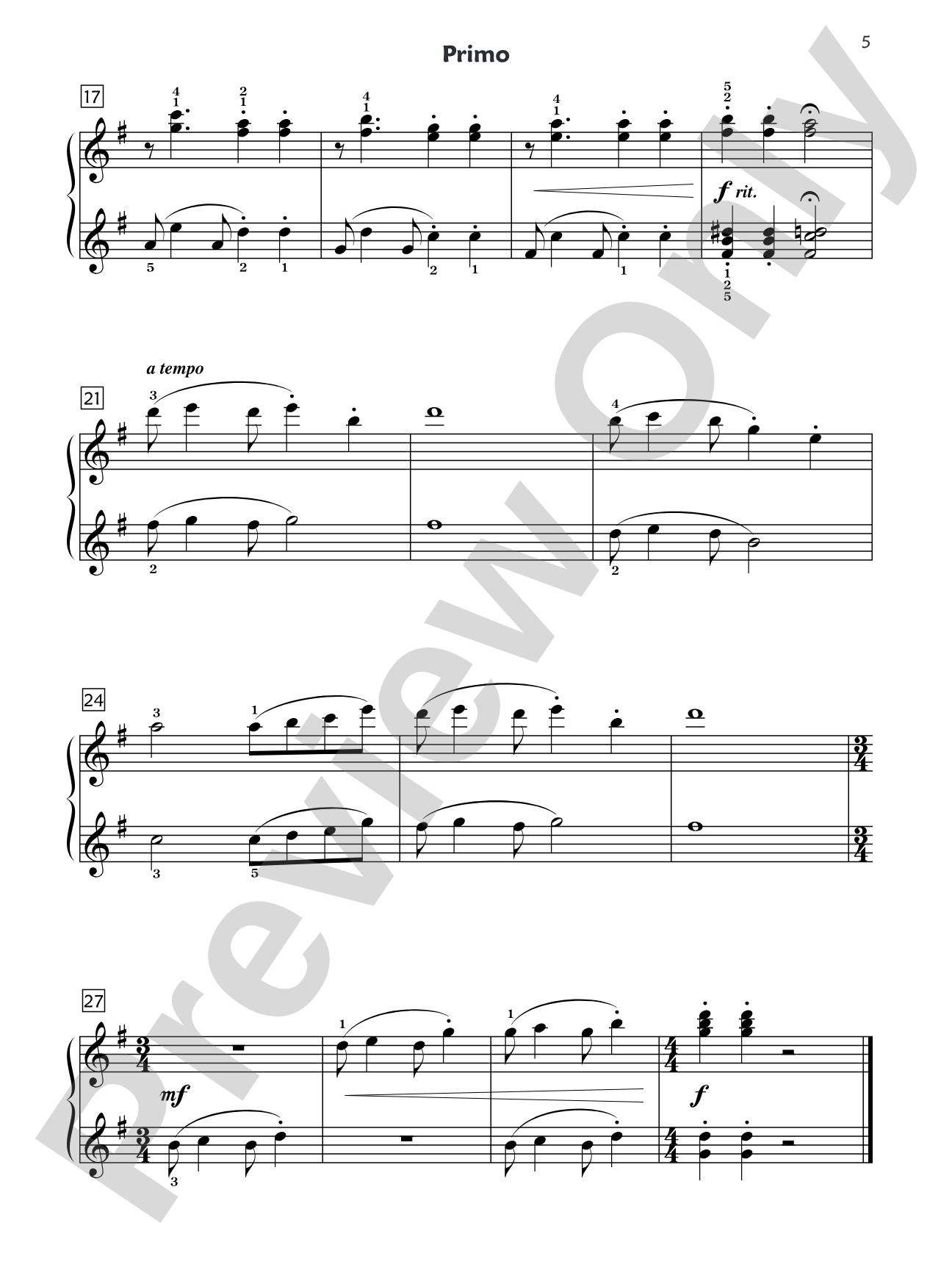
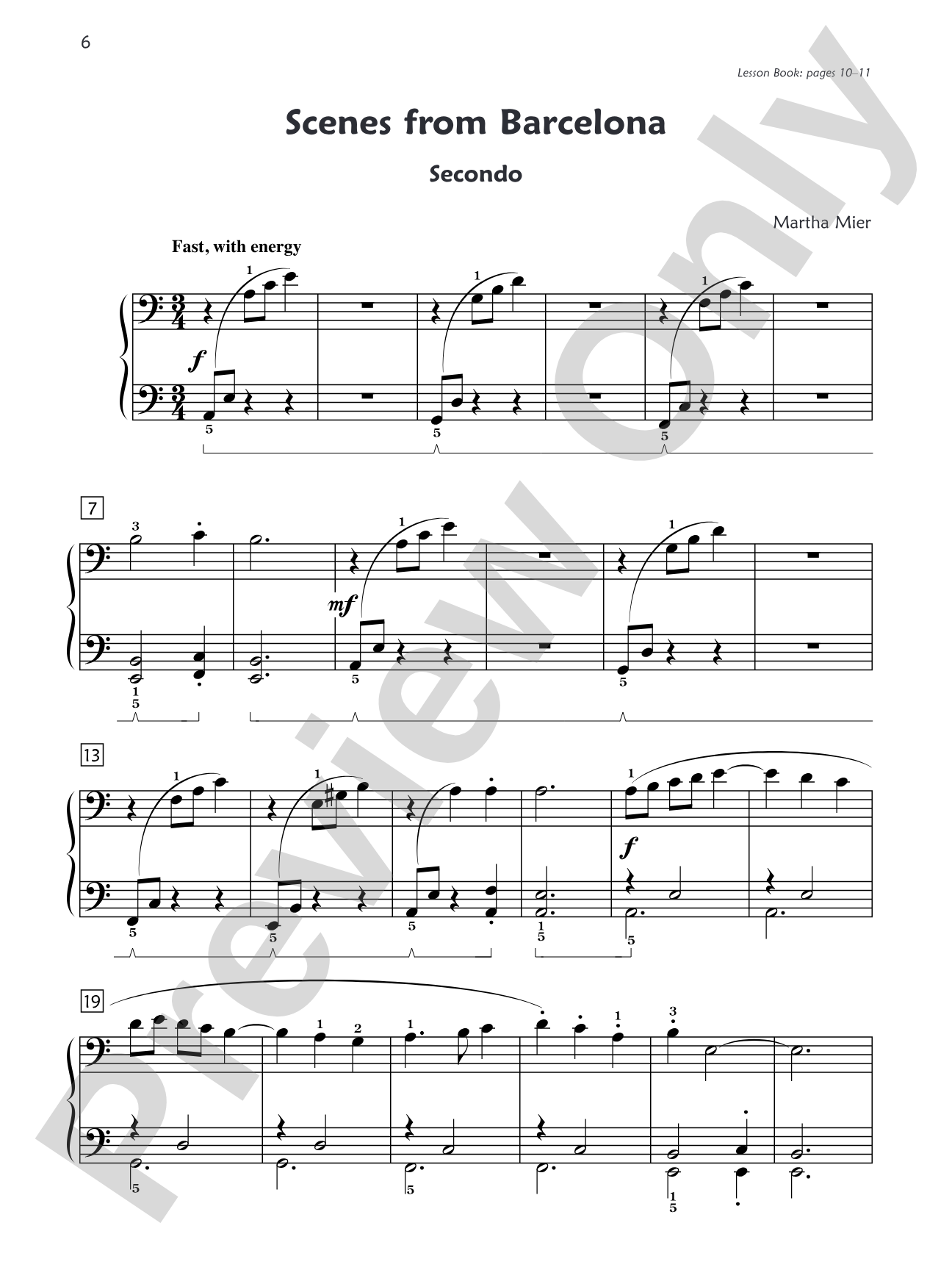
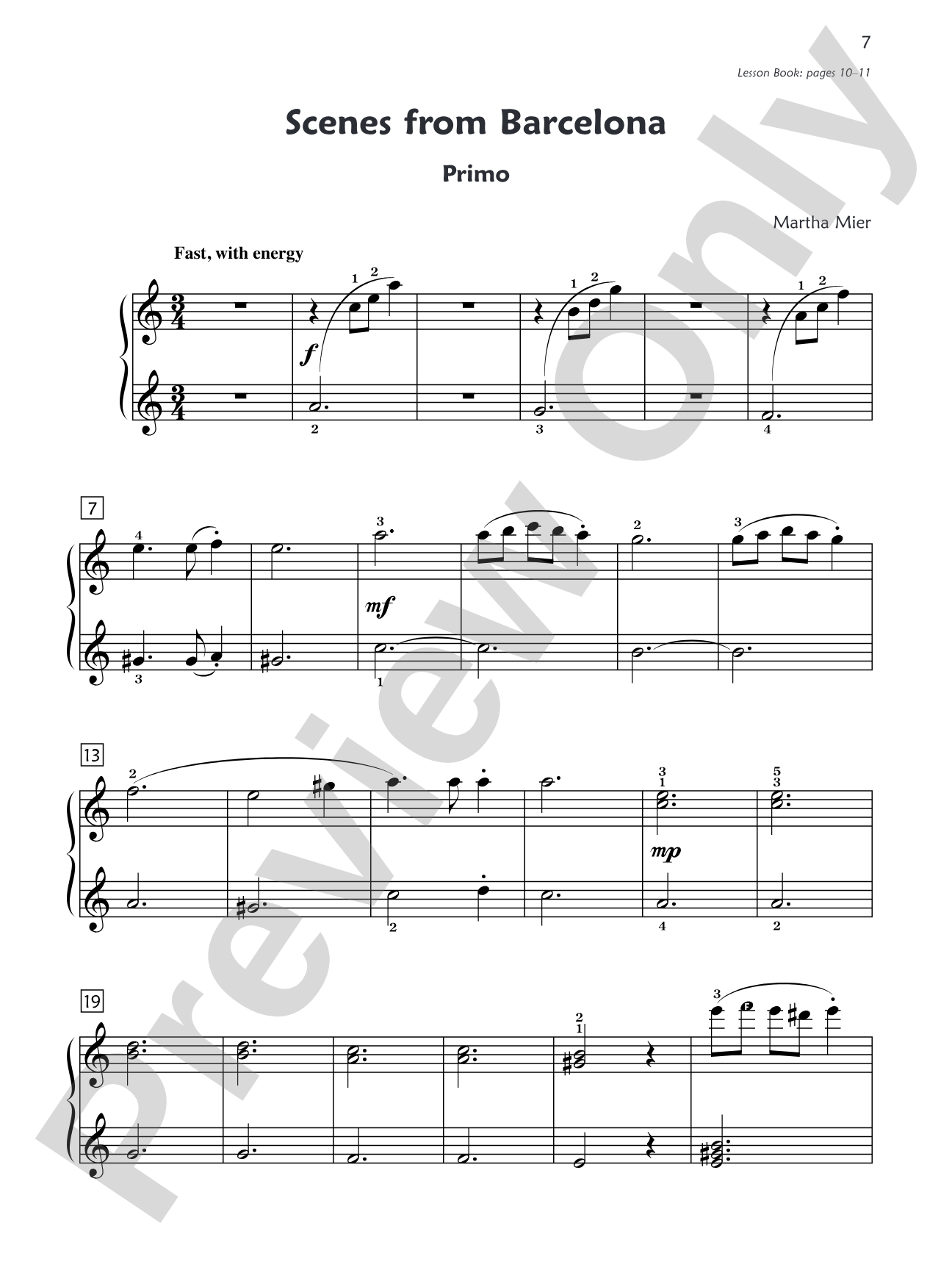
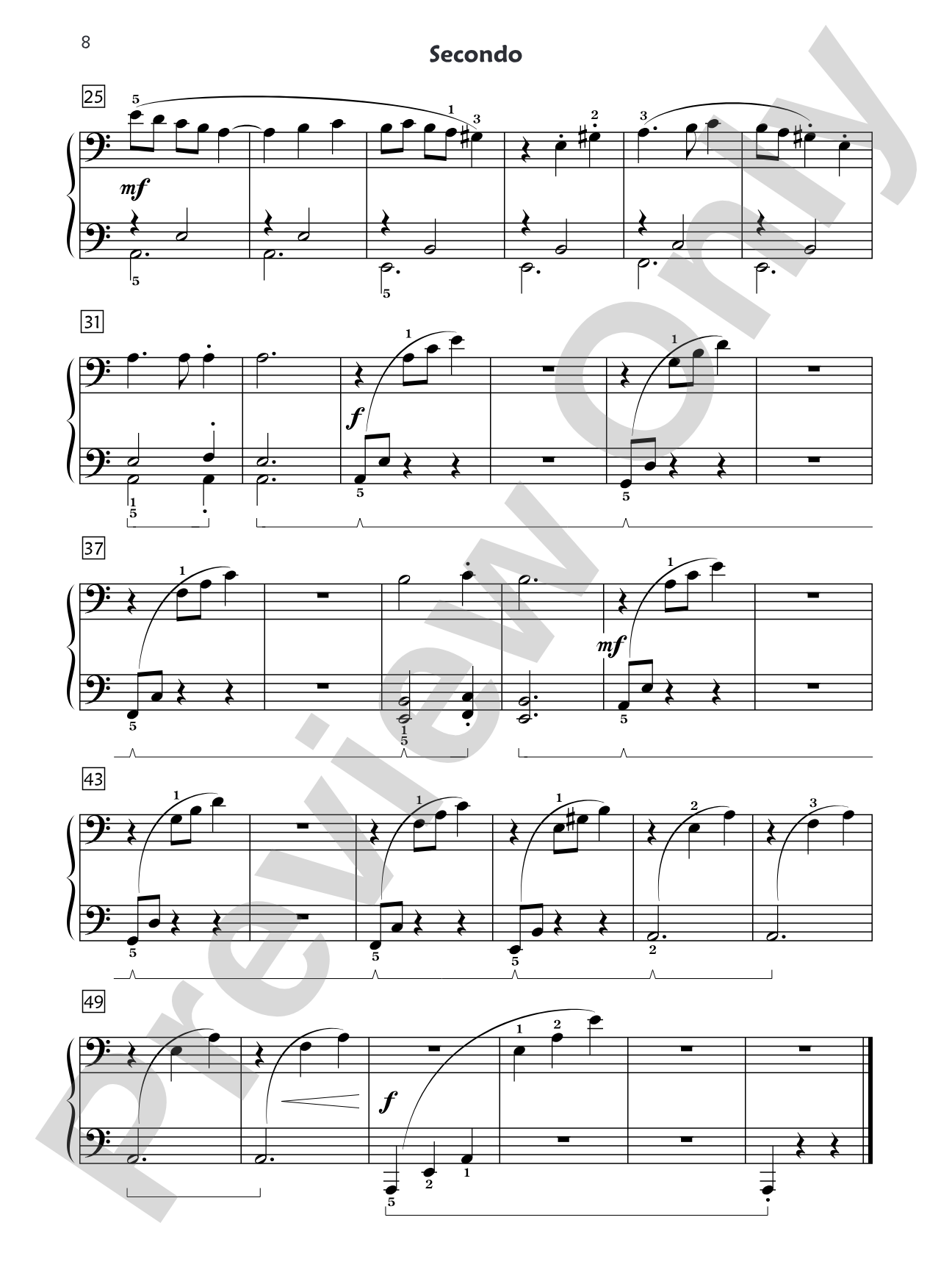
Alfred's Premier Piano Course, Duet 4 includes motivational music that reinforces concepts introduced in Lesson 4. These duets for one piano, four hands continue the strong pedagogical focus of the course while providing the enjoyment of playing with a friend or family member. Written by America's leading pedagogical composers, these duets contain equally leveled parts for secondo and primo. Within each duet, melodic material is shared between the parts. Styles and forms include a ballad, a jazz piece, a dance, pieces in Latin styles, and an arrangement of a famous symphony movement. Titles: Bossa Brasilia (Dennis Alexander) * Caribbean Sunrise (Wynn-Anne Rossi) * Emoji Magic (Tom Gerou) * Mountain Serenity (Mike Springer) * Scenes from Barcelona (Martha Mier) * Smoke and Mirrors (Robert D. Vandall) * Symphony No. 40 (Theme from the 1st Movement) (Arr. Carol Matz) * Voyage on the High Seas (Melody Bober). A Federation Festivals 2020-2024 selection.


Premier Piano Course, Duet 4: Piano Duets & Four Hands isn't in MakeMusic Cloud just yet...but it could be. Let us know you'd like to see it, and you'll help shape what comes next. In the meantime, start a free trial and dive into thousands of interactive titles your students can play along with today.
Request This Title
Tell us you want it.
Start Your Free Trial
Explore everything that's ready to play right now.
Sample Audio
No sample audio found.
Sample Video
No sample videos found.
Additional Details
Series:
Premier Piano Course
Publisher:
Alfred Music
Page Count:
40
SKU:
00-PB-0000606
More about this title
About the Creator
Alfred's Premier Piano Course was developed by a collaborative team of America's finest piano pedagogues, including Dennis Alexander, Melody Bober, Tom Gerou, Martha Mier, Mike Springer, Robert D. Vandall, and Wynn-Anne Rossi. Each composer brings decades of classroom experience to the series, understanding precisely what students need to hear and play at every stage of their musical development.
This duet collection showcases the breadth of these composers' stylistic range, from Latin rhythms to symphonic arrangements. Their shared commitment to equal voice-writing ensures that both primo and secondo players remain engaged and challenged, making four-hand playing feel like a genuine musical conversation rather than a supporting act.
Why we love this
The strength here lies in the variety packed into one book. Students get exposure to bossa nova, Caribbean rhythms, jazz voicings, and orchestral writing all at a level that matches their technical skills in Lesson 4. The shared melodic material between parts means neither player feels sidelined, which is crucial for keeping younger students invested in ensemble playing.
What to expect
Playful, worldly, and surprisingly sophisticated. The pieces skip between sunny Caribbean beaches, bustling Barcelona streets, and the dramatic architecture of Mozart's genius. There's a sense of adventure throughout, with each piece opening a small window onto a different musical landscape while staying rooted in the technical comfort zone of a developing player.
Who it's for
Students who have completed Lesson 4 of the Premier Piano Course and are ready to experience ensemble playing at their level. This collection also appeals to teachers seeking age-appropriate duets that introduce world music styles and famous classical works without requiring a second piano or an advanced accompanist.
How to get the most out of it
- Balance the parts by listening carefully to where the melody sits; even when both hands carry thematic material, one voice typically leads while the other supports the harmonic foundation.
- Let the rhythmic styles guide your touch and phrasing. The Latin pieces demand a looser, more flexible approach to pulse than the ballad or the classical arrangement.
- Rehearse with your duet partner multiple times before attempting a performance, paying special attention to page turns and the transitions where one player's musical idea passes to the other.
- Record yourselves in rehearsal and listen back to catch tempo inconsistencies and balance issues that are hard to hear while playing.
How to use it
Feature one or two duets on a spring recital to highlight student collaboration and progress; the variety of styles means you can pair pieces with contrasting solo repertoire without overloading the program aesthetically. Alternatively, scatter individual duets throughout the year as unit celebrations when students master each corresponding lesson, building toward a duet recital or ensemble concert where all eight pieces are performed.
Skills your students will build
- Ensemble listening and balance between equal voices
- Reading and performing stylistically diverse genres (ballad, jazz, bossa nova, Latin rhythms, orchestral arrangement)
- Coordinating page turns and musical transitions with a partner
- Interpreting tempo and articulation cues in unfamiliar musical contexts
- Sharing melodic material between hands and between players with musical intention