

Premier Piano Course, Duet 3: Piano Duets & Four Hands
Ed. Gayle Kowalchyk and E. L. Lancaster
Level: 3
Item: 00-PB-0000605
$9.50
Pickup currently not available
Related Items
Premier Piano Course, Duet 3: Piano Book |
$9.50
|
View |
Description
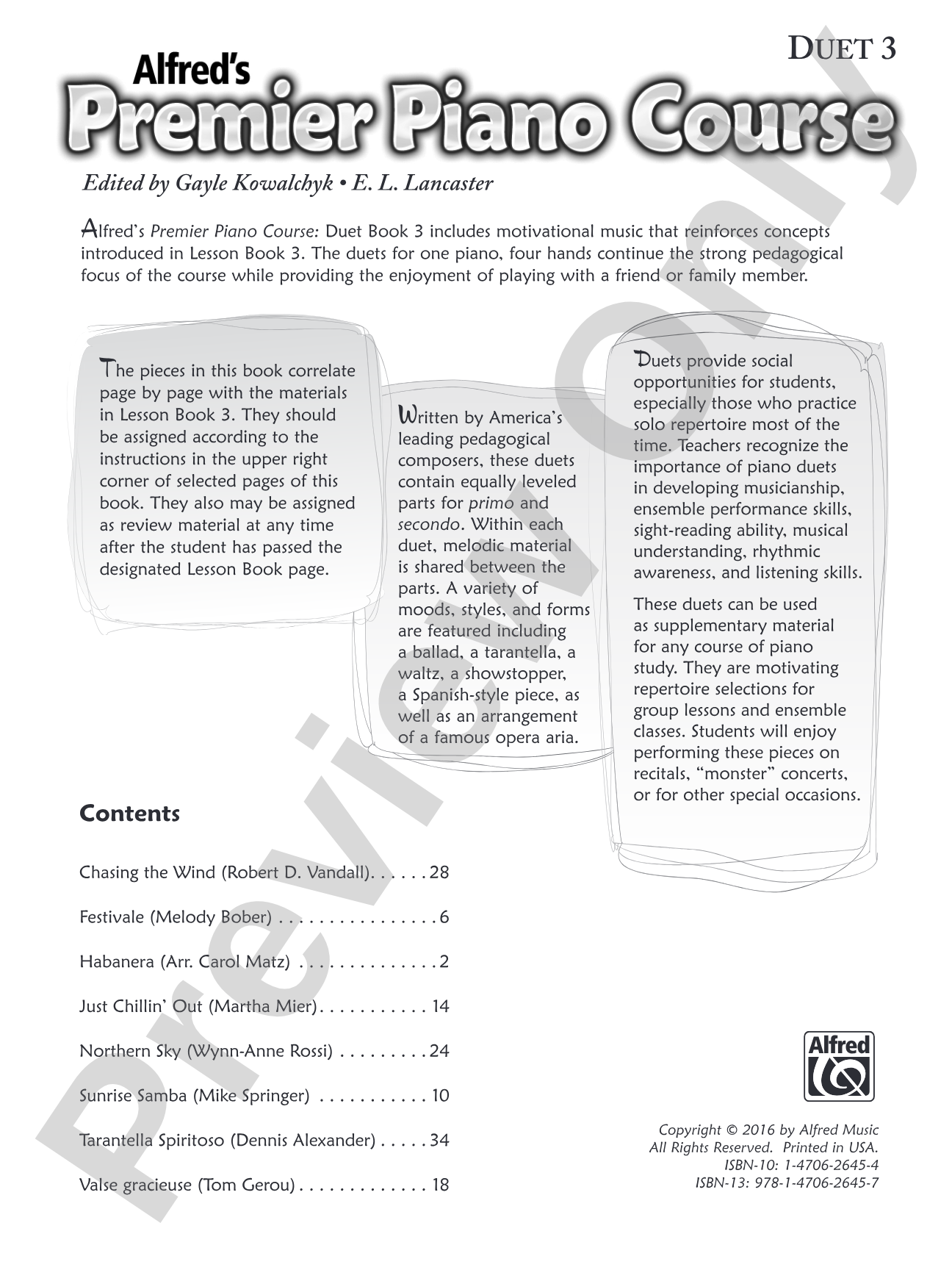
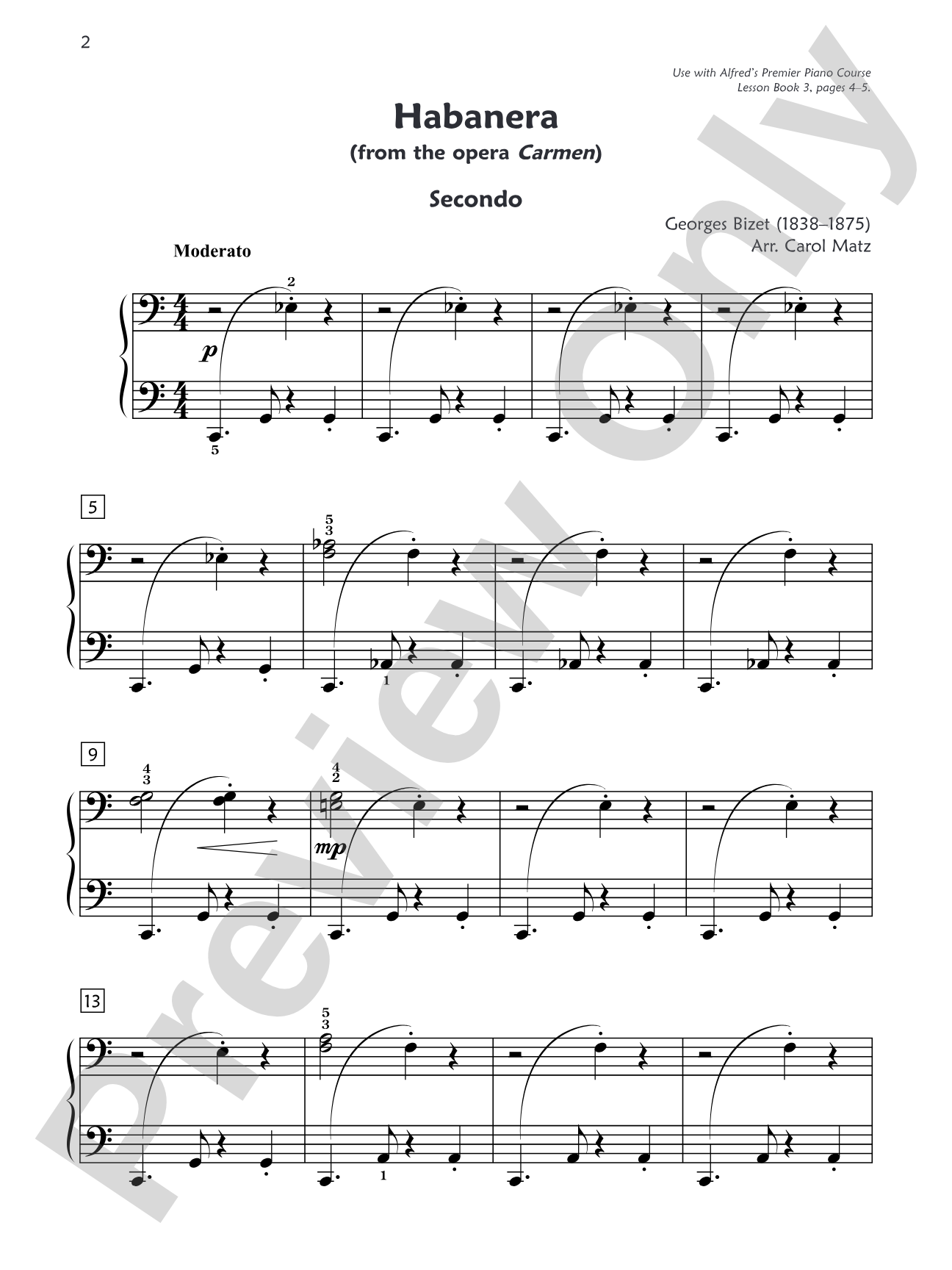
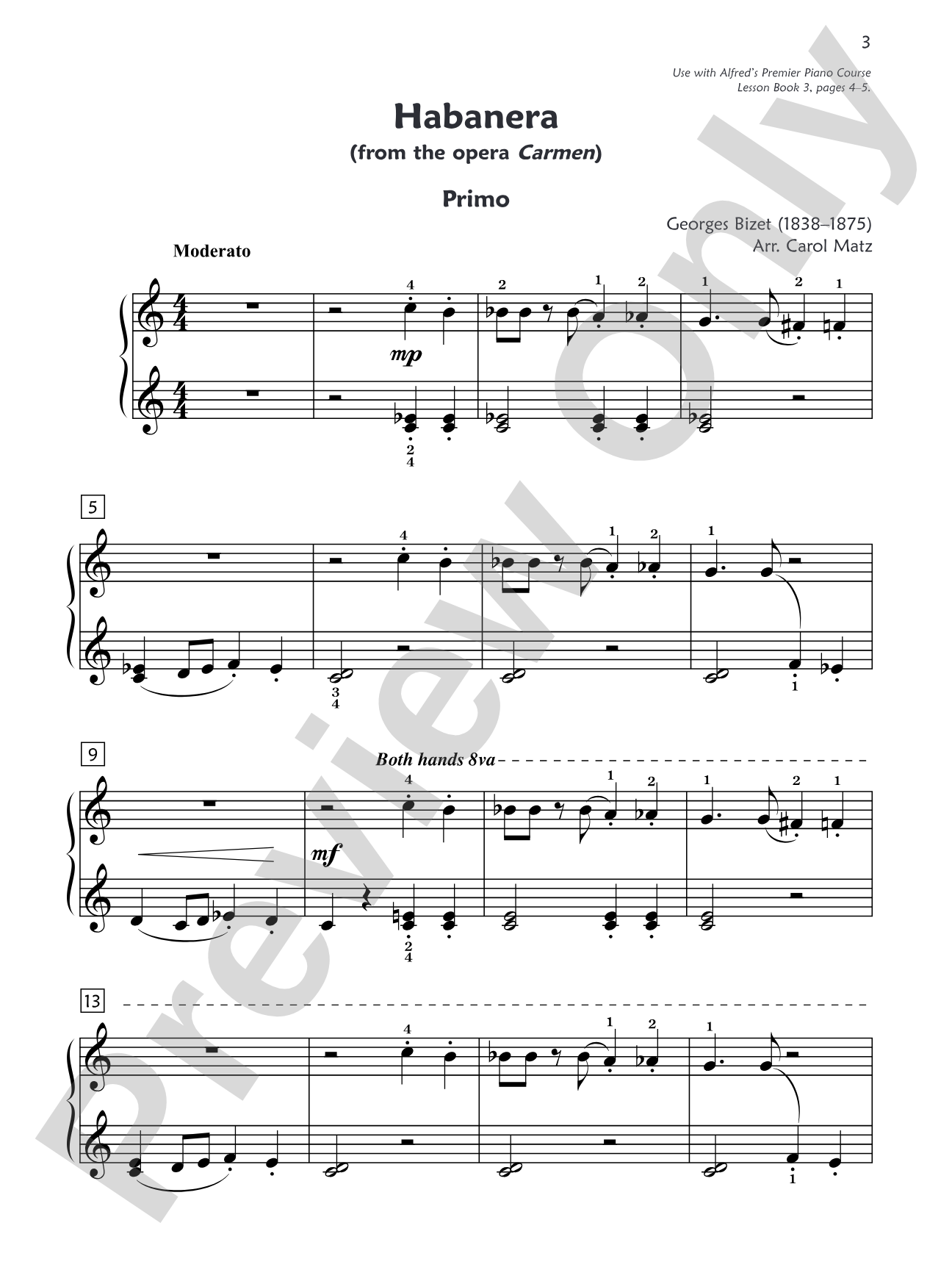
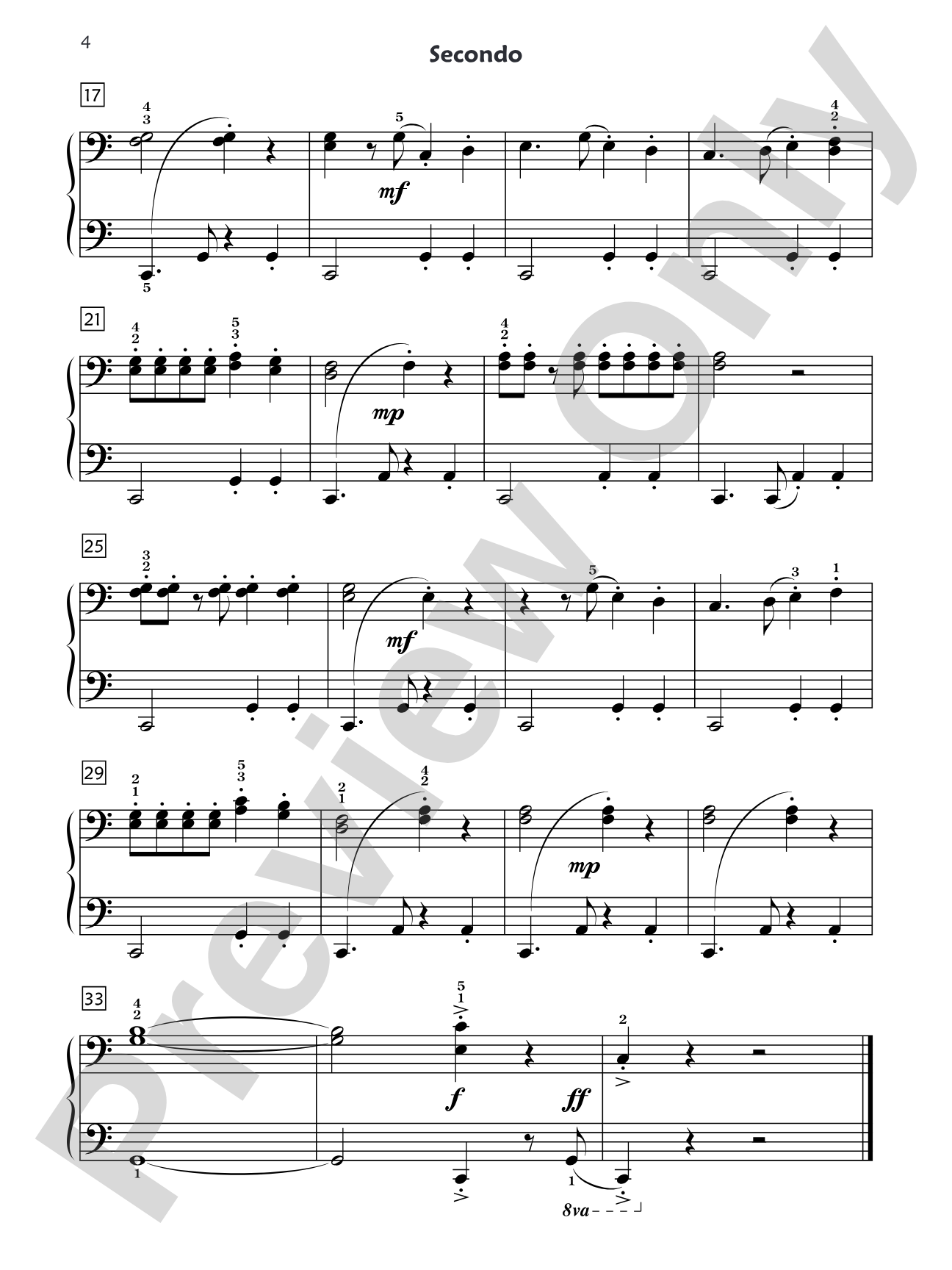
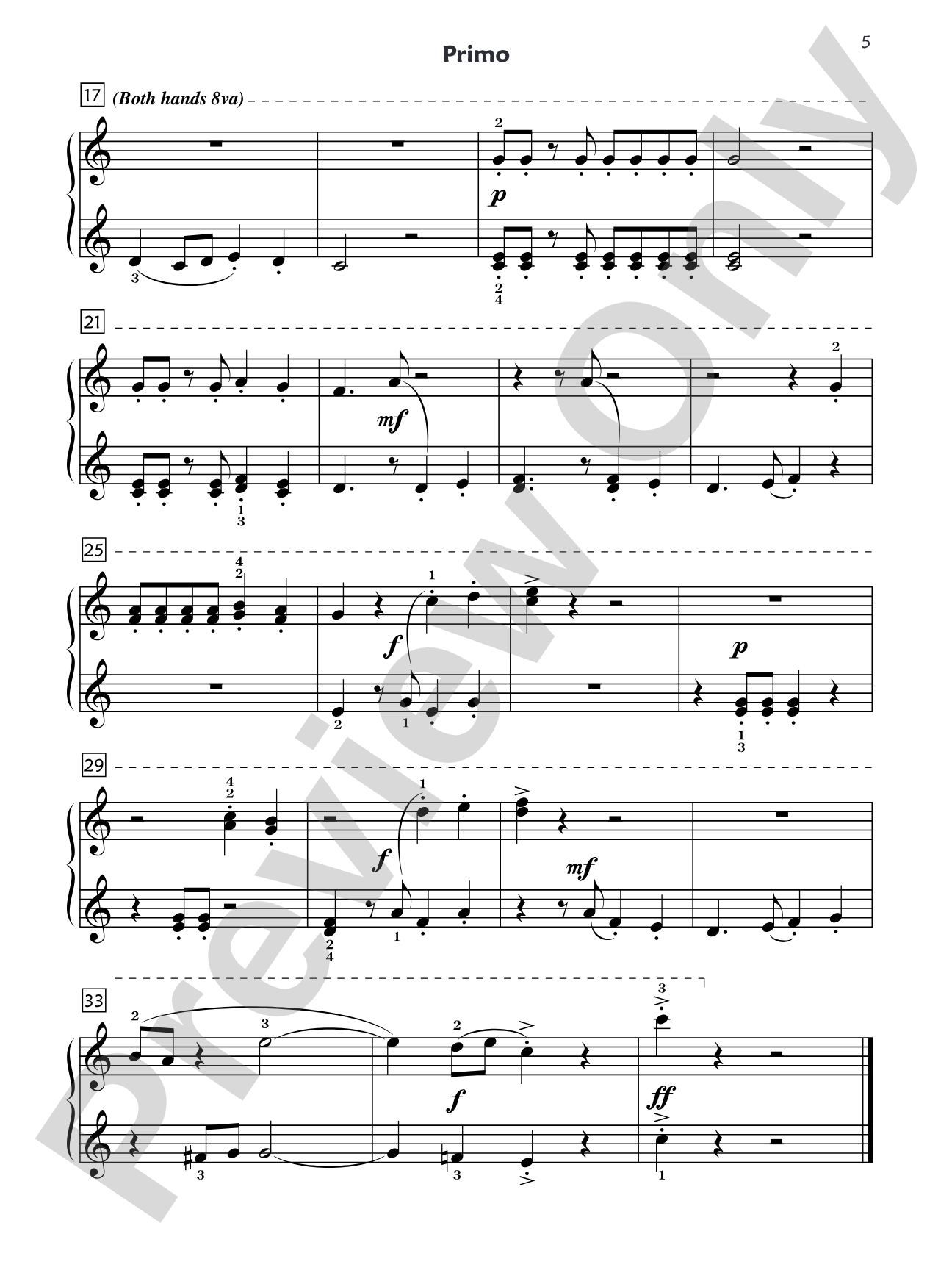
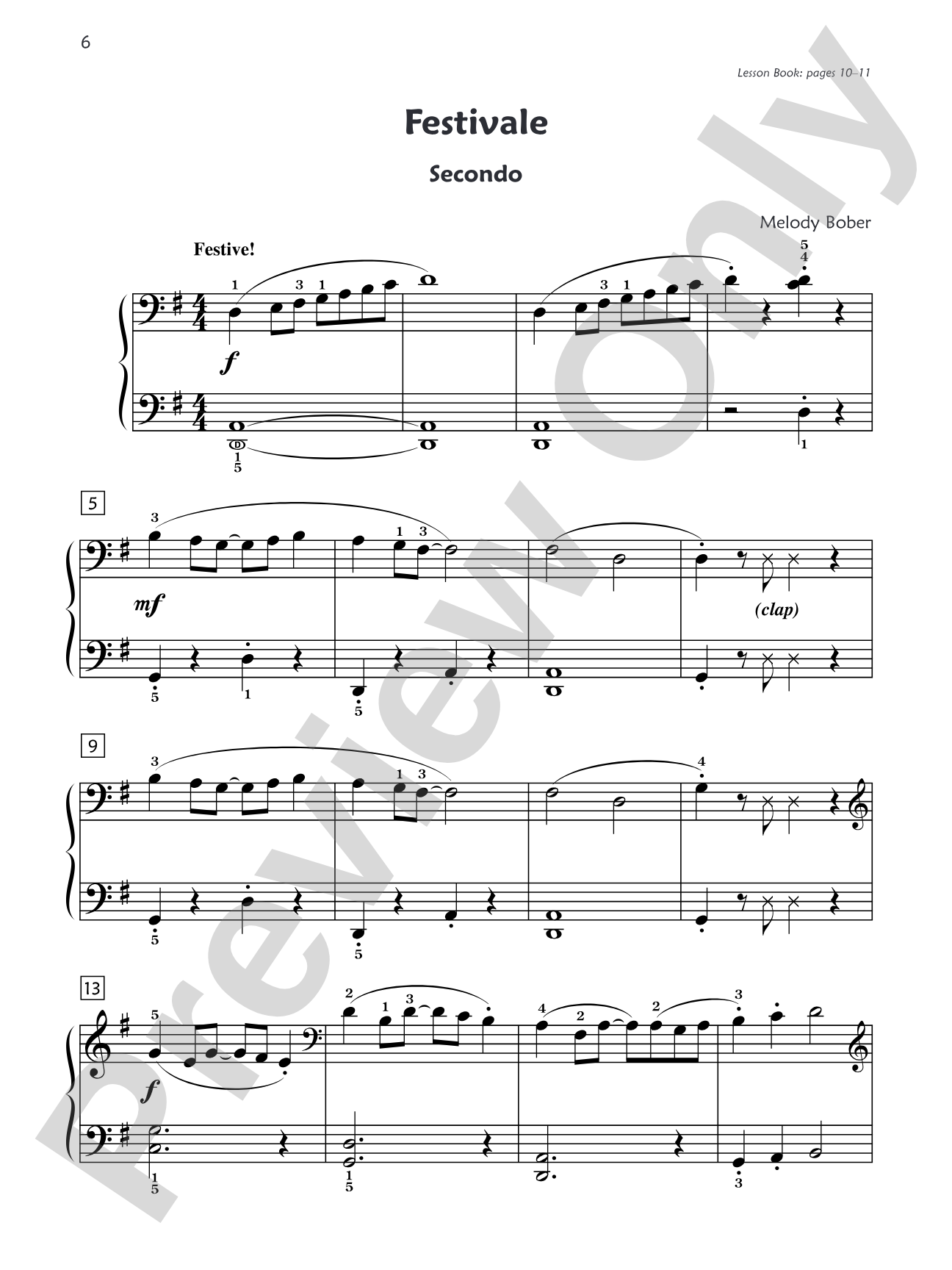
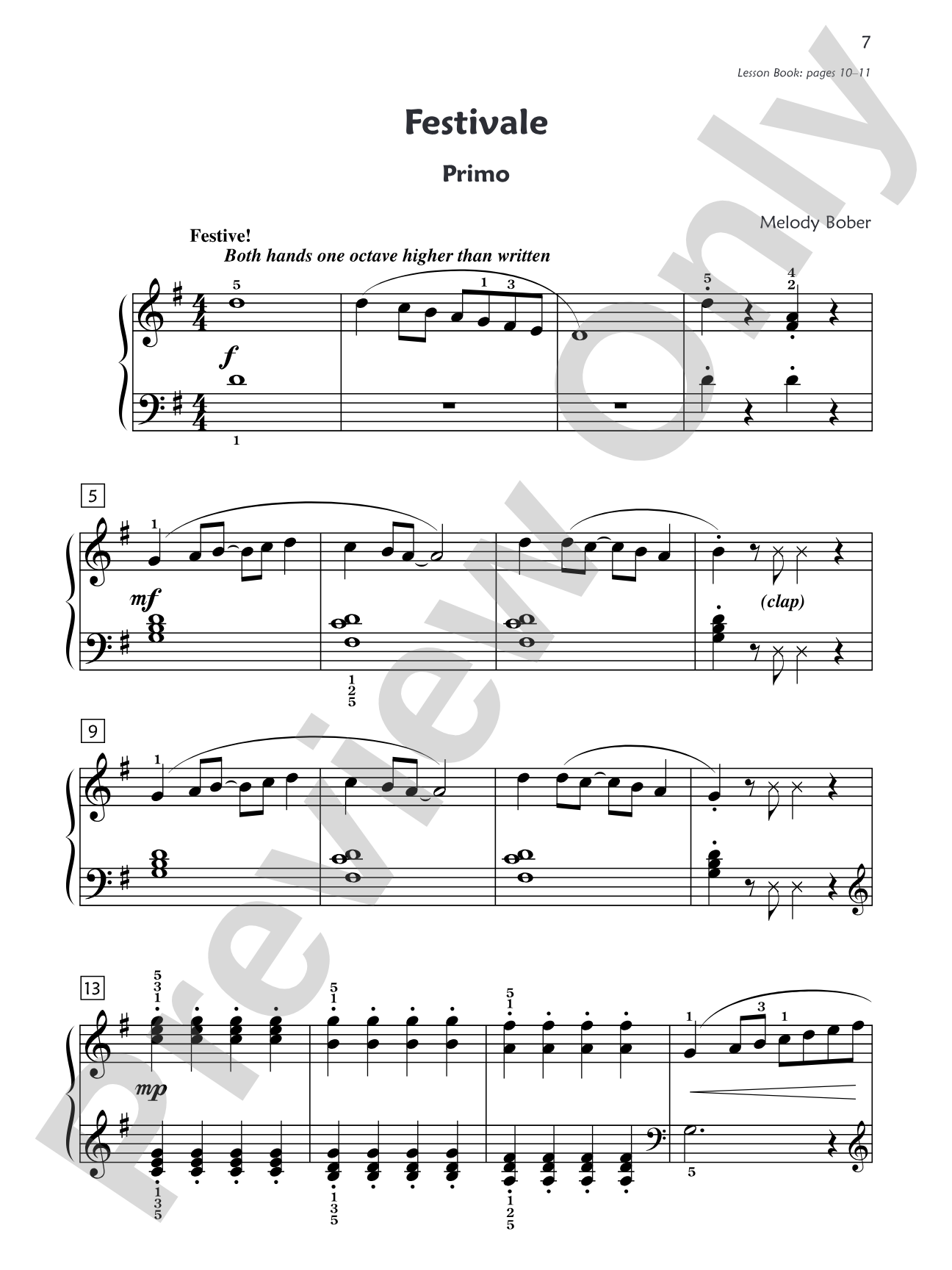
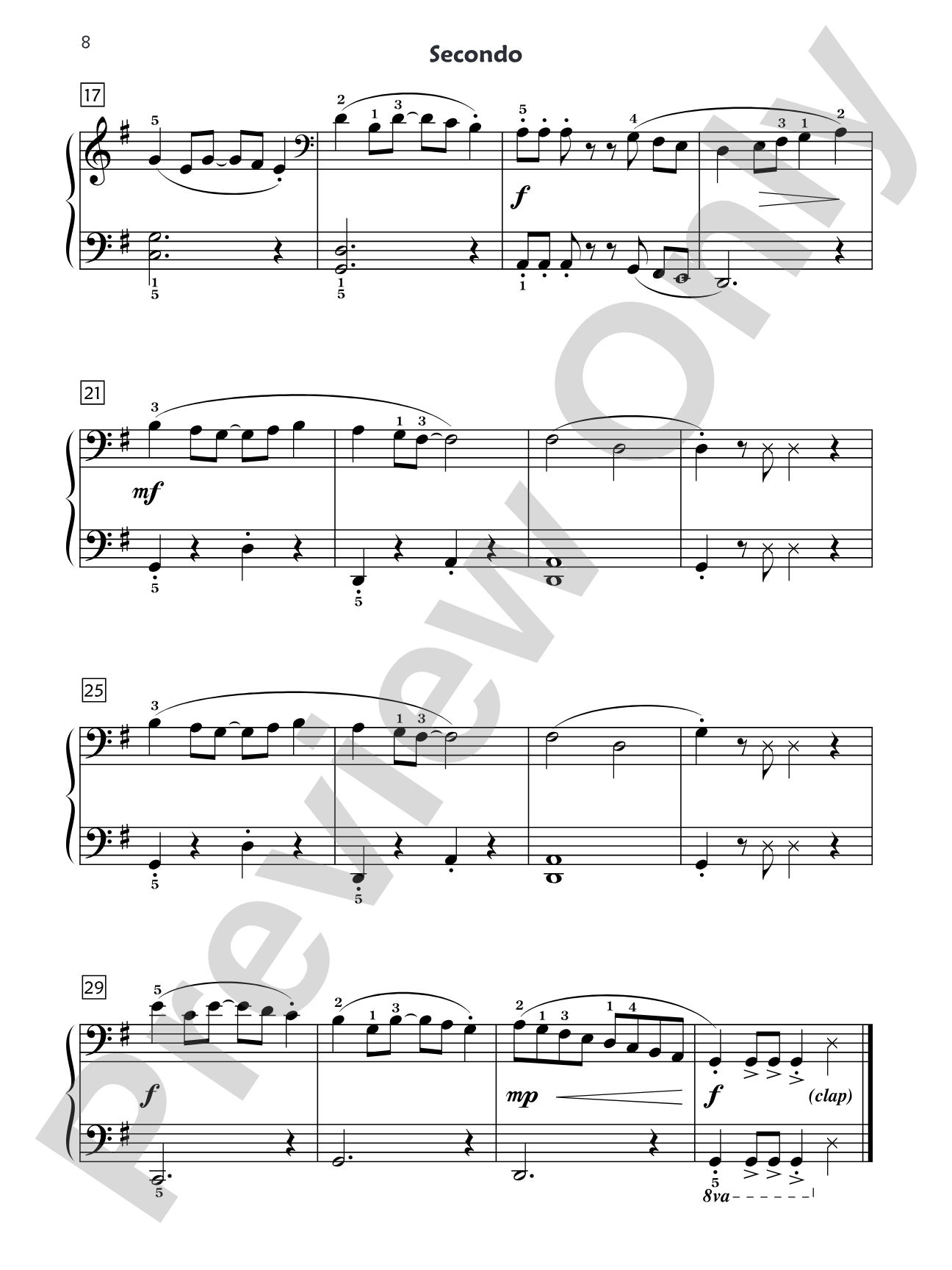
Alfred's Premier Piano Course, Duet 3 includes motivational music that reinforces concepts introduced in Lesson 3. These duets for one piano, four hands continue the strong pedagogical focus of the course while providing the enjoyment of playing with a friend or family member. Written by America's leading pedagogical composers, these duets contain equally leveled parts for secondo and primo. Within each duet, melodic material is shared between the parts. Styles and forms include a ballad, a tarantella, a waltz, a showstopper, a Spanish-style piece, as well as an arrangement of a famous opera aria. Titles: Chasing the Wind (Robert D. Vandall) * Festivale (Melody Bober) * Habanera (Carol Matz) * Just Chillin' Out (Martha Mier) * Northern Sky (Wynn-Anne Rossi) * Sunrise Samba (Mike Springer) * Tarantella Spiritoso (Dennis Alexander) * Valse gracieuse (Tom Gerou). A Federation Festivals 2020-2024 selection.


Premier Piano Course, Duet 3: Piano Duets & Four Hands isn't in MakeMusic Cloud just yet...but it could be. Let us know you'd like to see it, and you'll help shape what comes next. In the meantime, start a free trial and dive into thousands of interactive titles your students can play along with today.
Request This Title
Tell us you want it.
Start Your Free Trial
Explore everything that's ready to play right now.
Sample Audio
No sample audio found.
Sample Video
No sample videos found.
Additional Details
Series:
Premier Piano Course
Publisher:
Alfred Music
Page Count:
40
SKU:
00-PB-0000605
More about this title
About the Creator
Alfred's Premier Piano Course draws from a collective of pedagogical composers who have shaped American music education for decades. Robert D. Vandall, Melody Bober, Carol Matz, Martha Mier, Wynn-Anne Rossi, Mike Springer, Dennis Alexander, and Tom Gerou each bring distinct compositional voices while maintaining a shared commitment to musicality at every level. Their duets prioritize equal partnership between players, ensuring neither hand feels secondary or subordinate.
These composers understand what works in the practice room and on stage. They write with real students in mind, crafting pieces that sound mature without requiring advanced technique. The result is repertoire that builds confidence and genuine musical satisfaction from the very beginning.
Why we love this
Duet 3 offers something genuinely rare: eight pieces that treat both parts with complete equality. Students stop thinking of one hand as "accompaniment" and start experiencing what ensemble playing really means. The stylistic variety keeps rehearsals fresh while reinforcing the same technical concepts from the lesson book, and the Federation Festivals listing gives students a real goal beyond their practice room.
What to expect
Playing these duets feels like being part of something larger than yourself. One moment you're carrying the melody through a shimmering "Northern Sky," the next you're propelling a "Festivale" with steady, driving support. The Spanish flavor of "Habanera," the infectious groove of "Sunrise Samba," and the theatrical sweep of the operatic arrangement make every piece a complete musical experience rather than a drill.
Who it's for
Students working through Level 3 of the Premier Piano Course who are ready to experience partnership at the piano. These duets also work for young students who've learned elsewhere but need engaging material that reinforces equal-voice writing and stylistic awareness.
How to get the most out of it
- Balance the melodic material between primo and secondo from the start. Mark your score when the tune passes from one hand to the other so neither player gets caught off guard during performance.
- Record yourselves regularly, even just on a phone. Hearing the duet as a single musical unit rather than two separate parts shifts how you approach phrasing and tempo together.
- Attend to the stylistic character of each piece before you worry about speed. "Tarantella Spiritoso" and "Valse gracieuse" sit in completely different musical worlds; make sure your interpretation reflects that difference.
- Practice separately before putting the hands together. Secure both parts independently so that when you combine them, you're listening to the overall sound rather than concentrating on not making mistakes.
How to use it
These duets fit naturally into student recitals, where they break up the steady stream of solo performances and remind audiences that piano playing is fundamentally social. You can also weave them throughout the year as students progress through the lesson book, using them as celebration points when new concepts lock into place. Schools preparing students for Federation Festivals will find especially useful material here.
Skills your students will build
- Balancing volume and phrasing between two equal parts
- Maintaining steady tempo while listening to a partner
- Recognizing when melodic material shifts between primo and secondo
- Playing across multiple musical styles (ballad, tarantella, waltz, samba, Spanish music, opera arrangement)
- Reading and interpreting dynamic and expressive markings in context
- Collaborating through careful listening and ensemble awareness