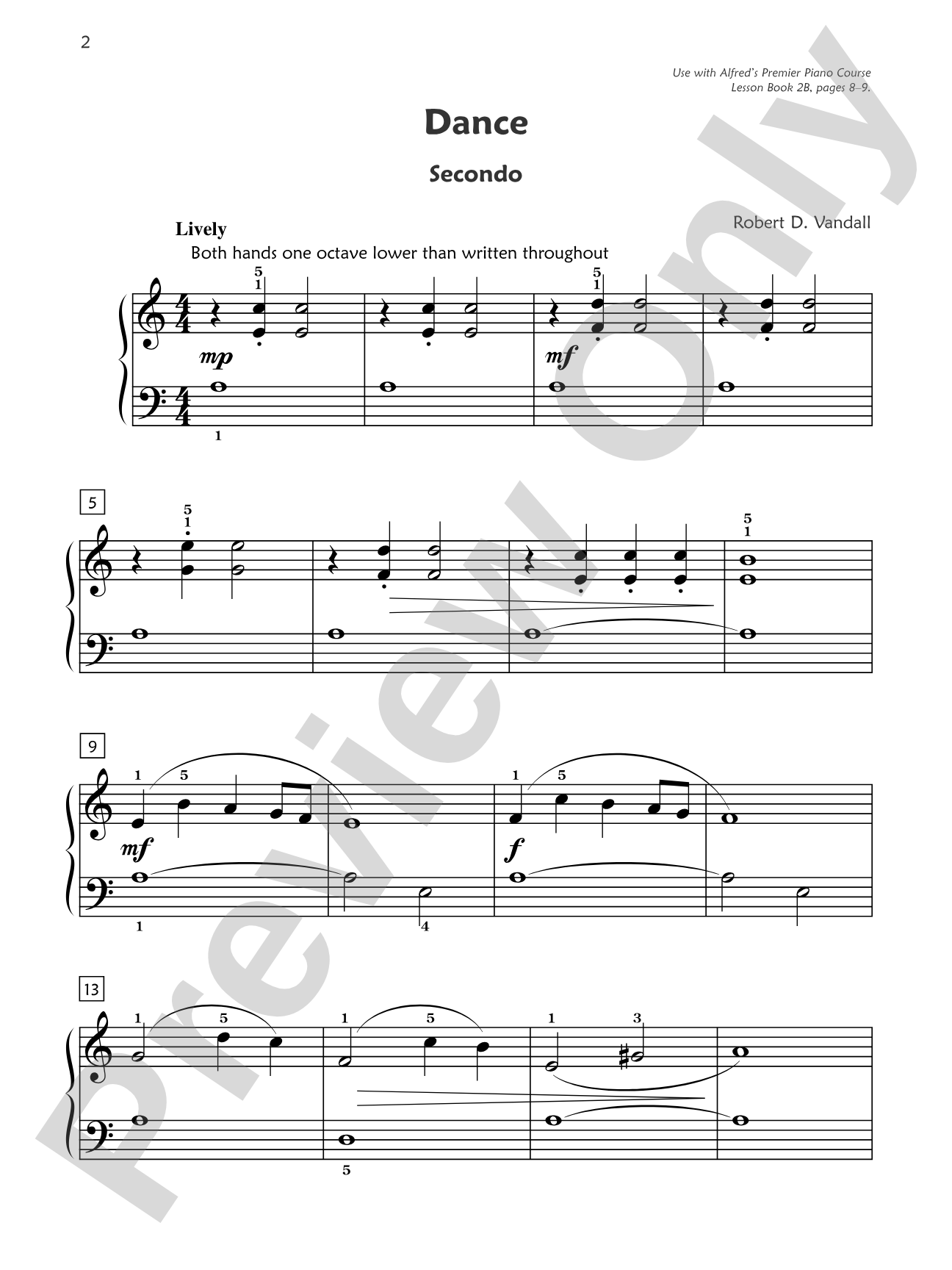
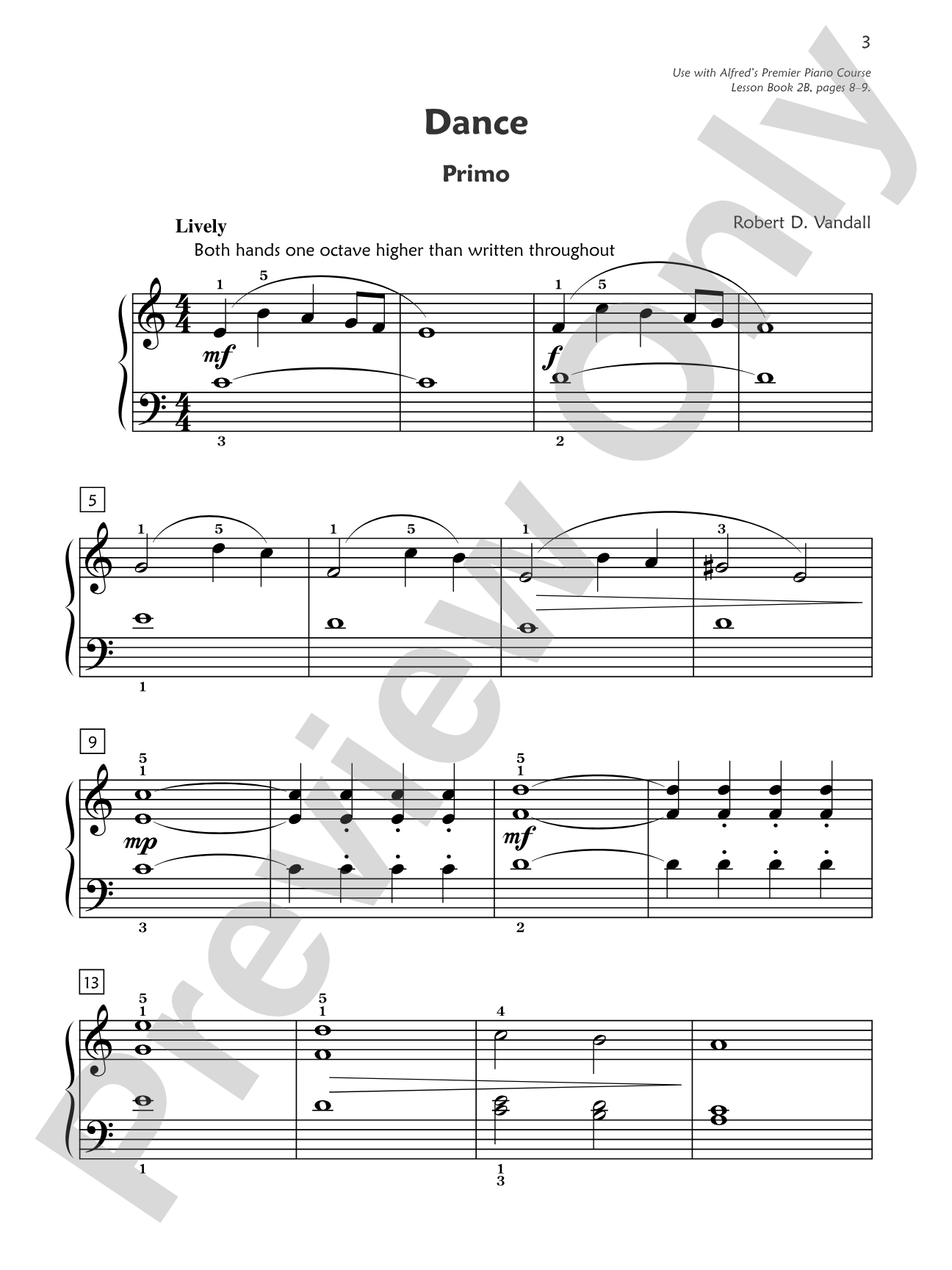
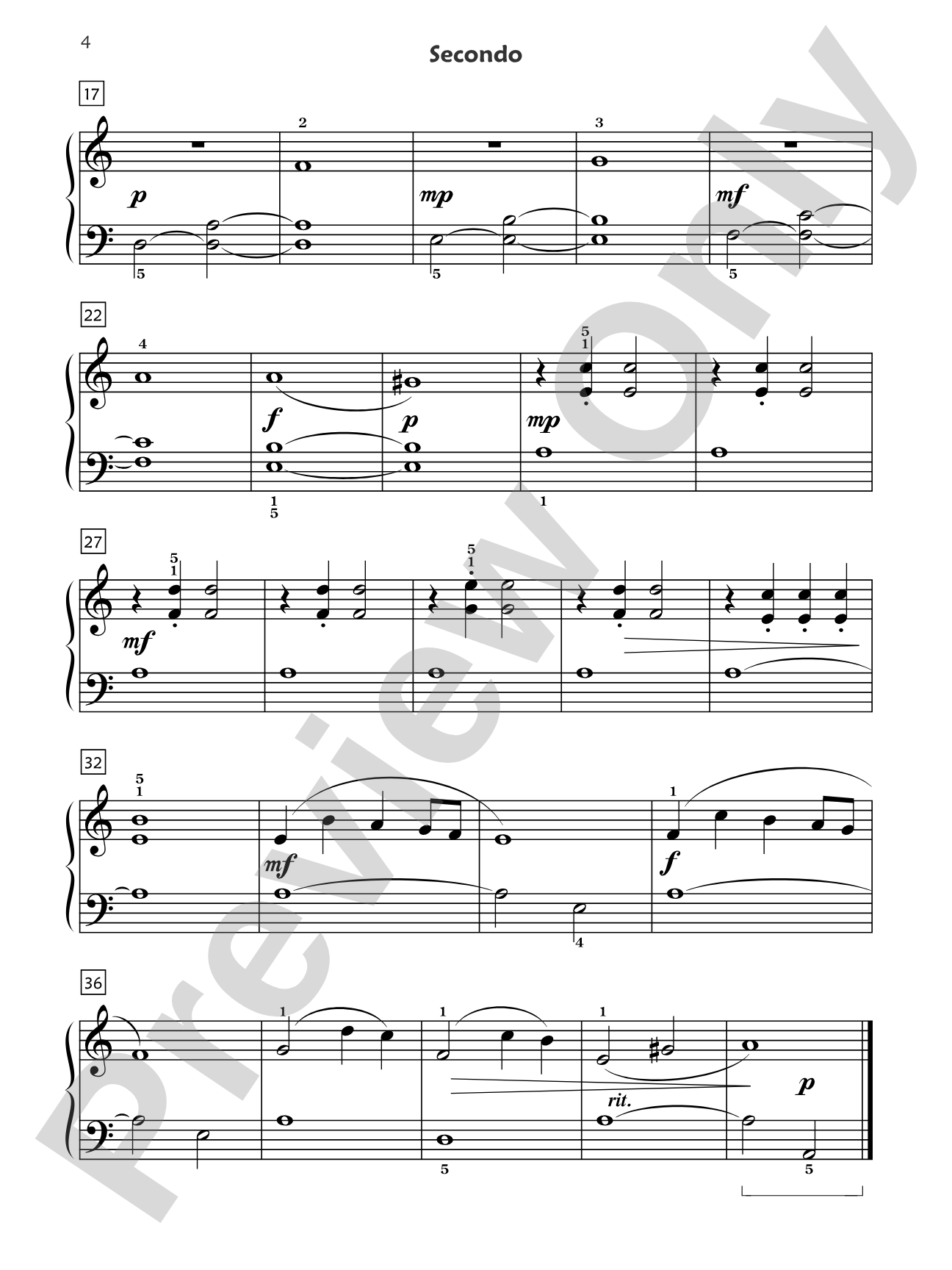
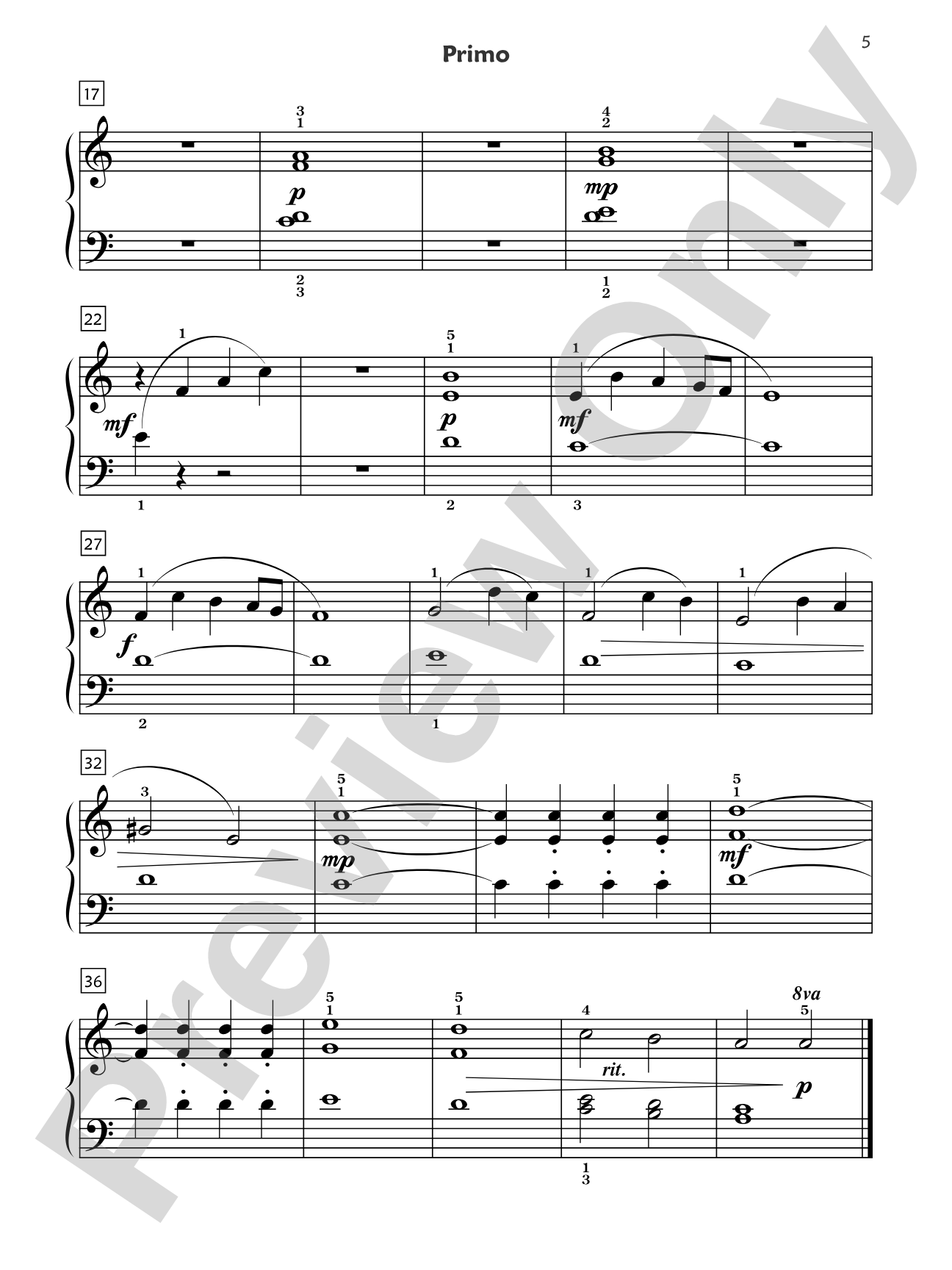
Premier Piano Course, Duet 2B  Sheet Music Preview

Premier Piano Course, Duet 2B: Piano Duets & Four Hands

Ed. Gayle Kowalchyk and E. L. Lancaster

Level: 2B

Item: 00-PB-0000571

Digital Download
$8.99
Description
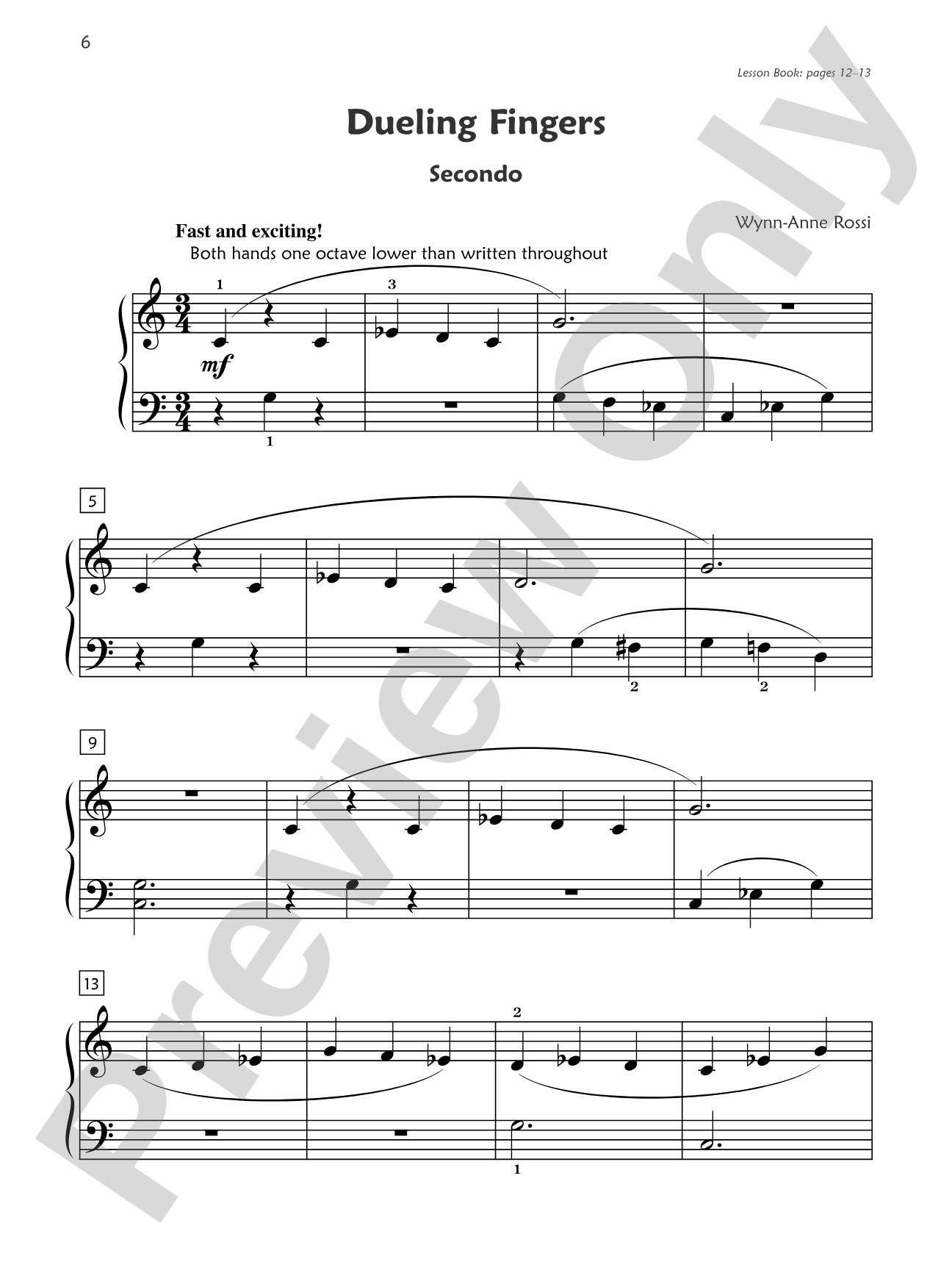
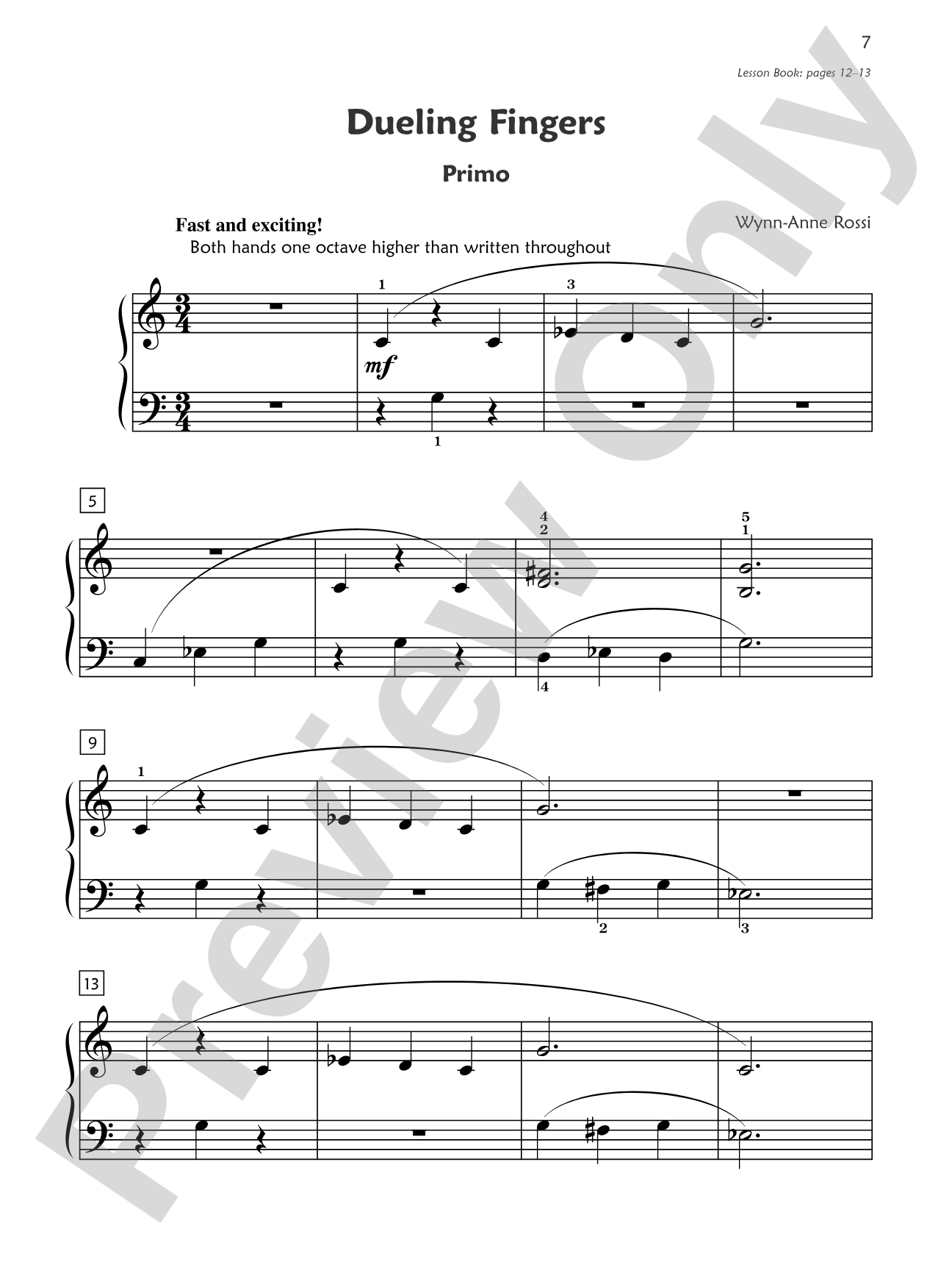
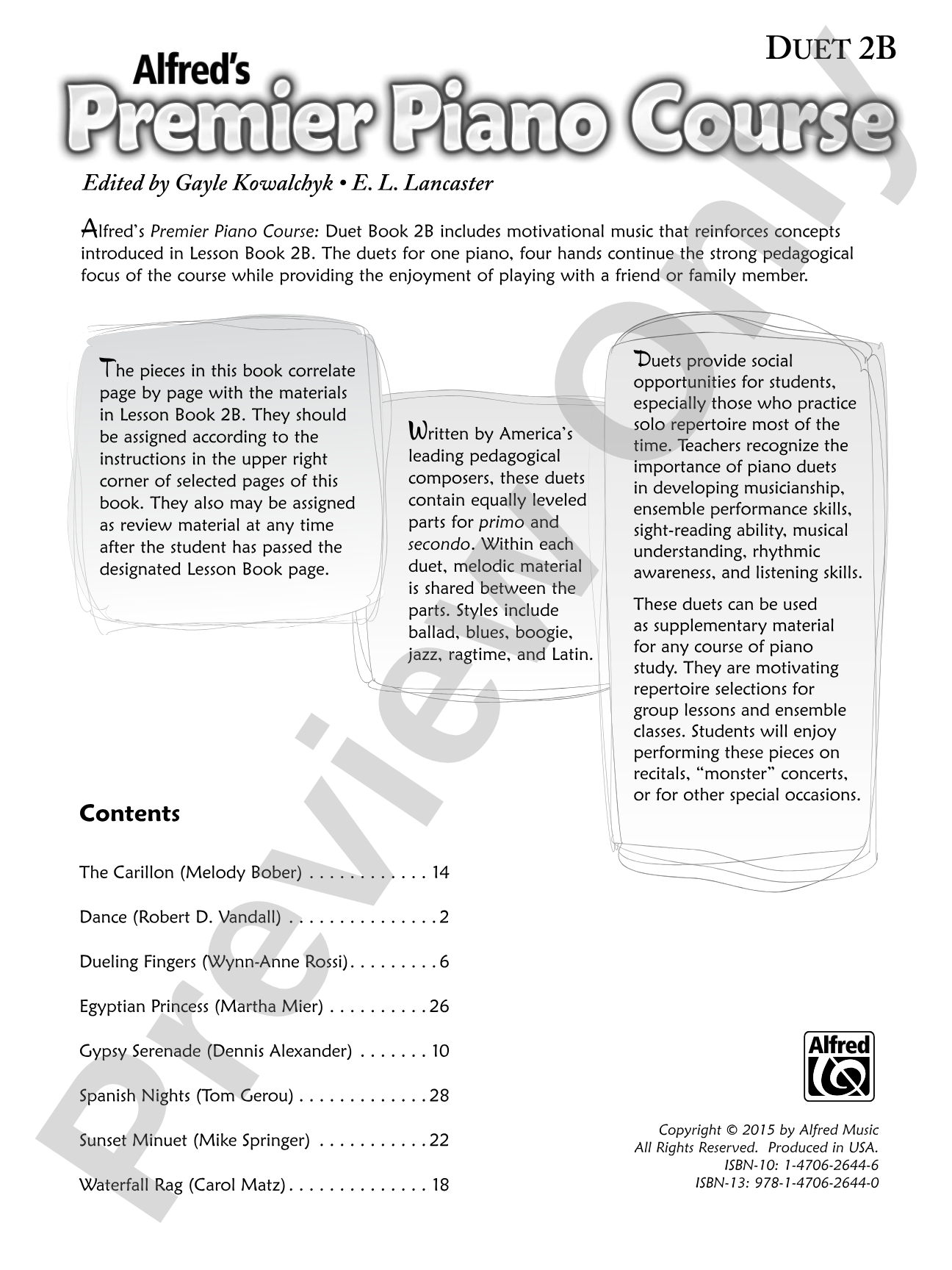
Alfred's Premier Piano Course: Duet 2B includes motivational music that reinforces concepts introduced in Lesson 2B. These duets for one piano, four hands continue the strong pedagogical focus of the course while providing the enjoyment of playing with a friend or family member. Written by America's leading pedagogical composers, these duets contain equally leveled parts for secondo and primo. Within each duet, melodic material is shared between the parts. Styles include ballad, blues, boogie, jazz, ragtime, and latin. Titles: The Carillon (Melody Bober) * Dance (Robert D. Vandall) * Dueling Fingers (Wynn-Anne Rossi) * Egyptian Princess (Martha Mier) * Gypsy Serenade (Dennis Alexander) * Spanish Nights (Tom Gerou) * Sunset Minuet (Mike Springer) * Waterfall Rag (Carol Matz). A Federation Festivals 2020-2024 selection. A Federation Festivals 2024-2028 selection.

Premier Piano Course, Duet 2B: Piano Duets & Four Hands isn't in MakeMusic Cloud just yet...but it could be. Let us know you'd like to see it, and you'll help shape what comes next. In the meantime, start a free trial and dive into thousands of interactive titles your students can play along with today.

Sample Audio
No sample audio found.
Sample Video
Additional Details
Series: Premier Piano Course
Publisher: Alfred Music
Page Count: 32
SKU: 00-PB-0000571

More about this title

About the Creator

Alfred's Premier Piano Course draws from a collective of America's most respected pedagogical composers, each bringing decades of classroom experience to their writing. The series reflects a philosophy that students learn best when they're genuinely engaged, which means the music itself must be worth playing and worth hearing.

Why we love this

This duet collection solves a real problem in Level 2B pedagogy: students need reinforcement material that actually sounds like music, not exercises. The stylistic variety keeps both players invested, and the equally balanced parts mean no one is stuck vamping while their partner carries the melody.

What to expect

A world tour at the piano. You move from the meditative bells of "The Carillon" through the groove of blues and boogie, then into the exotic color of "Egyptian Princess" and "Gypsy Serenade." The ragtime and Latin pieces crackle with energy, while the ballads give you space to shape a phrase together.

Who it's for

Pianists at the late beginner/early intermediate stage who are ready to experience collaborative playing without sacrificing musical substance. Any teacher needing reinforcement material that aligns with Lesson 2B concepts while doubling as genuinely enjoyable recital repertoire.

How to get the most out of it

  • Balance the texture by listening for which part carries the primary melody in each section; the secondo and primo trade roles throughout, so adjust your dynamic support accordingly.
  • Work out the coordination in "Dueling Fingers" slowly at first, since the piece's title suggests the parts will interact tightly around similar rhythmic figures.
  • The Latin and ragtime pieces benefit from a clear rhythmic pulse established by the secondo player; anchor the time feel there before adding rubato or swing.
  • Explore the character contrasts available across the collection; "Sunset Minuet" calls for legato phrasing while "Waterfall Rag" demands crisper articulation.

How to use it

Use these duets to open recitals or serve as intermission breathers between solo performances. The stylistic range allows you to program multiple selections across a single student recital, showing off different facets of the pianist's developing musicianship. They also work beautifully in ensemble settings where family members or peer pianists perform together.

Skills your students will build

  • Ensemble listening and rhythmic coordination with a partner
  • Trading melodic lines between primo and secondo parts
  • Style-specific articulation (legato ballad phrasing, crisp ragtime attack, swing feel in jazz passages)
  • Reading and interpreting varied dynamic and tempo markings across multiple musical styles
  • Keyboard independence and technical clarity in both hands simultaneously

You May Also Like