

Premier Piano Course, Duet 2A: Piano Duets & Four Hands
Ed. Gayle Kowalchyk and E. L. Lancaster
Level: 2A
Item: 00-PB-0000570
$9.99
Pickup currently not available
Related Items
Premier Piano Course, Duet 2A: Piano Book |
$9.99
|
View |
Description
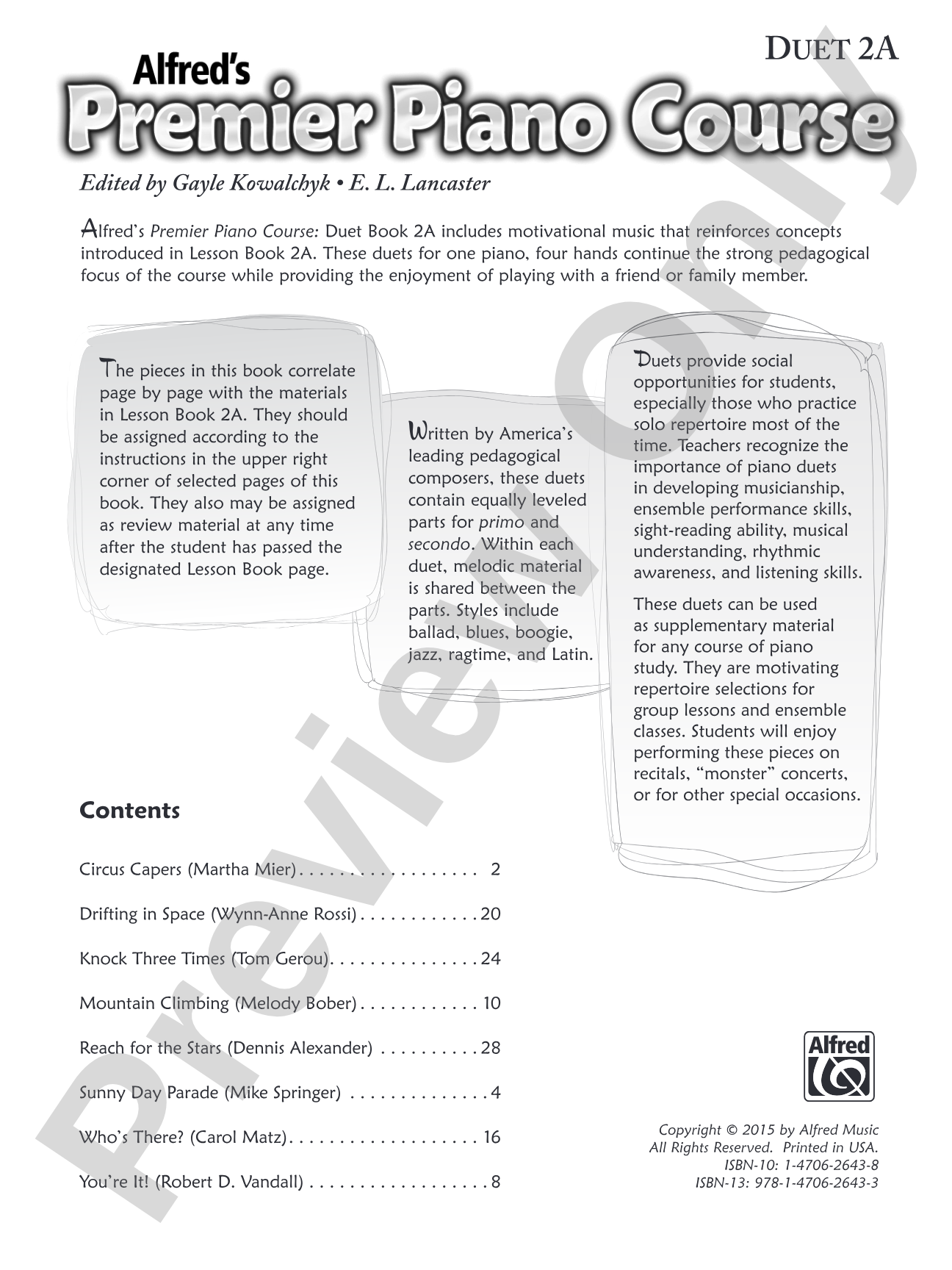
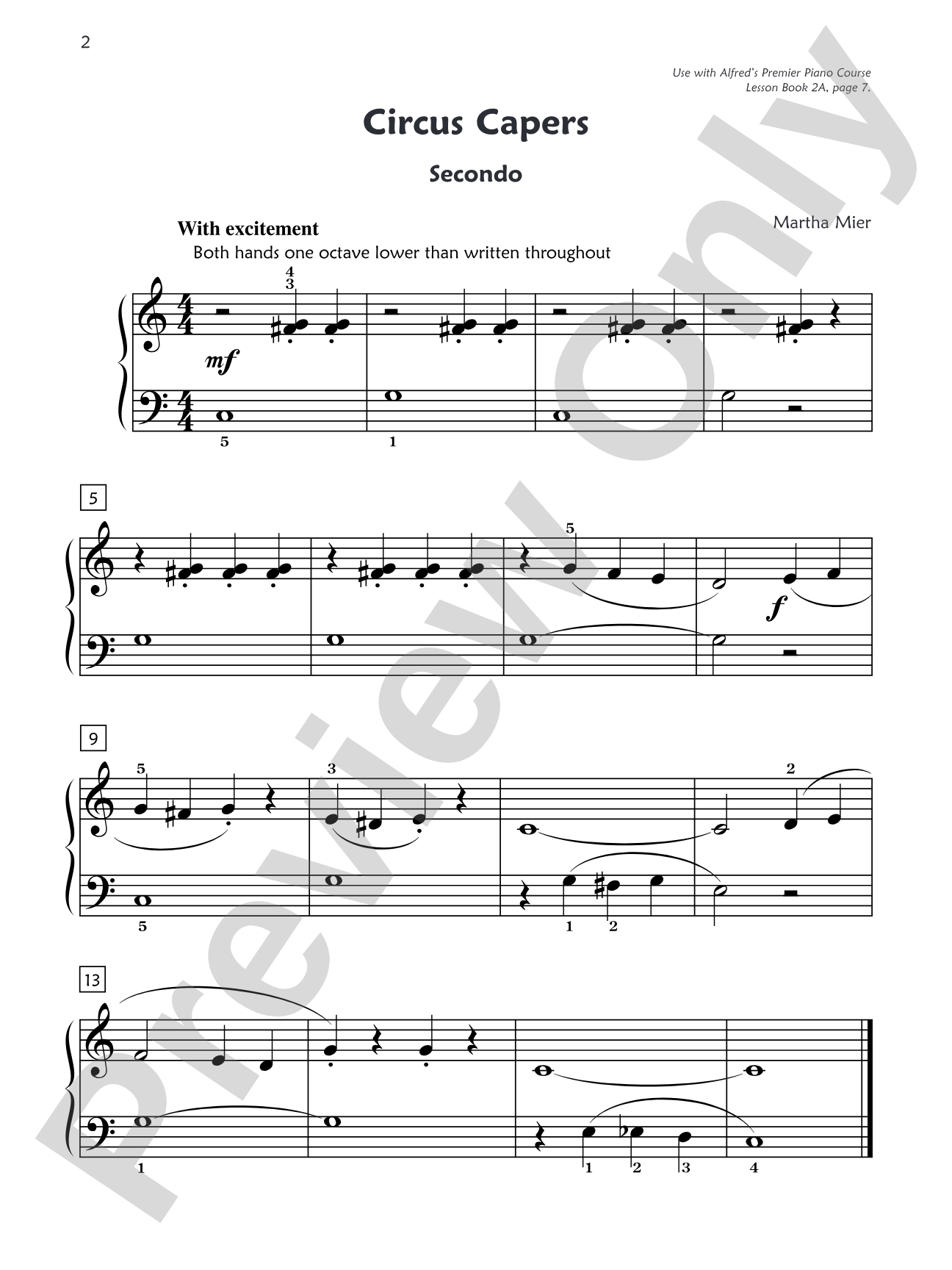
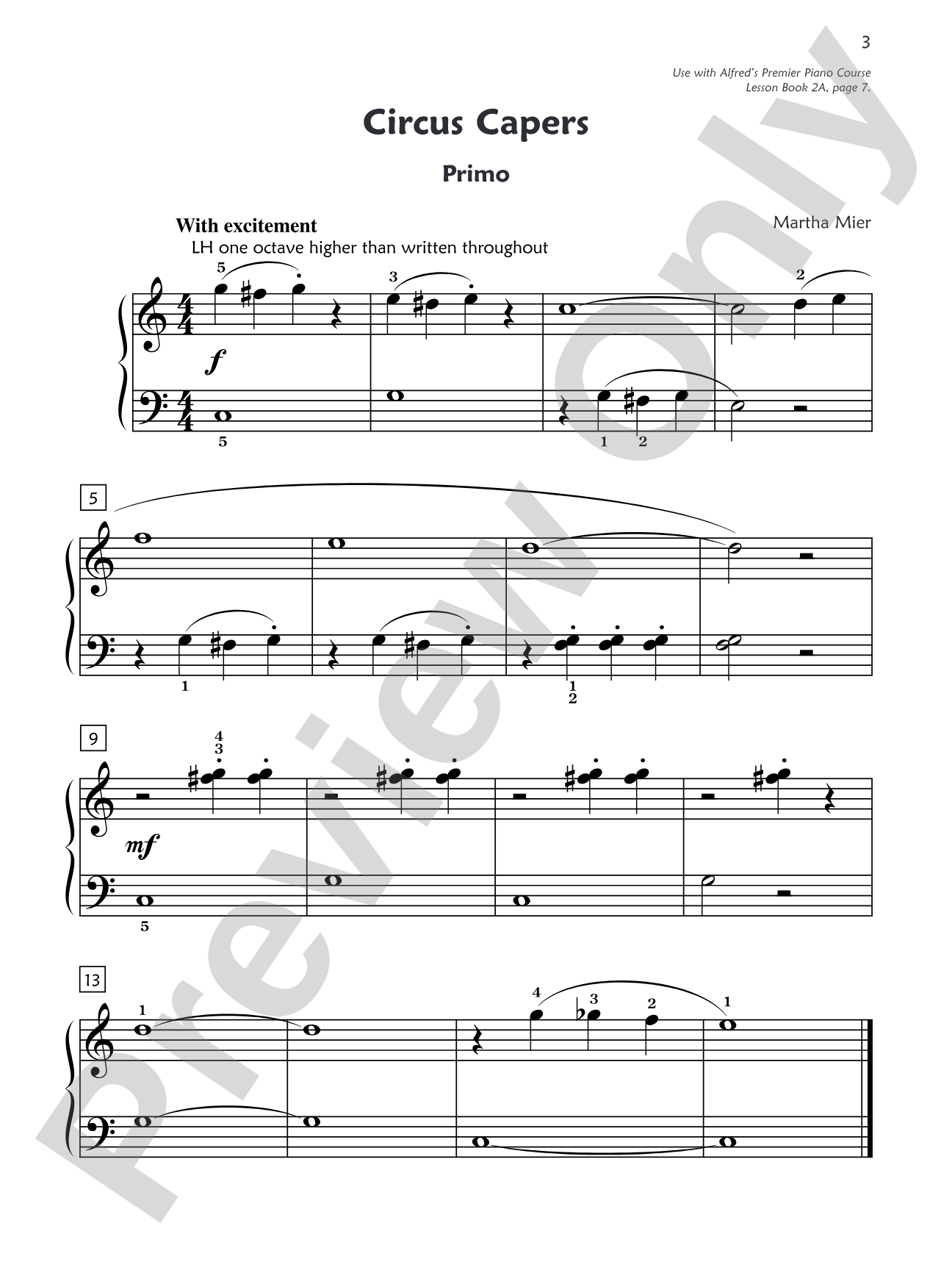
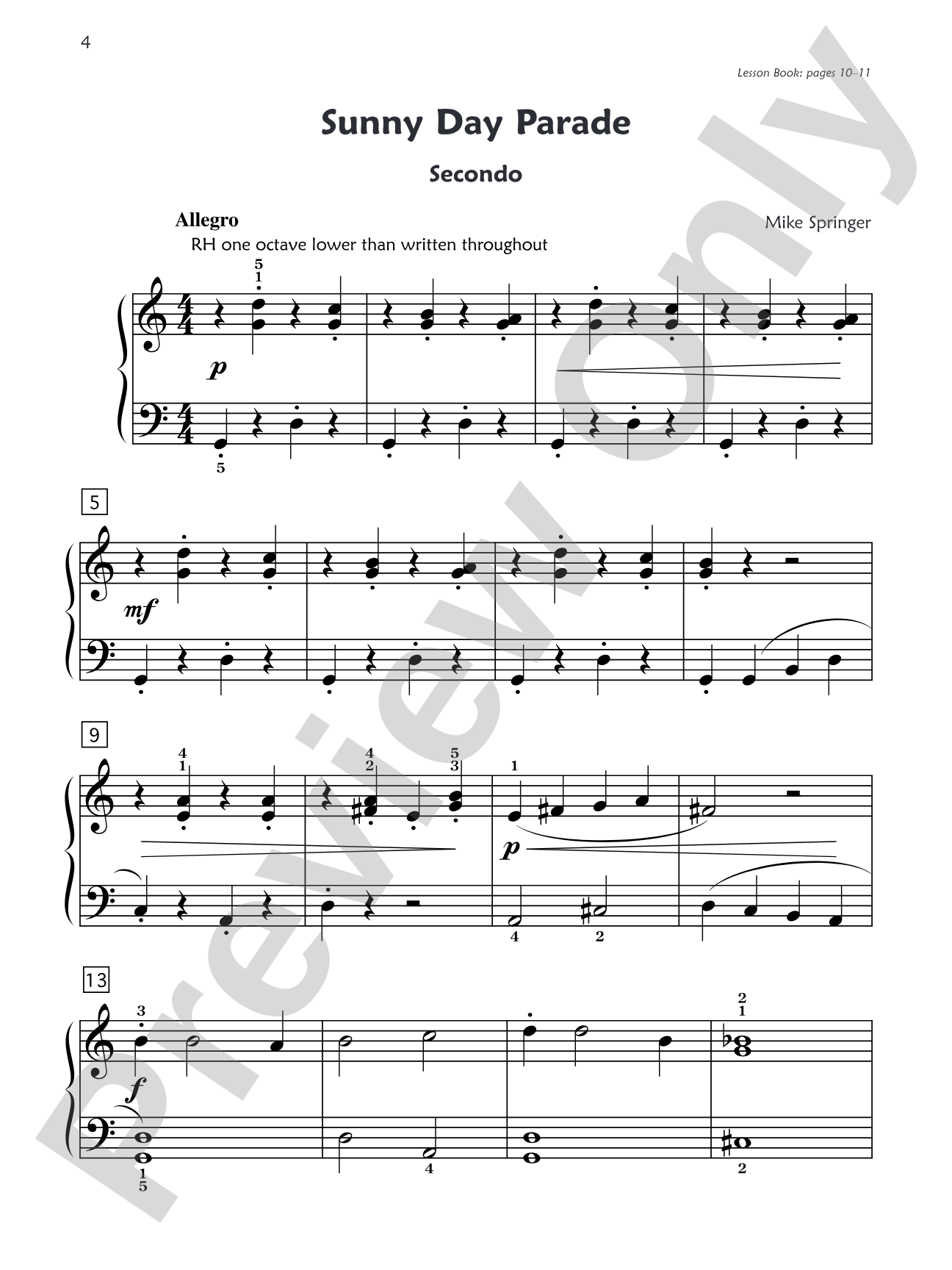
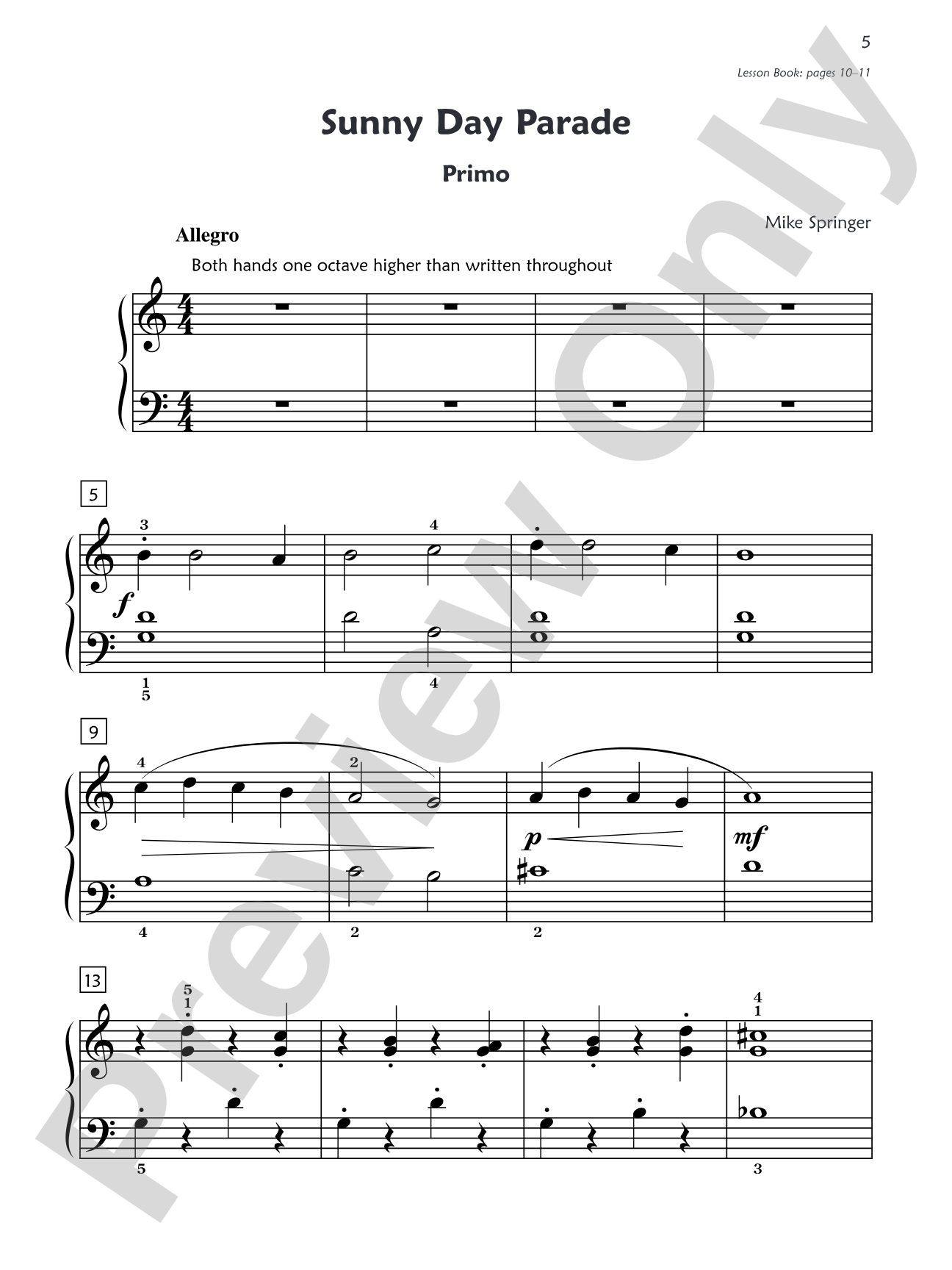
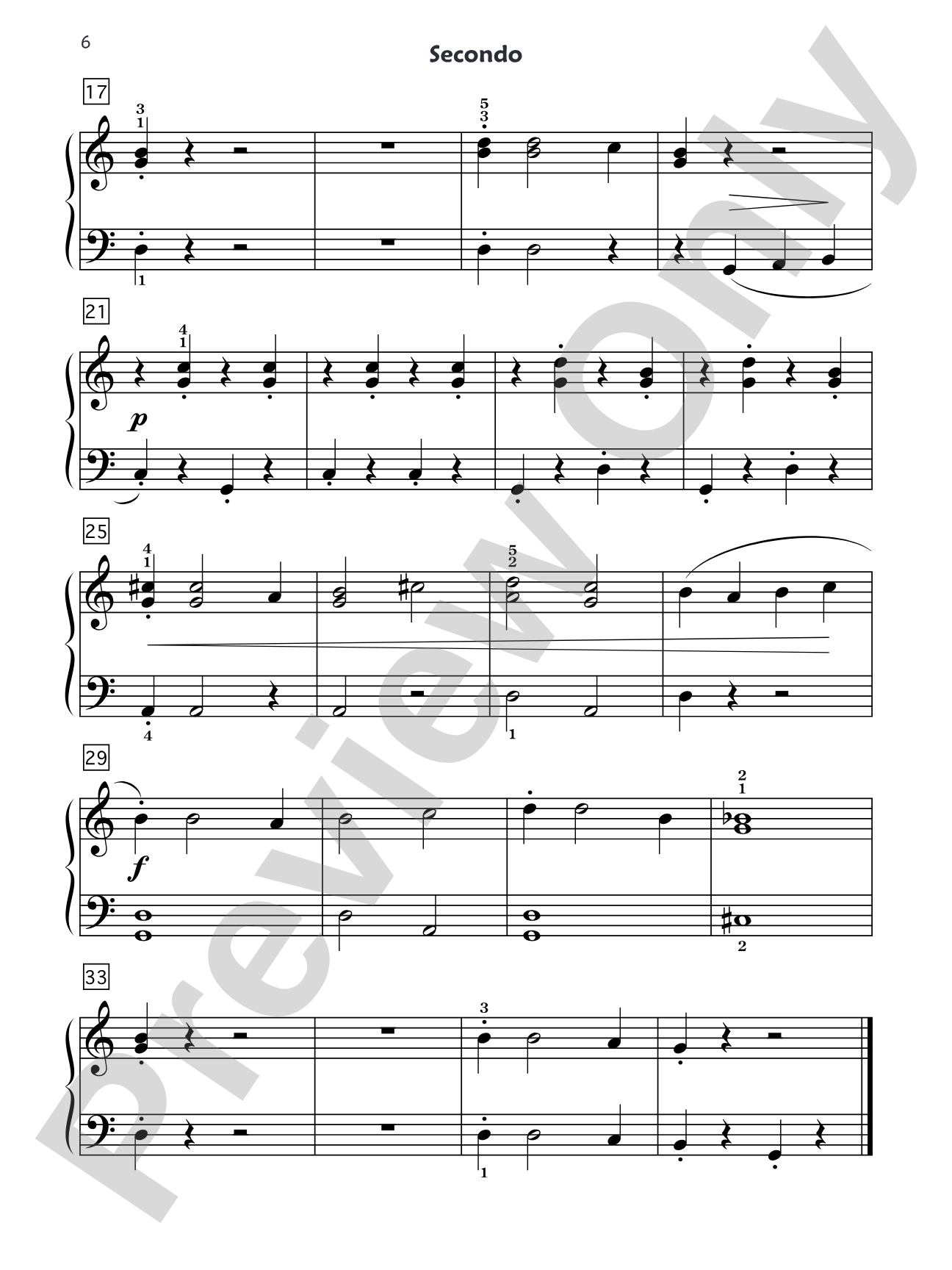
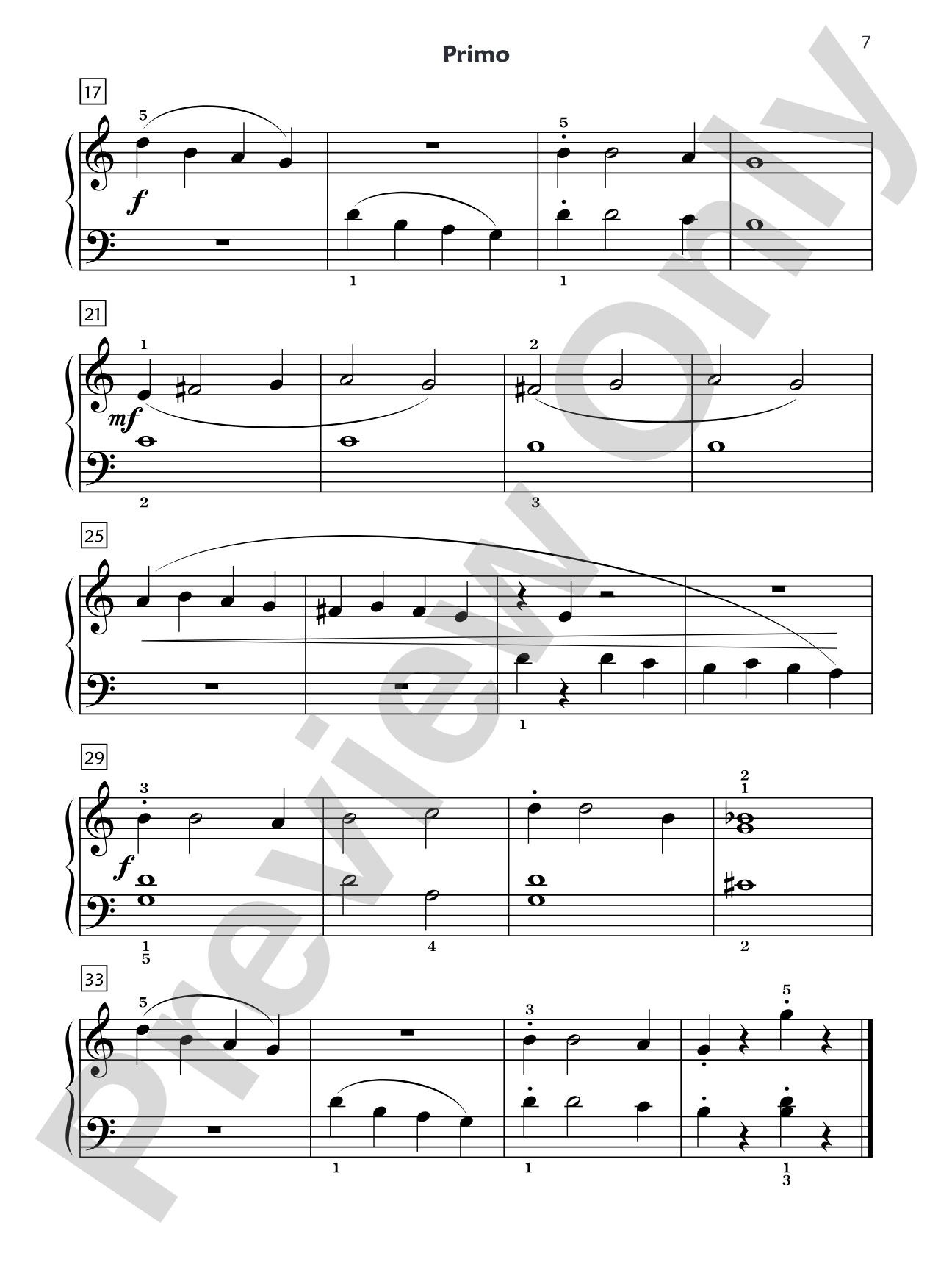
Alfred's Premier Piano Course: Duet 2A includes motivational music that reinforces concepts introduced in Lesson Book 2A. These duets for one piano, four hands continue the strong pedagogical focus of the course while providing the enjoyment of playing with a friend or family member. Written by America's leading pedagogical composers, these duets contain equally leveled parts for secondo and primo. Within each duet, melodic material is shared between the parts. Styles include ballad, blues, boogie, jazz, ragtime, and latin. Titles: Circus Capers (Martha Mier) * Drifting in Space (Wynn-Anne Rossi) * Knock Three Times (Tom Gerou) * Mountain Climbing (Melody Bober) * Reach for the Stars (Dennis Alexander) * Sunny Day Parade (Mike Springer) * Who's There? (Carol Matz) * You're It! (Robert D. Vandall). "Mountain Climbing," "Reach for the Stars," and "Who's There?" are Federation Festivals 2016-2020 selections. A Federation Festivals 2020-2024 selection. A Federation Festivals 2024-2028 selection.


Premier Piano Course, Duet 2A: Piano Duets & Four Hands isn't in MakeMusic Cloud just yet...but it could be. Let us know you'd like to see it, and you'll help shape what comes next. In the meantime, start a free trial and dive into thousands of interactive titles your students can play along with today.
Request This Title
Tell us you want it.
Start Your Free Trial
Explore everything that's ready to play right now.
Sample Audio
No sample audio found.
Sample Video
No sample videos found.
Additional Details
Series:
Premier Piano Course
Publisher:
Alfred Music
Page Count:
32
SKU:
00-PB-0000570
More about this title
About the Creator
Alfred's Premier Piano Course represents the collective work of America's finest pedagogical composers: Martha Mier, Wynn-Anne Rossi, Tom Gerou, Melody Bober, Dennis Alexander, Mike Springer, Carol Matz, and Robert D. Vandall. Each brings decades of classroom experience and deep understanding of what young pianists need to progress musically and technically.
These composers have shaped piano education by writing music that sounds genuinely appealing to students while reinforcing specific technical and musical concepts. Their duets don't feel like exercises dressed up as pieces; they're music that pianists want to play because it's engaging and fun.
Why we love this
Duet 2A solves the real challenge of finding music where both parts matter equally. The secondo and primo parts share melodic material, which means neither player feels like they're stuck with accompaniment figuration. Your students will actually want to trade parts and play again. The style variety alone (blues, boogie, ragtime, Latin) keeps rehearsals fresh and gives you natural entry points into different musical traditions at an age-appropriate level.
What to expect
These duets sparkle with personality. You'll find yourself tapping your foot during "Sunny Day Parade," getting pulled into the gentle sway of "Drifting in Space," and delighting in the playful rhythmic games of "Who's There?" The music captures what makes piano duets special: the sense of two voices in conversation, sometimes leading, sometimes supporting, always connected.
Who it's for
Piano students working through Level 2A material who are ready for the social and musical rewards of ensemble playing. Teachers looking for repertoire that reinforces lesson concepts while introducing varied musical styles without adding significant difficulty.
How to get the most out of it
- Balance the sound between parts by adjusting dynamic levels during rehearsal rather than assuming equal volume automatically produces equal presence. The player with the melody might need to sit slightly forward.
- Let students choose which part they'd like to play first. Ownership over the choice builds investment in learning, and swapping parts later makes for productive practice sessions.
- Record a simple performance on your phone during rehearsal. Hearing themselves play as a unit, rather than struggling through in real time, gives students confidence and reveals balance issues they might not notice while playing.
- Establish a clear tempo before the downbeat. A shared breath or a silent count-off prevents the typical "racing off together" that happens when students aren't confident about the starting pulse.
How to use it
Use duets from this collection in end-of-level recitals where families can hear two students collaborate on stage. The shorter, self-contained pieces also work well as concert openers or palate cleansers between solos. Several selections appear on Federation Festivals lists (2016-2028), making them ideal choices if your students are preparing for adjudicated events.
Skills your students will build
- Playing as an ensemble with attention to balance and blend
- Maintaining independence while coordinating with a partner
- Reading and interpreting varied musical styles (ballad, blues, boogie, jazz, ragtime, Latin)
- Reinforcing rhythmic and harmonic concepts from Lesson Book 2A
- Executing shared melodic passages with unified phrasing
- Building confidence through collaborative music-making