

Premier Piano Course, Christmas 1A: Piano
By Dennis Alexander, Gayle Kowalchyk, E. L. Lancaster, Victoria McArthur, and Martha Mier
Level: 1A
Item: 00-PB-0001065
$8.99
Pickup currently not available
Related Items
Premier Piano Course, Christmas 1A: Piano Book |
$8.99
|
View |
Description
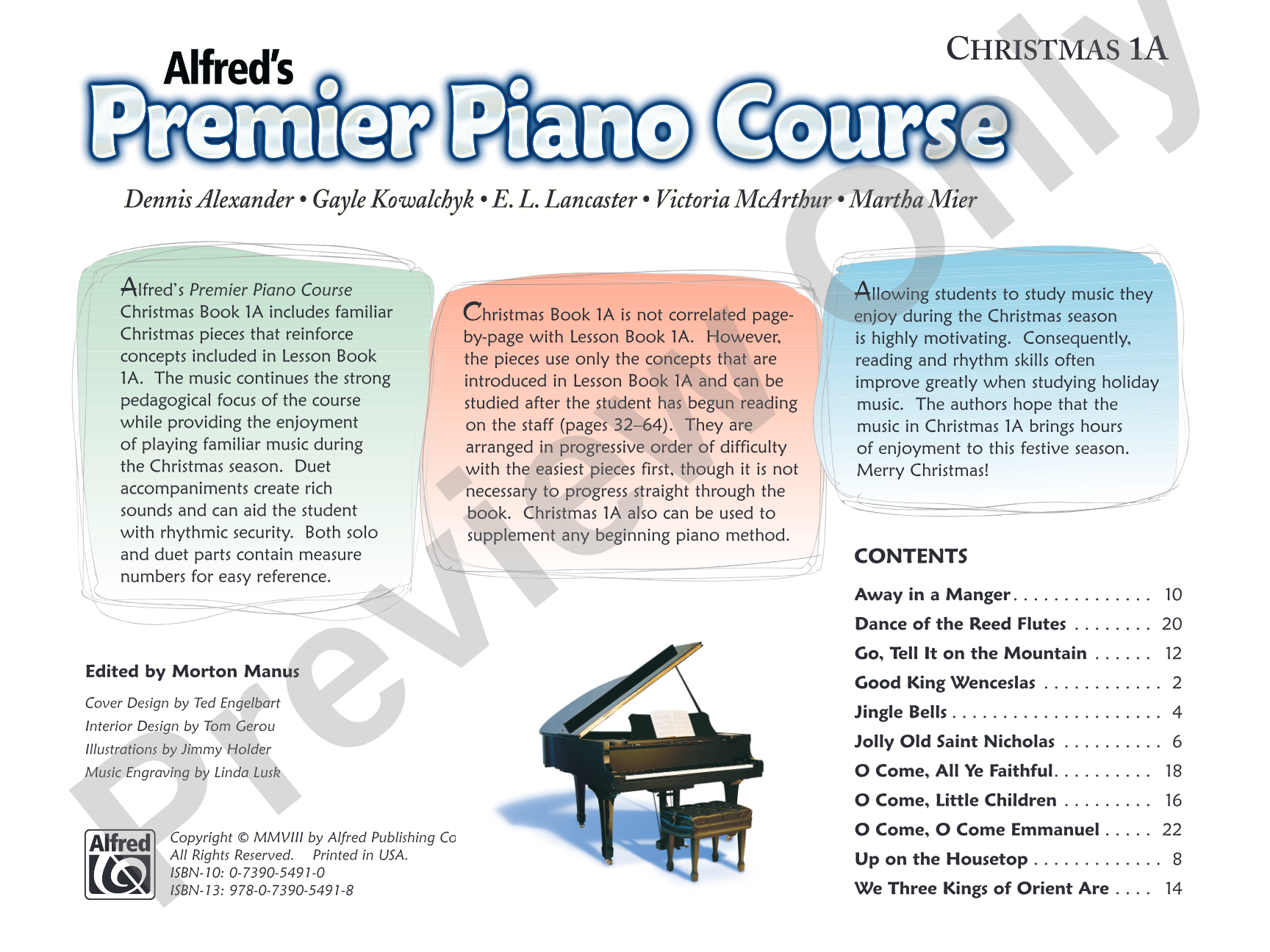
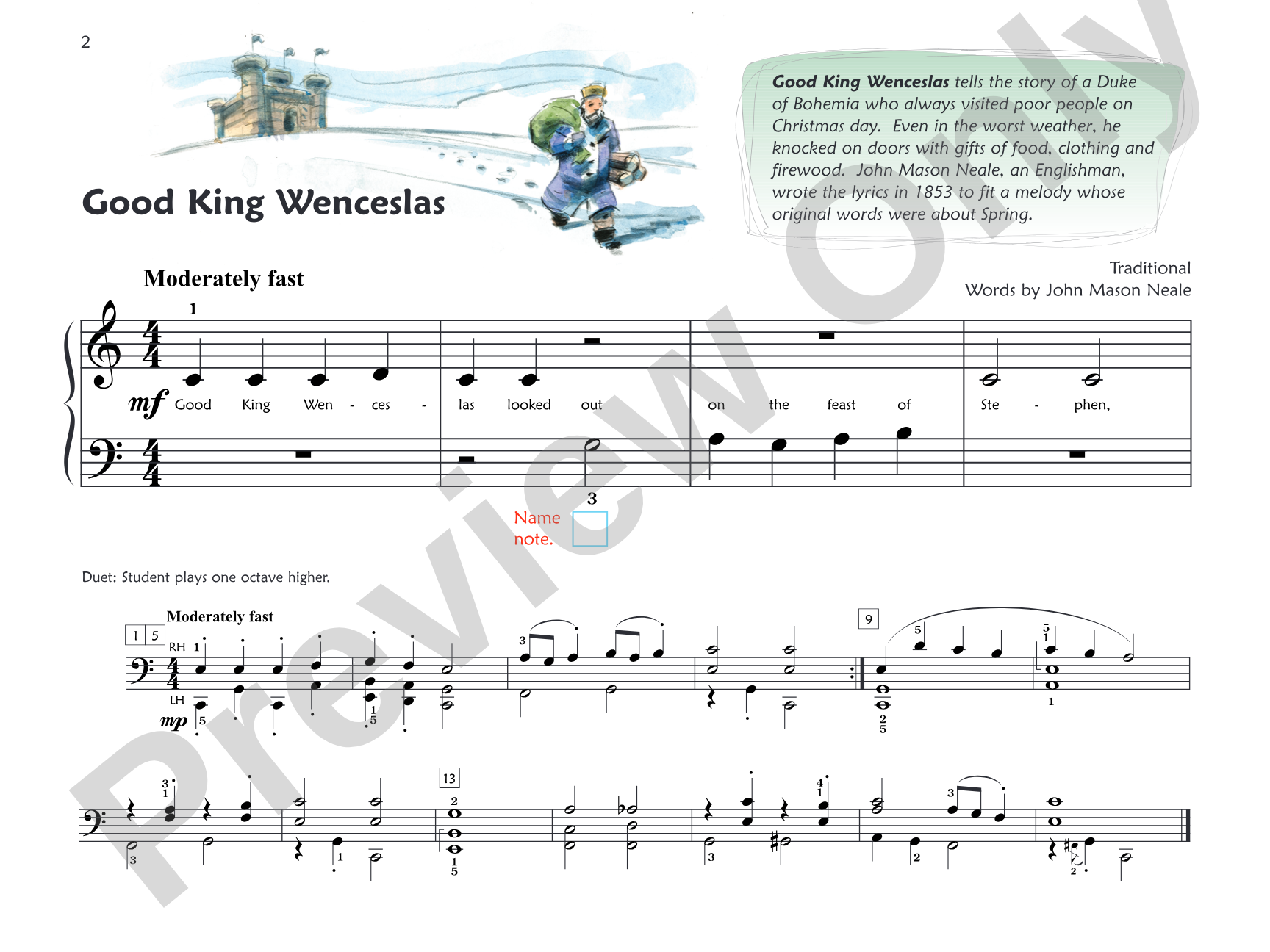
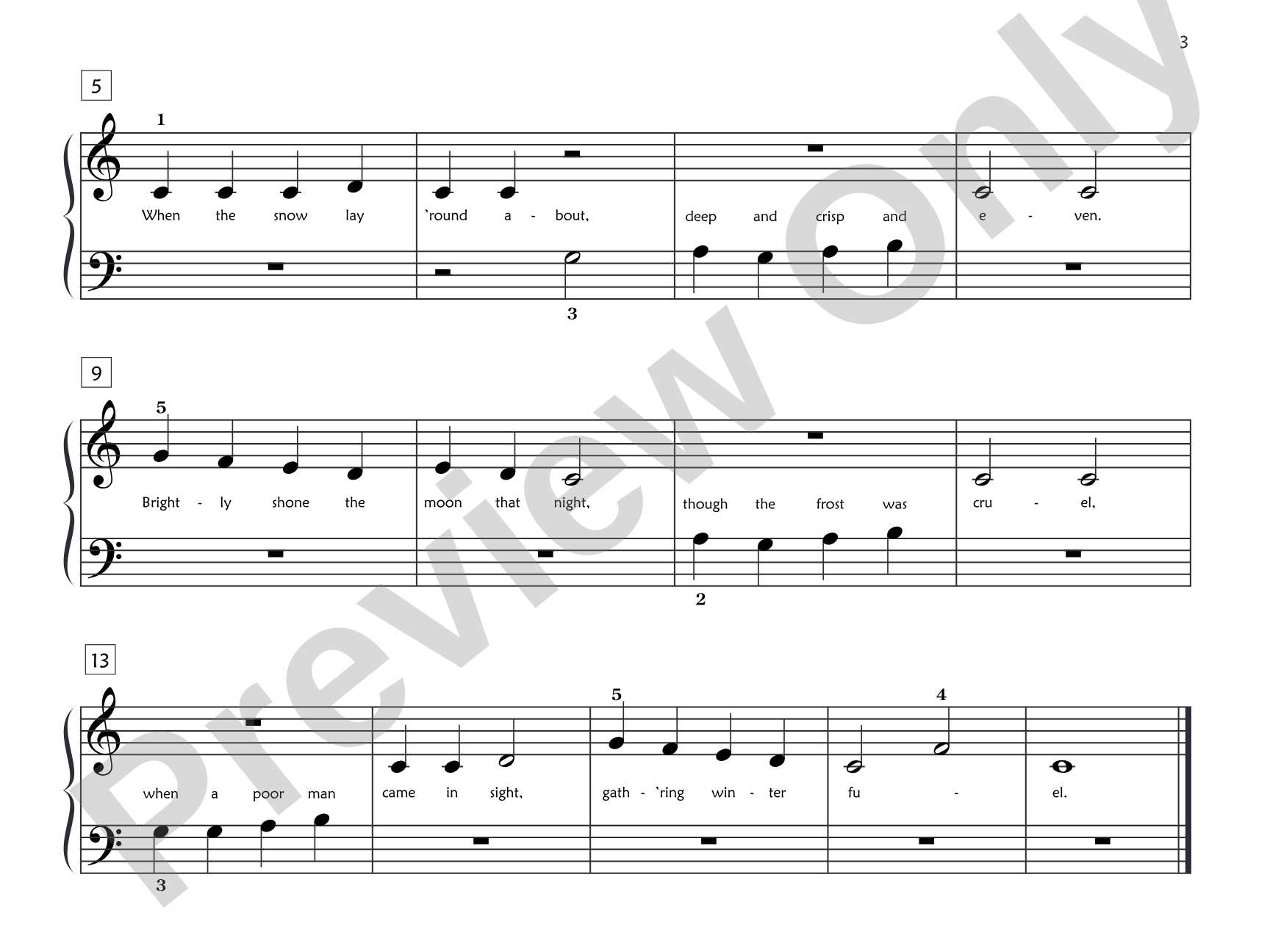
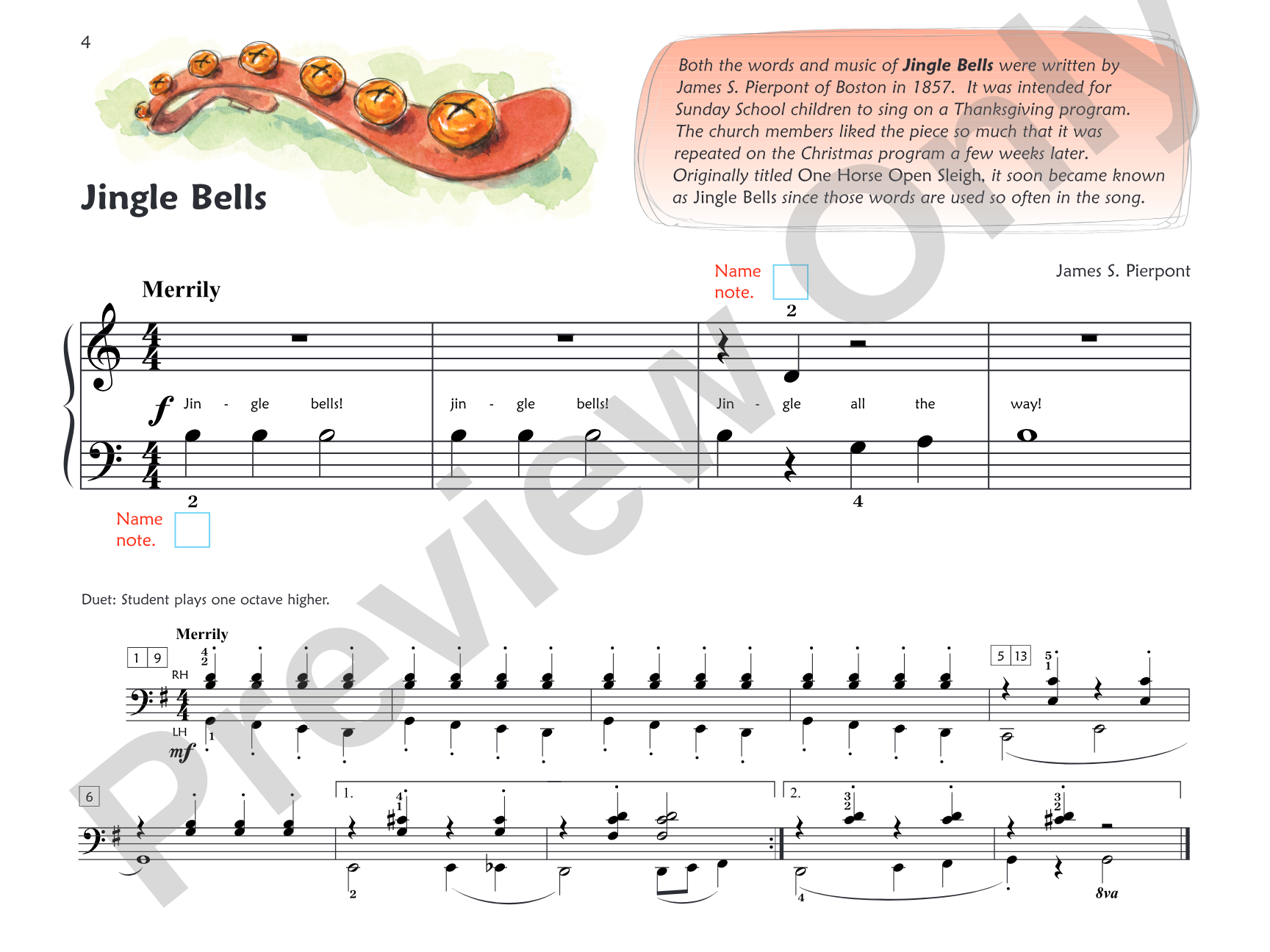
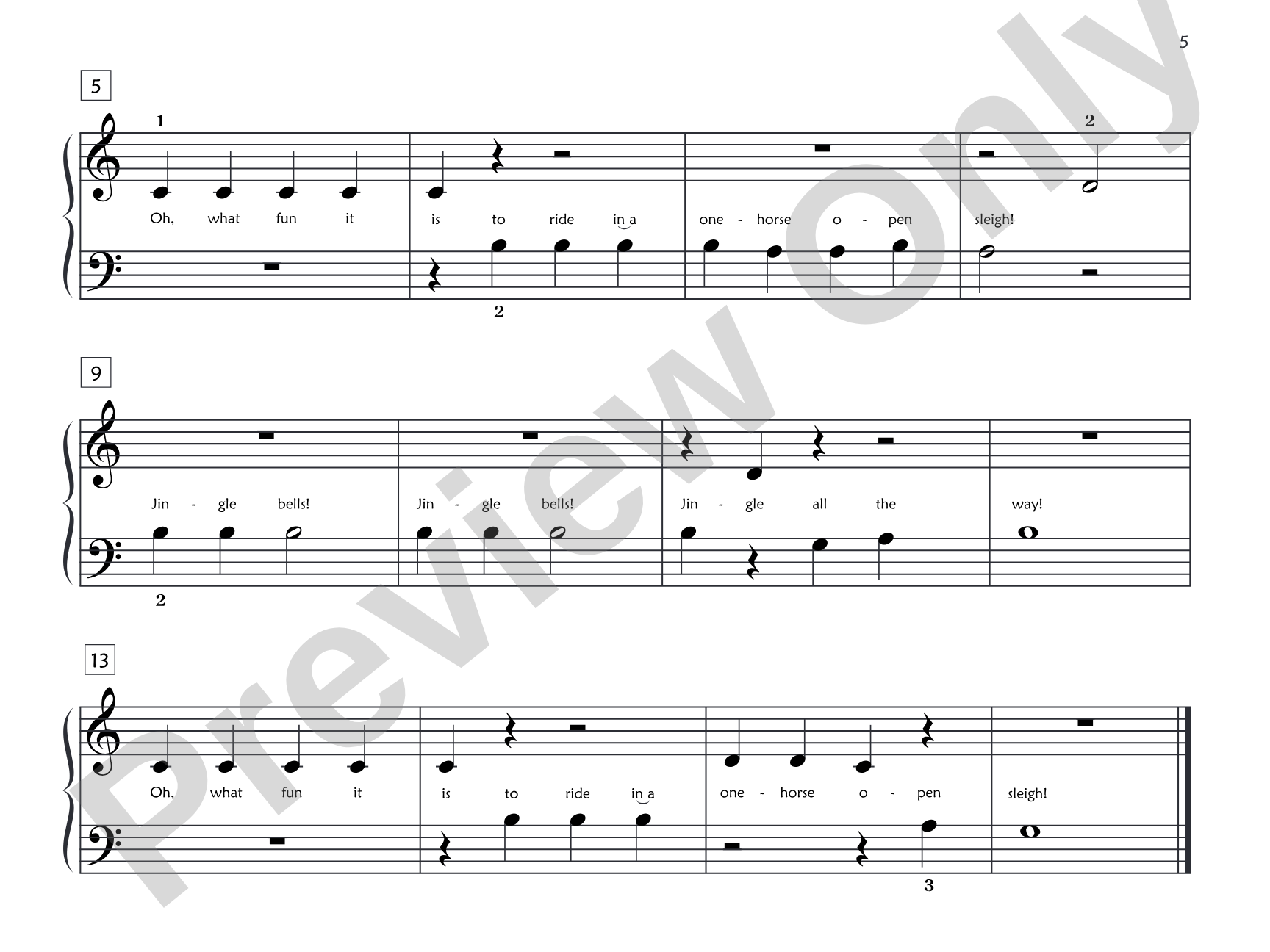
Familiar motivational pieces for the holiday season using the same concepts introduced in the corresponding Lesson Book. Can be used with any method as soon as students begin reading on the grand staff. Contains teacher duet accompaniments for an enhanced musical experience. Titles: Away in a Manger * Dance of the Reed Flutes (from The Nutcracker Suite) * Go, Tell It on the Mountain * Good King Wenceslas * Jingle Bells * Jolly Old Saint Nicholas * O Come, All Ye Faithful * O Come, Little Children * O Come, O Come Emmanuel * Up on the Housetop * We Three Kings of Orient Are. 24 pages.


Premier Piano Course, Christmas 1A: Piano isn't in MakeMusic Cloud just yet...but it could be. Let us know you'd like to see it, and you'll help shape what comes next. In the meantime, start a free trial and dive into thousands of interactive titles your students can play along with today.
Request This Title
Tell us you want it.
Start Your Free Trial
Explore everything that's ready to play right now.
Sample Audio
No sample audio found.
Sample Video
No sample videos found.
Additional Details
Series:
Premier Piano Course
Publisher:
Alfred Music
Page Count:
24
SKU:
00-PB-0001065
More about this title
About the Composer: Dennis Alexander

Dennis Alexander has shaped piano pedagogy since 1986 through his prolific work with Alfred Music Publishing, with over 400 compositions and recordings to his name. His approach to educational piano writing has made him internationally recognized for creating repertoire that motivates students across all levels. He spent 24 years on the faculty at the University of Montana teaching piano pedagogy before relocating to California, where he taught at Cal State Fullerton and Cal State Northridge. A Carnegie Hall debut artist and active collaborative pianist, Alexander has served as a clinician at state and national music teachers conventions and judged major competitions internationally. He maintains an active composing and performance schedule from his home in Albuquerque, New Mexico.
Why we love this
This collection pairs beloved holiday melodies with 1A-level concepts, giving students immediate musical gratification while reinforcing what they're learning in their lesson book. The inclusion of teacher duet accompaniments transforms simple student parts into genuine musical experiences rather than exercises, which keeps motivation high during the winter months. Whether you need pieces for a holiday recital, a festive student showcase, or reinforcement during a slow teaching period, these arrangements deliver both pedagogical substance and authentic holiday spirit.
What to expect
Cheerful, accessible, and genuinely musical. These arrangements capture the warmth and familiarity of holiday traditions while respecting the technical limitations of early pianists, so students play pieces they recognize without frustration. The teacher duets add richness and encourage listening skills that transform a simple student line into something memorable.
Who it's for
First-year piano students who are beginning to read on the grand staff and ready for repertoire beyond their lesson book. Teachers who want motivational pieces aligned with their students' current technical level, whether they follow Premier Piano Course or any other method that covers similar early concepts.
How to get the most out of it
- Play the teacher duet accompaniments with your students whenever possible. The fuller harmonic context helps young pianists hear their part in relation to the whole and makes rehearsals feel like real performances rather than practice sessions.
- Take time to discuss the origins of these pieces with your students. Knowing that some are carols sung for centuries and others come from famous ballets gives the music deeper meaning and context beyond the page.
- Work on consistent phrasing even at this early level. Ask students where the musical phrases breathe naturally, and guide them to avoid stopping at every rest mark.
How to use it
Program this collection during your studio's holiday recital or student showcase, where familiar melodies create an immediate emotional connection with audiences of mixed musical literacy. Use individual pieces as weekly performance assignments throughout November and December to maintain student engagement and joy during what can be a demanding season for teachers. The duet format also works beautifully in group lessons or small ensemble settings where teachers can accompany multiple students simultaneously.
Skills your students will build
- Reading and playing on the grand staff with comfort and accuracy
- Maintaining steady tempo and rhythm within a musical phrase
- Listening to harmonic support and understanding how a melody sits within larger musical context
- Phrasing and musicality in familiar, recognizable melodies
- Ensemble awareness and responding to an accompanist's tempo and dynamics