

Preludes - Piano Duo (2 Pianos, 4 Hands): Piano Duets & Four Hands
By George Gershwin / transcr. Gregory Stone
Level: Advanced
Item: 00-PB-0000713
$12.95
Pickup currently not available
Description
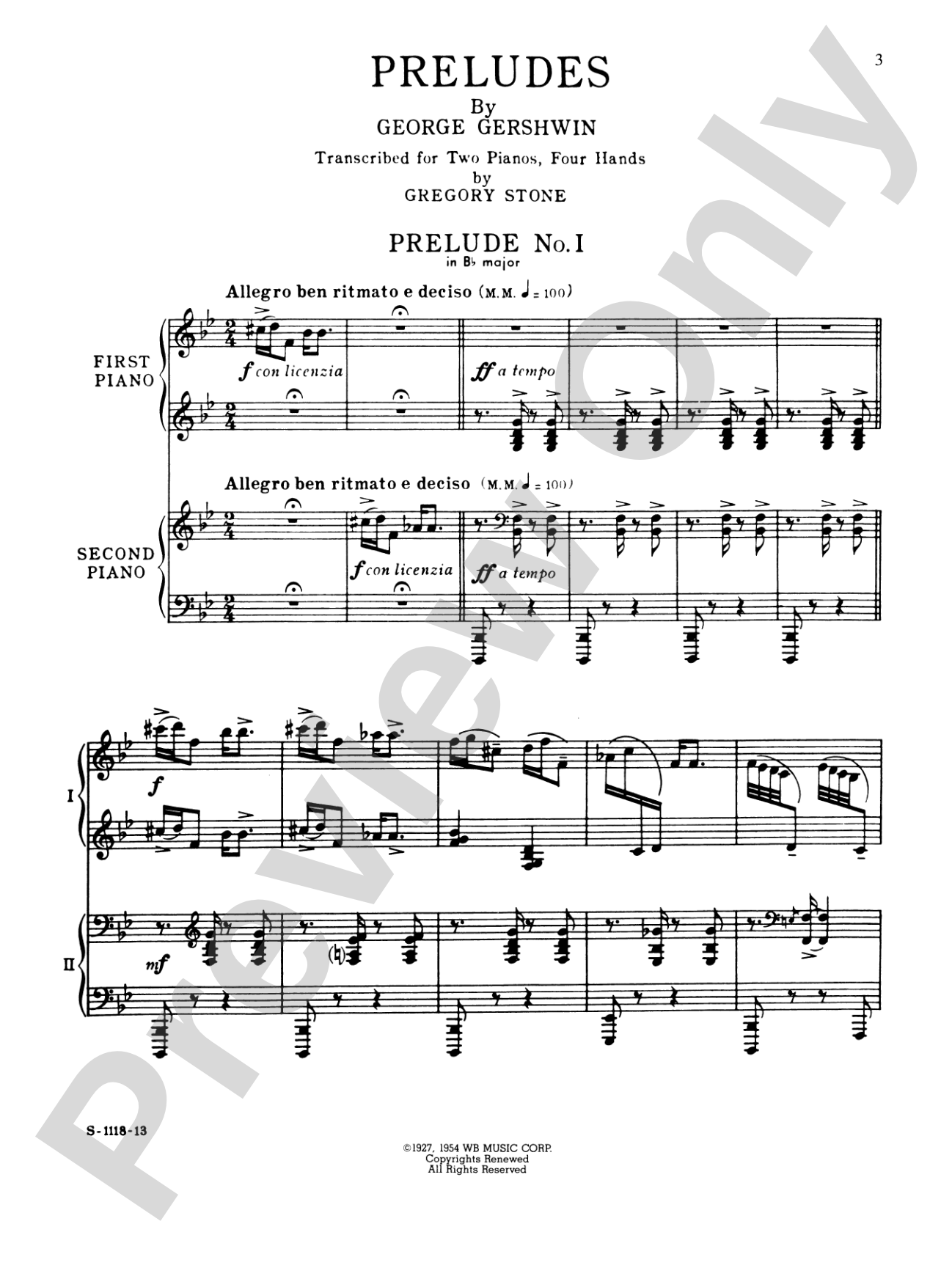
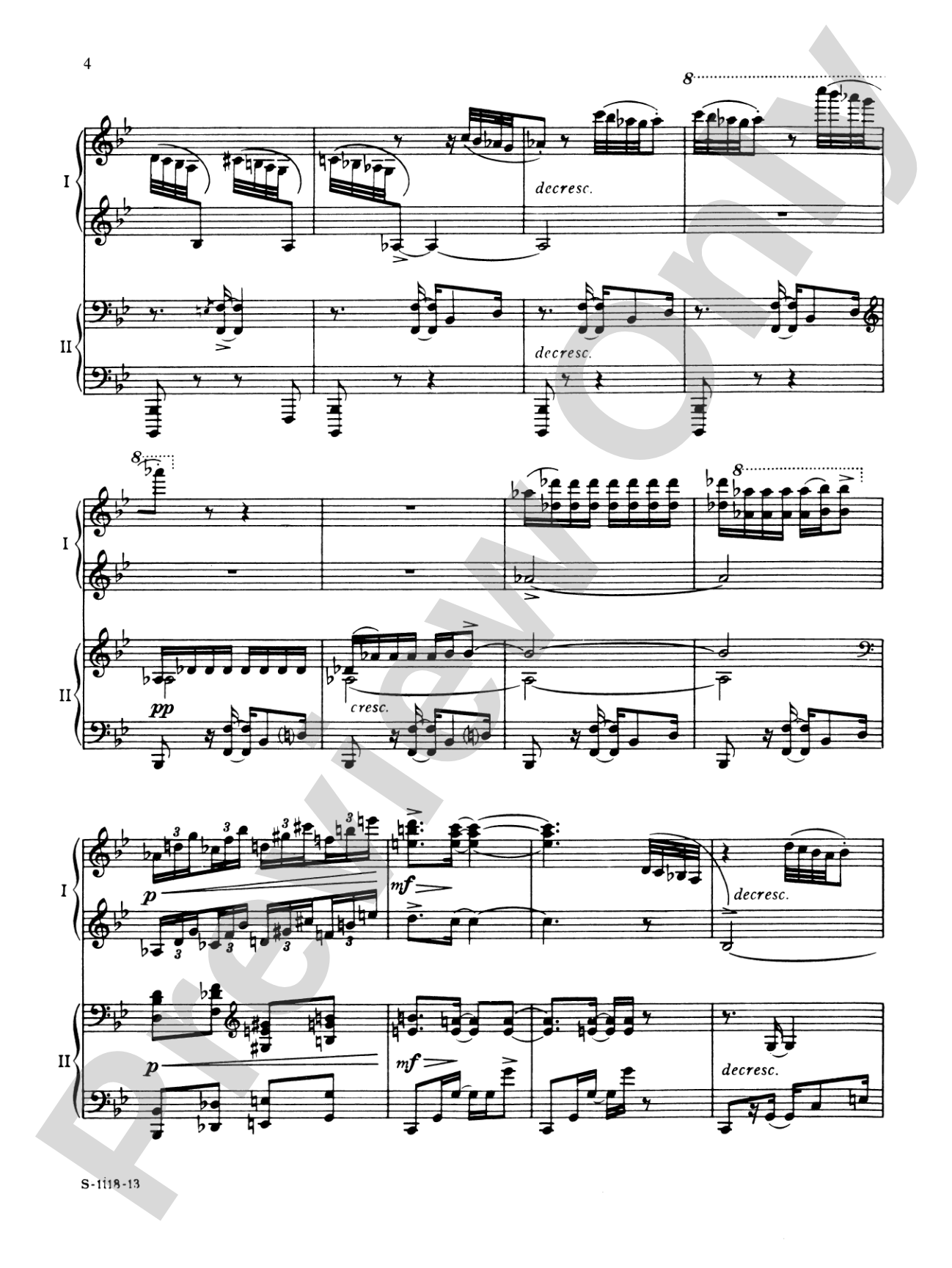
George Gershwin's well-known Preludes for solo piano are arranged for two pianos, four hands in this transcription by Gregory Stone. These preludes show Gershwin's mastery of the melding of jazz idioms with concert forms. Preludes I and III are highly syncopated and filled with bravura playing, while Prelude II is a lyric blues piece with an ostinato accompaniment. Two copies are included. A Federation Festivals 2024-2028 selection.


Preludes - Piano Duo (2 Pianos, 4 Hands): Piano Duets & Four Hands isn't in MakeMusic Cloud just yet...but it could be. Let us know you'd like to see it, and you'll help shape what comes next. In the meantime, start a free trial and dive into thousands of interactive titles your students can play along with today.
Request This Title
Tell us you want it.
Start Your Free Trial
Explore everything that's ready to play right now.
Sample Audio
No sample audio found.
Sample Video
No sample videos found.
Additional Details
Series:
Alfred's Classic Editions
Publisher:
Hal Leonard Publications
Page Count:
32
SKU:
00-PB-0000713
More about this title
About the Composer: George Gershwin
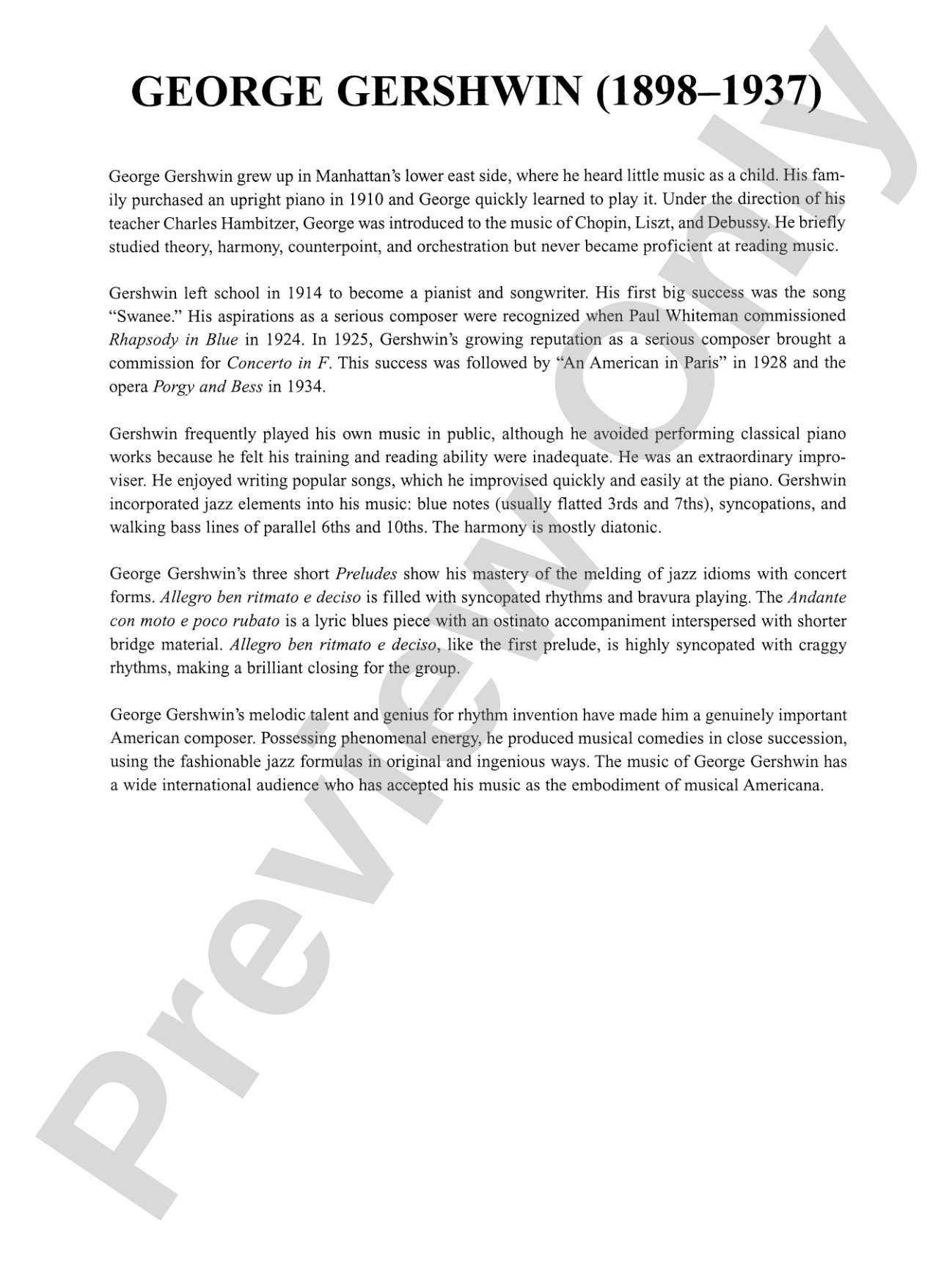
George Gershwin (1898–1937) brought jazz vernacular into the concert hall at a time when the boundary between popular and classical music felt absolute. His Preludes for solo piano, composed in 1926, stand as landmark works that legitimized syncopation and blues idiom within serious pianistic discourse. Gershwin's harmonic language and rhythmic sophistication influenced generations of composers who followed, and his music remains essential listening for any pianist seeking to understand how American musical idioms reshaped 20th-century composition.
Why we love this
Gregory Stone's arrangement transforms three virtuosic solo works into a collaborative showcase that deepens the harmonic and textural possibilities of Gershwin's original vision. Advanced piano duos rarely encounter repertoire that balances equal partnership with authentic concert-level substance, and these preludes deliver both. The syncopation, blues vocabulary, and jazz-inflected harmony remain intact while the two-piano format creates opportunities for shared leadership and dialogue that feel organic to the music itself.
What to expect
The energy shifts dramatically across these three movements. Preludes I and III crackle with syncopation and syncopated bravura, driven by the kind of rhythmic vitality that makes jazz feel alive on a concert stage. Prelude II offers respite through lyric blues melody, softened by an ostinato that rocks gently beneath like a steady heartbeat. Throughout, Gershwin's harmonic language feels both sophisticated and soulful, grounded in American vernacular idioms that still sound modern.
Who it's for
Advanced pianists ready to explore sophisticated jazz-inflected harmony and syncopated rhythmic writing in a duo setting. This arrangement suits festival competitions, advanced studio pairs, and concert programs where directors want to showcase pianists who can handle both technical virtuosity and stylistic nuance. Piano teachers with two advanced students can use this to develop collaborative skills while keeping the musical substance genuinely challenging.
How to get the most out of it
- Balance the syncopation carefully in Preludes I and III; the rhythmic displacement between the two pianos needs clarity without sounding mechanical. Work with a metronome at a steady tempo first, then gradually ease the strictness to allow for natural swing.
- In Prelude II, the ostinato accompaniment should sit back dynamically so the lyric melody can sing freely. The supporting pianist shapes the blues feeling through touch and subtle rubato rather than prominence.
- Coordinate the bravura passages in I and III so that figurework feels like a single musical line distributed across two instruments. Mark breath points and phrase boundaries together in early rehearsals.
- Use the pedal judiciously, especially where the two pianos share the same harmonic space. Coordinate pedal changes between players to maintain clarity in the jazz harmonies without muddiness.
How to use it
Pair these preludes with other Gershwin works (solo piano or orchestral) to create a thematic concert around his approach to jazz and classicism. They work equally well as a complete standalone set or as the centerpiece of a program exploring 20th-century American music. The technical demands and stylistic distinctiveness make them ideal repertoire for advanced festival competitions where judges value both technique and musicianship.
Skills your students will build
- Syncopation and jazz rhythm coordination across two pianos
- Balancing solo and accompanying roles within a duo partnership
- Blues harmony and jazz harmonic language at the keyboard
- Stylistic control between classical virtuosity and jazz vernacular
- Collaborative ensemble playing at an advanced level