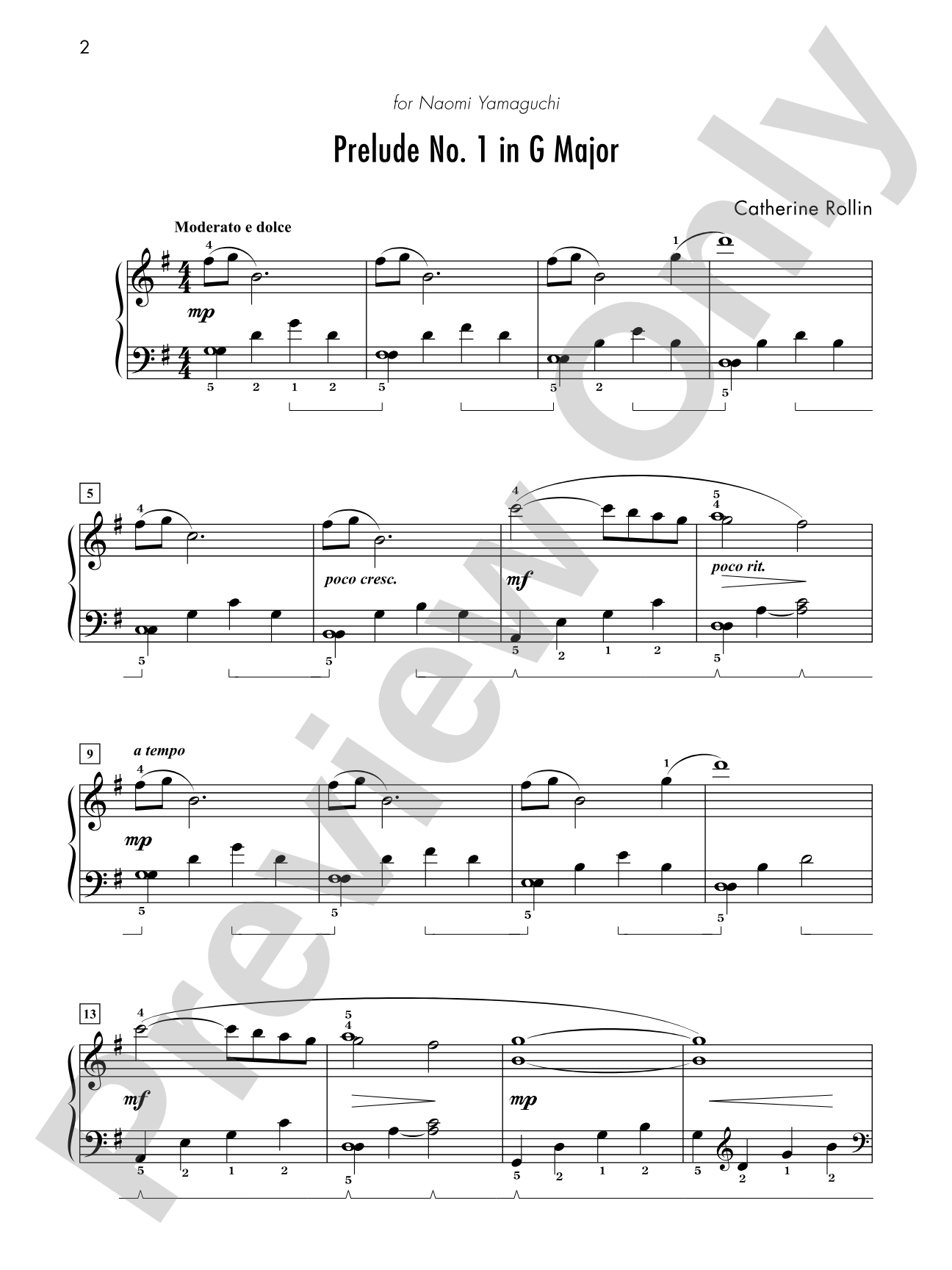
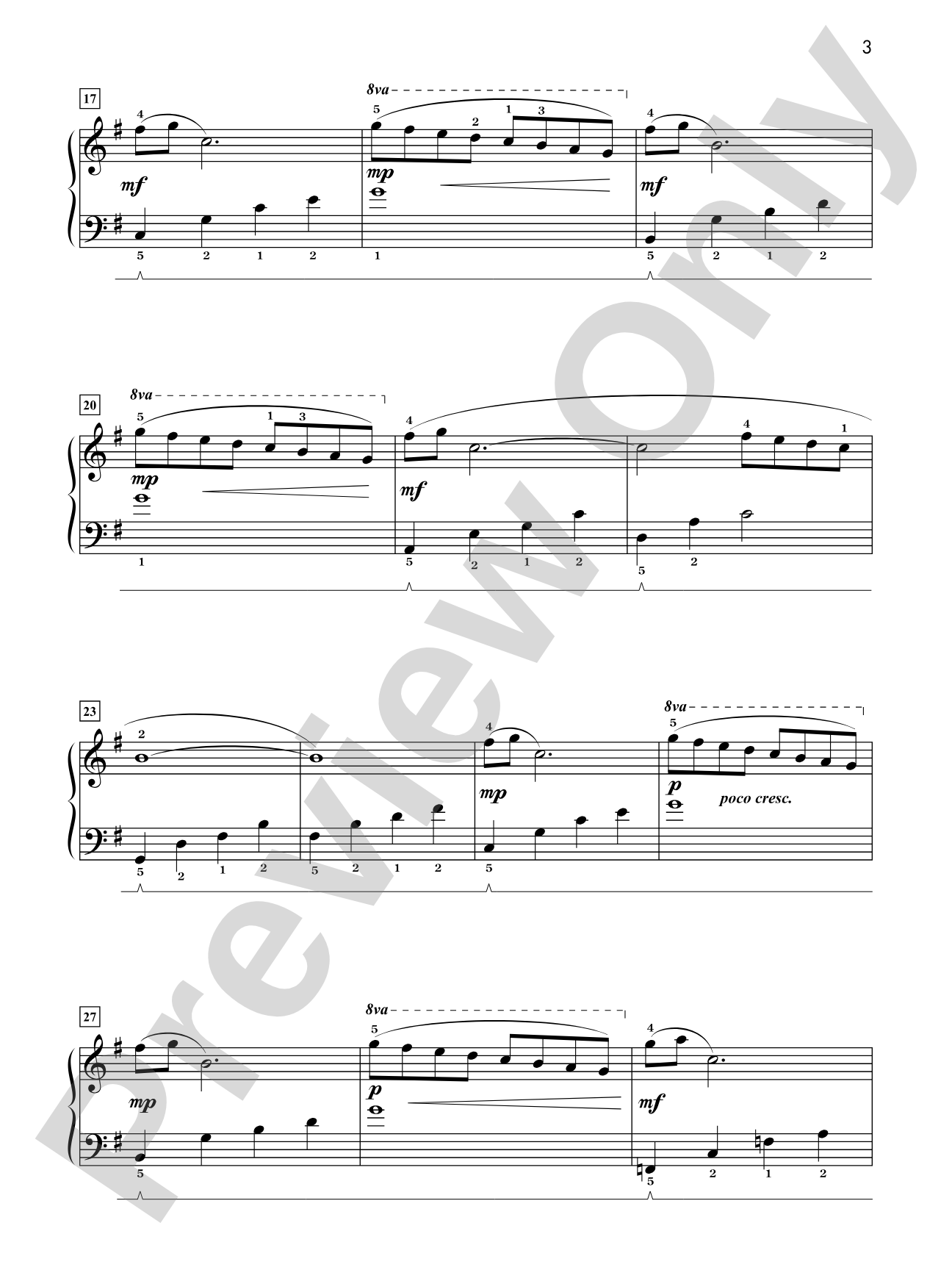
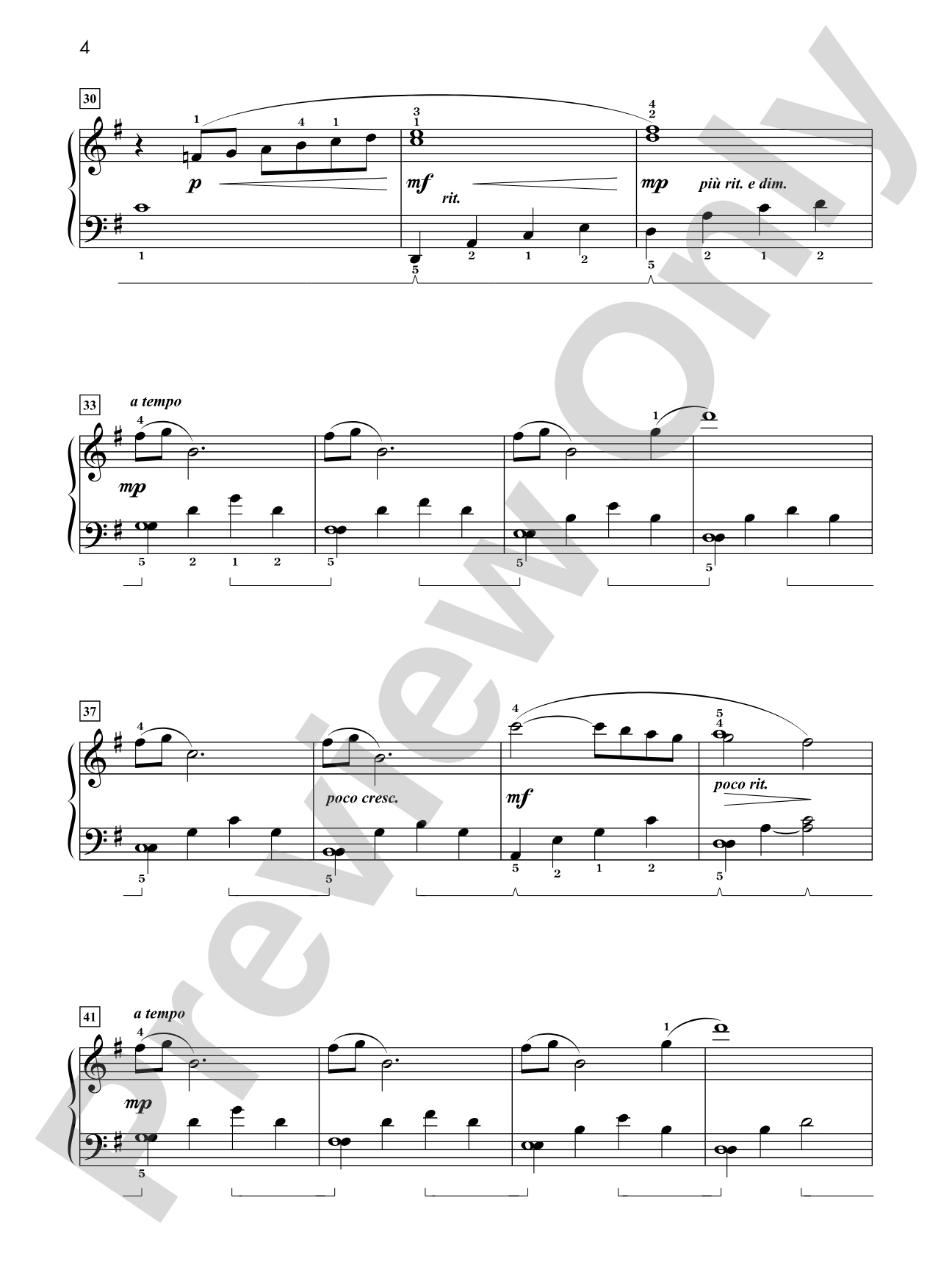
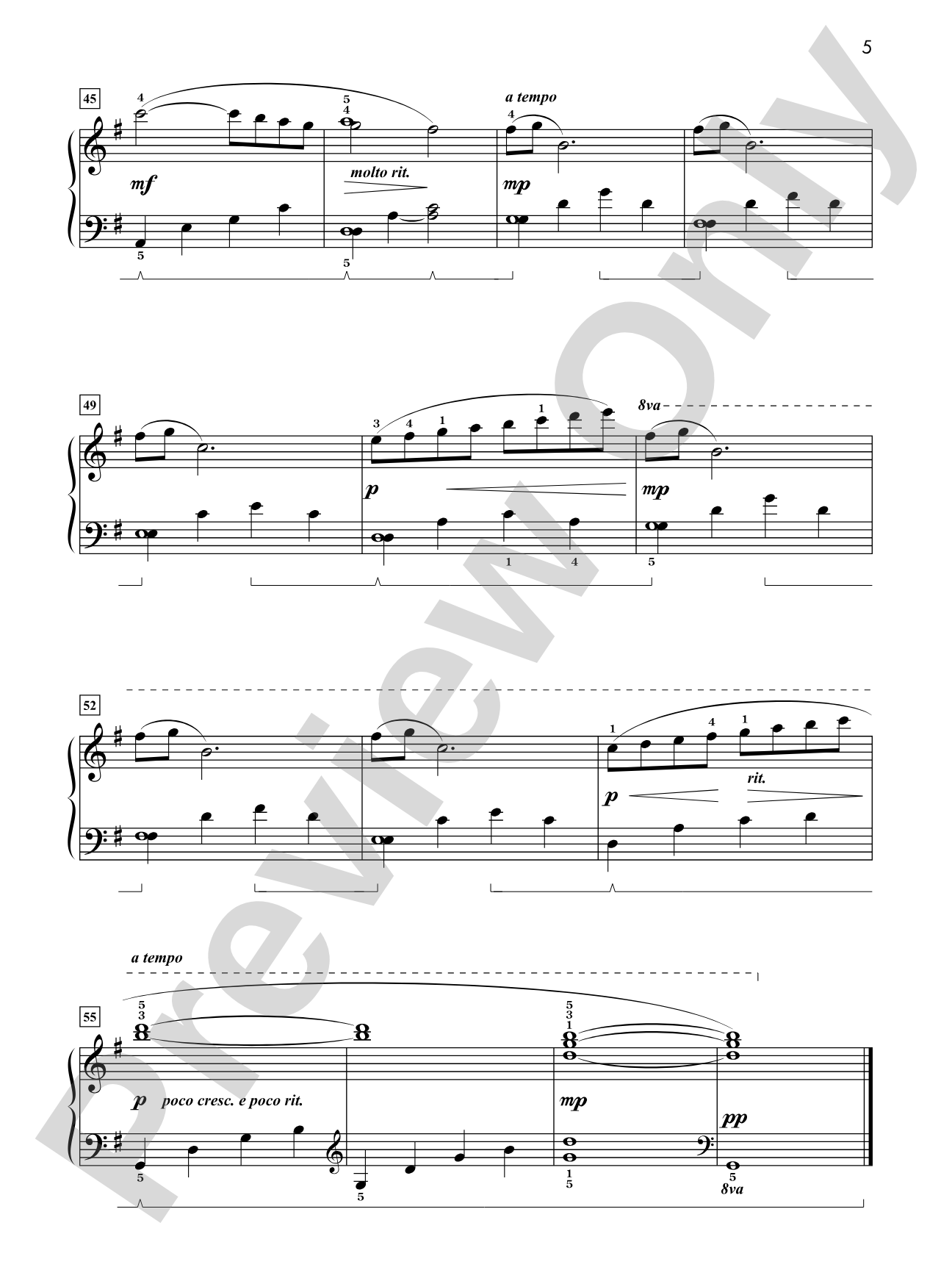
Preludes for Piano, Book 3: 6 Late Intermediate Pieces That Explore and Develop Lyrical Playing Sheet Music Preview

Preludes for Piano, Book 3: 6 Late Intermediate Pieces That Explore and Develop Lyrical Playing: Piano

6 Late Intermediate Pieces That Explore and Develop Lyrical Playing

By Catherine Rollin

Level: Late Intermediate

Item: 00-PB-0000537

Digital Download
$8.99
Description
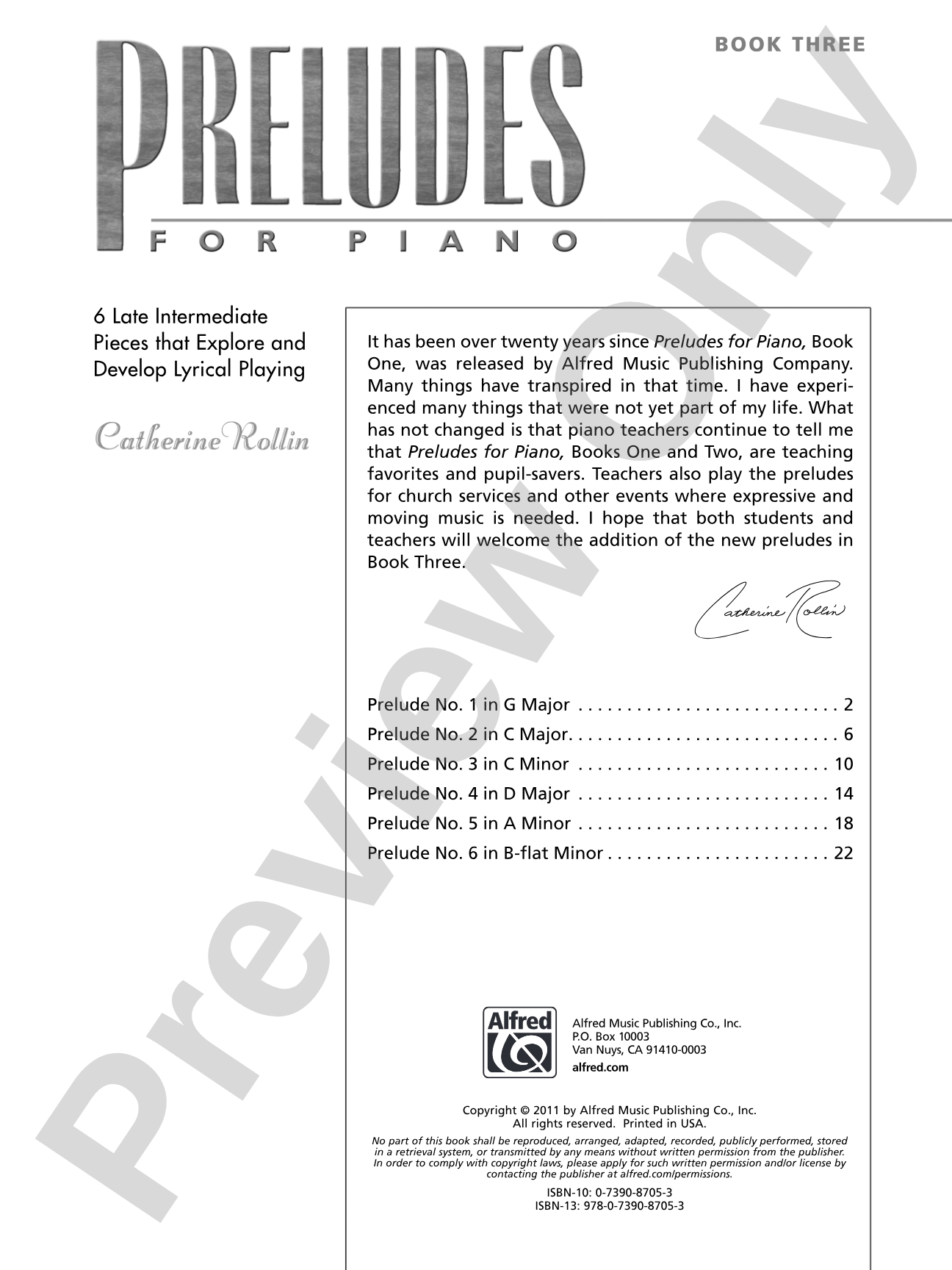
Preludes for Piano, Book Three, contains 6 late-intermediate piano pieces in lyrical style. Each piece is expressive and develops the art of lyrical playing. The use of rubato and other musical indications in the music helps the performer capture the emotional character of each prelude. A Federation Festivals 2020-2024 selection.

Preludes for Piano, Book 3: 6 Late Intermediate Pieces That Explore and Develop Lyrical Playing: Piano isn't in MakeMusic Cloud just yet...but it could be. Let us know you'd like to see it, and you'll help shape what comes next. In the meantime, start a free trial and dive into thousands of interactive titles your students can play along with today.

Sample Audio
No sample audio found.
Sample Video
Additional Details
Series: Preludes for Piano
Publisher: Alfred Music
Page Count: 24
SKU: 00-PB-0000537

More about this title

About the Composer: Catherine Rollin

Catherine Rollin

Catherine Rollin balances a thriving performance career with mentoring accomplished students, having led workshops and masterclasses across North America and Asia. She holds degrees from the University of Michigan and Oakland University School of Performing Arts, and her compositions have earned commissions from MTNA, the Michigan Music Teachers Association, and Clavier Companion magazine.

Rollin's work appears regularly on the National Federation of Music Clubs Festivals lists, and she has served as a national judge for both the MTNA Student Composition Competition and the Lynn Freeman Olson Composition Contest. Her ASCAP-award-winning Museum Masterpieces series and the chamber work Suite Detroit (premiered at the 2018 MTNA national conference) showcase her range as both composer and pianist.

Why we love this

Rollin writes with genuine understanding of what intermediate pianists need to hear in their own playing. These pieces use rubato and expressive markings as teaching tools, not decorations, so students learn that emotional direction comes from the score itself. The Federation Festivals selection means you're choosing music that adjudicators recognize and value.

What to expect

Each prelude unfolds like a song without words, with room to breathe and space to make musical choices. The harmonic language is accessible but never simple, giving performers real emotional content to work with rather than merely pretty surfaces.

Who it's for

Late-intermediate pianists ready to move beyond reading notes into shaping phrases with intention. Teachers preparing students for festival competition or recitals who need pieces that reward expressive maturity without requiring advanced technique.

How to get the most out of it

  • Study the rubato markings as carefully as the notes; Rollin indicates where time should expand and contract, giving you a roadmap for phrasing rather than leaving it to guesswork.
  • Let the dynamic contours shape your touch before you think about technique. These pieces respond to what the music is asking for emotionally, which often solves mechanical tension naturally.
  • Record yourself and listen back at least once before performing. Lyrical playing requires you to hear what you're actually doing, not just what you intend.

How to use it

Slot these into a recital where you want to showcase growth in musicianship rather than virtuosity. A Festival Bulletin selection works equally well as solo concert material or as part of a student showcase focused on contemporary American composers.

Skills your students will build

  • Interpreting and executing rubato effectively
  • Sustaining lyrical phrasing across longer lines
  • Using dynamic shaping to convey emotional intent
  • Reading and responding to expressive musical markings
  • Building confidence in subjective musical choices

You May Also Like