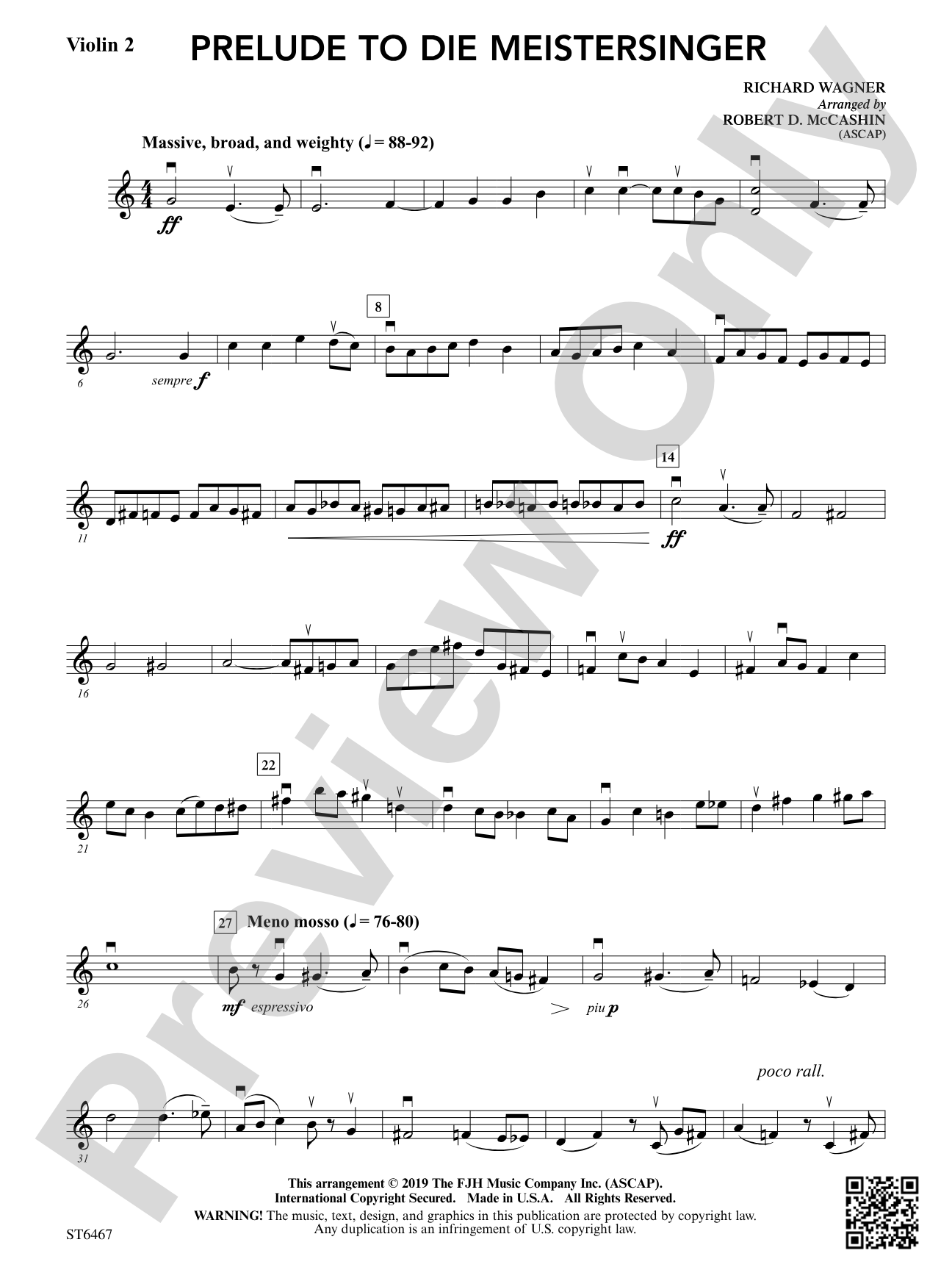
Prelude to Die Miestersinger: Violin 2 Sheet Music Preview

Prelude to Die Miestersinger: Violin 2

By Richard Wagner / arr. Robert D McCashin

Grade: 4

Item: 98-PC-DST6467_VN2

Digital Download
$7.00
Description
This world-renowned prelude contains four primary themes from Wagner's staged work. From the opening powerful declaration to the beautiful lyrical moments within, this is a testament to the brilliance of Wagner. The arrangement thoughtfully captures the depth and power of the original and is a fabulous way to open any program.

Prelude to Die Miestersinger: Violin 2 isn't in MakeMusic Cloud just yet...but it could be. Let us know you'd like to see it, and you'll help shape what comes next. In the meantime, start a free trial and dive into thousands of interactive titles your students can play along with today.

Sample Audio
0:00
0:00
Sample Video
Additional Details
Series: FJH String Orchestra
Publisher: The FJH Music Company, Inc.
SKU: 98-PC-DST6467_VN2

More about this title

About the Composer: Richard Wagner

Richard Wagner (1813-1883) transformed opera and orchestral music through his revolutionary approach to harmony, leitmotif, and dramatic storytelling. His works demand sophisticated orchestration and harmonic language that continue to challenge and inspire musicians more than a century after his death. Wagner's influence extends far beyond the opera house; his compositional techniques have shaped how we understand musical development and orchestral color in the concert repertoire.

Why we love this

This arrangement strikes the rare balance between fidelity to Wagner's original vision and accessibility for developing orchestras. The prelude's four distinct themes give your ensemble multiple characters to explore, from declarative grandeur to genuine lyricism, making it an ideal opening statement that sounds far more advanced than its Grade 4 designation suggests.

What to expect

This prelude captures the pageantry and warmth at the heart of Wagner's opera. The opening announces itself with ceremonial confidence before yielding to passages of genuine beauty and introspection; together they create a sense of occasion that elevates any concert from the moment the first notes sound.

Who it's for

String orchestras at the intermediate level who want to program something with genuine orchestral sophistication and recognizable musical substance. Conductors seeking a masterwork arrangement that opens concerts with impact and introduces students to Wagner's harmonic language without overwhelming technical demands.

How to get the most out of it

  • Shape the opening declaration with deliberate weight in the bass and cello lines; this is Wagner's signature gesture, and it needs space to land before the upper voices enter.
  • Identify where each of the four themes appears and mark them in your parts so players understand the architecture. This helps prevent the piece from becoming a single-colored wash and clarifies sectional balance.
  • Allow the beautiful lyrical moments to breathe without rushing; young orchestras often compensate for sustained passages by creeping forward in tempo, so a clear pulse and patient conducting will serve you well.
  • Balance string sections carefully during theme transitions; Wagner layers themes contrapuntally, and clarity across four primary melodic ideas requires intentional sectional balance work.

How to use it

Open your concert or a formal assembly with this piece; the dramatic declaration and clear thematic material make it an immediate audience engagement tool. It also pairs naturally with lighter or more contemporary repertoire that follows, as it establishes a musical context of sophistication and depth.

Skills your students will build

  • Sustaining tone quality across extended passages without losing pitch center
  • Balancing multiple simultaneous thematic lines (four primary themes)
  • Reading and executing Wagner's harmonic language, including chromatic movement and voice leading
  • Responding to nuanced conducting gestures during transitions between themes
  • Understanding leitmotif structure and how recurring themes create musical coherence

You May Also Like