Prelude to Christmas: Viola Sheet Music Preview

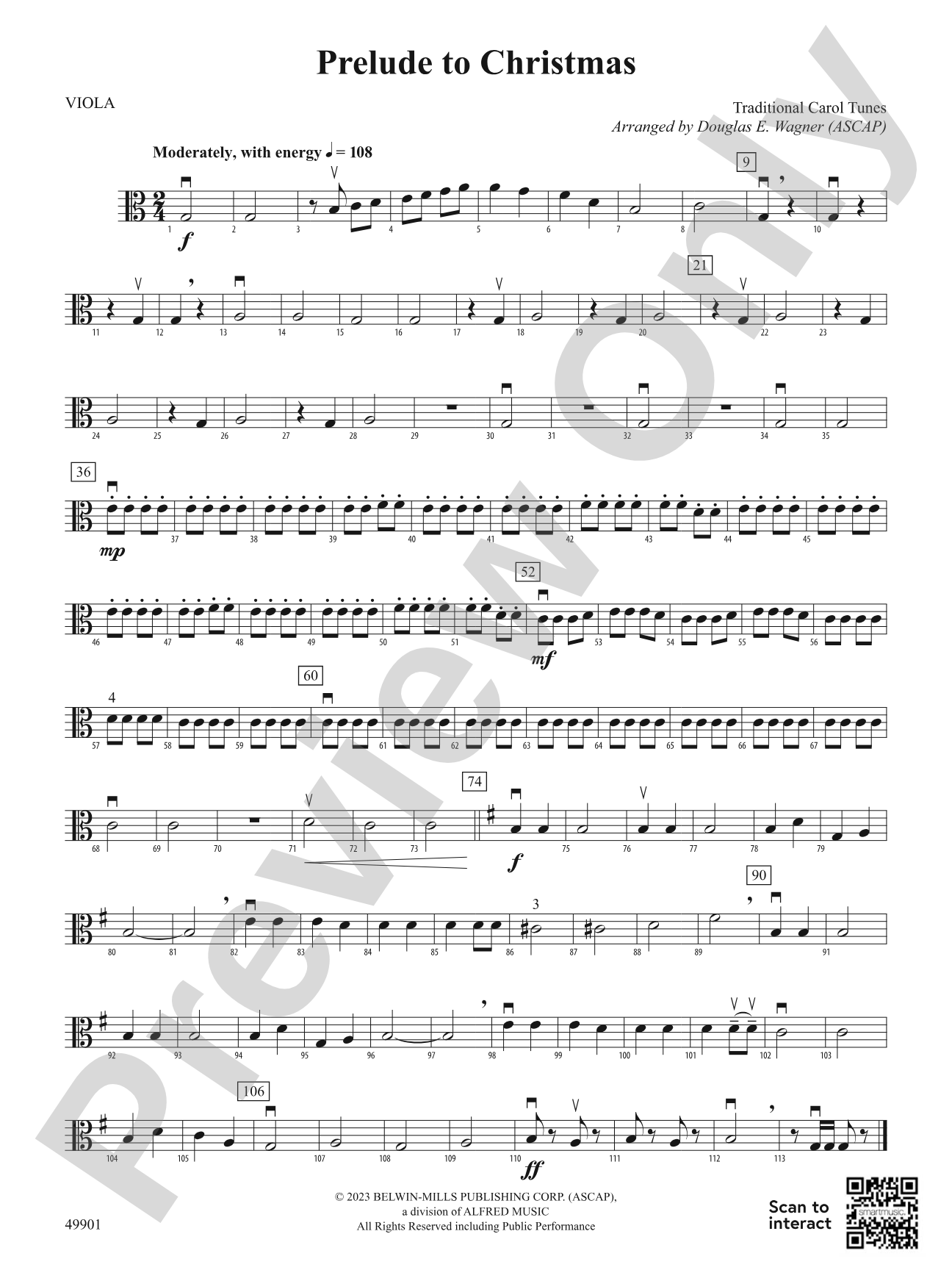
Prelude to Christmas: Viola

Traditional Carol Tunes / arr. Douglas E. Wagner

Grade: 2.5

Item: 00-PC-0018941_VA1

Digital Download
$3.00
Description
This musical celebration of the season is an upbeat, creative mix of five traditional, school-friendly carol tunes that include (in order of appearance): "Ding! Dong! Merrily on High," "Deck the Hall," "Good King Wenceslas," "Here We Come A-Caroling," and "Jingle Bells." Fresh and varied scoring techniques create a seamless two-minute work perfectly suited as a program or set opener that rings out with unbridled joy from beginning to end. (2:05)

Don't just read it, hear it, play along with it, and watch your students grow with it. In MakeMusic Cloud, Prelude to Christmas: Viola comes alive with professional accompaniment, adjustable tempo, and built-in practice tools that turn solo practice into real progress.

Sample Audio
0:00
0:00
Sample Video
Additional Details
Series: Belwin Intermediate String Orchestra
Publisher: Alfred Music
SKU: 00-PC-0018941_VA1

More about this title

About the Arranger: Douglas E. Wagner

Douglas E. Wagner

Douglas E. Wagner is a composer and arranger whose work has shaped school music programs across the United States and internationally. A native of Chicago with degrees from Butler University, he spent three decades as a high school music director before dedicating himself entirely to composition. Since 1973, he has created more than 3,500 works for choirs, bands, orchestras, handbells, organ, piano, and voice. His music has reached audiences through concert halls, television and radio broadcasts, and performances worldwide, with over seventeen million copies in circulation.

Wagner's arrangements and compositions are known for their accessibility and musicality, making them trusted choices in school and church settings. His ability to craft engaging, performable music that speaks to both musicians and audiences has made him a defining voice in music education for generations of directors.

Why we love this

Wagner shapes five beloved carols into a cohesive, energetic opener that feels completely fresh despite using familiar melodies. The varied scoring techniques sustain interest across two minutes without losing the directness and joy that make these carols resonate with audiences. At Grade 2.5, it's accessible enough for most school orchestras while offering enough musical sophistication to feel like a complete artistic statement.

What to expect

Unbridled holiday spirit delivered with musical craft and polish. The five carols flow seamlessly into one another, each receiving distinct orchestral treatment that honors the melody while contributing to an overall sense of momentum and warmth.

Who it's for

String orchestra directors seeking a holiday opening that programs cleanly and plays reliably without excessive rehearsal demand. Middle and high school orchestras at Grade 2.5 level will find it approachable while still rewarding the effort to shape it musically.

How to get the most out of it

  • Emphasize the rhythmic precision in the transitions between carols; Wagner's arrangement depends on clean ensemble attacks to maintain the energy and forward motion.
  • Balance the fuller sections with transparency when melody moves to divisi lines, ensuring each carol's tune remains the focal point rather than buried in texture.
  • Let the opening carol set a tempo that feels celebratory without rushing; the subsequent pieces can shift slightly to accommodate each tune's natural character.
  • Use the conductor score to map the scoring changes early; knowing exactly which sections play which carol will sharpen rehearsal efficiency and musical clarity.

How to use it

Program this as your concert or set opener to immediately establish festive energy and audience goodwill. Its two-minute duration makes it ideal for holiday concerts where you want a strong opening statement without taking up substantial rehearsal time or stage minutes.

Skills your students will build

  • Transitions between musical sections and key areas
  • Ensemble balance and voice independence within scored textures
  • Flexible tempo adjustment while maintaining stylistic consistency
  • Recognition of orchestration techniques and their expressive purposes

You May Also Like