
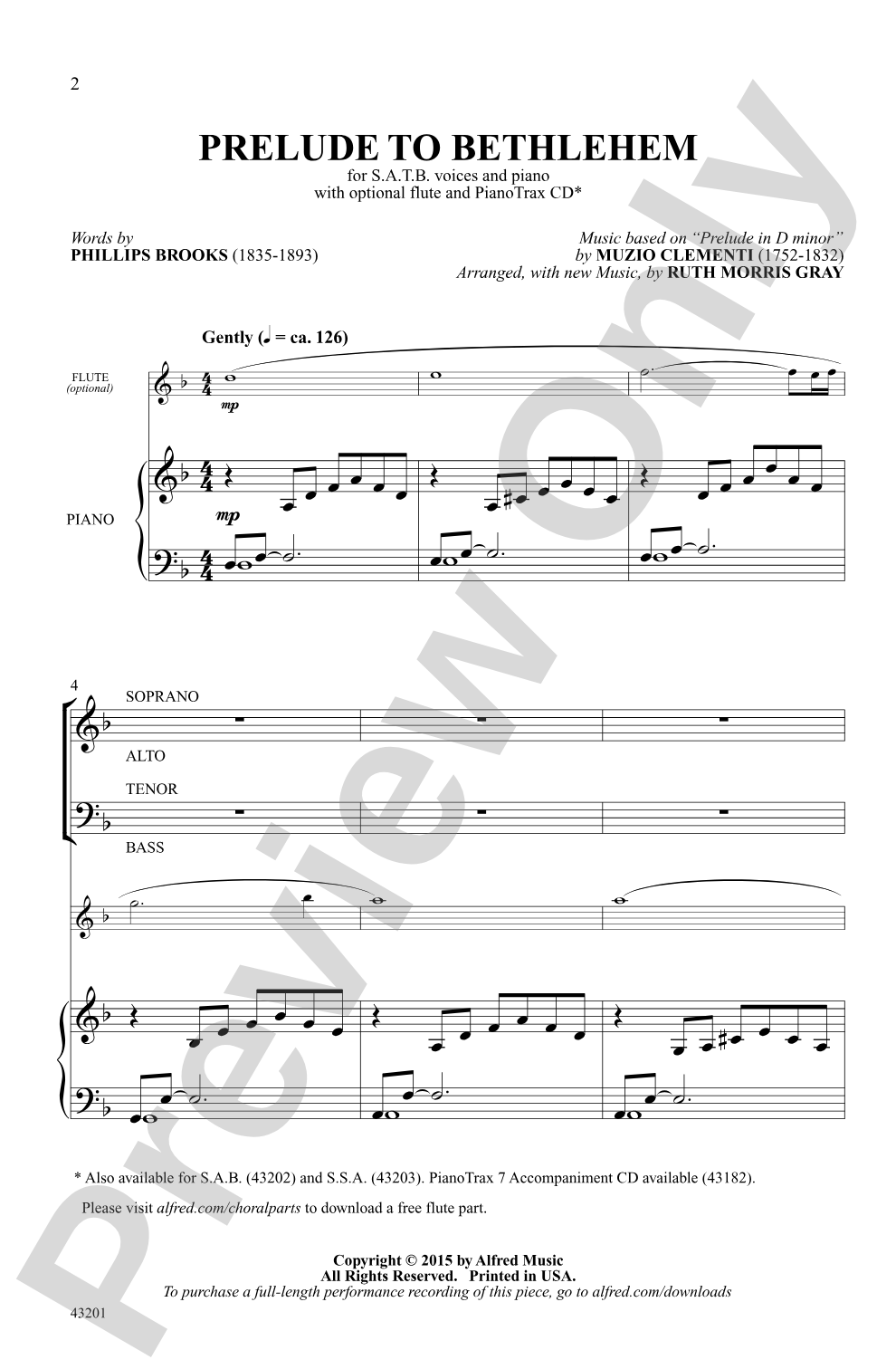
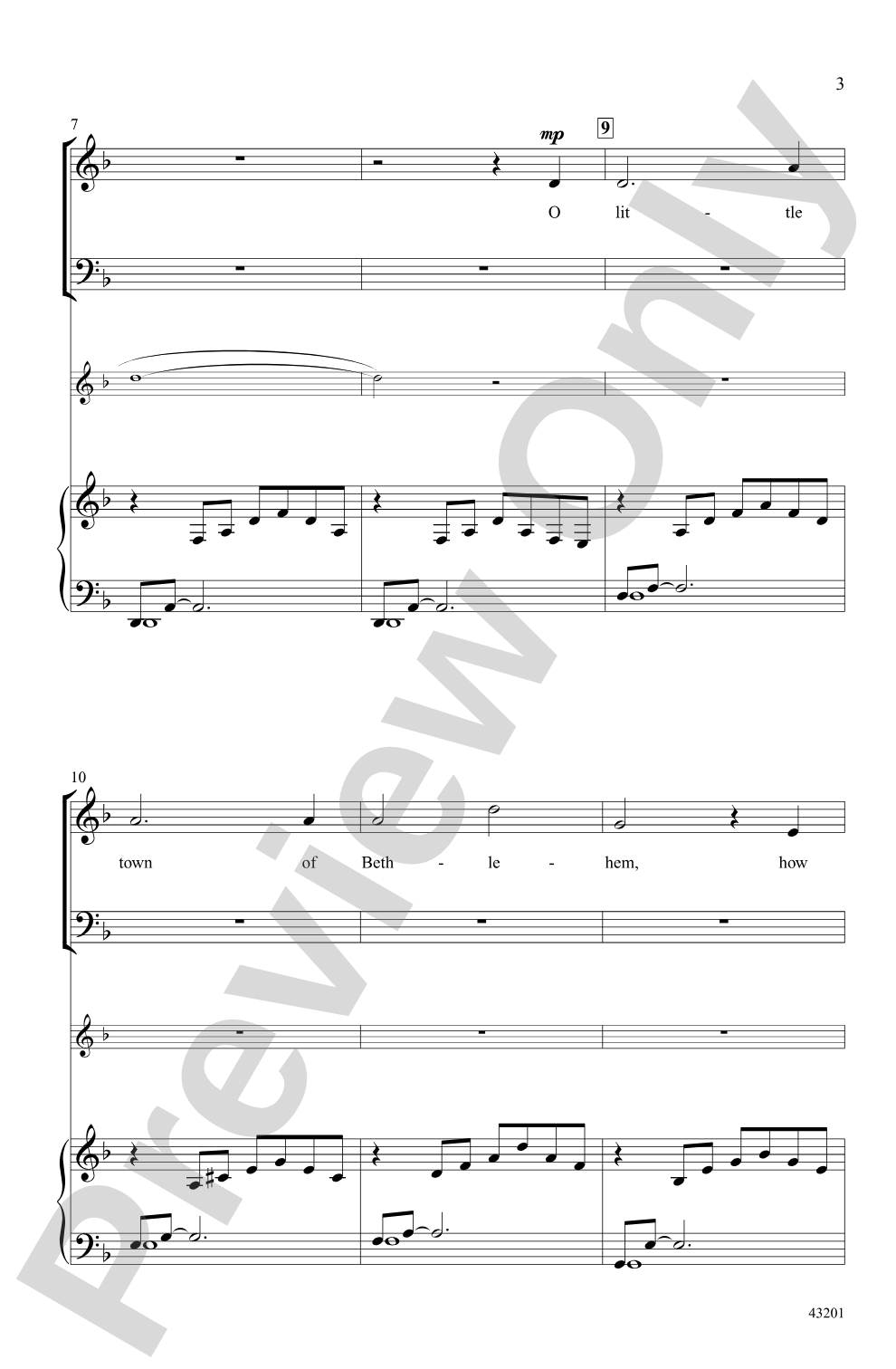
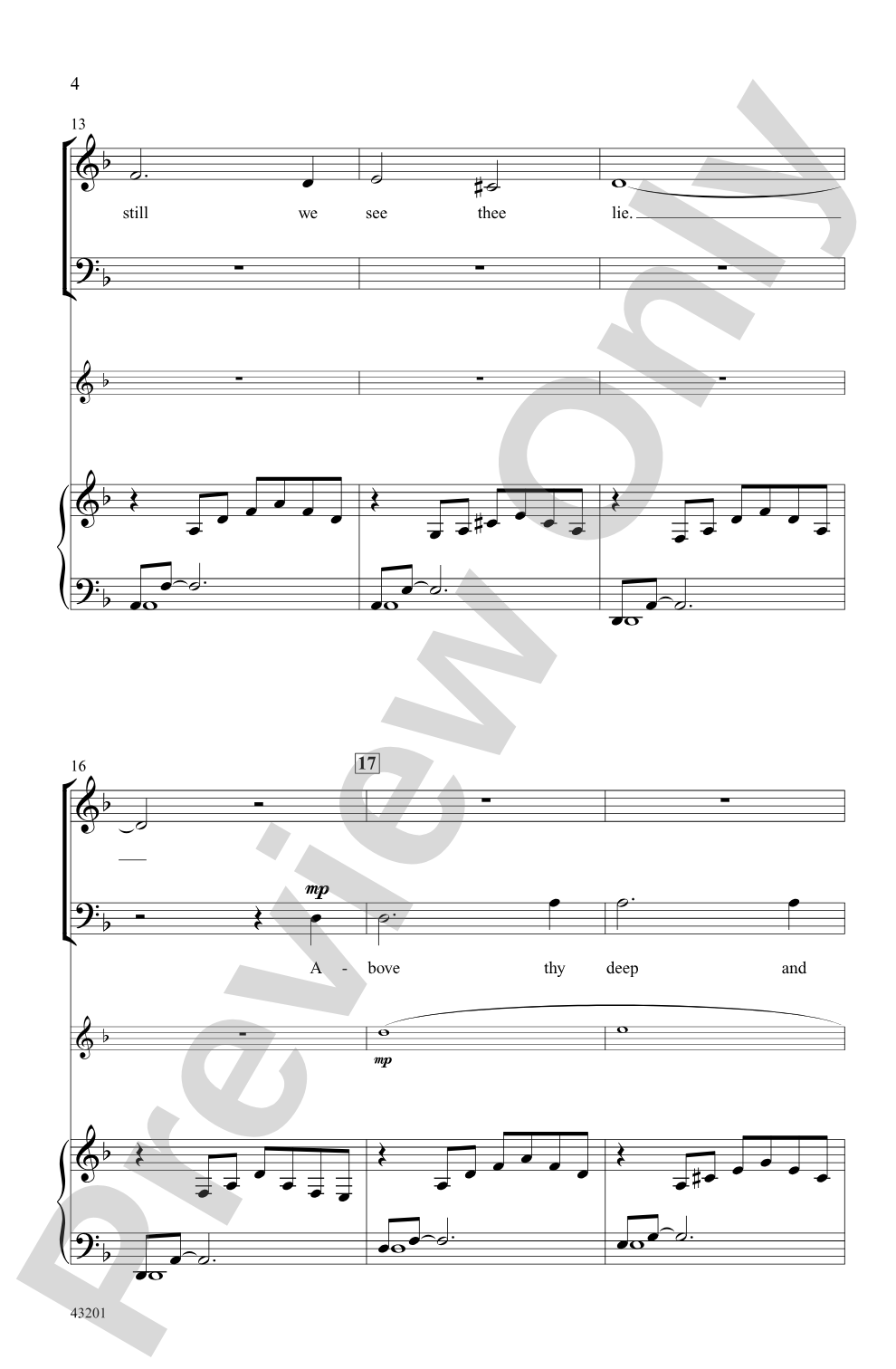

Prelude to Bethlehem: SATB Choral Octavo
Words by Phillips Brooks, music based on "Prelude in D Minor" by Muzio Clementi / arr., with new music, by Ruth Morris Gray
Item: 00-PO-0003201
$1.90
Minimum order quantity: 20 copies
Pickup currently not available
Related Items
Prelude to Bethlehem: PianoTrax Digital Download |
$9.99
|
View | |
Prelude to Bethlehem: SAB Choral Octavo |
$1.90
|
View | |
Prelude to Bethlehem: SSA Choral Octavo |
$1.90
|
View | |
Prelude to Bethlehem: SATB Choral Octavo |
$1.90
|
View | |
Prelude to Bethlehem: SAB Choral Octavo |
$1.90
|
View | |
Prelude to Bethlehem: SSA Choral Octavo |
$1.90
|
View |
Description
Pianists will instantly recognize this Clementi prelude, and now choral singers can share the beauty of his music during the Christmas season. Ingenious composer Ruth Morris Gray adds her own melody, choral parts, and flute obbligato to Clementi's masterpiece. The "O Little Town of Bethlehem" text makes this appropriate for the stage or the sanctuary.


Prelude to Bethlehem: SATB Choral Octavo isn't in MakeMusic Cloud just yet...but it could be. Let us know you'd like to see it, and you'll help shape what comes next. In the meantime, start a free trial and dive into thousands of interactive titles your students can play along with today.
Request This Title
Tell us you want it.
Start Your Free Trial
Explore everything that's ready to play right now.
Sample Audio
1
Audio File
--:--
0:00
0:00
Sample Video
No sample videos found.
Additional Details
Series:
Alfred Choral Designs
Publisher:
Alfred Music
Page Count:
12
SKU:
00-PO-0003201
Instrumentation:
Flute Obbligato
More about this title
About the Composer: Muzio Clementi
Muzio Clementi (1752-1832) was an Italian composer and pianist whose instrumental works bridged the Classical and early Romantic eras. His sonatas, preludes, and etudes remain cornerstones of piano pedagogy and concert repertoire, prized for their technical brilliance and musical substance. Clementi's influence on keyboard writing shaped the development of the piano as a serious concert instrument.
In the classroom and rehearsal hall, Clementi's music teaches students about harmonic architecture and elegant phrase construction. His preludes particularly reward singers and instrumentalists with clear melodic lines and logical chord progressions that reveal themselves through performance.
Why we love this
Ruth Morris Gray's arrangement transforms a beloved keyboard work into a four-part choral experience without diminishing Clementi's original architecture. The addition of the flute obbligato and the "O Little Town of Bethlehem" text creates a sophisticated holiday piece that works equally well in concert and worship settings, offering choirs something beyond the standard seasonal repertoire.
What to expect
The piece unfolds with the clarity and grace of Clementi's keyboard writing, now distributed across four voices and enriched by a singing flute line. There's an elegance here that avoids sentimentality; the harmonies feel inevitable and the text finds its home in music that breathes with Classical restraint and Romantic warmth.
Who it's for
This arrangement serves choirs looking for Christmas music with substance and sophistication. It works for intermediate-level ensembles that can manage four-part writing with an independent instrumental part, and it particularly suits programs that value classical foundation alongside seasonal content.
How to get the most out of it
- Balance the flute obbligato so it floats above the choir rather than competing for attention; this countermelody is Gray's gift to the texture and should remain transparent.
- Shape the choral melody with the same care you'd give a piano soloist—Clementi's original prelude is pianistic and lyrical, and that character should shine through the voices.
- Pay attention to the harmonic rhythm beneath the text; the movement of the underlying chords reflects Clementi's original voice leading and anchors the singers' intonation.
- Consider the flute player's role as collaborative rather than decorative; a rehearsal or two with the flutist separate from the choir ensures clean entrances and musical dialogue.
How to use it
This works beautifully as a bridge between secular and sacred holiday programming, or as the centerpiece of a concert that pairs Classical instrumental works with choral arrangements of the same era. Its 12-page length and modest instrumentation make it practical for mid-winter concerts when rehearsal time is precious.
Skills your students will build
- Reading SATB voicing with an independent instrumental line
- Balancing ensemble texture when a melody sits above sustained choral harmony
- Understanding how arrangers adapt keyboard works for singers
- Singing Clementi's harmonic language, which teaches voice leading and chord function
- Collaborative listening with a flute obbligato