Prelude to Act III of Lohengrin: Viola Sheet Music Preview

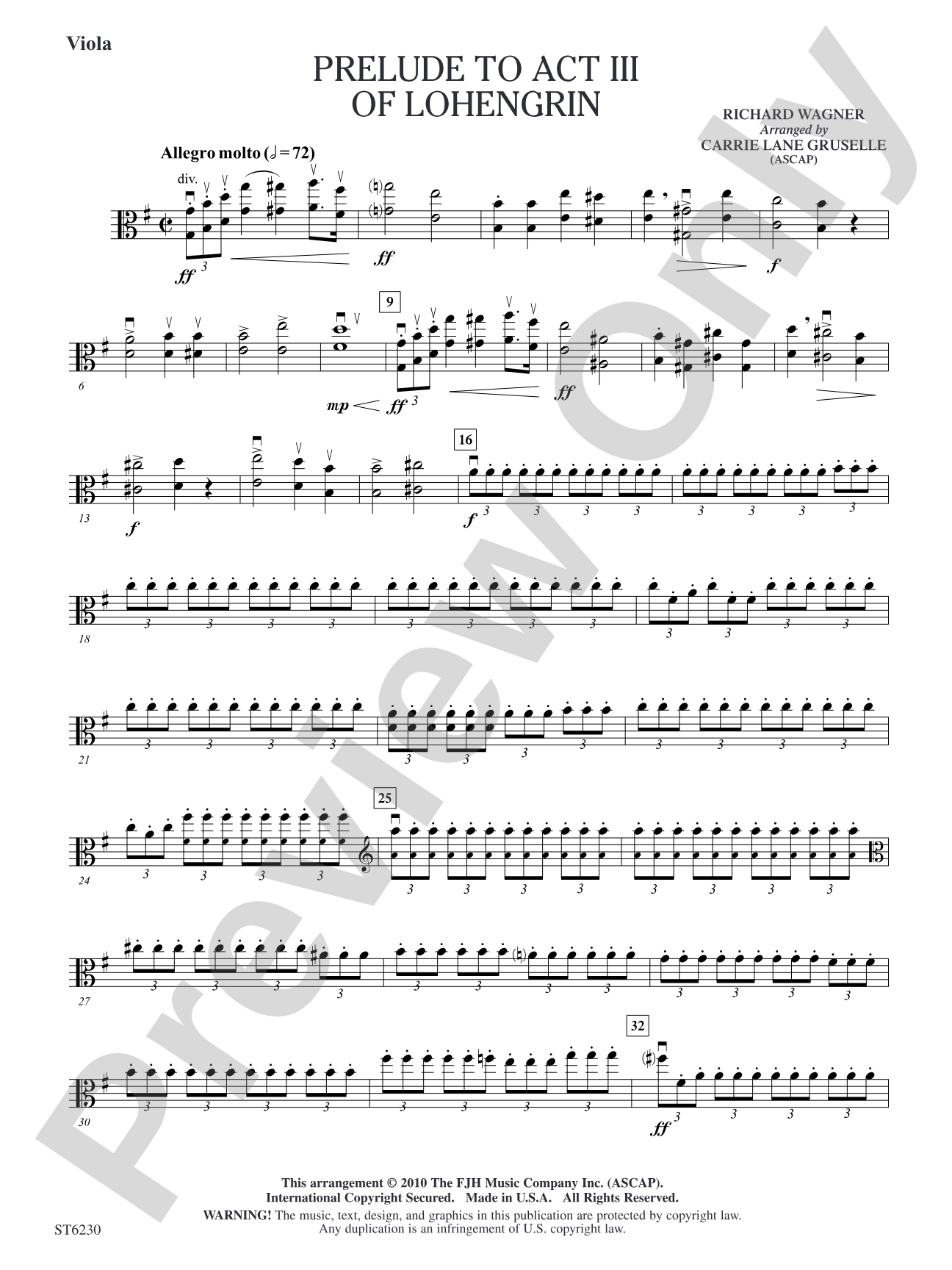
Prelude to Act III of Lohengrin: Viola

Arranged by Carrie Lane Gruselle

Grade: 5

Item: 98-PC-DST6230_VA1

Digital Download
$7.00
Description
Open your concert in dramatic fashion with this spectacular arrangement of Wagner's Prelude to Act III of Lohengrin! Unbridled joy flows from each section as the powerful music unfolds in jubilant and triumphant statements. Showcase the virtuosity of your ensemble as your audience sits back and enjoys one of the most recognized melodies in all of classical music!

Prelude to Act III of Lohengrin: Viola isn't in MakeMusic Cloud just yet...but it could be. Let us know you'd like to see it, and you'll help shape what comes next. In the meantime, start a free trial and dive into thousands of interactive titles your students can play along with today.

Sample Audio
0:00
0:00
Sample Video
Additional Details
Series: FJH String Orchestra
Publisher: The FJH Music Company, Inc.
SKU: 98-PC-DST6230_VA1

More about this title

About the Composer: Carrie Lane Gruselle

Carrie Lane Gruselle

Carrie Lane Gruselle earned her Bachelor of Music Education from the University of Wisconsin–Eau Claire and her Master of Music Education from the University of Wisconsin–Stevens Point, where she focused on Suzuki pedagogy. She teaches strings at the elementary and middle school levels in the Appleton Area School District and serves as cello instructor for the Lawrence University Arts Academy.

Gruselle's work reflects her deep understanding of how young musicians develop musicianship through repertoire. Her arrangements balance accessibility with musical substance, giving students the chance to perform music of genuine artistic weight while building the technical and interpretive skills they need.

Why we love this

This arrangement captures the grandeur of Wagner's original without sacrificing the clarity and playability your ensemble needs at this level. Gruselle's voice leading keeps every section engaged and essential, and the familiar melody ensures your audience connects immediately. It's the kind of opener that reminds people why they came to the concert.

What to expect

Joy and nobility unfold in waves. The opening suggests celebration held at a grand scale; as the arrangement progresses, triumphant statements build in intensity and breadth. The familiar melody carries emotional weight without sentimentality, inviting your audience into a moment of shared musical confidence.

Who it's for

String orchestra directors looking for a showpiece that sits confidently at Grade 5, where students have the technical foundation to handle double stops, shifting, and rhythmic precision without getting lost. This works equally well for a festival performance or a concert centerpiece when you want to demonstrate your ensemble's artistry and command of a masterwork.

How to get the most out of it

  • Shape the opening phrases with forward momentum; the jubilant character depends on energy that builds rather than sits. Avoid letting the strings flatten the dynamic trajectory.
  • Balance the melodic voices across your violin sections so the primary theme sings above the harmonic foundation. Test your seating arrangement during rehearsal to ensure clarity.
  • Use the triumphant statements in the middle section as opportunities to show your ensemble's ability to project with control. Power without precision becomes noise.
  • Bring out the dialogue between upper and lower strings in the latter half of the piece; it creates textural variety and keeps listeners engaged through the final statements.

How to use it

Open a concert with this arrangement to set an uplifting, confident tone before programming contrasting works. Its recognition and virtuosic quality make it ideal for festival performances or competitions where you want to showcase both your students' ability to execute a masterwork and their musicality.

Skills your students will build

  • Navigating shifting and double stops in the upper strings
  • Maintaining rhythmic precision in syncopated accompaniment figures
  • Balance and blend across violin, viola, and cello sections
  • Phrasing and dynamic shape within a large-scale melodic statement
  • Reading conductor cues in a piece that requires ensemble cohesion and interpretive unity

You May Also Like