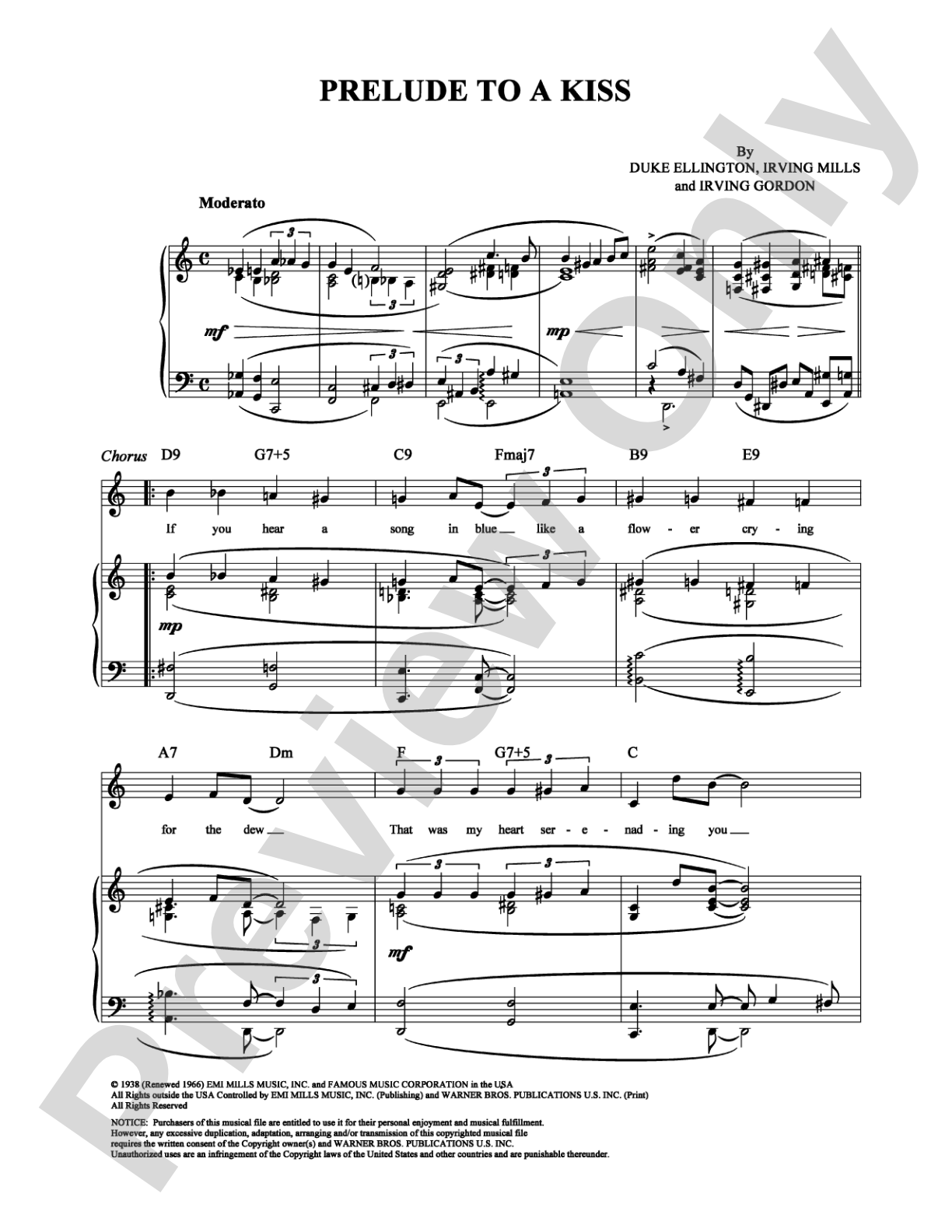
Prelude to a Kiss: Piano/Vocal/Chords Digital Sheet Music

Prelude to a Kiss: Piano/Vocal/Chords Digital Sheet Music

Duke Ellington, Irving Mills, Irving Gordon

Item: 00-PS-0000949

Digital Download
$3.99
Description

Prelude to a Kiss: Piano/Vocal/Chords Digital Sheet Music isn't in MakeMusic Cloud just yet...but it could be. Let us know you'd like to see it, and you'll help shape what comes next. In the meantime, start a free trial and dive into thousands of interactive titles your students can play along with today.

Sample Audio
No sample audio found.
Sample Video
Additional Details
SKU: 00-PS-0000949

More about this title

About the Artist: Duke Ellington

Duke Ellington (1899-1974) composed over a thousand works that fundamentally shaped American music. His command of harmony, orchestration, and formal innovation established him as a towering figure in jazz and popular music, equally at home writing extended concert works and intimate standards. Ellington's compositional voice remained distinctive across six decades of creation, blending blues sensibility with sophisticated European harmonic language.

Why we love this

Ellington's standards reward careful study of jazz harmony and idiomatic voice leading. This piece gives singers and pianists a window into how a master composer balances memorable melody with surprising harmonic turns, making it an excellent teaching tool for understanding the difference between pop songwriting and jazz composition. The piano part demands both accompaniment sensitivity and solo capability, making it valuable for pianists developing jazz fluency.

What to expect

The piece unfolds with urbane sophistication and tender restraint, mixing wistful melody with lush harmonic color. It has the character of late evening conversation, intimate and introspective, never forcing emotion but earning it through compositional craftsmanship.

Who it's for

Singers preparing jazz repertoire and pianists developing jazz accompaniment skills will find this digital resource accessible and instructive. Intermediate to advanced performers benefit most, as the harmonic sophistication and interpretive flexibility demand familiarity with jazz language.

How to get the most out of it

  • Shape the piano introduction with subtle dynamic shaping rather than strict tempo; Ellington's pieces breathe with compositional intent beneath their surface ease.
  • Let the voice and piano dialogue rather than simply accompany. The chords suggest harmonic color; find moments where the piano comps minimally and creates space for the vocalist's phrasing.
  • Approach the chord symbols as suggestions for harmonic thinking, not prescriptions. Reharmonization and substitution are inherent to jazz performance of standards.
  • Support rubato in the vocal line through flexible accompaniment. This piece is sophisticated enough to reward singers who honor its balladic quality.

How to use it

Feature this in a jazz or American songbook recital alongside other standards, where it demonstrates Ellington's unique voice within the Great American Songbook. It pairs naturally with other Ellington compositions or with standards from his contemporaries, offering singers a chance to explore interpretive depth over more familiar pop arrangements.

Skills your students will build

  • reading jazz chord symbols and understanding harmonic function in popular music
  • coordinating vocal phrasing with piano accompaniment in a non-metered or flexibly metered context
  • interpreting jazz standards with stylistic authenticity
  • understanding voice leading and reharmonization in jazz idiom
  • balancing solemnity with accessibility in balladic performance

You May Also Like