
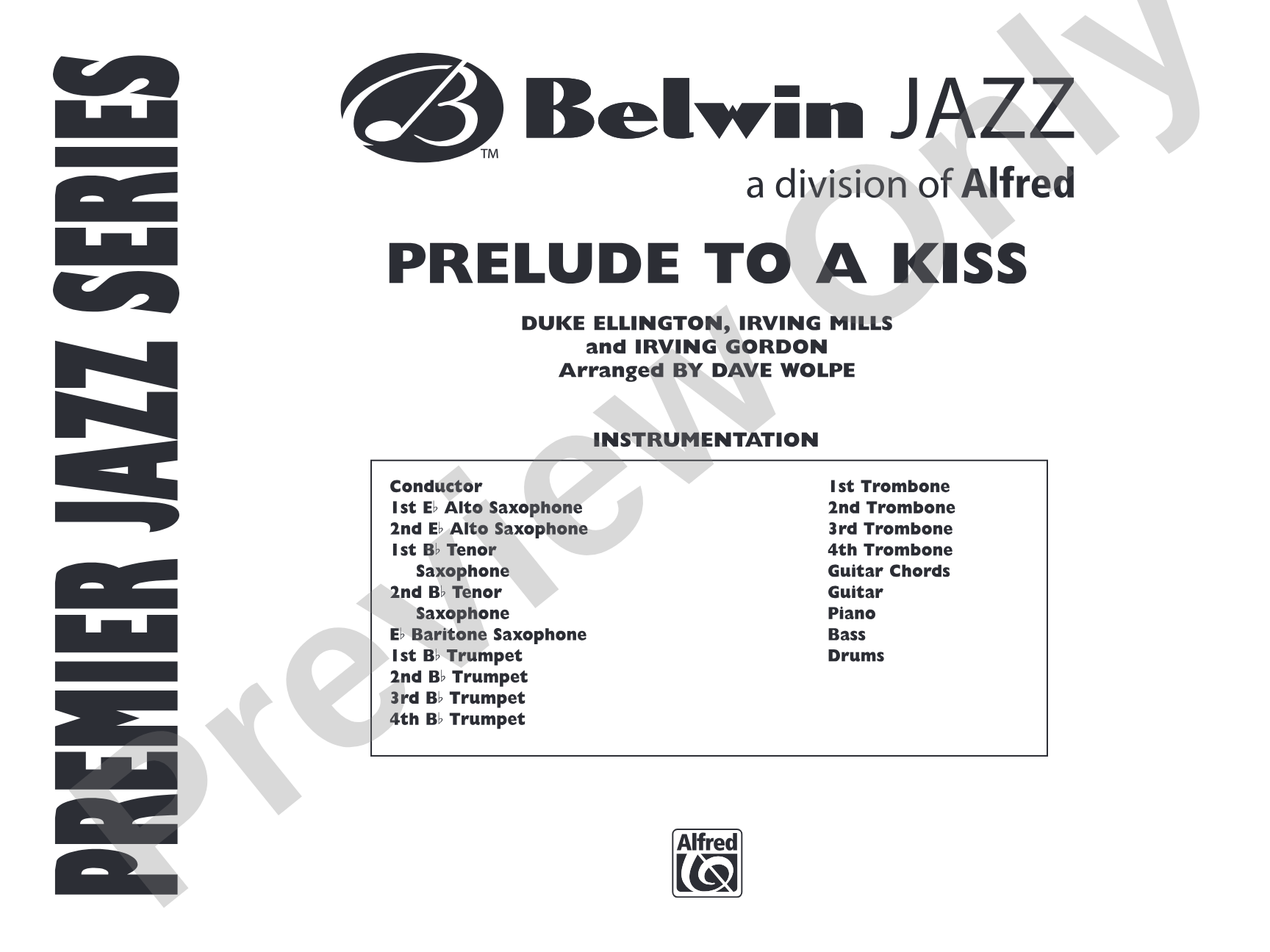
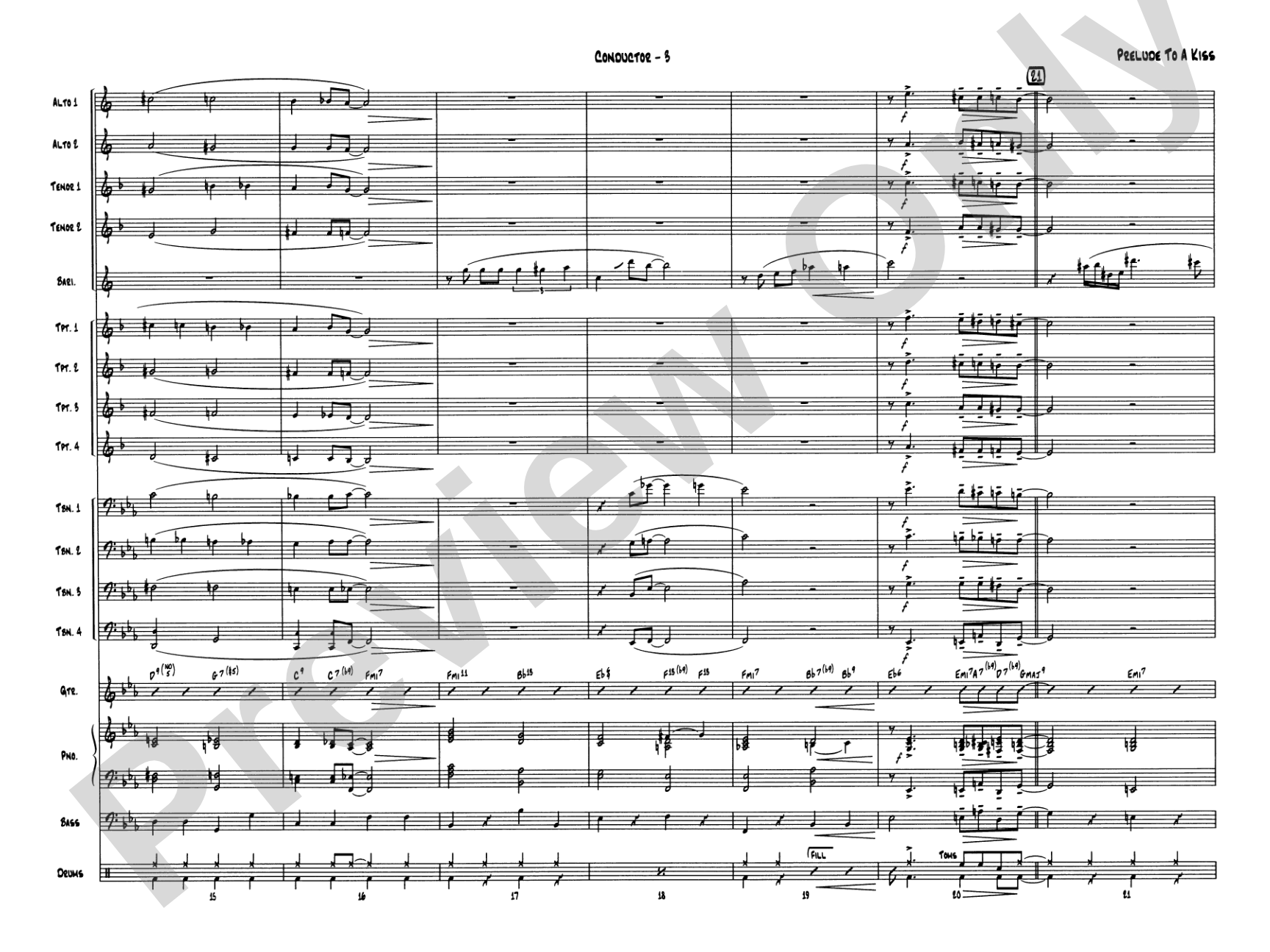
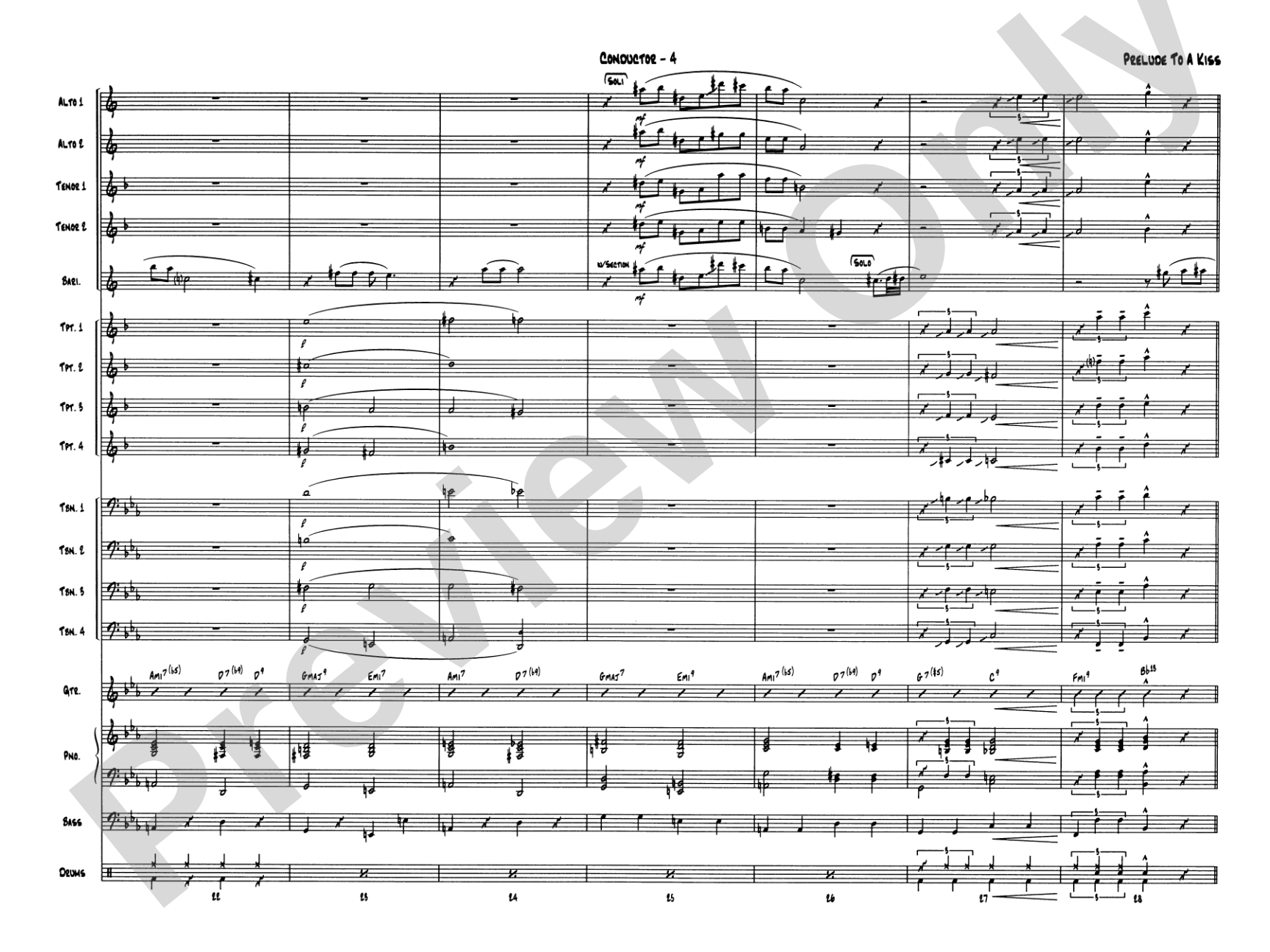
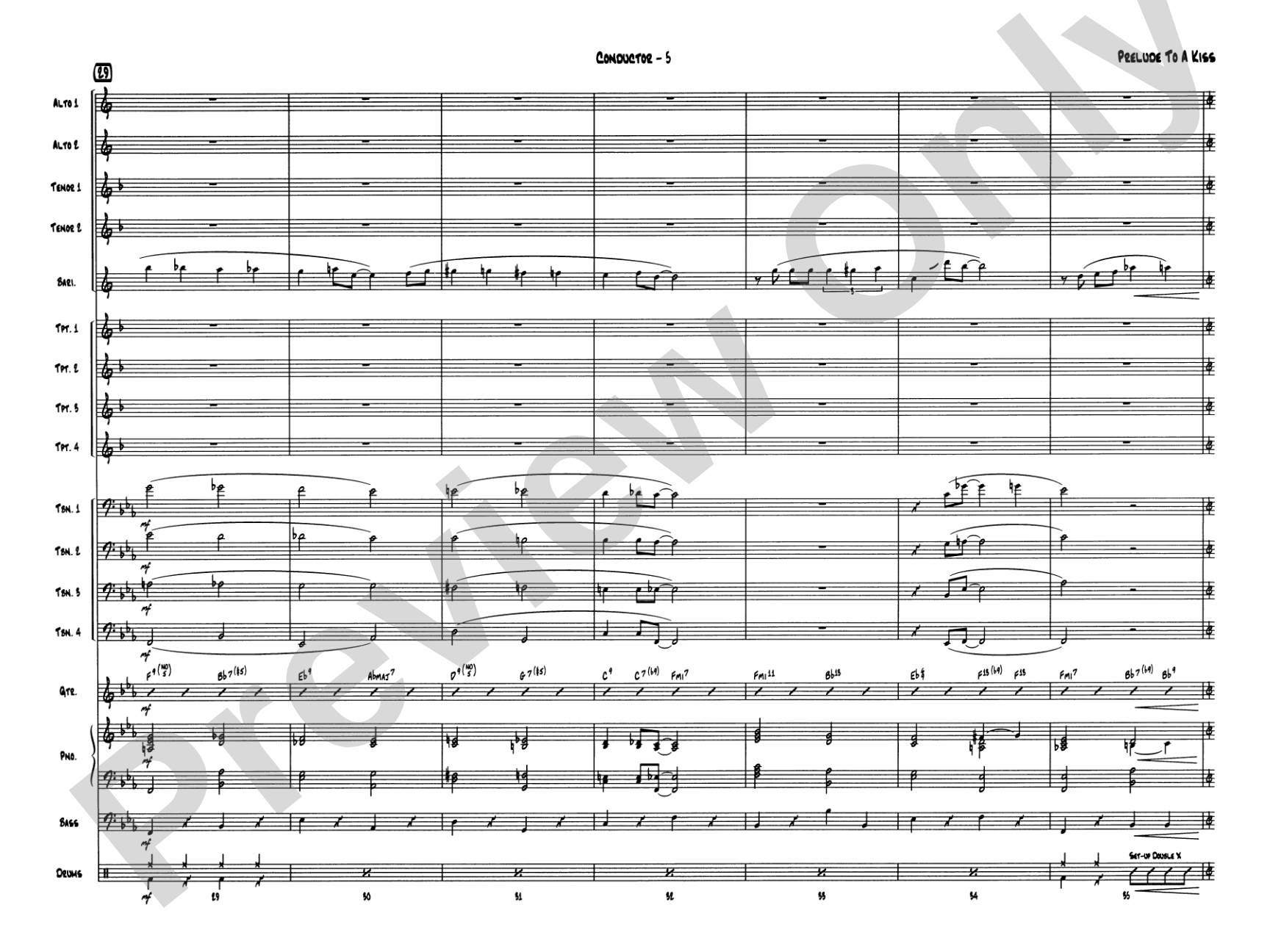
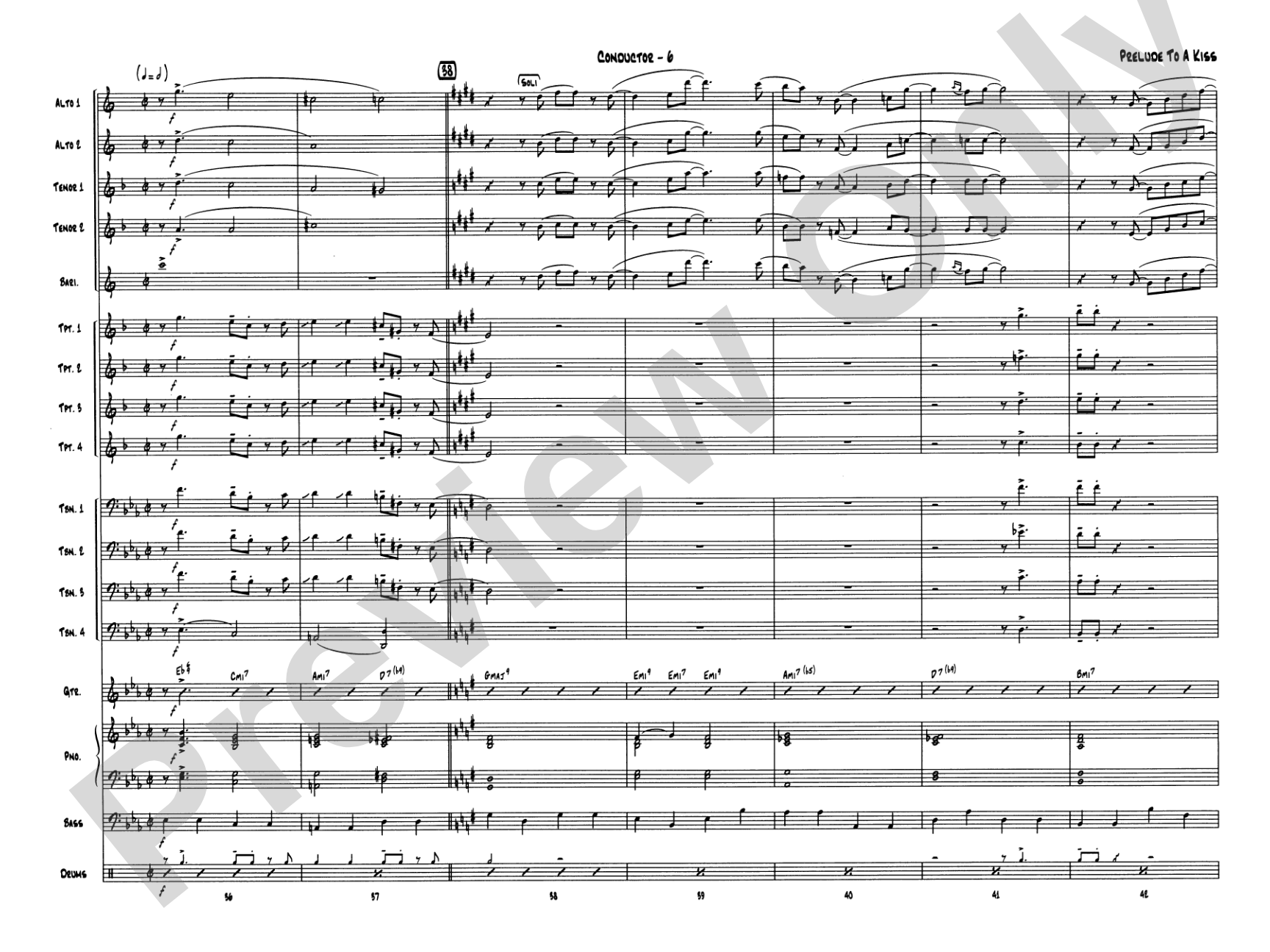
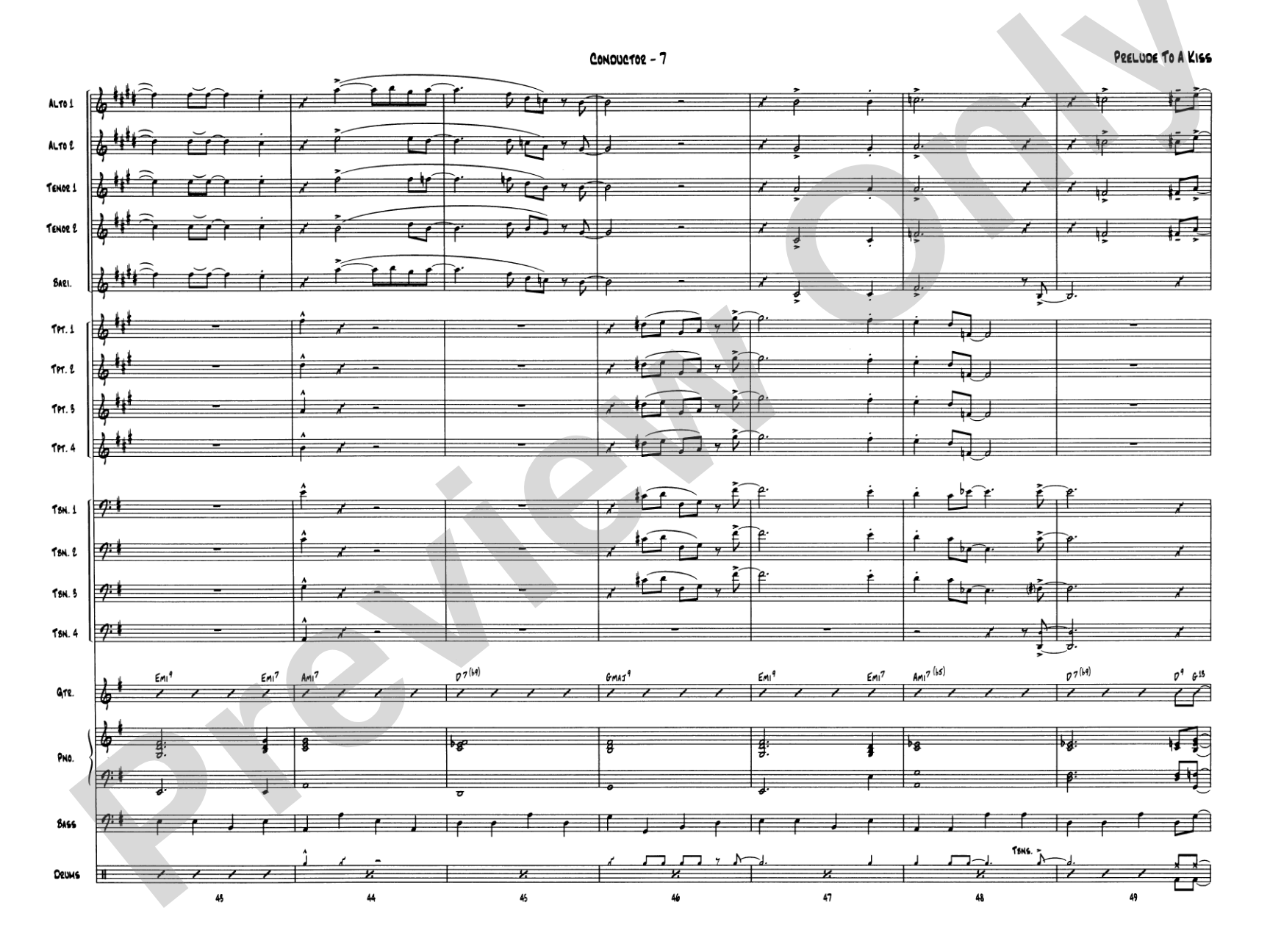
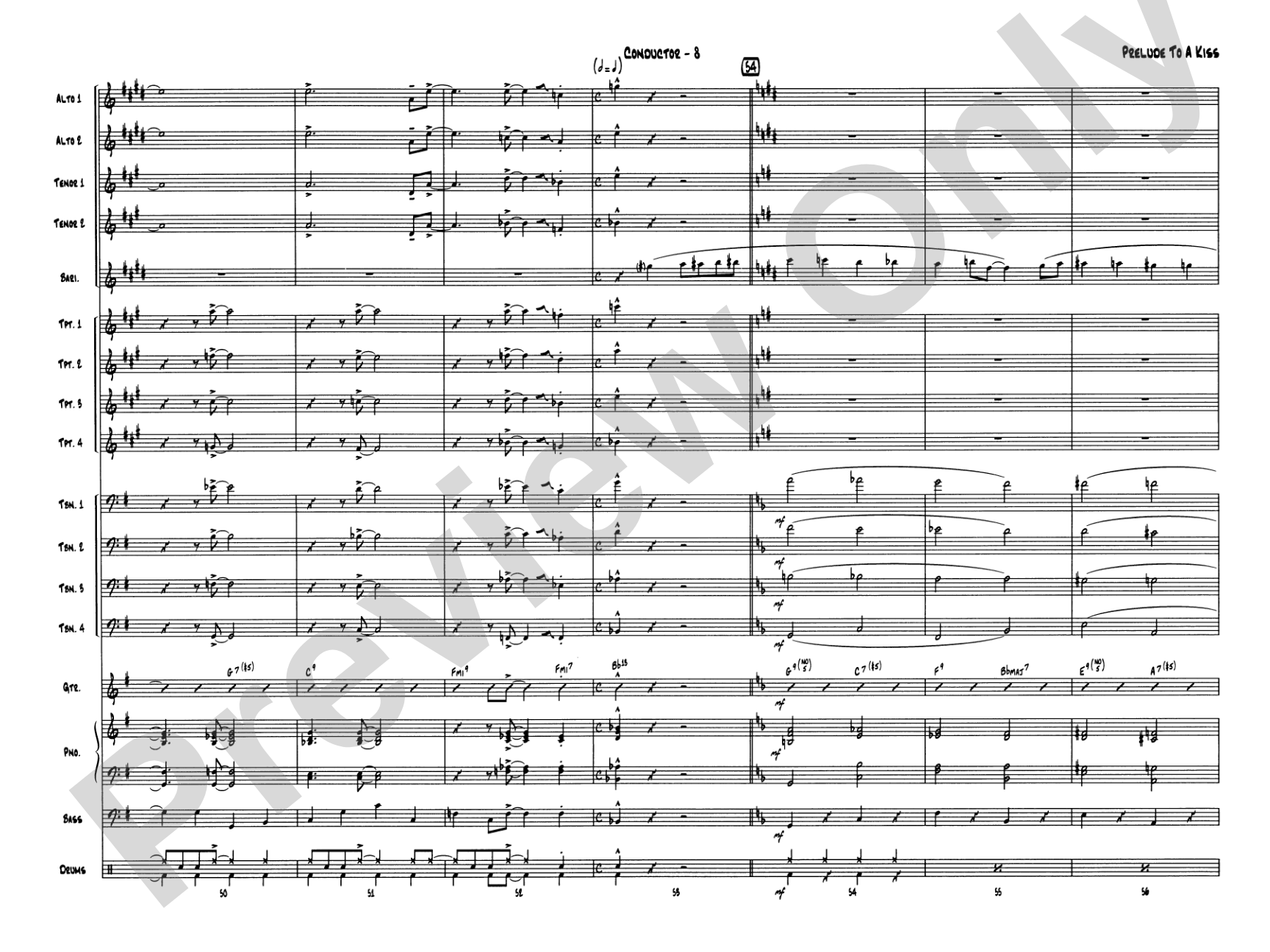
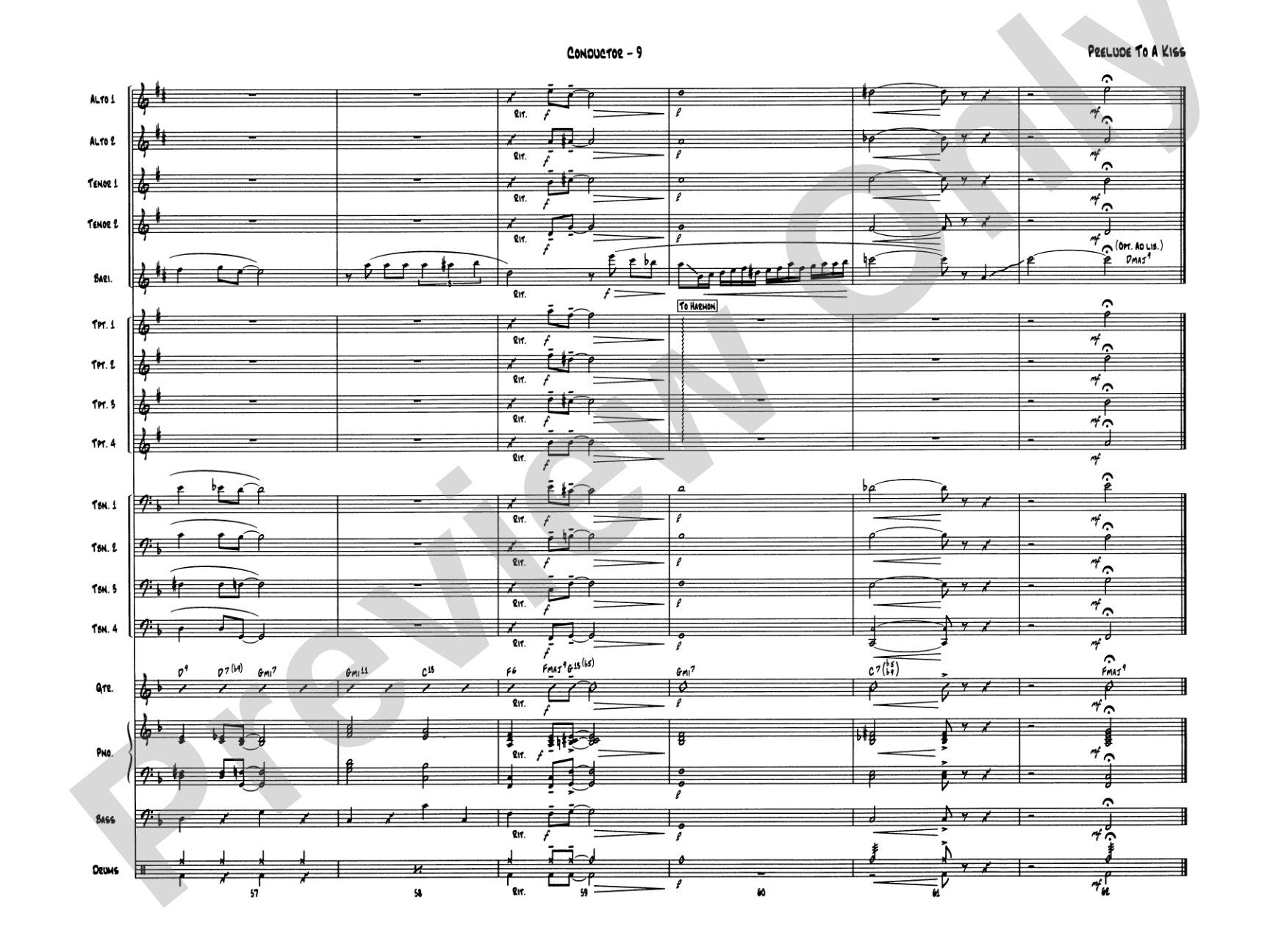


Prelude to a Kiss: Jazz Ensemble Conductor Score & Parts
By Duke Ellington, Irving Mills, and Irving Gordon / arr. Dave Wolpe
Grade: 4.5 (Medium Advanced / Difficult)
Item: 00-PK-0002511

$60.00
One moment…
Description
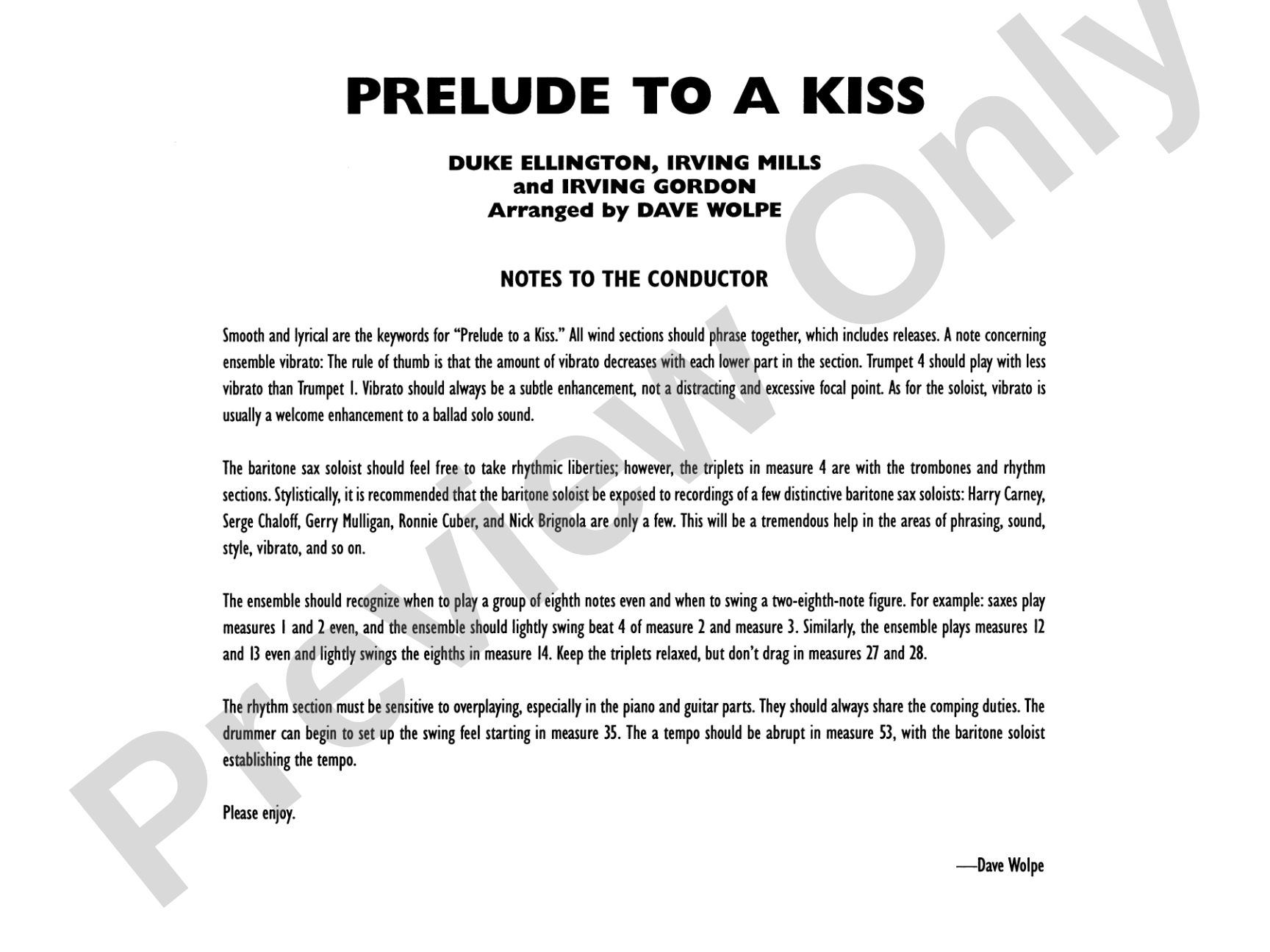
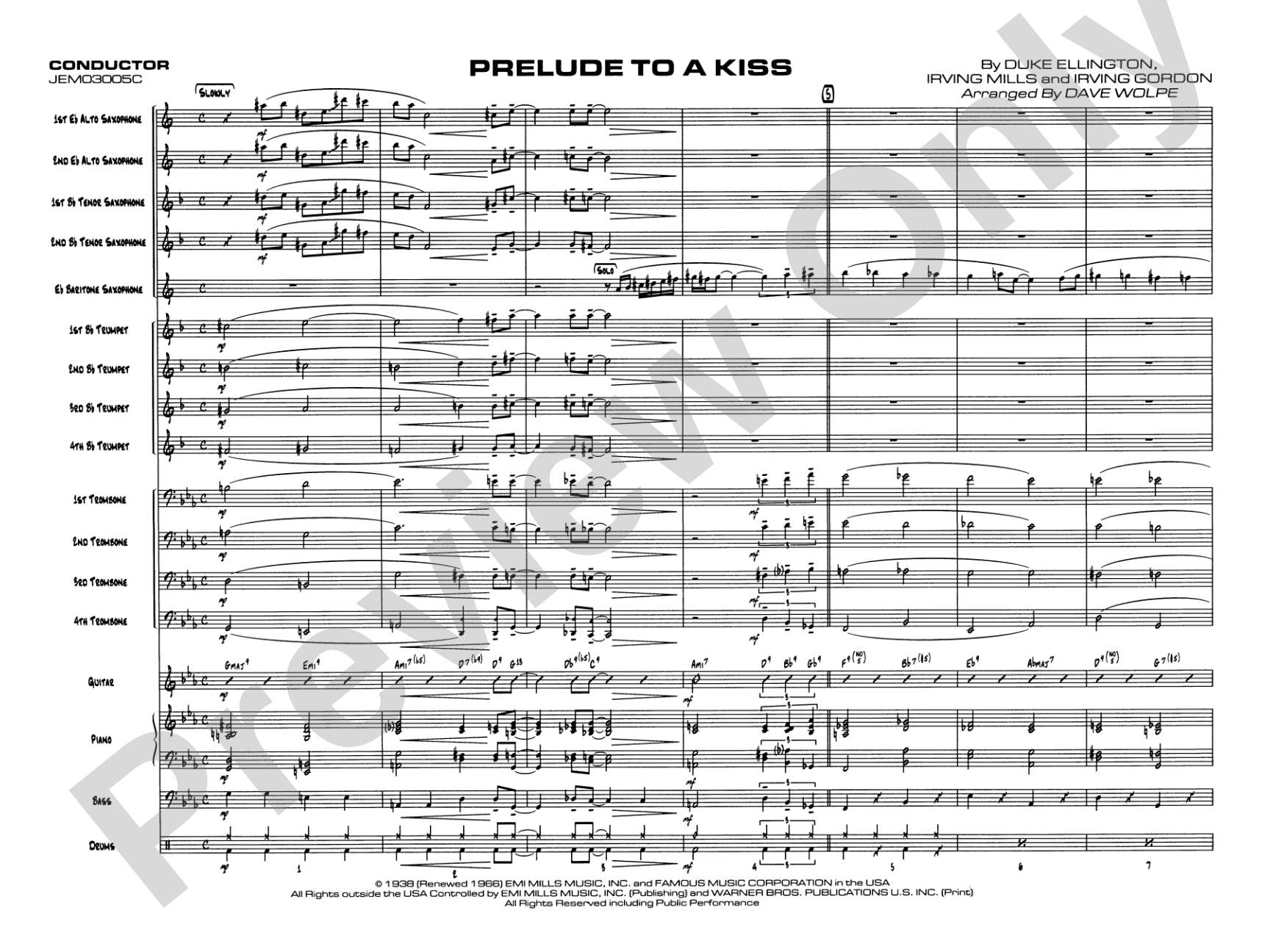
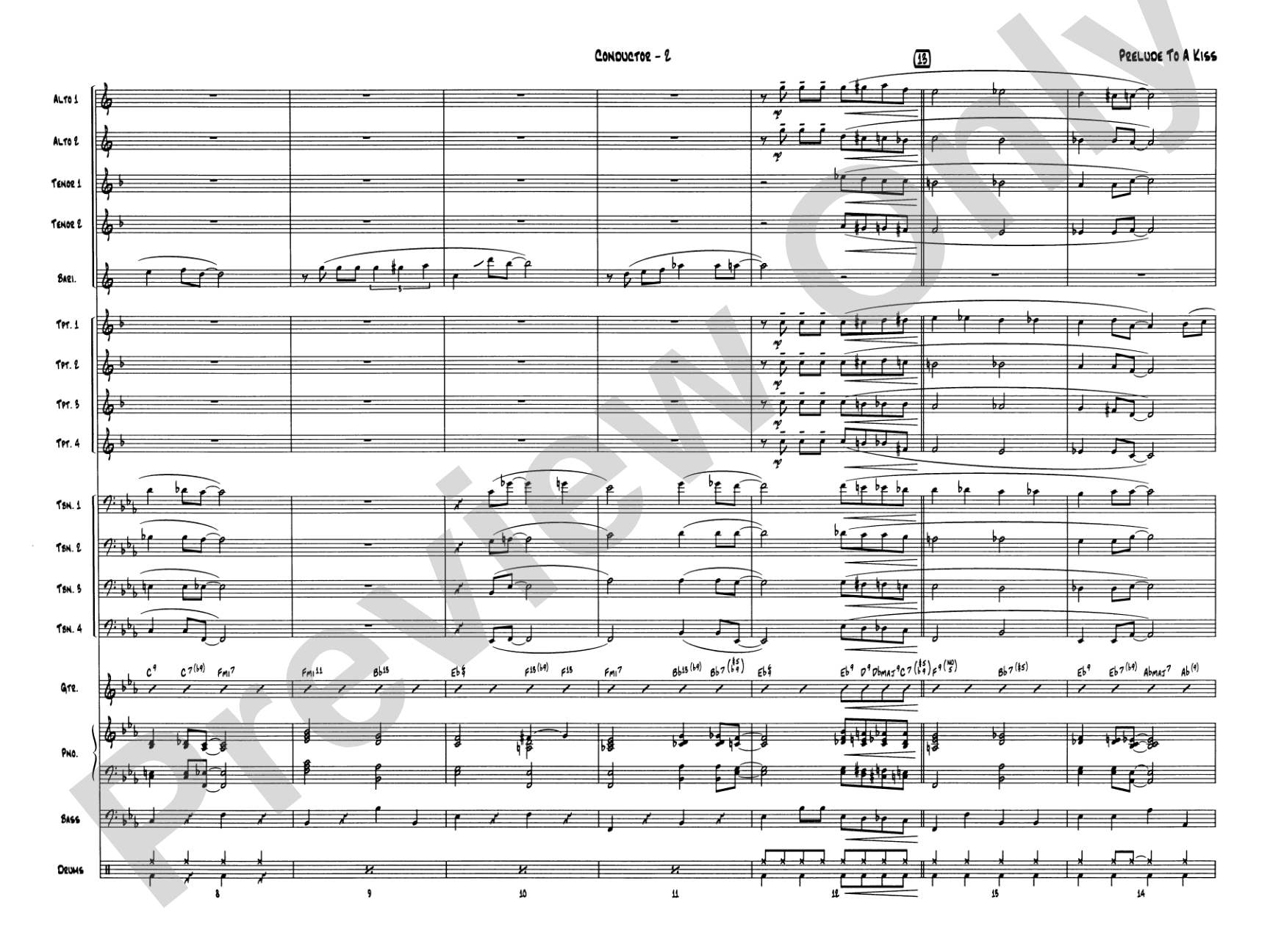
A superb feature for baritone saxophone, this is certainly one of Ellington's more beautiful melodies and another winning chart from master arranger Dave Wolpe. The perfect ballad showcase for your bari player with plenty of melodic soloing and no improvisation. A swingin' double-time section offers a nice contrast to this lush ballad. This chart is perfect for concert, festival or even a dance gig. Give the bari player the spotlight.


Don't just read it, hear it, play along with it, and watch your students grow with it. In MakeMusic Cloud, Prelude to a Kiss: Jazz Ensemble Conductor Score & Parts comes alive with professional accompaniment, adjustable tempo, and built-in practice tools that turn solo practice into real progress.
Open in the Player
Jump straight in and assign it today.
Start Your Free Trial
Open this title and explore the full library in minutes.
Sample Audio
1
Audio File
--:--
0:00
0:00
Sample Video
Additional Details
Series:
Premier Jazz Series
Publisher:
Alfred Music
Page Count:
54
SKU:
00-PK-0002511
More about this title
About the Composer: Duke Ellington
Duke Ellington stands as one of the most prolific and innovative composers in American music history. His output across seven decades shaped jazz idiom itself; his harmonic sophistication, orchestral sensibility, and gift for melody elevated the genre far beyond its origins. Ellington's works remain central to jazz education because they demand serious musicianship while remaining deeply accessible to student ensembles.
Why we love this
Dave Wolpe's arrangement captures the romantic sweep of Ellington's melody while creating a genuine feature for your baritone saxophonist. The structure works beautifully in performance: the ballad sections are genuinely lyrical, the double-time swing section provides momentum and contrast, and there's no improvisation to manage, so everyone can focus on ensemble blend and the soloist's phrasing.
What to expect
A warm, sophisticated ballad that feels more like a conversation than a performance. The melody unfolds with Ellington's characteristic elegance, and when the double-time section arrives, it lifts the piece with a joyful buoyancy that makes you want to move. Wolpe's voicings are lush without being heavy, giving the ensemble plenty of color to work with.
Who it's for
Directors with a strong baritone saxophonist ready for a genuine showcase, or those building a mixed-difficulty set where this medium-advanced chart balances easier opener or closer. Jazz ensembles at the high school or college level will find it sits comfortably in the repertoire range where musicianship and arrangement craft both shine.
How to get the most out of it
- Balance the ensemble voicings underneath the baritone solo so the melody emerges cleanly without the rhythm section overwhelming it; the lush writing invites a collaborative rather than competitive texture.
- Treat the double-time section as a genuine tempo shift in feel, not just faster note values; your rhythm section should lock into a brighter swing pocket here to make the contrast punch.
- Shape the baritone's phrases like a vocalist would; Ellington melodies sing, and your soloist should breathe where a singer would, even within longer passages.
- Let the ensemble dynamics breathe during ballad sections; resist the urge to fill every moment with sound.
How to use it
This works beautifully as the centerpiece of a jazz concert set, either opening a second half or anchoring a ballad segment flanked by up-tempo pieces. The bari feature and absence of improvisation make it ideal for festival settings where you want to showcase ensemble discipline and a standout soloist without managing the variables that come with student improv.
Skills your students will build
- Legit ballad phrasing on saxophone and throughout the ensemble
- Feel the distinction between ballad and double-time swing feels
- Reading and voicing lush jazz harmonies
- Supporting a featured soloist within ensemble texture
- Controlling dynamics and blend in slower tempos