Prelude No. 3 Sheet Music Preview

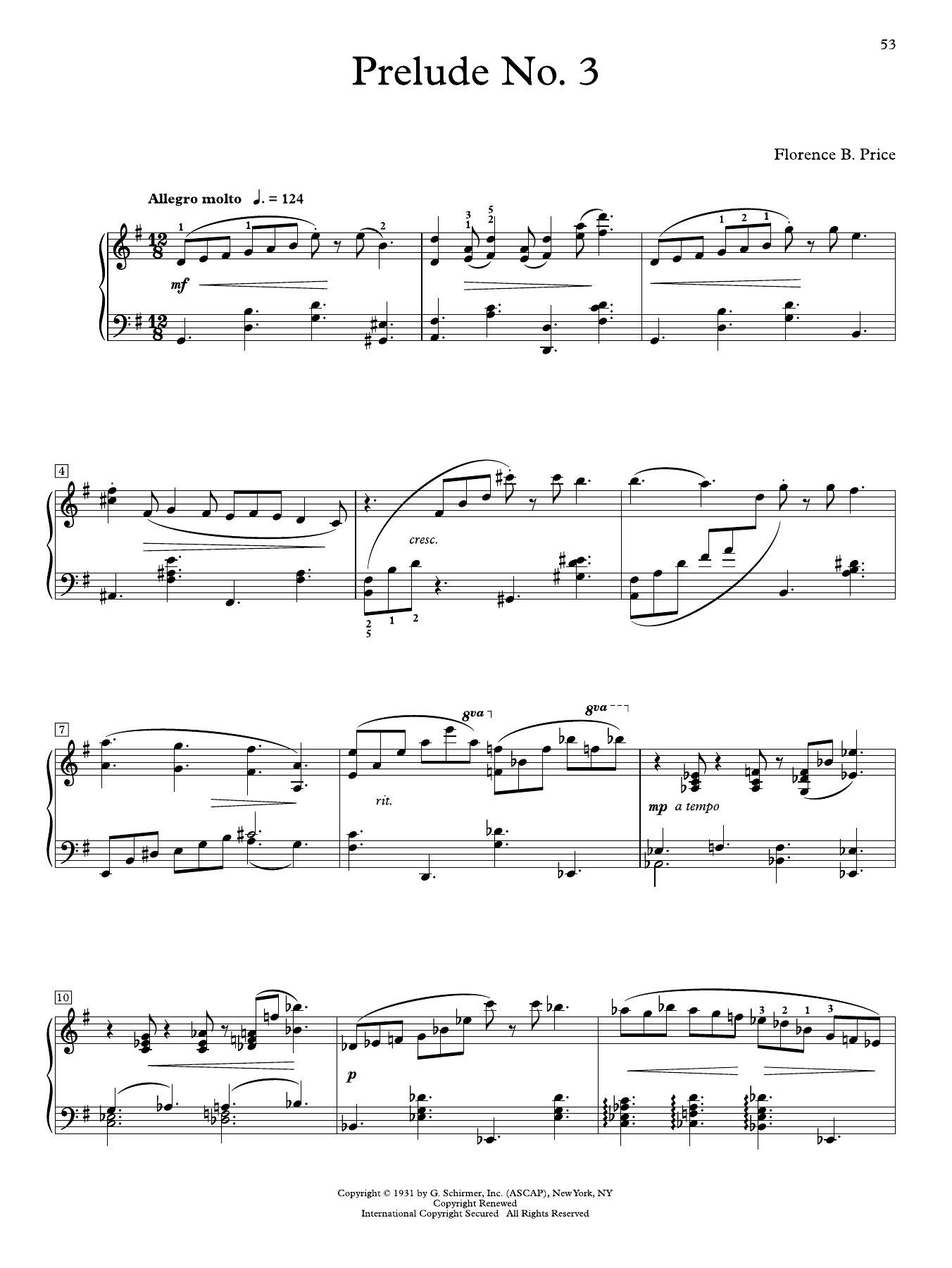
Prelude No. 3: Educational Piano

As performed by Florence Price

Item: 35-DS01838056

Digital Download
$4.99
Description

Discover MakeMusic Cloud: thousands of interactive titles your students can play along with today.

Sample Audio
No sample audio found.
Sample Video
Additional Details
Publisher: Hal Leonard
Page Count: 3
SKU: 35-DS01838056

More about this title

About the Artist: Florence Price

Florence Price (1887-1953) was an American composer, pianist, and music teacher whose work bridged classical traditions with African American musical idioms. As the first African American woman to have a symphony performed by a major orchestra, Price composed prolifically across genres including symphonies, concertos, chamber works, and art songs. Her piano works remain central to expanding the repertoire available to students and revealing the depth of American classical music.

Why we love this

Price's preludes sit at the intersection of technical clarity and genuine musical substance. Students encounter clean harmonic language and accessible textures without sacrificing the kind of character and stylistic identity that makes a piece worth performing repeatedly. This prelude opens doors to an underrepresented voice in the piano canon.

What to expect

Understated and reflective, with an unhurried elegance that unfolds through clear harmonic thinking. The piece carries an introspective quality that deepens as you play it, rewarding careful listening to voice movement and tonal color rather than virtuosic display.

Who it's for

Intermediate pianists ready to move beyond five-finger positions and explore pieces with genuine harmonic content. This prelude works well for students building independence between hands and discovering how American composers engaged with European forms.

How to get the most out of it

  • Shape the phrases by allowing the voice leading to breathe naturally rather than holding strictly to metronomic time; Price's harmonic progressions reward slight rhythmic flexibility.
  • Balance any accompaniment figures against a singing melodic line; clarity matters more than weight in these textures.
  • Approach dynamic markings as expressive boundaries rather than rigid walls; the intimacy of the piece invites responsive, nuanced control.

How to use it

Pair this with other American piano works from the early twentieth century to build a thematic recital or studio class exploring national identity in classical music. It also serves as an excellent contemporary contrast piece when programming alongside Baroque or early Classical repertoire.

Skills your students will build

  • Voice leading and harmonic awareness across hand positions
  • Control of accompanimental textures while maintaining melodic independence
  • Stylistic interpretation of twentieth-century American classical music
  • Pedal technique for tonal blending and sustain management

You May Also Like