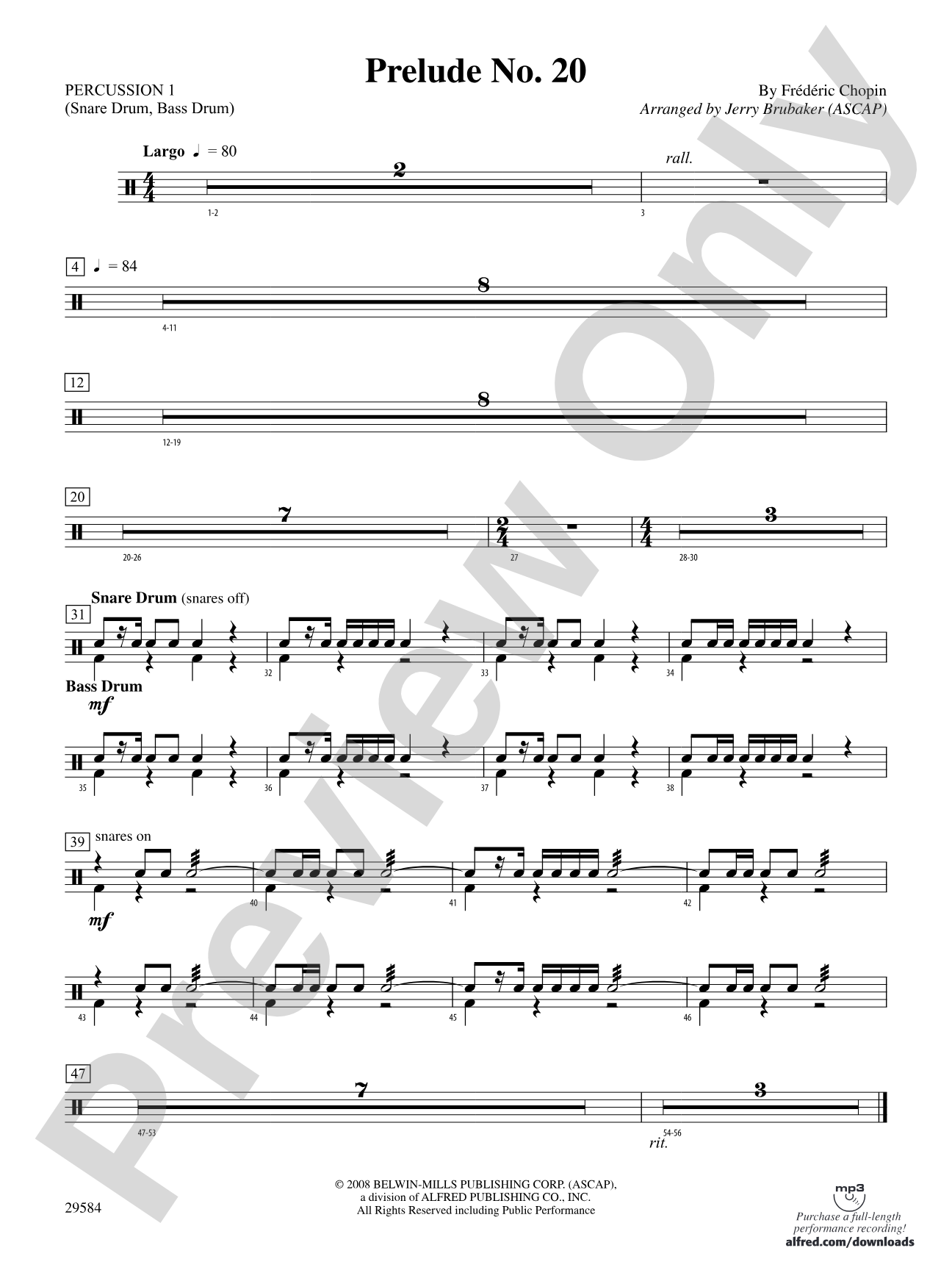
Prelude No. 20: 1st Percussion Sheet Music Preview

Prelude No. 20: 1st Percussion

By Frédéric Chopin / arr. Jerry Brubaker

Grade: 2 (Easy)

Item: 00-PC-0001480_PC1

Digital Download
$3.00
Description
Frederic Chopin's Prelude No. 20 is familiar since it was used as introductory material for Barry Manilow's "Could It Be Magic." The rich chordal style in a minor key evokes a mildly somber mood and will be a satisfying program addition. (3:06)

Don't just read it, hear it, play along with it, and watch your students grow with it. In MakeMusic Cloud, Prelude No. 20: 1st Percussion comes alive with professional accompaniment, adjustable tempo, and built-in practice tools that turn solo practice into real progress.

Sample Audio
0:00
0:00
Sample Video
Additional Details
Series: Belwin Young Band
Publisher: Alfred Music
Page Count: 124
SKU: 00-PC-0001480_PC1

More about this title

About the Composer: Frédéric Chopin

Frédéric Chopin (1810-1849) was a Polish composer and virtuoso pianist who fundamentally shaped 19th-century music. Working primarily in smaller forms like nocturnes, études, and preludes, he developed a distinctly lyrical approach to the piano that emphasized expressive melody, harmonic innovation, and delicate ornamentation. His influence extends far beyond concert halls: his works have become touchstones of popular culture, sampled and reimagined across generations of musicians and songwriters.

Chopin's 24 preludes in all major and minor keys stand as one of the cornerstones of piano literature, each capturing a specific mood or technical idea in miniature. They remain essential repertoire for pianists and continue to inspire arrangements that bring his harmonic language and emotional depth to broader ensembles.

Why we love this

This arrangement introduces young bands to genuine Romantic masterwork without overwhelming them. Chopin's harmonic language and emotional restraint translate beautifully to Grade 2 concert band, and the modest three-minute duration makes it realistic for a full ensemble to learn and perform with musicality. The chordal texture ensures all sections participate meaningfully.

What to expect

A quiet dignity settles over the ensemble as the minor key and rich harmonies unfold. The mood is introspective and contemplative, never heavy, with a quality of gentle resignation that draws listeners in. Chopin's lyrical restraint shines through even in band instrumentation.

Who it's for

Concert bands performing at Grade 2 level seeking substantive repertoire with historical weight and emotional maturity. Directors programming pops concerts or mixed repertoire will appreciate how recognizable this piece is to audiences while maintaining artistic credibility.

How to get the most out of it

  • Shape the melody with subtle dynamic swells rather than sudden accents; Chopin's voice sings through sustained phrasing, not punctuation.
  • Balance the chord voices carefully so the inner harmonies emerge without drowning the top line; this is where the arrangement's richness lives.
  • Allow slight breathing room at phrase endings rather than rushing to the next section; minor key writing gains depth from small silences.
  • Let the conductor guide tempo flexibility gently through the form; this piece rewards a touch of expressive freedom rather than metronomic precision.

How to use it

Position this as a contrasting ballad between more energetic works on a concert program, or pair it with other Romantic-era arrangements to explore the era's harmonic language with younger students. It works equally well as an opening number that establishes a thoughtful tone for the evening.

Skills your students will build

  • Balancing independent voice lines within a harmonic texture
  • Sustaining musical line through minor key expression without drama
  • Responding to subtle conducting gestures for tempo and phrase shaping
  • Listening critically to intonation in sustained chord passages

You May Also Like