Prelude No. 2 Sheet Music Preview

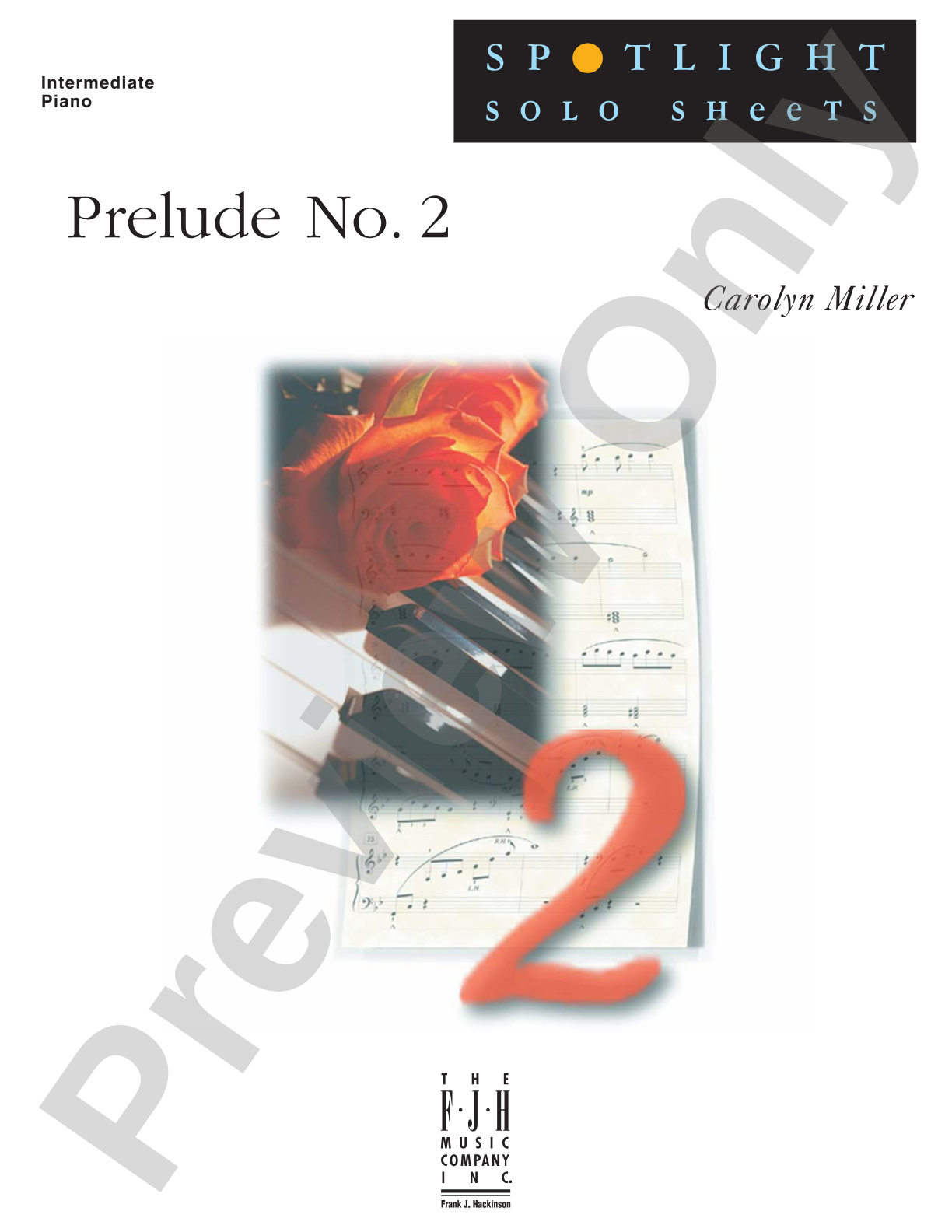
Prelude No. 2: Piano

By Carolyn Miller

Item: 98-DS4050

Digital Download
$5.95
Description
Bold and impressive-sounding, this piece will build proficiency in both blocked and broken chords.

Prelude No. 2: Piano isn't in MakeMusic Cloud just yet...but it could be. Let us know you'd like to see it, and you'll help shape what comes next. In the meantime, start a free trial and dive into thousands of interactive titles your students can play along with today.

Sample Audio
No sample audio found.
Sample Video
Additional Details
Series: Spotlight Solo Sheets
Publisher: The FJH Music Company, Inc.
SKU: 98-DS4050

More about this title

About the Composer: Carolyn Miller

Carolyn Miller is a prolific composer of educational piano music whose works span from elementary to intermediate levels. Her compositions are known for their musicality, clear pedagogical purpose, and ability to engage students while building genuine technical skills.

Why we love this

This prelude strikes that rare balance between sounding polished and feeling achievable. Students get immediate satisfaction from playing something substantial, while the chord work translates directly into real hand independence and facility.

What to expect

Confident and commanding. The bold harmonic movement and interplay between blocked and broken textures create a sense of forward momentum and pianistic authority without feeling overwrought.

Who it's for

Intermediate pianists ready to tackle pieces that demand secure chord voicing and hand coordination. This works well for students building confidence in their technical foundation and looking for repertoire that sounds impressive to audiences.

How to get the most out of it

  • Shape the blocked chords with dynamic clarity; let weight and release define each harmonic moment rather than playing them uniformly.
  • Map out the broken chord patterns at slow tempo first, establishing consistent hand position shifts before building speed.
  • Listen for phrase contours across the chord changes; avoid treating each chord as an isolated event.

How to use it

Place this in a student recital to showcase technical growth; it works particularly well when paired with lighter Baroque or Classical pieces to highlight contrasting textures and moods.

Skills your students will build

  • Executing blocked and broken chord patterns with rhythmic precision
  • Hand position and coordination across chord changes
  • Dynamic shaping and voicing within harmonic progressions
  • Building confidence in intermediate-level solo repertoire

You May Also Like