
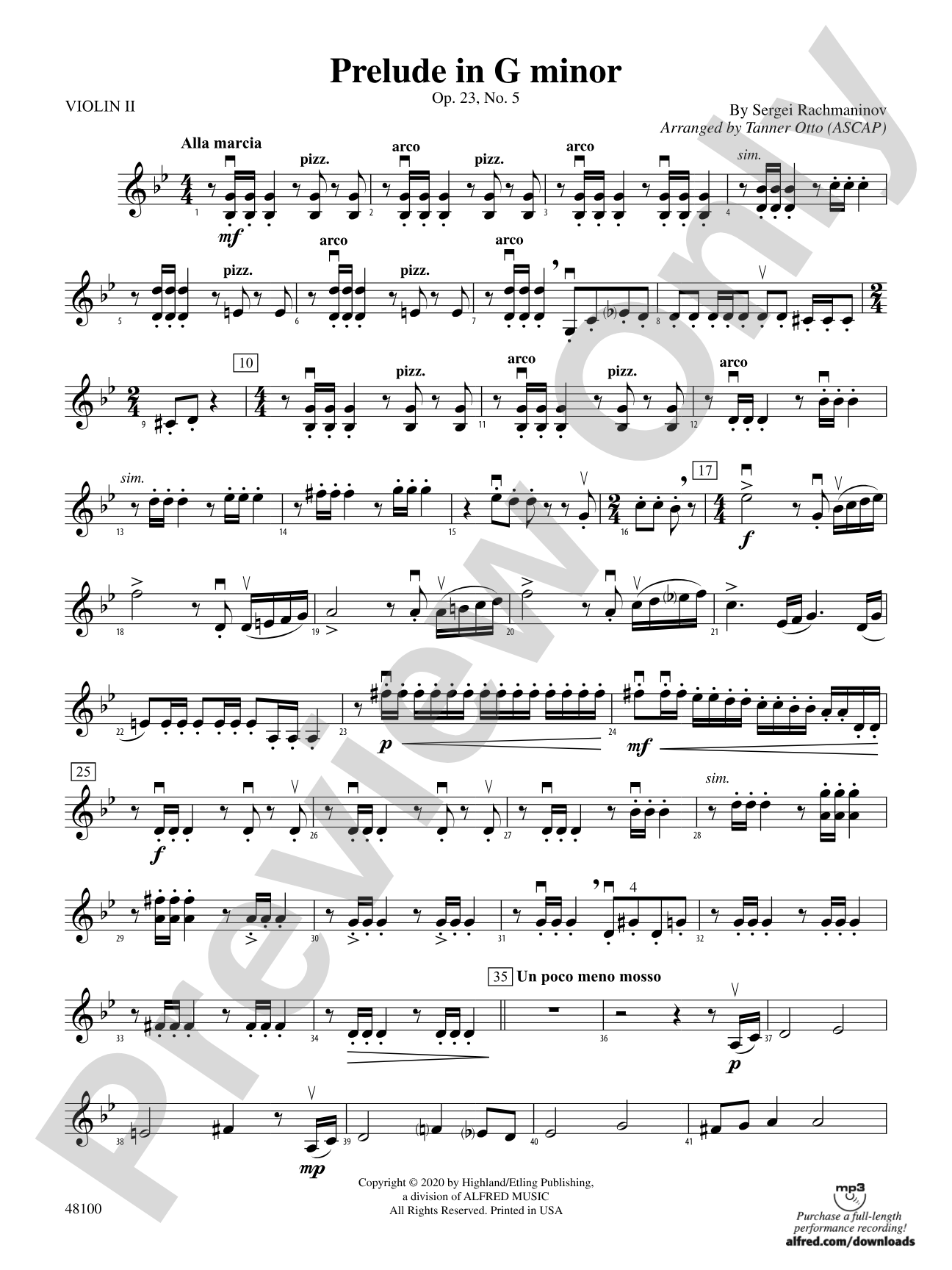

Prelude in G Minor: 2nd Violin
Op. 23 No. 5
By Sergei Rachmaninov / arr. Tanner Otto
Grade: 3
Item: 00-PC-0018535_VN2
$3.00
Pickup currently not available
Description
This thrilling arrangement of Sergei Rachmaninov's Prelude in G Minor, arranged by Tanner Otto, is sure to get the adrenaline flowing. The bold and assertive melodies are as fun to play as they are to listen to. This piece is great for developing and refining the staccato bow stroke and for tone development. A perfect festival piece or concert finale! (3:20)


Don't just read it, hear it, play along with it, and watch your students grow with it. In MakeMusic Cloud, Prelude in G Minor: 2nd Violin comes alive with professional accompaniment, adjustable tempo, and built-in practice tools that turn solo practice into real progress.
Open in the Player
Jump straight in and assign it today.
Start Your Free Trial
Open this title and explore the full library in minutes.
Sample Audio
1
Audio File
--:--
0:00
0:00
Sample Video
Additional Details
Series:
Highland/Etling String Orchestra
Publisher:
Alfred Music
Page Count:
124
SKU:
00-PC-0018535_VN2
More about this title
About the Composer: Sergei Rachmaninov
Sergei Rachmaninov (1873-1943) was a Russian composer, pianist, and conductor whose works remain central to the orchestral and chamber music repertoire. His gift for memorable melody and rich harmonic language made him one of the most performed composers of the twentieth century, and his music continues to inspire musicians across all levels.
Rachmaninov's keyboard works in particular showcase his mastery of texture and emotional depth. The Prelude in G Minor, one of his most recognizable compositions, demonstrates why his music translates so effectively to ensemble arrangements; the bold themes and dramatic arc that define his style are as compelling when heard across a string section as they are in the original.
Why we love this
Arranger Tanner Otto has captured the visceral energy of Rachmaninov's original in a way that stays true to the composer's voice while making the piece genuinely rewarding to play as a section. Grade 3 orchestras can access one of the repertoire's most recognizable works without compromising on the driving intensity and tonal richness that make this prelude memorable. It's a showstopper that audiences know and appreciate, and the technical demands sit right where developing players can feel accomplished rather than overwhelmed.
What to expect
This prelude radiates dramatic intensity from its opening measures. Bold unison passages alternate with rich harmonic textures, and the piece thrives on the contrast between assertive rhythmic figures and singing melodic lines. By the time it reaches the climax, the energy builds in a way that feels both inevitable and thrilling.
Who it's for
Grade 3 string orchestras that have developed solid bow control and the ability to balance independent sections. Conductors looking for a work that challenges intonation and staccato technique while keeping players engaged and audiences captivated will find this arrangement especially useful.
How to get the most out of it
- Shape the opening unison statement with clear dynamic intention. The assertiveness in these early measures sets the tone for everything that follows, so commit to the character without waiting for consensus within the section.
- Differentiate between the staccato figures and legato passages with precision in your bow stroke. Staccato articulation here needs clarity and snap, not just short notes; this contrast is what drives the piece forward.
- Balance melody against accompaniment carefully when the piece opens up texturally. String sections can easily overshadow a single voice, so listen actively for who is carrying the primary line in each section.
- Sustain tone quality through the sustained passages without sacrificing the rhythmic momentum. Rachmaninov expects both weight and forward motion; neither one should disappear at the expense of the other.
How to use it
This works beautifully as a concert closer or festival selection where you want to leave a strong final impression. It also pairs well in a program exploring Romantic-era masterworks or showcasing your orchestra's advancing technical abilities. At 3:20, it fits comfortably into almost any concert structure without requiring padding or apologies.
Skills your students will build
- Staccato bow articulation with clarity and control
- Tone development across sustained passages
- Balance between primary melody and accompaniment voices
- Dynamic contrast and dramatic phrasing
- Section coordination in unison passages
- Reading and executing rapid rhythmic figures