Phillip Keveren has built a reputation as one of the most prolific and thoughtful arrangers in music education. His work spans multiple genres and difficulty levels, consistently prioritizing clarity, musicality, and accessibility without sacrificing artistic integrity. Keveren's arrangements have become staples in classrooms and studios because they honor the original compositions while creating fresh entry points for diverse performers.
Why we love this
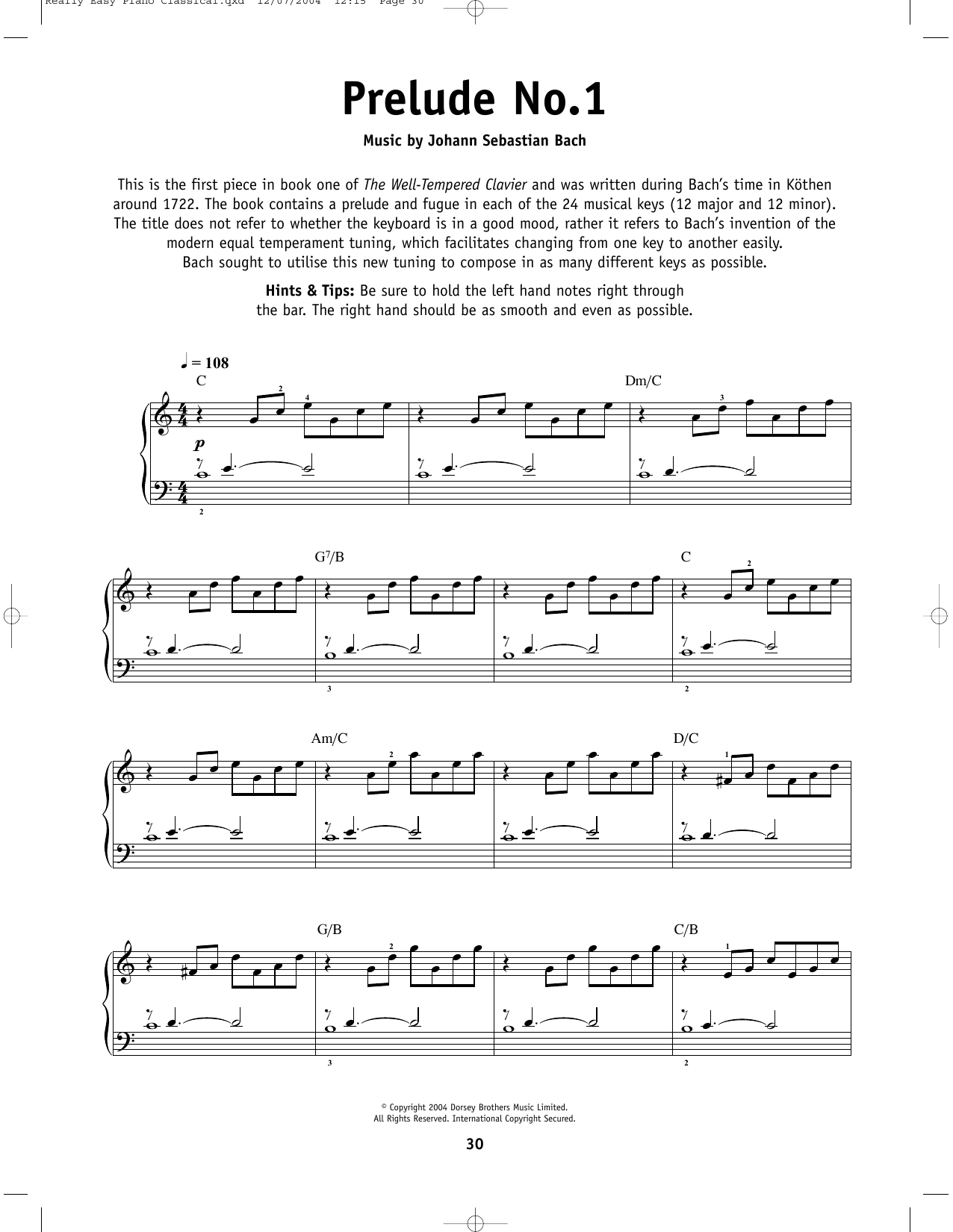
Keveren's reading of this foundational Bach prelude strips away none of its harmonic sophistication while making it genuinely playable at earlier levels. The arrangement respects Bach's voice leading and contrapuntal clarity, giving students an authentic encounter with one of classical music's most important works rather than a simplified facsimile.
What to expect
Serene and contemplative. The famous opening gesture feels inevitable and timeless, unfolding with the quiet dignity of a musical architecture where every note has its place. There is clarity in simplicity here, and elegance that rewards careful listening.
Who it's for
Students making their first acquaintance with Bach's keyboard music, whether at the piano or through transposed arrangements for their own instruments. This accessible version opens the door to understanding voice leading and harmonic function without overwhelming technical demands.
How to get the most out of it
Shape the melodic line with subtle dynamic swells that follow the phrase contours rather than playing at a uniform level throughout.
Think of the accompaniment as a gentle, consistent pulse that supports rather than dominates; clarity of texture matters more than thickness of sound.
Let the harmonic progressions breathe by observing any indicated articulation changes; Bach's harmonic language reveals itself through attention to voice independence.
How to use it
Pair this with other Renaissance or Baroque selections to build a thematic program exploring musical foundations, or use it as a solo recital opener that establishes a thoughtful tone. It works equally well as a sight-reading study or a performance piece, making it flexible for concert programs at any point in the season.
Skills your students will build
Recognizing and performing baroque voice leading and counterpoint
Maintaining even rhythm and pulse through simple, sustained accompaniment patterns
Shaping melodic lines with harmonic awareness rather than arbitrary phrasing
Reading two-part or multi-voice textures with independence
You May Also Like
Scan to Complete Your Purchase
Use your phone's camera to scan the code below
You'll log in on your phone and the order will be added to your account